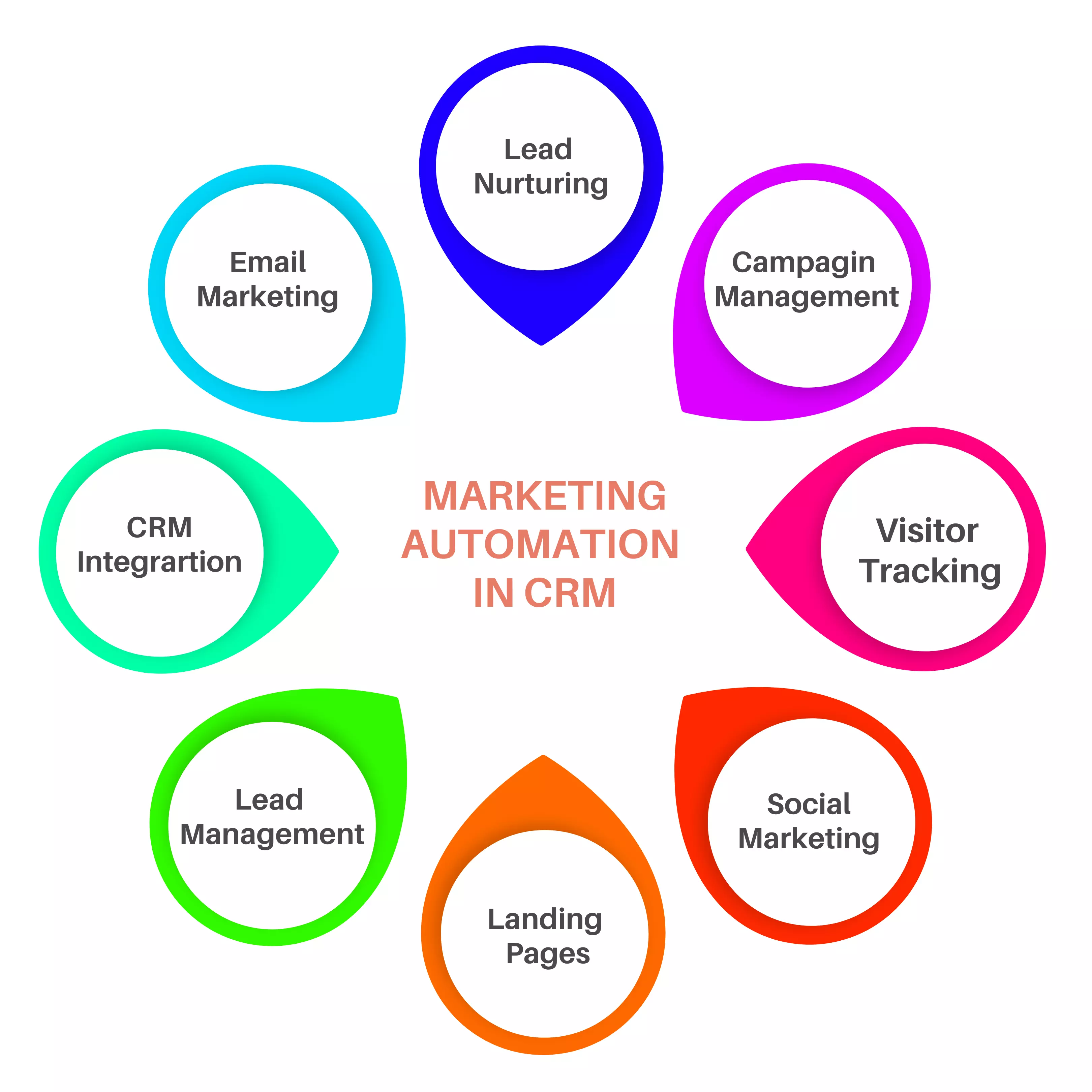
A.P. Moller - Maersk utilizes a sophisticated CRM and marketing automation ecosystem primarily centered on Salesforce Sales Cloud and Marketing Cloud, integrated with SAP ERP and proprietary logistics engines. This digital stack enables the company to manage complex global customer journeys, automate high-volume supply chain communications, and deliver personalized logistics solutions across its integrated end-to-end network.
The evolution of A.P. Moller - Maersk from a traditional ocean carrier into a global "integrator of container logistics" has necessitated one of the most ambitious digital transformations in the maritime industry. Central to this transformation is the deployment and continuous optimization of Customer Relationship Management (CRM) and marketing automation software. In 2026, these systems are no longer merely administrative tools; they are the engines of the Maersk.com digital platform, which handles a significant percentage of the world’s B2B logistics transactions.
The Strategic Shift: Why Maersk Invested in Advanced CRM
To understand the specific software choices made by Maersk, one must first understand the "Integrator Strategy." Historically, shipping lines interacted with customers through manual bookings, phone calls, and disparate local agents. As Maersk moved to offer end-to-end services—including warehousing, landside transportation, customs brokerage, and trade finance—the complexity of the customer relationship increased exponentially.
A single customer might now interact with Maersk across ten different touchpoints. Without a unified CRM, these interactions would be siloed, leading to a fragmented customer experience. The investment in advanced CRM and marketing automation software was designed to:
- Unify Customer Data: Create a "single source of truth" for global accounts that operate across multiple geographies.
- Scalability: Manage millions of TEUs (Twenty-foot Equivalent Units) and the associated documentation with minimal manual intervention.
- Personalization: Deliver relevant logistics offers (e.g., eco-delivery options or air freight alternatives) based on real-time supply chain disruptions or historical shipping patterns.
- Retention: Use predictive analytics to identify "at-risk" customers before they switch to competitors.
The Core Technology Stack: Salesforce and Beyond
A.P. Moller - Maersk has standardized its front-office operations on the Salesforce platform. This choice was driven by Salesforce's ability to handle massive global scale and its robust API-first architecture, which allows it to communicate with Maersk's specialized "transportation management systems" (TMS) and "vessel sharing agreement" (VSA) databases.
Salesforce Sales Cloud
This serves as the primary repository for lead management, opportunity tracking, and account planning. In 2026, Maersk’s Sales Cloud instance is heavily customized with custom objects that track vessel schedules, container availability, and contract performance. It allows global account managers in Copenhagen to see the same data as sales representatives in Shanghai or New Jersey, ensuring a seamless experience for multinational clients.
Salesforce Marketing Cloud
For marketing automation, Maersk relies on Salesforce Marketing Cloud (formerly ExactTarget). This platform is used to orchestrate complex "Customer Journeys." For example, when a new business signs up on Maersk.com, the Marketing Cloud triggers a multi-stage onboarding sequence that varies based on the user's industry and geographic location.
Integration with SAP and Microsoft Azure
While Salesforce handles the customer-facing "front end," the financial and operational "back end" is largely powered by SAP. The integration between Salesforce and SAP is critical. When a sales rep closes a deal in the CRM, the data must flow into SAP for billing, revenue recognition, and tax compliance across hundreds of jurisdictions. This integration is managed via MuleSoft (a Salesforce company) and hosted on Microsoft Azure, which serves as Maersk’s primary cloud infrastructure provider.
Key Features of Maersk's Marketing Automation in 2026
Marketing automation at Maersk goes far beyond simple email newsletters. It is deeply integrated into the operational flow of global trade.
1. Dynamic Quote Follow-ups
When a customer searches for a freight rate on Maersk.com but does not complete the booking, the marketing automation system triggers a "recoverable lead" workflow. Depending on the customer's value segment, this might result in an automated email offering a time-limited rate guarantee or a task being created for a sales agent to call the customer directly.
2. Operational Event Triggers
One of the most valuable uses of automation at Maersk is the "Notification Center." By linking the CRM with real-time vessel tracking data, the system automatically sends updates regarding:
- Vessel Delays: Automated SMS or email alerts when a ship is delayed by weather or port congestion.
- Documentation Deadlines: Reminders to submit "VGM" (Verified Gross Mass) or "Shipping Instructions" to avoid port roll-overs.
- Arrival Notices: Automated alerts to consignees so they can arrange for landside pickup.
3. Hyper-Personalized Cross-Selling
Using the Salesforce Einstein AI engine, Maersk analyzes historical shipping data to suggest complementary services. If a customer frequently ships electronics from Vietnam to Germany, the automation system may trigger a personalized campaign for Maersk’s "Value Protect" (cargo insurance) or specialized warehousing solutions in Rotterdam.
4. Lead Scoring and Routing
Maersk uses sophisticated lead scoring to prioritize the sales team’s efforts. Leads are scored based on:
- Firmographics: Company size, industry, and annual shipping volume.
- Behavioral Data: Interaction with whitepapers, webinar attendance, and frequency of rate searches.
- Propensity to Buy: AI models that predict which leads are most likely to convert based on current market trends and container capacity.
Technical Requirements and Implementation Challenges
Implementing such a vast CRM and automation network is not without significant technical hurdles. Maersk has had to overcome several "legacy" challenges to reach its current state in 2026.
Data Harmonization
The greatest challenge was consolidating data from dozens of legacy systems inherited from decades of acquisitions (such as P&O Nedlloyd, Hamburg Süd, and various regional logistics providers). Maersk invested heavily in a Global Data Lake on Azure, which cleanses and standardizes data before it is ingested by the CRM.
Global Compliance (GDPR and Beyond)
Operating in nearly every country in the world requires strict adherence to data privacy laws. Maersk’s CRM configuration includes localized data residency rules. For instance, data for Chinese customers is handled in accordance with the PIPL (Personal Information Protection Law), while European data complies with GDPR. The automation workflows are "permission-aware," ensuring that marketing communications are only sent to those who have explicitly opted in, categorized by region and service type.
Cyber Resilience
Following the 2017 NotPetya cyber-attack, which caused significant disruptions to Maersk’s operations, the company rebuilt its IT infrastructure with a "security-by-design" approach. The CRM and marketing automation platforms are now part of a zero-trust architecture, ensuring that even if one segment of the network is compromised, customer data and automated communication channels remain secure and operational.
Comparative Analysis: Maersk vs. Industry Standard CRM Usage
To see how Maersk's approach differs from other logistics providers or general B2B companies, consider the following technical comparison:
| Feature | Standard B2B CRM | Maersk Digital Ecosystem (2026) |
|---|---|---|
| Primary Platform | Salesforce or HubSpot | Salesforce (Sales + Marketing + Service Cloud) |
| Integration Layer | Basic Zapier or Native Plugins | Enterprise Service Bus (MuleSoft / Azure) |
| Data Update Frequency | Daily or Real-time | Near Real-time (Streaming Telemetry) |
| Automation Scope | Email & Lead Nurturing | Full Lifecycle (Booking to Final Delivery) |
| AI Integration | Basic Lead Scoring | Predictive Logistics & Capacity Forecasting |
| Compliance | Regional (e.g., GDPR) | Global Multi-Jurisdictional Framework |
| User Base | Sales & Marketing Teams | Sales, Customer Service, and Operations |
Operational Impact: The Results of Automation
By 2026, the results of Maersk's investment in CRM and marketing automation are evident in their operational metrics. The company has reported a significant reduction in "Cost to Serve." By automating routine inquiries—such as "Where is my container?" or "Send me my invoice"—customer service agents are freed up to handle complex supply chain consulting and exceptions.
Furthermore, the "Self-Service" ratio on Maersk.com has climbed. Marketing automation plays a key role here by "teaching" customers how to use digital tools through automated walkthroughs and feature-update notifications, tailored to the specific functions the customer uses most.
Troubleshooting and Common User Issues
Despite the sophistication of the system, users (both internal employees and external customers) occasionally encounter issues.
- Data Latency: In some remote port locations with poor connectivity, there can be a delay between a physical event (like a container being gated in) and the automated CRM notification. Maersk addresses this by using "edge computing" where possible to cache and then sync data.
- Duplicate Records: With a global database, preventing duplicate "Account" records remains a constant challenge. Maersk utilizes advanced "fuzzy matching" logic within Salesforce to identify and merge duplicates.
- Over-Automation: There is a risk of "notification fatigue." Maersk has introduced a "Preference Center" where customers can granularly select which types of automated alerts they wish to receive, preventing them from marking Maersk emails as spam.
Future Outlook: AI and the Autonomous Supply Chain
Looking beyond 2026, A.P. Moller - Maersk is testing the integration of Generative AI with its CRM. The goal is to allow customers to interact with the CRM through natural language. Instead of navigating a dashboard, a customer could ask a chatbot, "What is the most carbon-efficient way to move 50 containers from Shanghai to Lyon next week?" and the CRM would instantly generate a quote, check capacity, and trigger the necessary automation workflows.
FAQs
Does Maersk use a proprietary CRM or a third-party solution?
Maersk primarily uses Salesforce, a third-party cloud-based CRM platform. However, they have heavily customized the platform with proprietary logic, integrations, and data models specific to the global shipping and logistics industry.
How does Maersk's marketing automation handle vessel delays?
The system is integrated with the Global Vessel Operations Center. When a delay is logged in the operational system, a signal is sent via API to Salesforce Marketing Cloud. This triggers an automated journey that identifies all customers with cargo on that specific vessel and sends them a personalized update with a revised Estimated Time of Arrival (ETA).
Can small businesses access Maersk's automated marketing tools?
Yes. Maersk’s digital strategy, particularly through the "Maersk Spot" and "Twice by Maersk" (now integrated) initiatives, is designed to give Small and Medium Enterprises (SMEs) access to the same automated booking and tracking tools that were once reserved for large global shippers.
What is the role of AI in Maersk's CRM?
AI, specifically Salesforce Einstein and Maersk’s internal data science models, is used for predictive lead scoring, personalized product recommendations, and "churn prediction." It helps the sales team identify which customers might be looking for alternative carriers based on their recent digital behavior.
How does Maersk ensure my data is safe in their CRM?
Maersk employs a multi-layered security strategy, including encryption of data at rest and in transit, multi-factor authentication (MFA) for all users, and regular third-party audits. Their shift to a cloud-first strategy with Microsoft Azure and Salesforce provides them with enterprise-grade security infrastructure.
Practical Recommendation for Logistics Professionals
For logistics managers and supply chain professionals interacting with Maersk’s digital systems, the following actions are recommended:
- Optimize the Preference Center: Log in to your Maersk.com profile and navigate to the notification settings. Ensure you have opted into "Operational Alerts" to receive the automated vessel and documentation updates that are powered by their CRM.
- Utilize the API: If your company moves high volumes, consider integrating your own CRM/ERP directly with Maersk’s via their Developer Portal. This allows your internal systems to "talk" directly to Maersk’s Salesforce instance, eliminating manual data entry.
- Engage with the Digital Assistant: Use the AI-powered chat tools on the platform. These are directly linked to the CRM and can often resolve issues (like re-issuing an invoice or checking a booking status) faster than a phone call to a regional office.