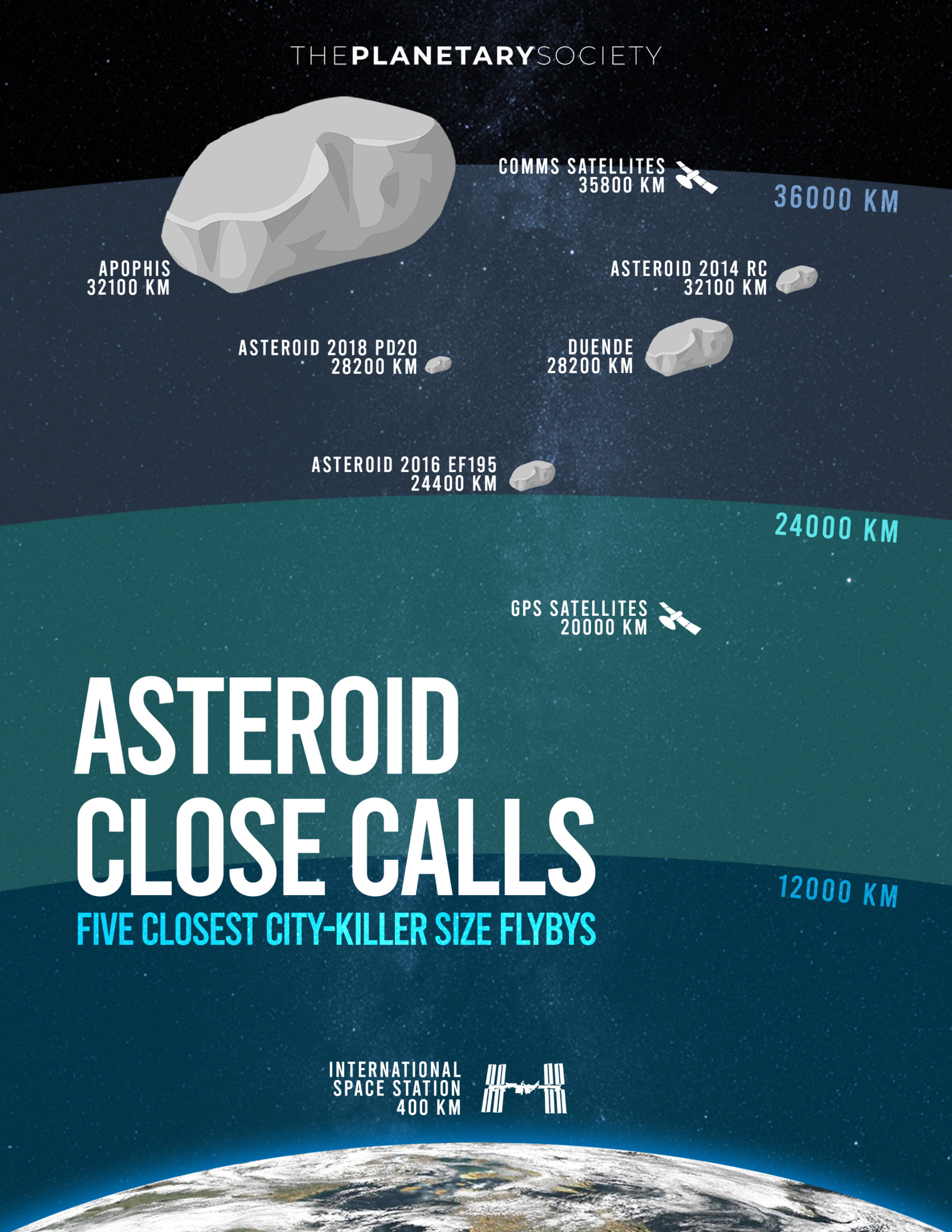
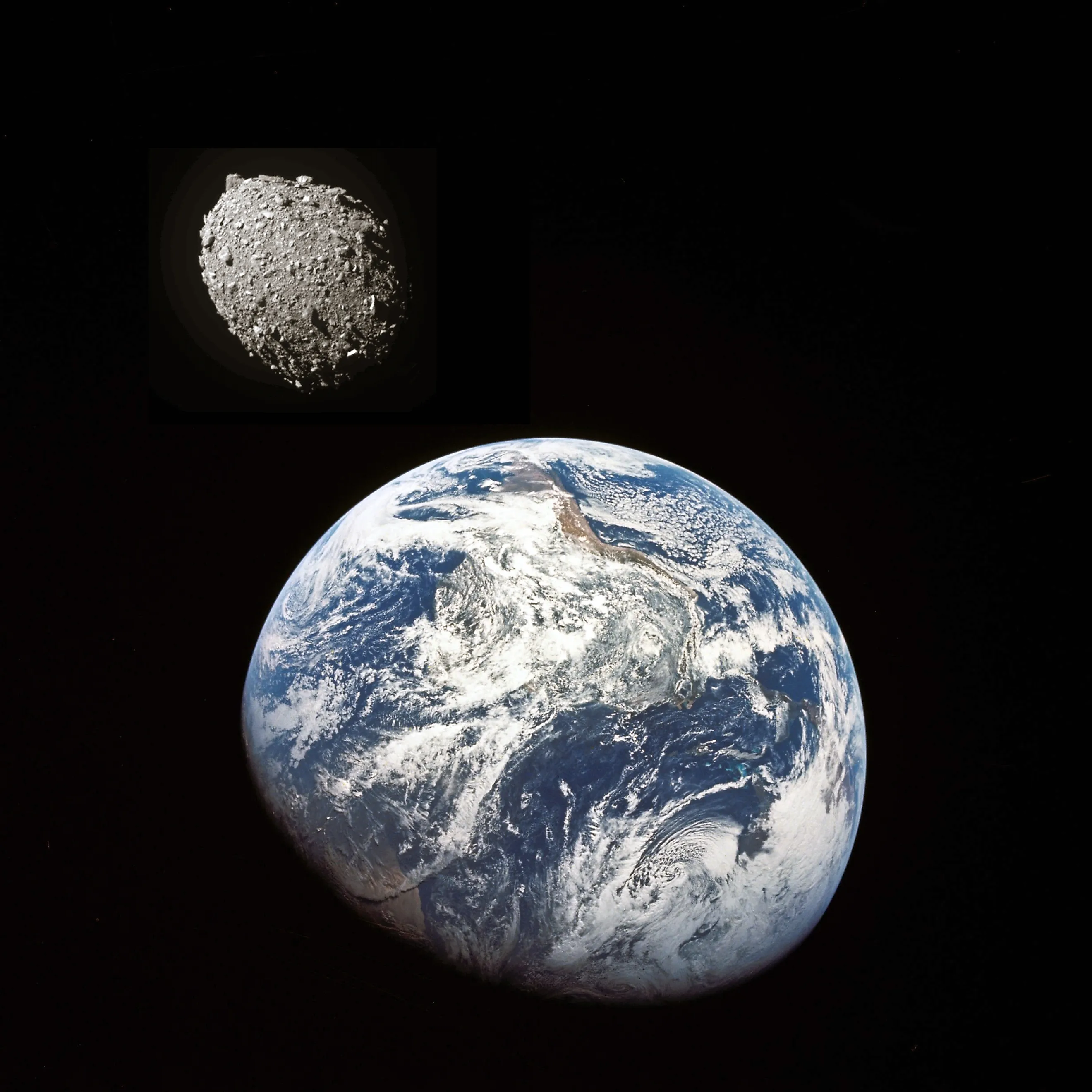
On April 13, 2029, the near-Earth asteroid 99942 Apophis will make an extraordinarily close flyby of Earth, passing within 31,600 kilometers (19,600 miles) of our planet's surface. While early tracking data raised brief concerns of a potential collision, comprehensive radar tracking has confirmed zero impact risk for at least a century, turning this historic encounter into a rare scientific and planetary defense opportunity.
The Discovery and Impact Risk History of 99942 Apophis
Astronomers Roy A. Tucker, David J. Tholen, and Fabrizio Bernardi discovered asteroid 99942 Apophis on June 19, 2004, at the Kitt Peak National Observatory in Arizona. Initial orbital calculations based on limited observational arcs yielded alarming results. Early models indicated a 2.7 percent chance—roughly 1 in 37—that the asteroid would strike Earth during its April 13, 2029 flyby. This unprecedented risk rating briefly placed Apophis at Level 4 on the Torino Impact Hazard Scale, drawing widespread international public and scientific attention.
The primary concern among planetary scientists involved a concept known as a "gravitational keyhole." A keyhole is a narrow region in space near Earth where our planet's gravity alters an asteroid's orbital period in such a way that it leads to a collision on a subsequent return orbit. Early projections suggested that if Apophis passed through a keyhole just 800 meters wide during its 2029 encounter, Earth’s gravitational force would nudge the asteroid into an exact resonant orbit, triggering a devastating impact seven years later on April 13, 2036.
- 1 in 37 Initial Probability (2004)
- Refined Optical Tracking (2005-2020)
- Deep Space Network Radar Campaign (March 2021)
- Impact Risk Excluded for >100 Years
To resolve these uncertainties, astronomers conducted extensive optical astrometry and precise radar observations during subsequent close approaches. A major breakthrough occurred in March 2021, when Apophis made a distant flyby of Earth. Using the 70-meter antenna at NASA’s Deep Space Network Goldstone complex alongside the Green Bank Telescope, scientists performed high-precision radar imaging.
The resulting measurements pinpointed Apophis's distance and velocity with extreme accuracy, reducing the uncertainty in its 2029 position from hundreds of kilometers down to just a few hundred meters. The data officially ruled out any collision risk for 2029, 2036, and at least the next 100 years. As a result, NASA officially removed Apophis from the NASA CNEOS Sentry Risk Table, confirming that the object poses no danger to Earth for the foreseeable future.
Orbital Mechanics and Trajectory of the 2029 Encounter
The geometry and mechanics of the 2029 flyby render it an unprecedented astronomical event in recorded history. On Friday, April 13, 2029, Apophis will achieve its closest approach at 21:46 Universal Time (UTC). At its closest point, the asteroid will hover approximately 31,600 kilometers (19,600 miles) above Earth's surface—a distance closer than the altitude of geostationary communications and weather satellites, which orbit at roughly 35,786 kilometers (22,236 miles).
- Earth Surface (0 km)
- Apophis Flyby Trajectory (~31,600 km) (Inside Geostationary Orbit!)
- Geostationary Satellite Ring (~35,786 km)
- Lunar Orbit (~384,400 km)
Apophis will approach Earth from the southern sky, crossing the equator near the constellation of Hydra. Its trajectory will take it rapidly over the Atlantic Ocean, crossing above Western Europe, Africa, and parts of Asia. Moving at a velocity of roughly 7.4 kilometers per second (16,500 miles per hour) relative to Earth, the asteroid will travel across the night sky at an apparent speed exceeding 40 degrees per hour, traversing an angular distance equal to the width of the full Moon in under a minute.
This intimate encounter will cause Earth's gravity to exert a profound force on the asteroid's orbit around the Sun:
- Orbital Reclassification: Apophis is currently classified as an Aten-class asteroid, meaning its semi-major axis is smaller than Earth's orbital distance (1.0 AU), placing most of its orbit inside Earth's trajectory.
- Post-Flyby Dynamics: Earth's gravitational force will accelerate the asteroid and expand its orbit, increasing its semi-major axis beyond 1.0 AU. This shift will permanently reclassify Apophis into an Apollo-class asteroid, extending its orbital period around the Sun from 324 days to approximately 423 days.
Because thousands of artificial satellites occupy high Earth orbit, space operators must track the flyby closely. However, because Apophis's trajectory is inclined relative to Earth's equatorial plane, the physical intersection distance between Apophis and operational geostationary satellites remains safe, minimizing collision risks with active space infrastructure.
Physical Characteristics of Asteroid 99942 Apophis
Understanding the physical makeup of Apophis is critical both for general planetary science and for designing planetary defense strategies. Space agency measurements derived from thermal infrared imaging, light-curve analysis, and radar scattering offer a clear profile of the asteroid's size, mass, and structure.
| Property | Details |
|---|---|
| Size | ~340 - 370 meters |
| Shape | Elongated, peanut-like |
| Type | S-type (silicate/nickel) |
| Mass | ~6.1 × 10^10 kg |
| Rotation | Non-principal axis |
Apophis is an S-type (stony) asteroid, composed primarily of silicate materials, nickel, and iron. Objects of this composition represent the second most common class of asteroids in the inner solar system, differing from carbon-rich C-type asteroids like Bennu or Ryugu. With an estimated diameter of 340 to 370 meters (1,100 to 1,200 feet), Apophis is larger than 90 percent of the known near-Earth asteroid population.
- Shape and Structure: Light-curve variations and high-resolution radar imaging indicate an elongated, two-lobed shape reminiscent of a peanut or a contact binary. It is believed to be a "rubble pile" asteroid—an aggregation of rock fragments held together loosely by gravity rather than a single monolithic boulder.
- Rotational Dynamics: Unlike planets, which rotate cleanly around a single principal axis, Apophis undergoes complex non-principal axis rotation, commonly known as "tumbling." It spins on its short axis with a period of roughly 30.5 hours while simultaneously wobbling or precessing on a secondary axis over a period of several days.
- Mass and Density: Scientists estimate Apophis's total mass to be approximately 6.1 × 10¹⁰ kilograms (67 million U.S. tons), with a bulk density averaging around 2.0 to 2.7 grams per cubic centimeter. This density confirms a porous internal structure typical of reassembled impact debris.
Tidal Forces and the "Asteroidquake" Phenomenon
The extreme proximity of the 2029 flyby presents a natural laboratory for studying how gravity reshapes small solar system bodies. As Apophis passes inside Earth's Roche limit for loose materials, Earth’s gravitational force will pull unevenly on the near side of the asteroid compared to the far side, creating gravitational tidal forces.
- Earth Gravitational Field
- Near-Side Pull (Stronger Gravity)
- Far-Side Pull (Weaker Gravity)
- Tidal Stress & Resurfacing:
- Structural shifts / Seismic waves
- "Asteroidquakes" & regolith movement
- Alteration of tumbling spin dynamics
These differential gravitational forces generate structural stresses across the body of Apophis, leading to several predicted geodynamic phenomena:
1. Structural Shifts and Seismic Activity
Computer simulations indicate that Earth’s tidal pull will trigger localized seismic events—often termed "asteroidquakes"—within Apophis. Loose boulders and fine dust (regolith) on the surface may slide down steep crater walls or shift positions, exposing pristine, unweathered subsurface materials.
2. Space Weathering and Spectral Alteration
Airless bodies in space undergo constant optical darkening and reddening caused by solar wind particles and micrometeorite impacts, a process known as space weathering. By destabilizing the upper layers of regolith, Earth's tidal forces are expected to uncover fresh silicates, temporarily altering the asteroid's spectral brightness and color characteristics.
3. Spin State Modifications
Earth's gravitational torque acting on Apophis’s asymmetric shape will alter its rotational dynamics. Scientists anticipate measurable changes in the asteroid’s spin rate and tumbling precession angle immediately following the encounter, providing key data on the internal mass distribution of rubble-pile objects.
Space Agency Rendezvous Missions: OSIRIS-APEX and Ramses
Space agencies worldwide are preparing missions to study Apophis up close before, during, and after its 2029 approach. Because an asteroid of this scale passes this close to Earth only once every several thousand years, mission scientists consider this event an extraordinary priority.
- Pre-Flyby (Arrival ~Early 2029)
- ESA's Ramses Mission: Measures Baseline Parameters Prior to Gravitational Pull
- Post-Flyby (Rendezvous ~April 2029)
- NASA's OSIRIS-APEX: Studies Post-Tidal Changes & Fires Thrusters for Subsurface Data
NASA's OSIRIS-APEX Mission
Following the successful delivery of samples from asteroid Bennu to Earth in September 2023, NASA approved an extended mission for the OSIRIS-REx spacecraft, renaming it OSIRIS-APEX (OSIRIS-Apophis Explorer).
OSIRIS-APEX will intercept Apophis shortly after the asteroid's closest approach on April 13, 2029. The spacecraft will perform an extended orbit around the asteroid for roughly 18 months. Key operational objectives include:
- Mapping the physical surface features and monitoring structural changes caused by Earth's gravity.
- Measuring changes in the spectral properties and spin state of the asteroid over time.
- Firing its onboard hydrazine gas thrusters close to the asteroid's surface to blow away loose regolith, exposing the hidden subsurface layers for chemical analysis.
ESA's Ramses Mission
The European Space Agency (ESA) is advancing the Rapid Apophis Mission for Space Safety (Ramses), coordinated through the ESA Space Safety Directorate.
Unlike OSIRIS-APEX, Ramses is designed to arrive at Apophis before the Earth flyby. By deploying micro-satellites and onboard instruments prior to April 2029, Ramses aims to collect baseline data on the asteroid's structural integrity, shape, and surface composition. Comparing the pre-flyby baseline from Ramses with the post-flyby data from OSIRIS-APEX will yield a comprehensive before-and-after view of tidal forces in action.
Observing the 2029 Event: A Guide for Stargazers
The 2029 flyby offers a rare visual opportunity for astronomers and the public. Typically, observing a near-Earth asteroid requires powerful optical telescopes or radar arrays. However, during its peak approach on April 13, 2029, Apophis will reach an apparent visual magnitude of approximately 3.1 to 3.4.
| Attribute | Details |
|---|---|
| Regions | Europe, Africa, Asia, & Indian Ocean |
| Visual Magnitude | ~3.1 (Visible to naked eye) |
| Movement Rate | >40° per hour |
| Peak Time | 21:46 UTC (Friday, April 13, 2029) |
This level of brightness makes the asteroid visible to the unaided eye under clear, dark skies, appearing as a fast-moving, star-like point of light.
- Geographic Visibility: The best viewing locations will cover Western Europe, Africa, parts of Asia, and the Indian Ocean. Observers in North and South America will miss the absolute closest approach due to daylight, but will be able to observe the object through optical instruments as it approaches and recedes.
- Apparent Motion: Moving faster than 40 degrees per hour, Apophis will traverse the sky at noticeable speeds. Observers using binoculars or small backyard telescopes will see the point of light visibly drift past background field stars within seconds.
- Path in the Sky: Apophis will streak from the southern hemisphere toward the northern sky, passing through the constellations of Cancer, Leo, and Ursa Major over the hours surrounding its closest approach.
Encounter Parameters vs. Key Space Metrics
The following table provides a comparison between the 2029 flyby parameters of 99942 Apophis and established astronomical and orbital reference points:
| Parameter / Metric | 99942 Apophis (2029 Flyby) | Reference Comparison Metric | Context / Significance |
|---|---|---|---|
| Closest Distance from Surface | ~31,600 km (19,600 mi) | ~35,786 km (22,236 mi) | Passes inside the orbit of geostationary communication satellites. |
| Distance relative to Moon | ~0.08 Lunar Distances (LD) | ~384,400 km (1.0 LD) | Passes roughly 10 times closer to Earth than the Moon's average orbit. |
| Object Diameter | ~340 – 370 meters | ~93 meters (Statue of Liberty height) | Roughly four times taller than the Statue of Liberty; larger than 90% of Near-Earth Objects (NEOs). |
| Estimated Mass | ~6.1 × 10¹⁰ kg | ~4.5 × 10⁸ kg (Great Pyramid of Giza) | Weighs more than 100 times the mass of the Great Pyramid of Giza. |
| Peak Apparent Magnitude | +3.1 to +3.4 | +6.0 (Human naked-eye limit) | Bright enough to view without telescopes or binoculars under dark skies. |
| Relative Velocity | ~7.4 km/s (16,500 mph) | ~7.8 km/s (ISS Orbital Speed) | Moves at comparable speeds to low Earth orbit space stations relative to Earth. |
| Post-Flyby Orbital Class | Apollo Class | Aten Class (Pre-Flyby) | Earth's gravity will expand its orbit, extending its solar orbital period from 324 to 423 days. |
Implications for Planetary Defense and Safeguards
The study of Apophis is directly linked to international planetary defense frameworks supported by organizations like the International Astronomical Union (IAU) and NASA's Planetary Defense Coordination Office. While Apophis itself no longer presents an immediate threat, understanding its physical structure is crucial for managing future asteroid risks.
- Planetary Defense Lessons
- Radar Calibration: Fine-tuning impact prediction
- Rubble-Pile Response: Understanding structural integrity & density
- Deflection Planning: Testing kinetic or gravity-based methods
- Radar and Tracking Precision: The tracking of Apophis over two decades has refined orbital modeling techniques. Orbit determination algorithms developed for Apophis now help scientists calculate precise collision probabilities for newly discovered Near-Earth Objects (NEOs).
- Structural Defense Insights: Knowing whether an asteroid is a solid block of stone or a loosely bound rubble pile shapes deflection strategies. If a rubble-pile asteroid were targeted with a kinetic impactor (similar to NASA’s DART mission), the asteroid might absorb much of the impact energy through internal pores, limiting the orbital deflection effect.
- Emergency Response Timelines: The initial scare surrounding Apophis underscored the importance of early detection. Establishing international warning protocols and response windows ensures space agencies have the necessary lead time—ideally several years or decades—to deploy deflection missions if a dangerous object is discovered.
Practical Recommendations for Stargazers and Educators
With the flyby approaching, space enthusiasts, educators, and amateur astronomers can take specific steps to prepare for observing and studying this encounter:
- Verify Equipment and Coordinates: Amateur astronomers planning to track Apophis with automated or GOTO telescope mounts should update their telescope controller software with the latest ephemeris data from the JPL Horizons system prior to April 2029 to account for rapid orbital movement.
- Join Citizen Science Initiatives: Organizations such as the Unistellar Network and the International Occultation Timing Association (IOTA) regularly host citizen science campaigns leading up to close flybys. Amateurs can assist professional astronomers by recording star occultations caused by Apophis to further map its profile.
- Incorporate Real-Time Data into Education: Science educators can use Apophis to teach students about orbital mechanics, planetary defense, and gravity wells. Interactive tools provided by NASA's Eyes on Asteroids platform offer real-time 3D visualizations of Apophis’s path relative to Earth.
Frequently Asked Questions
Will Apophis hit Earth in 2029 or during any future flyby?
No. Comprehensive radar and optical tracking data compiled through 2021 have definitively ruled out an impact for the 2029 flyby, as well as subsequent approaches in 2036 and 2068. NASA and European astronomers confirm that Apophis poses no collision risk to Earth for at least the next 100 years.
How close will Apophis get to Earth compared to artificial satellites?
Apophis will pass approximately 31,600 kilometers (19,600 miles) above Earth's surface. Geostationary satellites orbit Earth at an altitude of approximately 35,786 kilometers (22,236 miles). This means Apophis will actually pass inside the outer ring of Earth’s geostationary communication satellites, though its orbit angle prevents collisions with these spacecraft.
Can I see Apophis with the naked eye on April 13, 2029?
Yes, provided you are located in an optimal viewing zone (such as Europe, Africa, or Western Asia) and have dark, clear sky conditions away from urban light pollution. Apophis will reach an apparent visual magnitude of roughly 3.1, appearing as a point of light moving noticeably across the constellations.
What spacecraft will study Apophis during its 2029 approach?
NASA’s OSIRIS-APEX spacecraft (formerly OSIRIS-REx) will rendezvous with Apophis shortly after the flyby, orbiting the asteroid for 18 months to study surface changes and fire its gas thrusters to inspect subsurface materials. Additionally, ESA is preparing the Ramses mission, designed to observe the asteroid before and during its closest approach.
How will Earth's gravity change Apophis during the encounter?
Earth's gravitational force will create tidal stresses across Apophis, potentially triggering surface landslides, shifting regolith dust layers, and altering its tumbling rotational spin. Additionally, Earth's gravity will expand the asteroid's solar orbit, changing its orbital classification from an Aten-class asteroid to an Apollo-class asteroid.