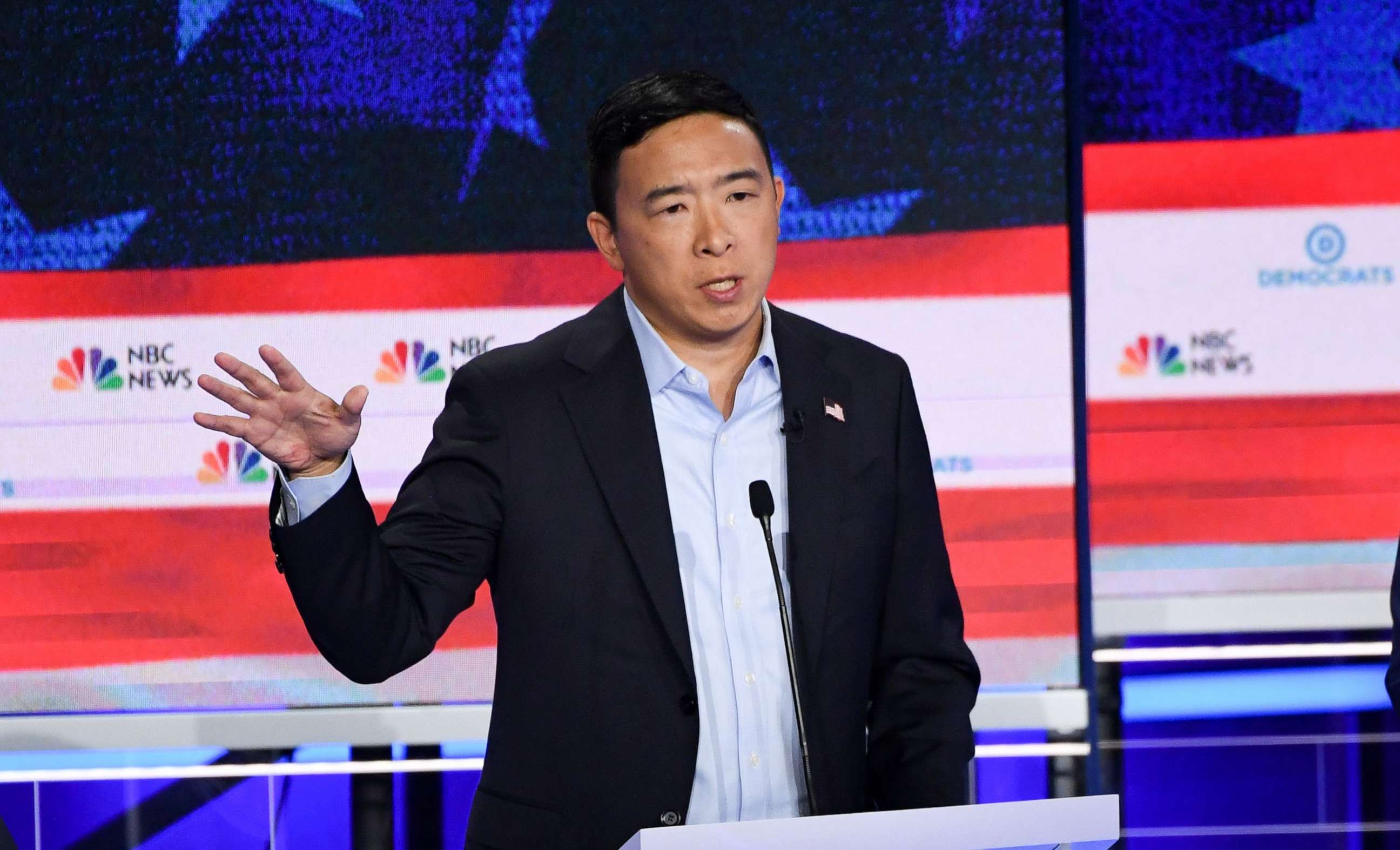
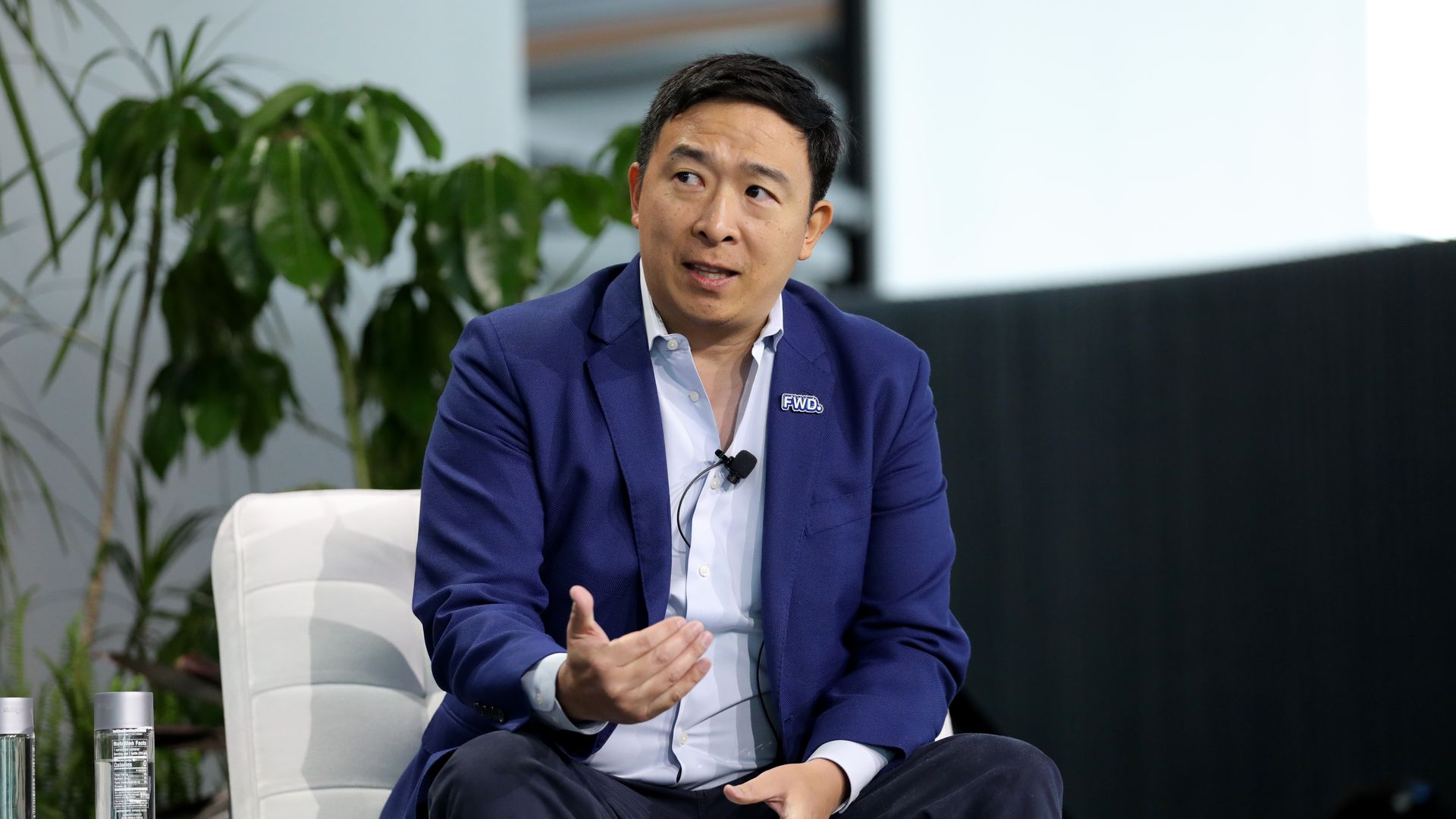
At the third 2020 Democratic primary debate, held on September 12, 2019, Andrew Yang utilized his opening statement to announce a campaign-funded "Freedom Dividend" pilot program. He pledged to give $1,000 per month for one year to ten American families, a move designed to demonstrate the feasibility of Universal Basic Income (UBI) while capturing significant media attention.
The third Democratic primary debate was a pivotal moment in the 2020 election cycle. For the first time, the field had narrowed sufficiently to fit all qualifying candidates onto a single stage for one night. Held at Texas Southern University in Houston and broadcast by ABC News in partnership with Univision, the event featured the top ten candidates: Joe Biden, Bernie Sanders, Elizabeth Warren, Kamala Harris, Pete Buttigieg, Beto O'Rourke, Cory Booker, Amy Klobuchar, Julian Castro, and Andrew Yang.
As an outsider candidate—an entrepreneur with no previous political office—Yang faced the challenge of competing for "airtime" against career politicians and household names. His performance at the Houston debate remains a case study in disruptive political marketing, policy-driven campaigning, and the struggle of "non-traditional" candidates to break through the traditional debate format.
The "Freedom Dividend" Raffle: A Disruptive Opening
Andrew Yang's most significant contribution to the third debate occurred within the first few minutes. Eschewing the traditional political platitudes typical of opening statements, Yang announced a specific, tangible experiment. He stated that his campaign would provide a $1,000 monthly stipend—his signature "Freedom Dividend"—to ten families across the United States for an entire year.
This was not merely a policy proposal; it was a live promotional event. To participate, viewers were directed to his campaign website to sign up. This strategy served three primary functions:
- Data Collection: It drove hundreds of thousands of people to his website, allowing the campaign to collect valuable email addresses and contact information for future fundraising and mobilization.
- Proof of Concept: By putting money directly into the hands of citizens, Yang sought to humanize the data and statistics he often cited regarding economic insecurity and the "Great Displacement" caused by automation.
- Media Saturation: The move was designed to be "viral." It forced moderators and other candidates to react, ensuring that Yang’s name would lead the news cycle the following morning, regardless of his total speaking time.
The reaction from the other candidates on stage was immediate and varied. Several candidates, including Kamala Harris and Amy Klobuchar, were seen laughing or smiling in disbelief. This reaction became a point of contention among Yang’s supporters (the "Yang Gang"), who viewed the laughter as dismissive of the real economic struggles of American families.
Speaking Time and Debate Dynamics
A recurring theme throughout the 2020 debates was the disparity in speaking time. Despite being on the stage with heavyweights like Joe Biden and Elizabeth Warren, Yang consistently received some of the lowest amounts of time to speak. According to tracking data from the time, Yang spoke for approximately 7 minutes and 58 seconds. This was significantly less than Joe Biden, who led with over 17 minutes.
Despite the limited time, Yang’s strategy was to be concise and "data-heavy." He focused on his core message: that the Fourth Industrial Revolution—driven by artificial intelligence and automation—was the root cause of the political instability in the country. He argued that traditional solutions, such as job retraining or a $15 minimum wage (supported by Sanders), were insufficient to address the scale of the coming economic shift.
Comparative Speaking Time and Focus Areas
| Candidate | Approx. Speaking Time | Primary Policy Focus in Debate |
|---|---|---|
| Joe Biden | 17m 22s | Healthcare (protecting the ACA), Experience, Stability |
| Elizabeth Warren | 16m 38s | Structural change, Corruption, Education |
| Bernie Sanders | 13m 54s | Medicare for All, Income Inequality, Climate Change |
| Kamala Harris | 11m 45s | Criminal justice reform, Trump's record, Executive action |
| Andrew Yang | 7m 58s | Universal Basic Income (UBI), Automation, Data Rights |
Key Policy Exchanges: Beyond the Raffle
While the raffle dominated the headlines, Yang participated in several critical exchanges regarding healthcare, immigration, and education.
Healthcare and the Choice Model
During the healthcare segment, Yang distanced himself from the more polarized "Medicare for All" vs. "Private Insurance" debate. He argued that the focus should not be on the "insurance" itself but on the underlying costs of care. He advocated for a system that would lower the costs of prescription drugs and decouple healthcare from employment, but he was less aggressive than Sanders or Warren in calling for the total elimination of private insurance. His "Humanity First" approach suggested that if the government-run plan were superior, people would naturally migrate toward it, making a forced transition unnecessary.
Immigration and the "American Dream"
As the son of immigrants, Yang often used his personal background to frame his views on immigration. During the third debate, he emphasized that the United States should remain a "beacon for the world." He criticized the focus on border walls, suggesting that technology and a more efficient path to legal status were more practical solutions. He frequently linked immigration to the economy, noting that immigrants are more likely to start businesses and drive innovation.
Education and the "College for All" Fallacy
One of Yang's most distinct stances was his critique of the "college for all" narrative. While other candidates pushed for free four-year college, Yang pointed out that only about 30% of Americans graduate from a four-year university. He argued for a massive reinvestment in vocational and trade schools, noting that automation would struggle to replace plumbers, electricians, and technicians in the near future. This resonated with a demographic of "blue-collar" workers who felt ignored by traditional Democratic rhetoric.
Legal and Ethical Scrutiny of the UBI Pilot
Immediately following the debate, legal experts and political commentators questioned the legality of Yang’s $120,000 giveaway. The primary concern involved Federal Election Commission (FEC) regulations.
- Personal Use of Campaign Funds: FEC rules generally prohibit the use of campaign funds for personal expenses. Critics argued that giving money directly to individuals could be interpreted as an illegal use of funds.
- The "Vote Buying" Accusation: Some observers raised the question of whether the raffle constituted an attempt to "buy" votes. However, Yang’s team argued that because the raffle was open to all adults and not contingent on voting or supporting the candidate, it was a legal form of campaign advertising or "contest."
- Precedent: The Yang campaign pointed to a previous instance where Yang himself had personally funded a UBI pilot for a family in New Hampshire and another in Iowa. Using campaign funds for a larger scale was, in their view, a legitimate promotional expense similar to buying a television ad or a billboard.
Ultimately, the FEC did not take immediate punitive action, and the "giveaway" proceeded, serving as a powerful testimonial tool for the campaign later in the year.
The Houston Stage: Moderators and Tone
The third debate was moderated by George Stephanopoulos, David Muir, Linsey Davis, and Jorge Ramos. The tone was notably more confrontational than the first two debates. For instance, Julian Castro’s sharp criticism of Joe Biden’s memory was a major talking point.
Yang, by contrast, remained largely non-confrontational. His strategy was to appear as the "problem-solver" on the stage. He often agreed with the goals of his colleagues but disagreed with their methods. For example, he would agree with Bernie Sanders that workers need more power, but he would argue that a Federal Jobs Guarantee (Sanders' proposal) was "dystopian" compared to giving people the cash to pursue their own goals.
This "math-based" and "non-ideological" approach helped Yang build a unique coalition that included progressives, libertarians, and even some disaffected Trump voters. His performance in Houston solidified his status as a "tier-1.5" candidate—someone who might not be a frontrunner but who had a dedicated following and a significant influence on the national conversation.
Long-Term Impact of Yang’s Third Debate Performance
The third debate was a turning point for the "Yang Gang" movement. While it did not catapult him into the top three in polling, it ensured his longevity in the race.
- Fundraising Surge: Following the debate, the Yang campaign saw a significant spike in small-dollar donations. The raffle announcement served as an effective "top-of-funnel" marketing tactic that converted casual viewers into donors.
- Mainstreaming UBI: Before Yang, Universal Basic Income was considered a fringe academic concept. By the end of the third debate, it was a central topic of discussion in mainstream American politics. This groundwork proved crucial in 2020 and 2021 when the U.S. government issued stimulus checks during the COVID-19 pandemic—a move many credited to the "socializing" of the cash-transfer concept by Yang.
- The "Tech-Forward" Candidate: Yang established himself as the only candidate truly focused on the "future of work." His discussions on data as a property right and the risks of facial recognition technology began in these early debates and have continued to influence policy discussions in 2026.
Frequently Asked Questions
Did Andrew Yang actually give away the money he promised?
Yes. Following the debate, the campaign selected ten families from across the country. These families received $1,000 a month for one year. The campaign later used the stories of these families in promotional materials and mini-documentaries to show how an extra $1,000 a month could change lives, from paying for car repairs to allowing a parent to work fewer hours and spend more time with their children.
Was the "raffle" legal under campaign finance laws?
While it was a subject of much debate, the Yang campaign maintained that it was a legal expenditure. They argued it was a form of "campaign research" and "outreach." Because the money was not given in exchange for a vote and was open to the general public, it fell into a grey area of FEC regulations that was never formally prosecuted.
How did Yang’s speaking time compare to other candidates in the third debate?
Andrew Yang had the second-lowest speaking time of the ten candidates, with approximately 7 minutes and 58 seconds. Only Julian Castro spoke for less time (about 7 minutes and 43 seconds). In contrast, Joe Biden and Elizabeth Warren both spoke for over 16 minutes each.
What was the specific name of the policy Andrew Yang promoted?
The policy was called the Freedom Dividend. It was a proposal to provide every American citizen over the age of 18 with $1,000 per month, no strings attached, to be funded primarily by a Value-Added Tax (VAT) on the companies benefiting most from automation.
Who were the moderators of the third debate in Houston?
The debate was moderated by ABC News anchors George Stephanopoulos and David Muir, ABC News correspondent Linsey Davis, and Univision anchor Jorge Ramos.
Final Perspective and Next Actions
Andrew Yang’s performance at the third Democratic debate is a reminder of how non-traditional candidates can use creative tactics to bypass traditional media "gatekeepers." While he did not win the nomination, his announcement in Houston was a catalyst for a national conversation on economic security that continues to resonate today.
For those interested in the evolution of these policies, researching the subsequent CARES Act stimulus payments and the Child Tax Credit expansions provides a direct line from Yang's debate stage "gimmick" to actual federal policy. To understand the full scope of Yang's impact, one should examine the 2019-2020 FEC filings and the "Humanity Forward" non-profit organization he founded after his campaign to continue the UBI pilot programs.