The value of American Express Membership Rewards (MR) points typically ranges from 0.5 cents to 2.0 cents per point, depending on how they are redeemed. While the baseline value for statement credits is a low 0.6 cents, strategic transfers to airline and hotel partners can frequently push the value above 2.0 cents per point.
Understanding the Variable Nature of Membership Rewards Points
In the landscape of 2026, American Express Membership Rewards remains one of the most flexible and sought-after "transferable" currencies. Unlike a fixed-value cashback program where 100 points always equals $1.00, the Membership Rewards ecosystem is designed with a variable valuation model. This means that the burden of extracting maximum value lies with the cardholder.
The core reason for this variability is the distinction between "direct redemptions" and "partner transfers." Direct redemptions occur when you use points within the American Express portal to pay for charges, buy gift cards, or book travel through Amex. These usually offer a fixed, often lower, value. Partner transfers involve moving your points to a third-party loyalty program, such as Delta SkyMiles or British Airways Executive Club. In these scenarios, the value is determined by the cash price of the flight or hotel room relative to the number of points required for the booking.
Because American Express points are a "soft currency," their purchasing power fluctuates based on market demand, seasonal travel trends, and the specific rules of individual transfer partners. To navigate this effectively, a cardholder must understand the "floor" and "ceiling" of point valuations.
The Value Spectrum: From Statement Credits to Luxury Travel
To determine if a redemption is "worth it," you must first establish a baseline. In the credit card industry, a value of 1.0 cent per point (cpp) is generally considered the standard benchmark for "fair" value. Anything below this is suboptimal, while anything above this is considered a "win" for the consumer.
Low-Value Redemptions (0.5 to 0.7 Cents per Point)
These are often the most convenient redemptions but offer the worst return on your spending.
- Cover Your Charges: Using points to pay off your credit card balance (statement credits) typically nets only 0.6 cents per point. For example, 10,000 points would only cover $60 of your bill.
- Online Shopping: Using points at checkout with partners like Amazon, Best Buy, or PayPal generally yields 0.7 cents per point. While convenient, you are effectively "losing" 30% to 40% of the points' potential value.
- Merchandise: Redeeming directly through the Amex catalog for electronics or home goods often results in a value as low as 0.5 cents per point.
Moderate-Value Redemptions (0.7 to 1.0 Cent per Point)
These options represent a middle ground and are suitable for those who want a simple redemption process without complex transfers.
- Amex Travel Flights: When booking flights through the American Express Travel portal, points are worth a flat 1.0 cent each. This is a solid, predictable way to use points.
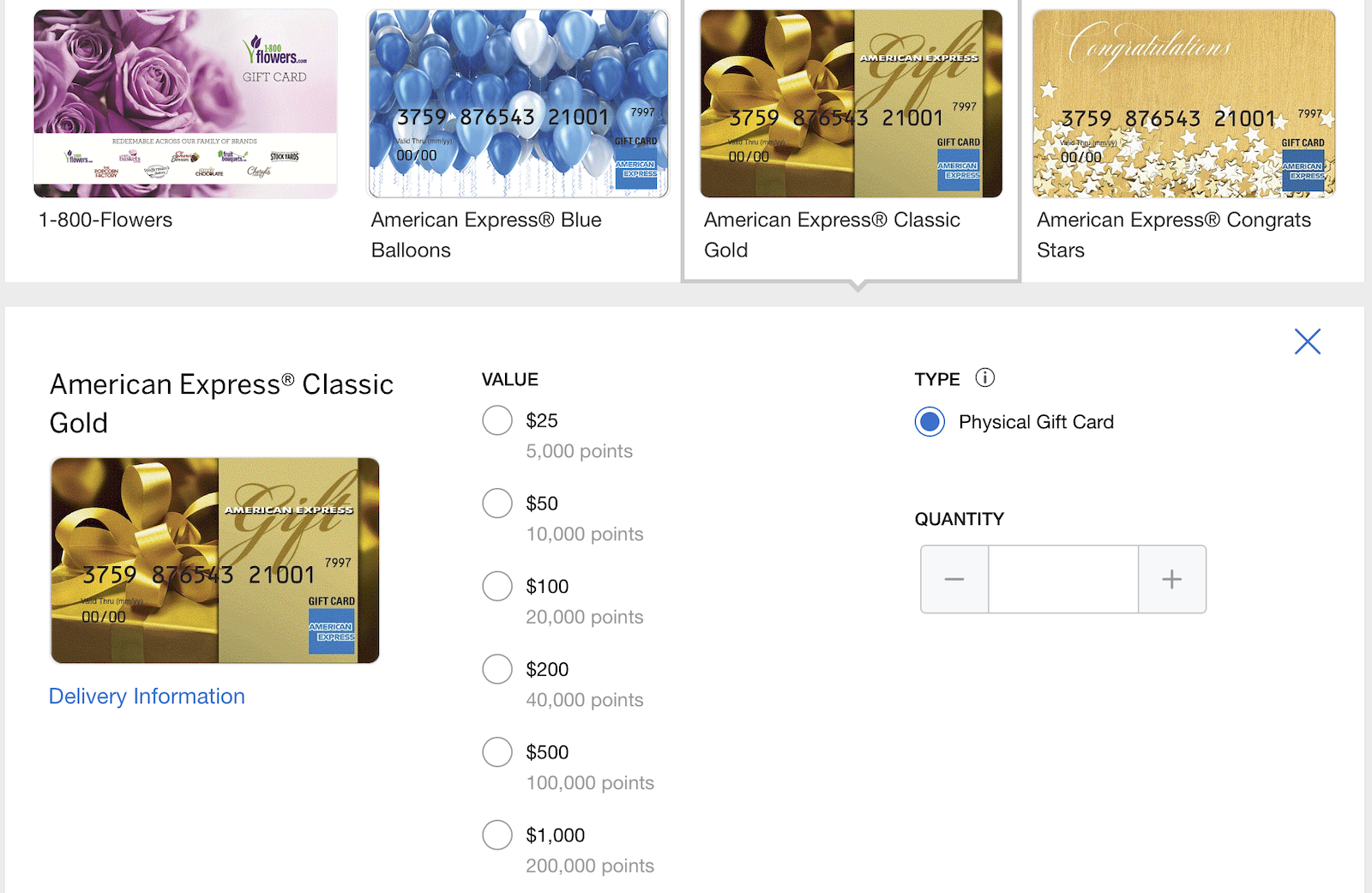
- Gift Cards: Value varies by brand, but many retail and dining gift cards can be redeemed at 1.0 cent per point.
- Amex Travel Hotels and Cruises: These usually offer a lower rate of 0.7 cents per point, making them less attractive than flight bookings.
High-Value Redemptions (2.0 Cents per Point and Above)
This is where the "value" of Membership Rewards becomes truly significant. By transferring points to airline partners and booking premium cabin travel (Business or First Class), it is possible to achieve valuations of 3.0, 4.0, or even 10.0 cents per point. This occurs because the cash price of a $6,000 international business class ticket might only require 150,000 points, resulting in a value of 4.0 cents per point.
Strategic Transfer Partners: Maximizing Your Return
The most powerful feature of American Express Membership Rewards is its extensive list of transfer partners. As of 2026, Amex maintains one of the largest networks of airline and hotel affiliates in the financial sector.
Airline Transfer Partners
Most airline transfers occur at a 1:1 ratio. The key to high value is finding "sweet spots" in partner award charts.
- British Airways (Avios): Excellent for short-haul flights on partner airlines like American Airlines or Alaska Airlines.
- Air Canada (Aeroplan): Known for its generous routing rules and lack of fuel surcharges on many partner bookings.
- Delta Air Lines: While Delta uses dynamic pricing, "SkyMiles Deals" can sometimes offer decent value for domestic travel.
- Singapore Airlines (KrisFlyer): Often the only way to book Singapore’s world-class Suites or First Class products.
Hotel Transfer Partners
Generally, transferring MR points to hotels is a lower-value proposition compared to airlines.
- Hilton Honors: Often features a 1:2 transfer ratio (1,000 Amex points = 2,000 Hilton points). However, since Hilton points are frequently valued at around 0.5 cents each, the net value remains near 1.0 cent per Amex point.
- Marriott Bonvoy: Usually a 1:1 transfer. Given Marriott points are often valued at 0.7–0.8 cents, this is rarely a recommended use of MR points unless you are just short of a specific award night.
The Impact of Specific Amex Cards on Point Value
Not all American Express cards treat points equally when it comes to redemption. Certain premium cards offer "boosters" that effectively increase the value of your points when used in specific ways.
The Business Platinum Card® from American Express
One of the most notable features for business owners in 2026 is the 35% Airline Bonus. When you use "Pay with Points" to book a flight (either First/Business class on any airline or any class on your selected qualifying airline) through Amex Travel, you receive 35% of those points back. This effectively raises the value of your points to approximately 1.54 cents per point. For many, this "pay with points" strategy is preferable to transferring, as these bookings are treated as "cash" by airlines, meaning you still earn frequent flyer miles on the flight.
The American Express® Platinum Card for Schwab
This specific version of the Platinum card allows users to "Invest with Rewards." Cardholders can deposit their Membership Rewards points into a linked Schwab brokerage account at a rate of 1.1 cents per point. This provides a valuable "cash-out" floor that is much higher than the standard 0.6-cent statement credit.
Comparison of Redemption Methods (2026 Data)
| Redemption Method | Point Value (Cents) | Value Category | Recommendation |
|---|---|---|---|
| International Business/First Class (Transfer) | 2.0 – 8.0+ | Elite | Highest Recommendation |
| Domestic Economy (Transfer) | 1.1 – 1.8 | High | Recommended |
| Business Platinum (35% Rebate) | 1.54 | High | Recommended for Business |
| Amex Travel (Flights) | 1.0 | Moderate | Solid Baseline |
| Gift Cards (Select Brands) | 1.0 | Moderate | Fair |
| Schwab Brokerage Deposit | 1.1 | Moderate | Best "Cash" Option |
| Amex Travel (Hotels/Cars/Cruises) | 0.7 | Low | Avoid if possible |
| Online Shopping (Amazon/PayPal) | 0.7 | Low | Not Recommended |
| Statement Credits / Cover Charges | 0.6 | Poor | Strong Avoid |
Common Pitfalls and How to Avoid Them
Even with high-potential value, it is easy to make mistakes that erode your points' worth.
1. Transferring Without Availability
A common mistake is transferring points to an airline partner before confirming that an award seat is actually available. Transfers are almost always irreversible. If you move 100,000 points to Delta and the flight you wanted disappears, those points are now stuck in the Delta ecosystem, where they are less flexible than they were as MR points.
2. Ignoring Federal Excise Tax
When transferring points to a U.S. airline (such as Delta, JetBlue, or Hawaiian Airlines), American Express is required to charge a federal excise tax offset fee of $0.0006 per point, capped at $99. While small, this fee slightly reduces the net value of your transfer. You can avoid this by transferring to international partners (like British Airways or Virgin Atlantic) to book the same domestic flights through alliances.
3. Using Points for Taxes and Fees
When booking through Amex Travel, the system will ask if you want to use points to cover the taxes and fees of your ticket. While the ticket itself is valued at 1.0 cent per point, sometimes the ancillary fees are redeemed at a lower rate. Always check the math before clicking "confirm."
Expert Guidance: When Should You Use Your Points?
The "right" time to use points is a balance between mathematical value and personal utility. If you are sitting on a million points and have no travel plans, a 1.1-cent Schwab deposit or a 1.0-cent gift card redemption is better than letting the points devalue due to inflation or program changes.
However, if your goal is luxury travel, you should save your points for transfer partner sweet spots. For example, transferring to Virgin Atlantic to book ANA First Class to Japan remains one of the most legendary uses of MR points, often yielding over 10 cents per point in value. Similarly, using Avios for short-haul flights in expensive markets (like the Caribbean or intra-Europe) can easily net 3 cents per point.
Frequently Asked Questions
Do American Express Membership Rewards points expire?
As long as you have at least one active card that earns Membership Rewards points, your points do not expire. If you plan to close your only MR-earning card, you must either transfer the points to a partner, redeem them, or open a no-annual-fee card like the Amex EveryDay® Credit Card to keep the points balance alive.
Can I transfer Amex points to someone else's airline account?
Generally, you can only transfer points to your own loyalty accounts or the account of an authorized user who has been on your account for at least 90 days. This makes it possible to pool points for family travel, provided the proper account structures are in place.
Is it better to use points for flights or hotels?
Mathematically, flights almost always offer a better return. Amex's hotel transfer partners (Hilton, Marriott, Choice) typically have lower-value currencies. Unless there is a significant transfer bonus (e.g., 30% extra points), your MR points will go much further when used for airfare.
What is the "Cash Out" value of Amex points?
For most cardholders, the cash-out value is a poor 0.6 cents per point via statement credits. However, holders of the American Express Platinum Card® for Schwab can cash out at 1.1 cents per point into their brokerage account, making it the most efficient way to turn points into liquid currency.
How do I calculate the "Cents Per Point" (cpp) for a redemption?
To find the value, take the cash price of the booking (minus any taxes/fees you still have to pay) and divide it by the number of points required. Multiply the result by 100. Formula: ((Cash Price - Taxes) / Points) * 100 = cpp.
Next Actions for Cardholders
To maximize your American Express Membership Rewards points value in 2026, start by auditing your current redemption habits. If you have been using points for statement credits or Amazon purchases, stop immediately and look toward travel or gift cards as a baseline. For those ready for advanced strategies, research the current transfer partners of the Global Transfer program and look for international flight availability through alliance partners like Oneworld, Star Alliance, and SkyTeam.