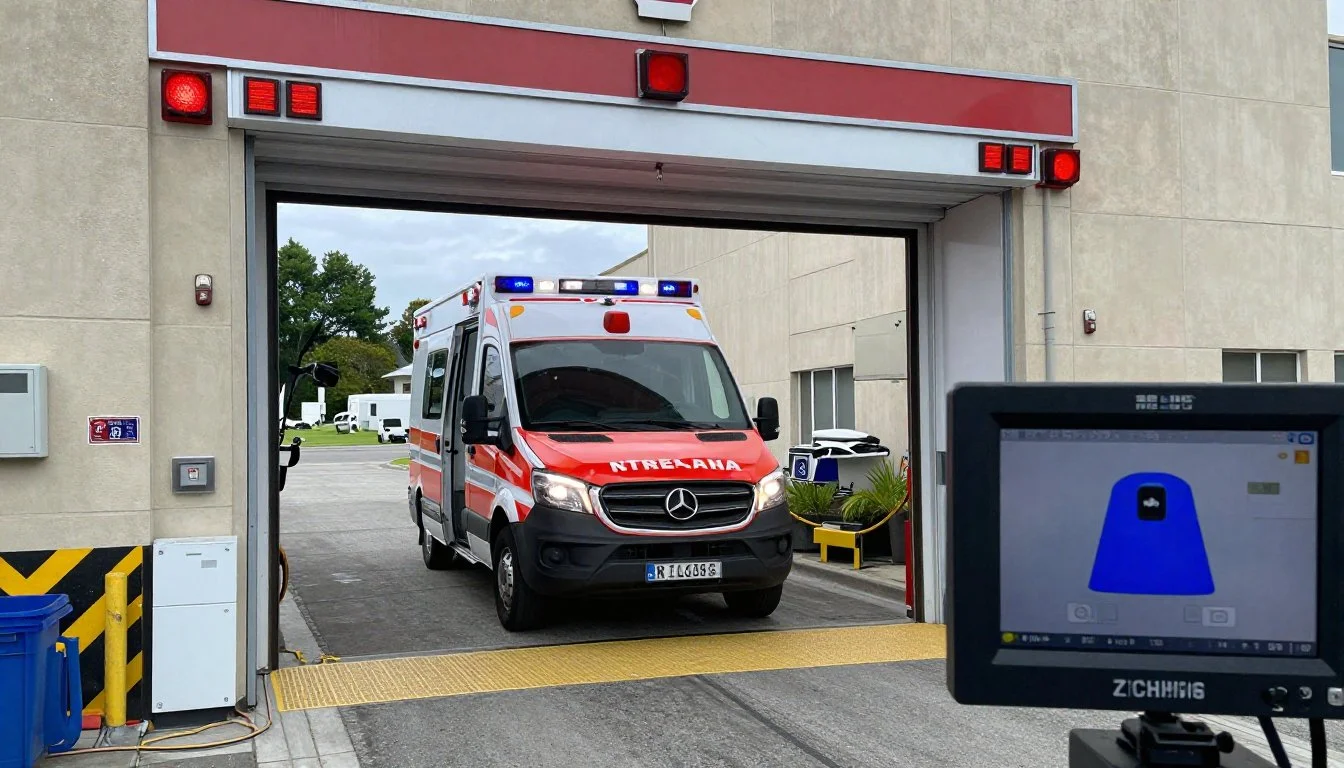
An ambulance driving license is a specialized commercial driver credential or endorsement required to legally operate emergency medical vehicles under both normal and emergency response conditions. Securing this authorization involves meeting rigorous medical fitness standards, completing advanced driver training courses, passing specialized written and practical examinations, and maintaining a clean driving record to ensure patient and public safety.
Understanding the Scope of an Ambulance Driving License
Operating an emergency vehicle is vastly different from driving a standard passenger car or even a routine commercial truck. An ambulance driving license is not typically a standalone driver’s license; rather, it functions as a specialized endorsement, a distinct classification, or a state- or national-level certificate added to a foundational commercial or non-commercial driver’s license.
The primary purpose of this credential is to verify that the holder possesses the physical stamina, psychological resilience, advanced spatial awareness, and technical vehicle handling skills required in high-stress, high-speed situations. Emergency Medical Services (EMS) personnel must navigate congested traffic, adverse weather conditions, and tight physical spaces while transporting vulnerable patients and specialized medical equipment. Consequently, regulatory bodies enforce strict qualification criteria to safeguard the community.
Core Prerequisites and Eligibility Requirements
Before beginning the application process for an ambulance driving license, candidates must satisfy a series of foundational prerequisites. While exact regulations vary by jurisdiction, standard requirements universally emphasize safety, maturity, and basic driving competence.
Age and Basic Licensing Prerequisites
Most jurisdictions require applicants to be at least 18 or 21 years old, depending on whether the service operates across state or national borders. Additionally, candidates must already hold a valid standard driver’s license (such as a Class C or equivalent) for a specified minimum period, usually one to three years, ensuring they have accumulated baseline driving experience before attempting emergency operations.
Clean Driving Record and Background Checks
Because emergency vehicle operators are granted specific exemptions from standard traffic laws—such as proceeding through red lights or exceeding speed limits under due regard—regulatory agencies scrutinize driving histories closely. Candidates must typically submit a certified copy of their driving record. Disqualifying factors often include:
- Excessive speeding convictions or reckless driving charges within the past three to five years.
- A history of driving under the influence (DUI) of alcohol or drugs.
- Multiple at-fault accidents within a condensed reporting window.
- Active license suspensions or revocations.
Furthermore, applicants are almost always required to undergo a comprehensive criminal background check, including fingerprinting through law enforcement databases, to ensure they meet the moral and legal standards required of public safety workers.
Medical Fitness and Physical Examination Standards
The physical demands of operating an ambulance and assisting with patient transport require stringent health evaluations. Candidates must pass a specialized medical examination administered by a licensed physician or authorized medical examiner.
The medical assessment evaluates cardiovascular health, visual acuity, hearing capabilities, and musculoskeletal strength. Specifically, candidates must demonstrate uncorrected or corrected vision meeting specific sharpness and peripheral standards, as well as the ability to distinguish traffic signal colors. Hearing tests ensure the driver can perceive sirens, radio dispatches, and verbal warnings from partners and bystanders. Conditions that pose a sudden risk of incapacitation—such as uncontrolled epilepsy, severe cardiovascular disease, or insulin-dependent diabetes without proper regulatory waivers—will typically result in medical disqualification.
Training, Coursework, and Examination Procedures
Once eligibility is established, candidates must undergo specialized training that bridges the gap between standard driving and emergency response navigation.
Classroom Instruction
The theoretical component of ambulance driver training covers a comprehensive curriculum designed to instill a safety-first mindset. Trainees study relevant motor vehicle codes, the legal liabilities associated with emergency response driving, and the physics of vehicle dynamics. Topics include stopping distances, center of gravity shifts in large box ambulances, hydroplaning dynamics, and the correct utilization of warning devices such as sirens and light bars.
Practical Behind-the-Wheel Training
Practical instruction takes place in controlled environments, such as empty parking lots, specialized emergency vehicle operations courses (EVOC), and eventually on public roads under the supervision of a certified instructor. Drivers practice precision maneuvers, serpentine courses, backing in tight spaces, and controlled deceleration. They also learn how to exercise "due regard"—the legal principle requiring emergency operators to drive with reasonable care for the safety of others, even when exercising exemptions.
Written and Practical Examinations
To finalize the credential, candidates must pass a comprehensive written examination covering traffic laws, vehicle mechanics, and emergency protocols. This is followed by a rigorous practical driving test administered by a state examiner or certified testing agency, where the applicant must demonstrate flawless execution of safety checks, smooth acceleration, strategic intersection management, and proper use of emergency signals.
Comparison of License Requirements and Classifications
Different jurisdictions structure their emergency vehicle credentials in distinct ways based on vehicle weight and operational scope. The following table outlines typical categorizations encountered in transportation and public safety sectors.
| Credential Type | Base License Requirement | Primary Focus & Scope | Typical Validity Period |
|---|---|---|---|
| Standard Driver Endorsement | Class C (Non-Commercial) | Standard box ambulances and basic life support (BLS) transport vehicles under specific weight limits. | 4 to 5 Years |
| Commercial Driver's License (CDL) with Endorsement | Class B or Class A (Commercial) | Heavy-duty critical care units, mobile intensive care units (MICUs), or specialized heavy rescue vehicles. | 4 to 5 Years |
| Fire/EMS Agency Specific Permit | Varies by jurisdiction | Internal municipal or private agency authorization confirming completion of specific agency EVOC standards. | 1 to 2 Years (Annual renewals often required) |
Maintenance, Renewals, and Continuing Education
An ambulance driving license is not a permanent privilege; it requires ongoing maintenance to ensure continuous competence and compliance with evolving safety standards.
Renewal Cycles and Medical Re-evaluations
Most credentials must be renewed every few years, frequently aligning with the renewal cycle of the driver's underlying commercial or regular license. Renewal processes typically require the submission of an updated medical examination report to re-verify physical fitness, alongside a fresh review of the applicant's driving record. If traffic violations accumulate during the licensing period, renewal may be denied or subjected to administrative review.
Continuing Education and Refresher Courses
Many progressive EMS agencies and regulatory bodies mandate periodic emergency vehicle operations refresher courses. These sessions address emerging traffic patterns, technological advancements in vehicle safety systems (such as electronic stability control and collision mitigation), and reviews of local collision data to prevent recurring operational errors.
Common Operational Challenges and Mistakes
Drivers entering the emergency medical field frequently encounter specific operational pitfalls that can jeopardize their certification and public safety.
- Failing to Exercise "Due Regard": A common misconception is that emergency lights and sirens grant absolute right-of-way. Legally, drivers can be held criminally and civilly liable if they fail to slow down or ensure intersections are completely clear before proceeding against traffic controls.
- Over-reliance on Warning Devices: Relying solely on sirens to clear paths is dangerous, particularly with modern, well-insulated vehicles and distracted pedestrians wearing headphones. Operators must master visual communication and strategic positioning.
- Neglecting Vehicle Weight Dynamics: Driving a fully loaded ambulance with heavy medical gear, stretchers, and personnel significantly alters braking distances and cornering stability compared to an empty test vehicle or a personal car.
- Inadequate Maintenance Checks: Skipping pre-trip inspections of tire pressure, fluid levels, brake responsiveness, and emergency warning equipment can lead to catastrophic mechanical failures during high-priority runs.
Frequently Asked Questions
What is the minimum age required to obtain an ambulance driving license?
The minimum age requirement is typically 18 years old for intrastate operations, though many employers and interstate carriers require drivers to be at least 21 years old due to commercial insurance underwriting guidelines.
Do I need a Commercial Driver's License (CDL) to drive an ambulance?
In many cases, a standard driver's license coupled with a specialized ambulance certificate or endorsement is sufficient for standard Type I, Type II, and Type III ambulances. However, if the vehicle's gross vehicle weight rating (GVWR) exceeds specific thresholds—such as 26,000 pounds—or if it is classified as a heavy rescue unit, a commercial driver's license (Class A or B) with appropriate endorsements becomes mandatory.
How often must I renew my medical certificate?
Medical certification standards vary by jurisdiction and employer policy, but physical examinations are typically required every one to two years. Drivers with specific managed health conditions may be subjected to more frequent evaluations.
What happens to my ambulance license if I get a speeding ticket in my personal vehicle?
Because regulatory agencies evaluate your overall driving conduct, traffic violations incurred in a personal vehicle—such as speeding, reckless driving, or DUIs—directly impact your eligibility. Accumulating too many points on your driving record can lead to the immediate suspension or revocation of your emergency vehicle endorsement.
Can I drive an ambulance in another state with my current license?
Reciprocity depends heavily on state or provincial laws. While many states recognize out-of-state commercial credentials, specialized emergency endorsements often require verification, local testing, or a transitional application process before you are legally permitted to operate within a new jurisdiction.
Next Actions and Practical Recommendations
To begin your journey toward obtaining an ambulance driving license, contact your local department of motor vehicles, transportation authority, or state EMS regulatory office to review specific regional prerequisites and application forms. Concurrently, schedule an appointment with an authorized medical examiner to complete your physical fitness evaluation, and request a certified copy of your driving record to ensure your history meets all eligibility thresholds before investing in formal training courses.