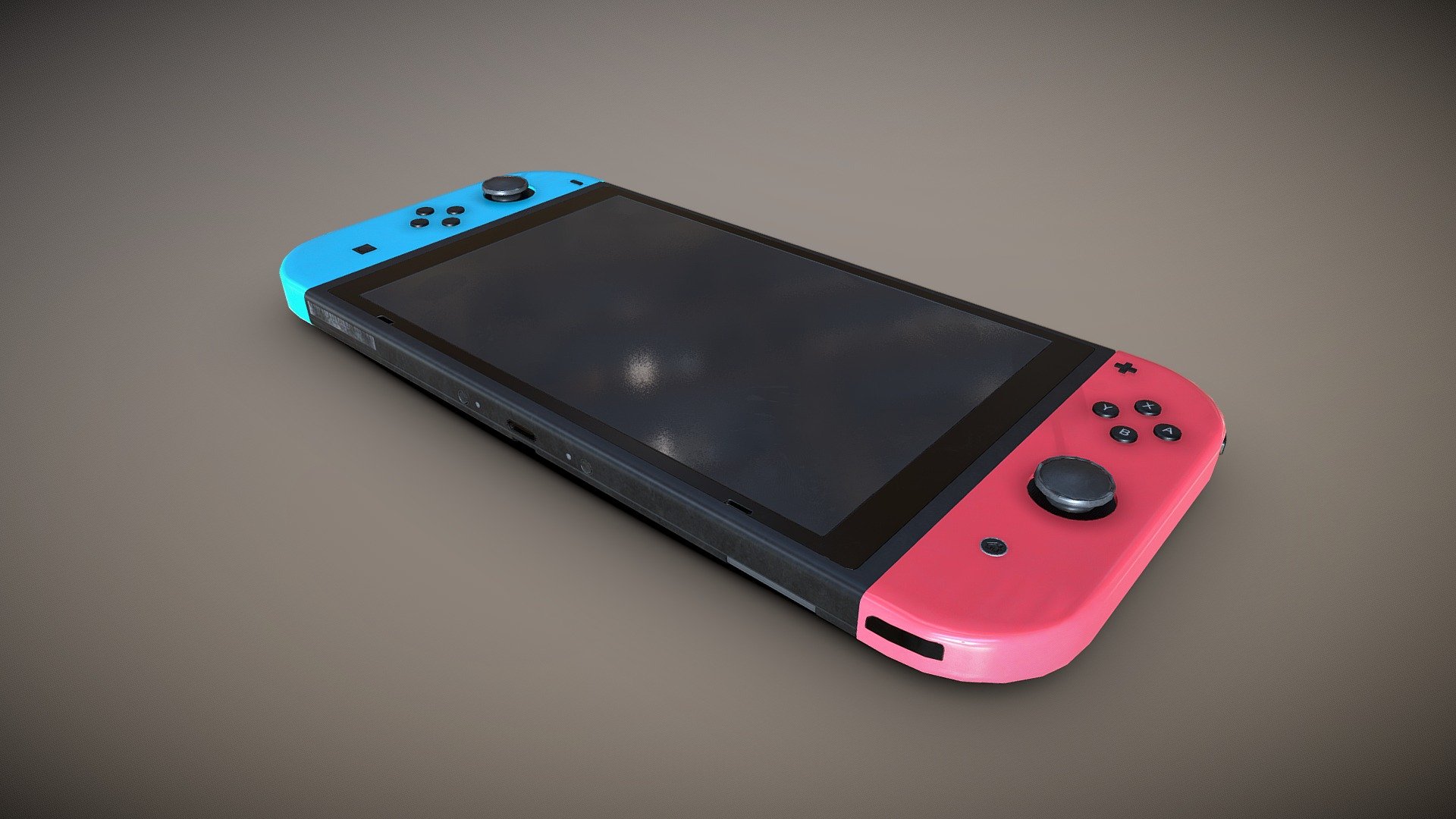
The Nintendo Switch family consists of four primary hardware iterations: the original 2017 model (V1), the 2019 battery-enhanced revision (V2), the portable-only Nintendo Switch Lite, and the premium Nintendo Switch OLED Model. Choosing the right version depends on whether you prioritize handheld clarity, battery longevity, or a budget-friendly entry point into the Nintendo ecosystem.
Since its debut, the Nintendo Switch has redefined the concept of a "hybrid" console. While the core functionality—playing the same library of games—remains consistent across the entire family, the physical hardware, thermal efficiency, and display technology have undergone significant transformations. As we look at the landscape in 2026, these devices remain staples in gaming households, often serving as primary portable machines or secondary consoles for younger family members.
To help you navigate the various models, it is essential to understand the technical nuances that differentiate a launch-day unit from a modern OLED variant.
The Original Nintendo Switch (V1): The 2017 Launch Model
The original Nintendo Switch, officially designated by the model number HAC-001, was the world's first true hybrid console. It introduced the concept of the "Switching" mechanic, allowing users to move seamlessly between a 6.2-inch LCD screen and a television via a proprietary dock.
Technical Limitations and Battery Life
The V1 model is powered by the initial NVIDIA Tegra X1 SoC (System on a Chip). While revolutionary at the time, this 20nm processor was less efficient than later iterations. The battery life on these units is rated for approximately 2.5 to 6.5 hours, though real-world testing on demanding titles like The Legend of Zelda: Breath of the Wild typically yields around 3 hours of play.
From a technical SEO and collector's standpoint, early V1 models are notable for a hardware-level vulnerability (an unpatchable RCM exploit) that allowed for significant homebrew development. However, for the average consumer in 2026, these units are largely found on the secondary market and are prone to shorter battery cycles due to the natural degradation of lithium-ion cells over nearly a decade.
The Battery-Enhanced Revision (V2): The "Mariko" Update
Released in August 2019, the HAC-001(-01)—commonly referred to as the V2—is visually identical to the original model but features a significant internal overhaul. Nintendo replaced the original processor with a more efficient 16nm version of the Tegra X1, codenamed "Mariko."
Why the V2 Replaced the V1
The primary benefit of the V2 is its drastically improved thermal management and power consumption. Without increasing the physical size of the battery, Nintendo was able to extend the play sessions to 4.5–9 hours.
For users who play primarily in handheld mode but do not want to pay the premium for an OLED screen, the V2 remains the "standard" Switch experience. In 2026, this model is frequently seen in special edition bundles. It maintains the 6.2-inch LCD, which offers 720p resolution in handheld mode and outputs 1080p when docked.
Nintendo Switch Lite: The Dedicated Handheld
Launched alongside the V2 in late 2019, the Nintendo Switch Lite (HDH-001) was a strategic pivot. By removing the "Switch" capability—the ability to dock with a TV—Nintendo created a more durable, affordable, and portable device.
Design and Ergonomic Differences
The Switch Lite features a smaller 5.5-inch LCD screen. Because the resolution remains 720p, the pixel density is actually higher than the standard Switch, leading to a slightly sharper image. Crucially, the Joy-Cons are not removable; they are integrated into the chassis. This allowed Nintendo to replace the four-button directional pad on the left side with a traditional, cross-style D-pad, which is highly preferred for 2D platformers and retro gaming.
Key constraints of the Lite model include:
- No Video Output: The hardware lacks the necessary internal components to output a video signal to a TV, even if placed in a third-party dock.
- No Rumble or IR Camera: To save space and cost, HD Rumble and the IR Motion Camera were removed.
- Size and Weight: At 0.61 lbs, it is significantly lighter than the 0.88 lbs (with Joy-Cons) of the standard model, making it the preferred choice for travel.
Nintendo Switch OLED Model: The Premium Standard
The Nintendo Switch OLED (HEG-001), released in late 2021, represents the pinnacle of the original Switch architecture. While it does not offer a "Pro" level jump in processing power or frame rates, it provides a comprehensive upgrade to the user interface and physical build quality.
The Display Technology
The centerpiece of this model is the 7-inch OLED screen. Unlike LCDs, which use a backlight to illuminate pixels, OLED pixels are self-emissive. This allows for perfect blacks, infinite contrast ratios, and much more vibrant color reproduction. The larger screen size was achieved by slimming down the bezels, meaning the console itself is only marginally wider than the standard model.
Physical Refinements
The OLED model corrected several design complaints regarding the original hardware:
- The Kickstand: The flimsy, thin plastic strip of the V1/V2 was replaced with a wide, adjustable metal stand that spans the entire back of the unit. This makes tabletop gaming much more stable.
- Storage: Internal storage was doubled from 32GB to 64GB.
- The Dock: The included dock features a built-in LAN port for stable, wired internet connections during competitive online play, a feature that previously required a USB adapter.
- Audio: The "Enhanced Audio" speakers provide clearer sound at higher volumes in handheld and tabletop modes.
Technical Comparison of All Switch Models
The following table summarizes the core technical specifications as they stand for these four primary models.
| Feature | Switch V1 (Original) | Switch V2 (Revised) | Switch Lite | Switch OLED |
|---|---|---|---|---|
| Model Number | HAC-001 | HAC-001(-01) | HDH-001 | HEG-001 |
| Release Date | March 2017 | August 2019 | September 2019 | October 2021 |
| Display | 6.2" LCD | 6.2" LCD | 5.5" LCD | 7.0" OLED |
| Handheld Res. | 720p | 720p | 720p | 720p |
| TV Output | 1080p via Dock | 1080p via Dock | N/A | 1080p via Dock |
| Internal Storage | 32 GB | 32 GB | 32 GB | 64 GB |
| Battery Life | 2.5 - 6.5 Hours | 4.5 - 9 Hours | 3.0 - 7.0 Hours | 4.5 - 9 Hours |
| Weight | ~0.88 lbs | ~0.88 lbs | ~0.61 lbs | ~0.93 lbs |
| Controller | Removable Joy-Con | Removable Joy-Con | Integrated | Removable Joy-Con |
Special Edition Models and Aesthetics
Beyond the technical revisions, Nintendo has released dozens of "Special Edition" models. These are functionally identical to the V2 or OLED hardware but feature unique laser-etched designs and color schemes. In 2026, these are often the most sought-after versions for collectors.
Notable OLED Special Editions
- Splatoon 3 Edition: Features neon gradient Joy-Cons and graffiti-style etching on the back and dock.
- Pokémon Scarlet & Violet Edition: Showcases the academy emblems and legendary Pokémon illustrations.
- The Legend of Zelda: Tears of the Kingdom Edition: Features a gold-and-green Hylian motif, often considered the most elegant of the special designs.
Notable Lite Special Editions
- Zacian and Zamazenta Edition: A light gray unit with cyan and magenta buttons, released for Pokémon Sword & Shield.
- Hyrule Edition: A gold-colored unit released to celebrate the Zelda series, frequently appearing in the secondary market.
The Role of Hardware Revisions in 2026
By 2026, the Nintendo Switch library has matured into one of the most comprehensive in gaming history. However, the hardware age is a factor for new buyers. The "Mariko" chip efficiency found in the V2, Lite, and OLED models is essential for modern titles that push the limits of the Tegra X1 processor.
If you are purchasing a used unit, it is vital to check the serial number. Serial numbers starting with "XKW" or "XJW" indicate the newer V2 hardware with better battery life. Original V1 units typically start with "XAW". This distinction is critical because, as the battery chemistry ages, the difference between a 3-hour V1 and a 6-hour V2 becomes even more pronounced.
Maintenance and Common Hardware Issues
Regardless of the model, the Nintendo Switch family shares several common maintenance requirements.
Joy-Con Drift
This is a documented issue where the analog sticks register input even when not being touched. While Nintendo has offered repair programs in various regions, the issue persists across all models that use these specific analog components (including the Lite). In 2026, many users opt for third-party "Hall Effect" joysticks, which use magnets to detect movement and are theoretically immune to wear-based drift.
Thermal Management
Over time, the internal thermal paste can dry out, and the cooling fan can accumulate dust. This is particularly relevant for the V1 and V2 models. If you notice your Switch fan spinning loudly or the device getting uncomfortably hot during docked play, it may require a compressed air cleaning of the top exhaust vent.
Battery Longevity
Lithium-ion batteries are rated for approximately 500 to 800 full charge cycles before their capacity drops below 80%. For a console released in 2017 or 2019, many units in 2026 may be nearing the end of their optimal battery life. Replacing the battery is possible but requires specialized "Tri-wing" screwdrivers and a steady hand.
Which Model Should You Choose in 2026?
The "best" model is no longer a one-size-fits-all answer. Instead, it depends on your specific lifestyle and how you intend to engage with the software library.
The Case for the OLED Model
If you play in handheld mode more than 50% of the time, the OLED model is the only logical choice. The contrast and screen size transform the experience of visually dense games. Furthermore, the 64GB of internal storage provides more room for system updates and "day one" patches, though a microSD card remains a mandatory purchase for almost everyone.
The Case for the Switch Lite
The Lite is the ideal secondary console. For parents buying for children, the unibody construction is sturdier than the rail-based Joy-Con system. It is also the most ergonomic choice for those with smaller hands or those who primarily play during short commutes where a bulky OLED unit might be cumbersome.
The Case for the V2 Standard
The V2 is the "budget hybrid." In 2026, it often represents the best value on the used market. It provides the full TV-out experience and the improved battery life of the newer chipsets without the price premium of the OLED. It is the pragmatic choice for those who play mostly in the dock but want the option for occasional portable sessions.
Frequently Asked Questions
Can I play all Switch games on the Switch Lite?
Most games are compatible, but those that require motion controls or the IR camera (like 1-2-Switch or Ring Fit Adventure) require you to purchase separate Joy-Con controllers. Additionally, because the Lite cannot dock, games that are specifically designed for a large screen may have text that is difficult to read on the 5.5-inch display.
Is the Switch OLED more powerful than the V2?
No. The internal processor (CPU/GPU) and the amount of RAM (4GB) are identical between the V2, the Lite, and the OLED model. You will not see higher frame rates or faster loading times on the OLED model; the improvements are entirely focused on the display, audio, and physical build quality.
Do all Switch models support the same microSD cards?
Yes, all models support microSD, microSDHC, and microSDXC cards. For 2026, it is recommended to use a card with at least 256GB of storage and a UHS-I (Ultra High Speed Phase I) rating with a minimum read speed of 60-95 MB/s to ensure smooth performance for digital titles.
Can I use my V2 dock with a Switch OLED?
Yes, the docks are interchangeable. A Switch OLED will fit into a standard V2 dock and output video perfectly. Conversely, a V2 Switch can be placed into an OLED dock to take advantage of the built-in LAN port. The only model that cannot use a dock is the Switch Lite.
How do I tell if I have a V1 or a V2 Switch?
The easiest way is to look at the packaging. The V2 comes in a box with a solid red background. The V1 comes in a box with a white background and a hand reaching for the console. If you don't have the box, check the model number on the back of the console: HAC-001 is V1, and HAC-001(-01) is V2.
Final Recommendation
For those looking to enter the Nintendo ecosystem in 2026, prioritize the Nintendo Switch OLED Model if your budget allows. The hardware refinements and superior display provide a premium experience that makes the vast library of games look their best. However, if you are looking for a dedicated travel companion and do not care about TV connectivity, the Switch Lite remains an unmatched value. Avoid the original V1 model unless you are a collector or find an exceptional deal, as the battery life and thermal efficiency are significantly lower than all subsequent revisions.