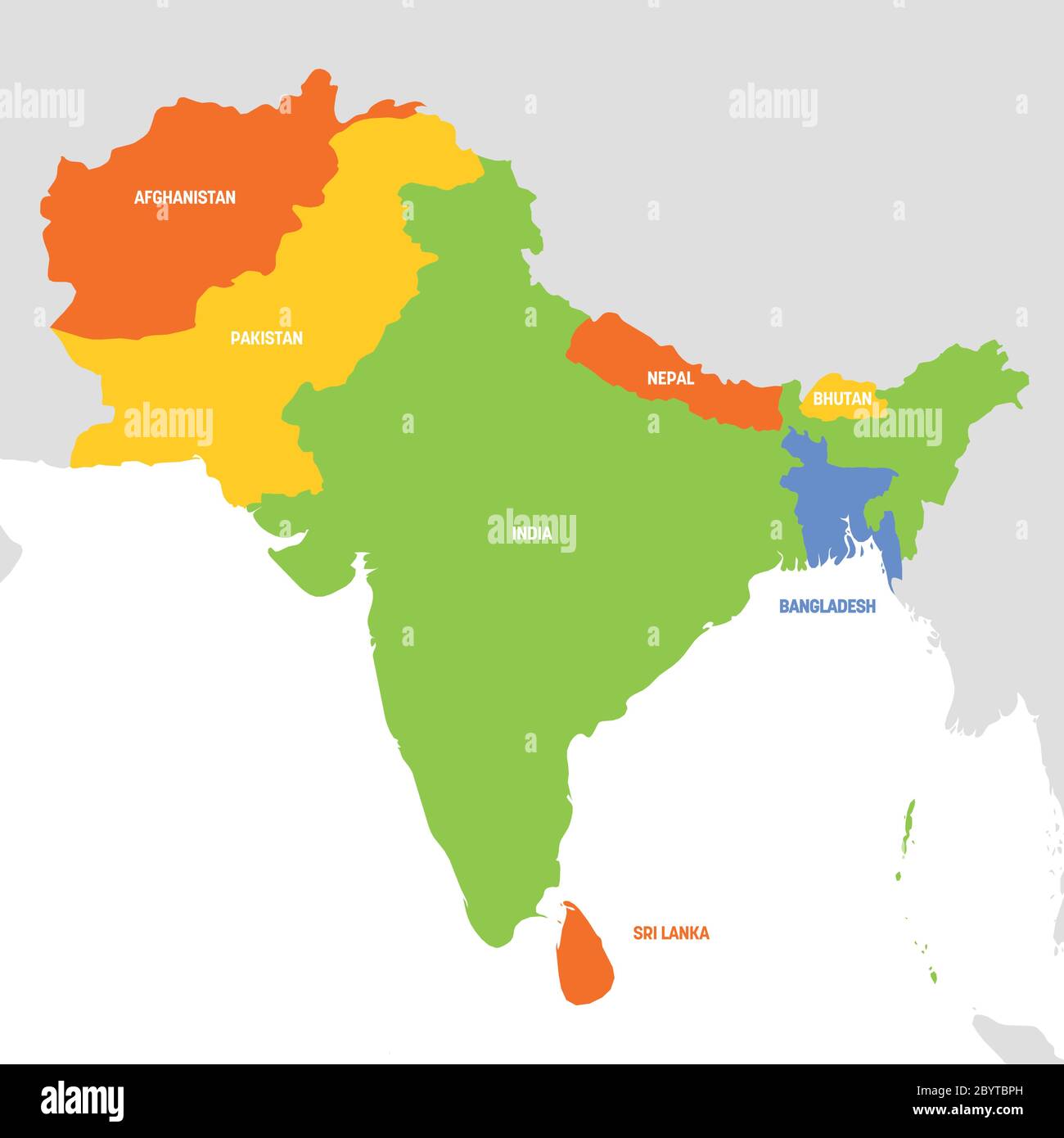
South Asia consists of eight sovereign nations: Afghanistan, Bangladesh, Bhutan, India, the Maldives, Nepal, Pakistan, and Sri Lanka. These countries are formally recognized members of the South Asian Association for Regional Cooperation (SAARC). Geographically, the region is defined by the Indian Subcontinent, bounded by the Himalayas to the north and the Indian Ocean to the south.
Understanding the Regional Scope of South Asia
South Asia is a region of immense diversity, housing approximately one-fourth of the world's population. As of 2026, it remains one of the most dynamic yet complex geopolitical areas globally. The region is often defined not just by geography but by shared history, linguistic roots, and socio-economic challenges.
The primary framework for regional identification is the South Asian Association for Regional Cooperation (SAARC), established in 1985. While the political effectiveness of SAARC has fluctuated, it remains the standard definition for the "eight countries of South Asia." Some geopolitical definitions occasionally include Myanmar due to its historical ties to the British Raj or Iran due to cultural overlaps, but for official, statistical, and diplomatic purposes, the eight-nation list is the definitive standard.
The Geographic and Cultural Landscape
The geography of South Asia is dominated by the Indian Plate. To the north, the collision of this plate with the Eurasian Plate created the Himalayas, the world's highest mountain range, which acts as a climatic and cultural barrier. To the south, the region opens into the vast expanse of the Indian Ocean, making maritime trade a critical component of the national economies of Sri Lanka, the Maldives, India, and Pakistan.
Culturally, the region is a mosaic of religions including Hinduism, Islam, Buddhism, Sikhism, and Christianity. Linguistically, it is home to hundreds of languages, primarily belonging to the Indo-Aryan and Dravidian families. This diversity necessitates a country-by-country analysis to understand the unique role each nation plays within the South Asian collective.
Profiles of the Eight South Asian Nations
1. India (Republic of India)
India is the largest country in South Asia by both land area and population. By 2026, India has solidified its position as the world's most populous nation and a major global economic engine. Its geography spans from the Himalayan peaks to the tropical backwaters of Kerala.
- Economic Profile: India’s economy is driven by a massive service sector, a burgeoning manufacturing base under the "Make in India" initiative, and a dominant technology industry centered in hubs like Bengaluru and Hyderabad.
- Geopolitical Role: As a nuclear-armed state and a member of the G20, India exerts significant influence over regional stability. Its infrastructure projects, such as the India-Middle East-Europe Economic Corridor (IMEC), are pivotal to 2026 trade routes.
2. Pakistan (Islamic Republic of Pakistan)
Located at the crossroads of South Asia, Central Asia, and the Middle East, Pakistan is the region's second-largest country. It possesses a diverse landscape including the coastal plains of the Arabian Sea and the Karakoram mountain range.
- Strategic Importance: Pakistan is a critical player in regional security. The China-Pakistan Economic Corridor (CPEC) remains a cornerstone of its infrastructure development, connecting the port of Gwadar to western China.
- Cultural Heritage: Pakistan holds some of the world's oldest civilizations, including the Indus Valley Civilization sites of Mohenjo-daro and Harappa.
3. Bangladesh (People's Republic of Bangladesh)
Bangladesh is characterized by its riverine geography, situated on the delta of the Ganges, Brahmaputra, and Meghna rivers. It is one of the most densely populated countries in the world.
- Industrial Success: Bangladesh has become a global leader in the Ready-Made Garment (RMG) industry. In 2026, it continues to transition from a "Least Developed Country" (LDC) to a developing economy status.
- Climate Resilience: Due to its low-lying topography, Bangladesh is a global leader in climate adaptation strategies, dealing with rising sea levels and monsoon flooding through innovative architectural and agricultural solutions.
4. Afghanistan (Islamic Emirate of Afghanistan)
Afghanistan serves as the land bridge between South and Central Asia. While its political landscape has been tumultuous, it remains geographically and historically integral to the South Asian identity.
- Resource Potential: The country sits on vast untapped mineral resources, including lithium and rare earth elements, which are increasingly vital for the global green energy transition in 2026.
- Connectivity: Projects like the TAPI pipeline (Turkmenistan-Afghanistan-Pakistan-India) represent the ongoing, though difficult, efforts to integrate Afghanistan into the regional energy market.
5. Sri Lanka (Democratic Socialist Republic of Sri Lanka)
An island nation located just south of the Indian peninsula, Sri Lanka is often called the "Teardrop of India." It is a vital maritime hub in the Indian Ocean.
- Economic Recovery: Following the economic challenges of the early 2020s, Sri Lanka in 2026 has focused on stabilizing its economy through tourism and its role as a transshipment center at the Port of Colombo and Hambantota.
- Human Development: Sri Lanka consistently ranks high in South Asia for literacy rates and life expectancy, reflecting long-term investments in social infrastructure.
6. Nepal (Federal Democratic Republic of Nepal)
Nepal is a landlocked Himalayan nation, home to eight of the world's ten tallest mountains, including Mount Everest.
- Hydropower Energy: Nepal's primary economic focus in 2026 is the export of hydroelectricity to India and Bangladesh, leveraging its massive river systems.
- Tourism: Mountaineering and trekking remain the backbone of its foreign exchange earnings, with a growing emphasis on sustainable and high-end eco-tourism.
7. Bhutan (Kingdom of Bhutan)
Bhutan is a secluded Himalayan kingdom known for its unique philosophy of Gross National Happiness (GNH) over Gross Domestic Product (GDP).
- Environmental Leadership: Bhutan is one of the world's only carbon-negative countries. It maintains a policy of "High Value, Low Volume" tourism to preserve its environment and Buddhist culture.
- Renewable Energy: Similar to Nepal, Bhutan’s economy is heavily supported by hydroelectric power sales to India.
8. Maldives (Republic of Maldives)
The Maldives is an archipelagic nation consisting of 26 atolls in the Indian Ocean. It is the smallest country in Asia by both land area and population.
- Tourism and Infrastructure: Its economy is almost entirely dependent on luxury tourism. In 2026, the Maldives is at the forefront of "blue economy" initiatives, focusing on sustainable ocean resources.
- Existential Threat: The nation is the lowest-lying country in the world, making sea-level rise an immediate existential threat. This has led the Maldivian government to become a leading voice in international climate negotiations.
Statistical Comparison of South Asian Countries (2026 Estimates)
The following table provides a comparative overview of the eight nations based on recent developmental data and geographic facts.
| Country | Capital City | Currency | Primary Language(s) | Key Export (2026) |
|---|---|---|---|---|
| India | New Delhi | Indian Rupee (INR) | Hindi, English | Software & Refined Petrol |
| Pakistan | Islamabad | Pakistani Rupee (PKR) | Urdu, English | Textiles & Rice |
| Bangladesh | Dhaka | Bangladeshi Taka (BDT) | Bengali | Ready-made Garments |
| Afghanistan | Kabul | Afghani (AFN) | Pashto, Dari | Coal & Dried Fruits |
| Sri Lanka | Colombo | Sri Lankan Rupee (LKR) | Sinhala, Tamil | Tea & Apparel |
| Nepal | Kathmandu | Nepalese Rupee (NPR) | Nepali | Hydroelectricity & Carpets |
| Bhutan | Thimphu | Ngultrum (BTN) | Dzongkha | Hydroelectricity & Ferroalloys |
| Maldives | Malé | Maldivian Rufiyaa (MVR) | Dhivehi | Fish Products & Tourism |
Regional Integration and Challenges in 2026
While the countries of South Asia are bound by geography, regional integration faces significant hurdles. The South Asian Free Trade Area (SAFTA) was designed to reduce customs duties, but intra-regional trade remains lower than in other blocs like ASEAN or the EU.
Economic Disparities and Synergies
The economic landscape of 2026 shows a massive gap between India’s trillion-dollar economy and the smaller, more fragile economies of Bhutan or the Maldives. However, synergies are developing in the energy sector. The "One Sun, One World, One Grid" initiative is beginning to link the power grids of India, Nepal, Bhutan, and Bangladesh, allowing for the seasonal transfer of renewable energy.
Common Environmental Vulnerabilities
South Asia is a "climate hotspot." The 2026 outlook emphasizes collective regional action on the following fronts:
- Glacial Melt: For Nepal, Bhutan, and India, the receding Himalayan glaciers threaten the long-term water security of the Indus, Ganges, and Brahmaputra basins.
- Monsoon Patterns: Unpredictable monsoons affect the agricultural cycles of Pakistan, India, and Bangladesh, which employ over 40% of the regional workforce.
- Marine Conservation: For the Maldives and Sri Lanka, coral bleaching and ocean acidification threaten the fisheries and tourism sectors.
Digital Transformation
By 2026, South Asia has seen a digital revolution. Mobile internet penetration has skyrocketed even in rural parts of Afghanistan and Nepal. India’s Unified Payments Interface (UPI) technology has been adopted or linked with payment systems in Nepal, Bhutan, and Sri Lanka, facilitating easier cross-border transactions and travel for citizens within the region.
Travel and Connectivity in South Asia
Traveling between South Asian countries remains a mix of highly connected routes and complex bureaucratic processes.
- Air Hubs: Delhi (DEL), Mumbai (BOM), and Colombo (CMB) serve as the primary international gateways.
- Visa Policies: Most South Asian countries require individual visas. However, the SAARC Visa Exemption Sticker scheme exists for specific categories of dignitaries and business people. For general travelers, many nations now offer e-Visas (notably India, Sri Lanka, and Pakistan) to streamline entry.
- Land Borders: The most active land borders for trade and tourism are between India and Nepal (which features an open border for their citizens), and India and Bangladesh. The Wagah-Attari border between India and Pakistan remains a significant, though highly regulated, transit point.
Frequently Asked Questions
Which country is the largest in South Asia?
India is the largest country in South Asia by a significant margin. It covers approximately 3.28 million square kilometers, making it the seventh-largest country in the world. It also holds the largest population in the region, exceeding 1.4 billion people.
Are all South Asian countries members of SAARC?
Yes, all eight countries—Afghanistan, Bangladesh, Bhutan, India, Maldives, Nepal, Pakistan, and Sri Lanka—are full members of the South Asian Association for Regional Cooperation. Afghanistan was the last to join, becoming a member in 2007.
What are the landlocked countries in South Asia?
There are three landlocked countries in South Asia: Afghanistan, Bhutan, and Nepal. These nations rely heavily on transit agreements with neighboring coastal countries (primarily India and Pakistan) for international maritime trade.
What is the most common religion in South Asia?
South Asia is religiously diverse. Hinduism is the largest religion by number of adherents, primarily due to India's population. Islam is the second-largest, being the state or majority religion in Pakistan, Bangladesh, the Maldives, and Afghanistan. Buddhism is dominant in Bhutan and Sri Lanka and has a significant presence in Nepal.
Can travelers move freely between South Asian countries?
No, there is no "Schengen-style" free movement in South Asia. Each country maintains its own visa policy and border controls. The only major exception is the open border between India and Nepal, which allows citizens of both nations to cross and work without passports or visas under the 1950 Treaty of Peace and Friendship.
Strategic Recommendations for 2026
For those looking to engage with South Asia—whether for business, research, or travel—it is essential to monitor the BIMSTEC (Bay of Bengal Initiative for Multi-Sectoral Technical and Economic Cooperation) as an alternative to SAARC for regional progress. While SAARC remains the official grouping, BIMSTEC has gained momentum in 2026 as a more active vehicle for trade and infrastructure integration between India, Bangladesh, Sri Lanka, Bhutan, Nepal, and Southeast Asian neighbors.
Before planning travel or investment, verify current entry requirements through the official Ministry of Foreign Affairs portals of the respective nations, as geopolitical shifts can influence visa protocols and border accessibility.