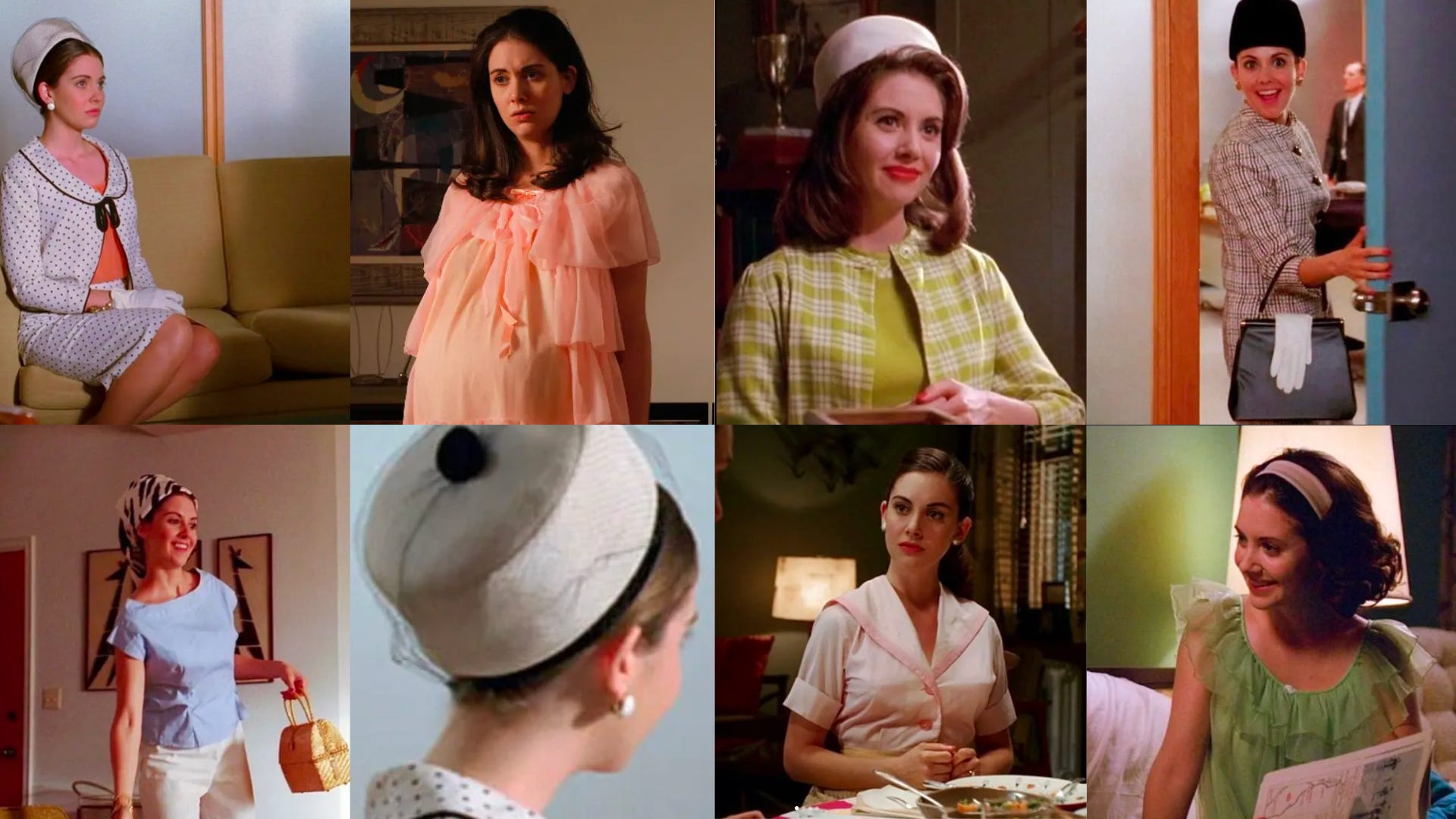
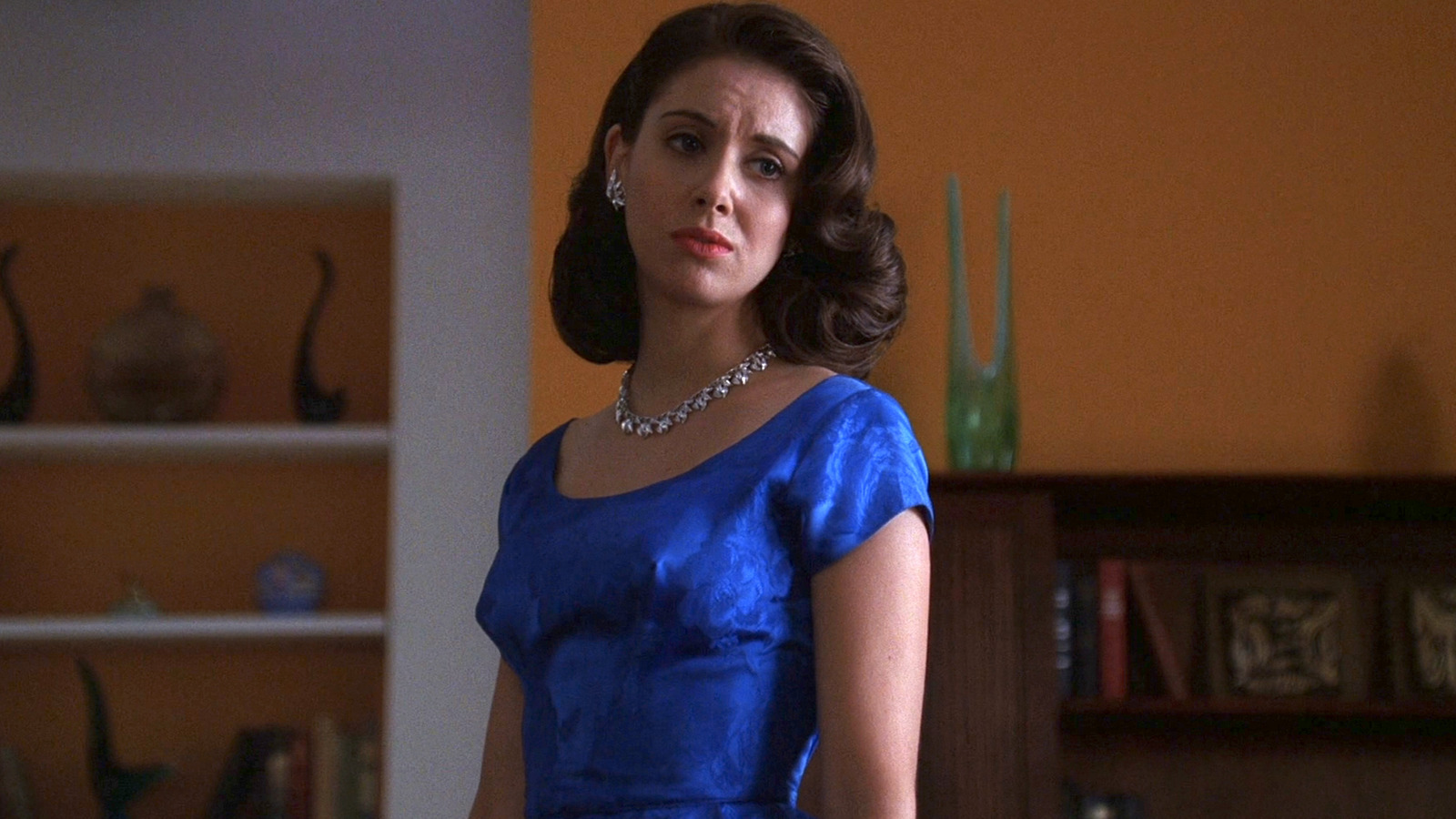
Alison Brie portrayed Trudy Campbell, the ambitious and socially astute wife of Pete Campbell, throughout the seven-season run of the AMC masterpiece Mad Men. Her performance transitioned Trudy from a stereotypical 1960s debutante into one of the series' most resilient and strategically intelligent characters, serving as a vital foil to the show’s darker themes of infidelity, identity, and corporate disillusionment.
The Architecture of Trudy Campbell: Origins and Social Standing
When audiences first met Trudy Campbell in 1960 (Season 1), she was presented as the quintessential "Upper East Side" daughter of privilege. As the daughter of Andrew and Dorothy Vogel, Trudy brought more than just herself to her marriage with Pete Campbell; she brought the "Vogel money" and a high-status social pedigree that Pete desperately craved to bolster his own fading family name. Alison Brie played this early iteration with a chirpy, high-energy optimism that often masked a steel-trap mind for social engineering.
In the rigid hierarchy of the Mad Men universe, Trudy represented the ideal partner for a rising advertising executive. Unlike Betty Draper, who often struggled with the psychological weight of her domestic cage, Trudy initially embraced her role with a project-manager’s efficiency. She was not merely a passive recipient of her life; she was its architect. Brie’s performance captured this distinction through precise physicality—her posture was always perfect, her expressions always calibrated for the specific social setting, whether it was a dinner party with the Drapers or a confrontation with her husband’s colleagues.
The significance of Trudy’s background cannot be overstated. Her father, Andrew Vogel, was a wealthy businessman who provided the down payment for the Campbells' apartment—a point of recurring friction for Pete. This financial backing gave Trudy a level of leverage that other "wives" in the series lacked. While Pete frequently felt emasculated by this dynamic, Trudy viewed it as a foundational strength for their "team." She viewed marriage as a partnership aimed at upward mobility, and Alison Brie’s ability to portray this transactional nature alongside genuine affection made Trudy one of the most complex supporting characters in television history.
The Dual-Career Phenomenon: Balancing Trudy and Annie Edison
For much of the time Mad Men was on the air, Alison Brie was famously performing a "double act" that showcased her immense range. While she was playing the sophisticated, often-traditional Trudy Campbell on AMC, she was simultaneously starring as the high-strung, youthful Annie Edison on the NBC comedy Community. This period of Brie's career is frequently cited by critics as a masterclass in versatility.
In 2026, looking back at the "Golden Age of Television," the contrast between these two roles remains a highlight of the era’s acting achievements. As Trudy, Brie had to suppress the manic energy she brought to Annie Edison, replacing it with a poised, mid-century decorum. However, the two characters shared a core trait: a relentless drive for perfection. Whether Trudy was organizing a social calendar to help Pete get a promotion or Annie was obsessed with a grade, Brie tapped into a specific type of female ambition that was rarely explored with such nuance.
The scheduling demands were legendary. Brie often flew between sets, transitioning from a 1960s girdle and wig to a modern-day hoodie within hours. This professional discipline mirrored Trudy’s own character—a woman who worked tirelessly behind the scenes to maintain an image of effortless grace. This "meta" layer of Brie’s career added a sense of grit to her portrayal of Trudy; there was always a sense that Trudy was working harder than anyone else in the room to keep the Campbell household afloat.
The Dynamics of the Campbell Marriage: Power and Infidelity
The core of Trudy Campbell’s narrative arc was her marriage to Pete Campbell (Vincent Kartheiser). Their relationship was one of the most honest depictions of a 1960s marriage on television, precisely because it was built on a mixture of genuine love and cold social ambition. Unlike Don and Betty Draper, whose marriage was defined by silence and secrets, Pete and Trudy often spoke—sometimes loudly—about their goals.
Trudy’s reaction to Pete’s consistent infidelity served as a turning point for her character’s development. For years, she maintained the "arrangement" that many women of her class accepted: turning a blind eye to discrete dalliances as long as the domestic sphere remained undisturbed. However, when Pete’s behavior crossed a line into their own social circle (specifically his pursuit of a neighbor), Trudy’s response was swift and devastating. The scene where she tells Pete, "I will destroy you," if he does not maintain the appearance of their marriage is widely considered one of Brie’s finest moments.
Brie played this scene not with hysterical anger, but with a chilling, calculated calm. It was the moment Trudy stopped being a "wife" in the traditional sense and became a sovereign entity. She recognized that the social contract had been broken and moved to protect her assets—her daughter, her home, and her dignity. This shift from the bubbly debutante of Season 1 to the iron-willed matriarch of Season 6 provided the show with one of its most satisfying character evolutions.
Comparison of the Leading Wives in Mad Men
To understand Trudy’s unique position, it is helpful to compare her trajectory with the other primary female characters who occupied the "homemaker" role during the series.
| Attribute | Trudy Campbell | Betty Draper | Jane Siegel/Sterling |
|---|---|---|---|
| Social Background | New Money/Upper Class | Old Money/Suburban | Working Class/Secretarial |
| Response to Infidelity | Tactical Confrontation/Separation | Denial followed by Divorce | Resentment/Financial Exit |
| Primary Motivation | Social Mobility & Family Legacy | Emotional Fulfillment/Image | Luxury & Status |
| Relationship with Husband | Partnership (The "Team") | Subservience/Rebellion | Decorative/Transactional |
| 2026 Critical Consensus | The most "modern" 1960s wife | A tragic victim of the era | A cautionary tale of vanity |
The "Charleston" and the Performance of Joy
One cannot discuss Alison Brie as Trudy Campbell without mentioning the Season 3 episode "My Old Kentucky Home." The scene where Pete and Trudy perform a perfectly choreographed Charleston at a country club party is iconic. It serves as a visual metaphor for their marriage: they are perfectly in sync, highly practiced, and deeply concerned with how they are perceived by their peers.
The dance requires immense physical skill, which Brie (a trained dancer and performer) executed flawlessly. However, the brilliance of the scene lies in the expressions. While they are performing, they aren't just having fun; they are winning. They are showing the older generation (the Sterlings and the Drapers) that they are the future of the social elite. Brie’s ability to project that level of competitive joy became a hallmark of the character.
This scene also highlighted the loneliness of the Campbells. They were so focused on the performance of their lives that they often struggled to find authentic moments of connection outside of their shared ambitions. Brie’s portrayal ensured that even in their most "perfect" moments, there was a faint undercurrent of the exhaustion that comes with constant social climbing.
Motherhood and the Search for Meaning
As the series progressed into the late 1960s, Trudy’s focus shifted toward motherhood and her daughter, Tammy. The struggle to conceive in the early seasons was a major plot point, and Brie portrayed Trudy’s desperation with a vulnerability that softened her more abrasive, ambitious edges. When she finally became a mother, her protective instincts extended not just to her child, but to the environment her child would grow up in.
By the time the show reached its final seasons, Trudy had moved out of Manhattan to the suburbs of Greenwich, Connecticut. This geographic shift mirrored her psychological shift. She was no longer interested in the frantic energy of the city's advertising world. She wanted stability. Even after her divorce from Pete, she remained a figure of immense strength, refusing to let her status as a "divorced woman" diminish her standing in the community.
Brie’s performance in these later years was more grounded. The high-pitched vocal register she used in the early seasons dropped slightly, and her movements became more deliberate. She portrayed a woman who had seen the ugly underbelly of the "American Dream" and had decided to build her own version of it on her own terms.
The Reconciliation and the 1970s Finale
In the final episodes of Mad Men, Pete Campbell undergoes a transformation, realizing that the life he thought he wanted (the Don Draper model of endless conquest) has left him empty. He returns to Trudy, offering her a "new life" in Wichita, Kansas, where he has accepted a high-level executive position with Learjet.
This reconciliation was controversial among fans, with some arguing that Trudy deserved better than to take back a man who had repeatedly disrespected her. However, Brie’s performance in the finale justified the choice. She didn't play the scene as a woman who was "giving in," but as a woman making a strategic decision for her family’s future. The move to Wichita represented a clean slate—a chance to be the "king and queen" of a smaller pond, far away from the toxic ghosts of Madison Avenue.
The final shot of the Campbell family boarding a private jet in 1970 showed Trudy dressed in a stunning, vibrant outfit that signaled the end of the 1960s and the beginning of a new era. She looked not like a woman following her husband, but like a woman boarding a vessel she had helped build.
Frequently Asked Questions
Was Alison Brie a series regular on Mad Men?
While Alison Brie appeared in all seven seasons of Mad Men, she was technically a "recurring guest star" rather than a series regular for much of the run. This was primarily due to her contractual obligations to the sitcom Community. Despite this, her character, Trudy Campbell, was integral to the show's narrative, appearing in approximately 36 episodes and maintaining a presence that felt as significant as the core cast.
Why did Trudy and Pete Campbell get divorced?
Trudy and Pete's marriage collapsed in Season 6 after Pete’s infidelity became impossible to ignore. Unlike previous indiscretions, Pete became involved with a neighbor in their apartment building. Trudy, realizing that Pete had violated the "sanctity" of their home and social standing, demanded a separation. She famously told him that their marriage would continue in name only for social purposes, but that he was no longer welcome in their home.
How did Alison Brie’s role as Trudy influence her later career?
Trudy Campbell established Alison Brie as a formidable dramatic actress capable of subtlety and period-specific nuance. This directly led to her casting in leading roles like Ruth Wilder in GLOW, where she again played a woman navigating the complexities of female ambition in a male-dominated era (the 1980s). Her work on Mad Men proved she could handle heavy dramatic material just as well as the "meta" comedy of Community.
What is the significance of the "Vogel money" in the show?
The "Vogel money" represents the financial safety net and social leverage that Trudy brought to the marriage. In the 1960s, a man’s success was often tied to his wife’s family connections. Because Trudy’s father was a successful businessman, Pete was often able to secure accounts and maintain a lifestyle that his salary alone would not have supported. This created a power imbalance that fueled much of Pete’s insecurity and Trudy’s quiet authority.
Did Trudy Campbell ever work outside the home?
Unlike Peggy Olson or Joan Holloway, Trudy Campbell never held a traditional job during the series. However, the show framed her domestic and social management as a form of labor. She was essentially Pete’s "social manager," handling the networking, gifting, and event planning that were essential for his career advancement in the mid-century corporate world.
Final Recommendation for Viewers
To truly appreciate Alison Brie's performance as Trudy Campbell, viewers should watch Mad Men with a specific focus on the "background" of scenes. Brie often does her best work when she is not the primary focus of the dialogue, using her facial expressions to react to the subtle shifts in social power happening around her. For those interested in character studies, pay close attention to the transition between Season 1 and Season 4; this is where Trudy’s "social mask" begins to integrate with her true, formidable personality. Whether you are a fan of 1960s history or modern character drama, Trudy Campbell remains a masterclass in how to play a "traditional" role with subversive strength.