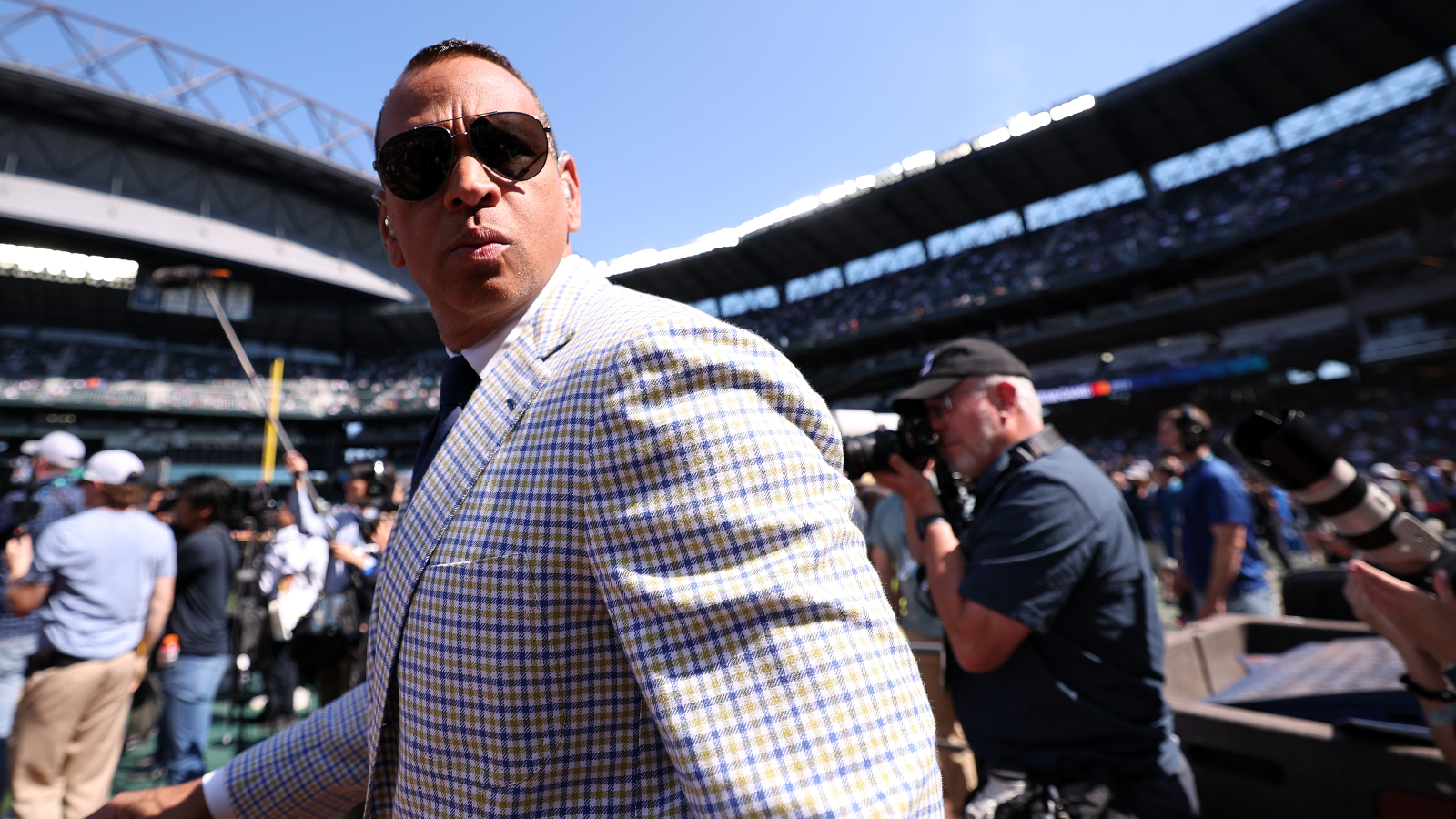
Alex Rodriguez signed two of the most significant contracts in sports history: a 10-year, $252 million deal with the Texas Rangers in 2000 and a 10-year, $275 million extension with the New York Yankees in 2007. These agreements redefined the economic landscape of Major League Baseball and established "A-Rod" as a financial pioneer.
During his 22-season career, Alex Rodriguez became as much a symbol of baseball’s economic evolution as he was a powerhouse on the field. To understand his impact, one must look beyond the home run totals and Gold Glove awards. Rodriguez’s contracts were not merely employment agreements; they were seismic shifts in how professional franchises valued "unicorn" talent. Even as we look back from 2026, the structure and audacity of his deals remain the benchmark for high-stakes sports negotiations.
The 2000 Texas Rangers Deal: Redefining the Market
In December 2000, the sports world was stunned when the Texas Rangers announced they had signed 25-year-old shortstop Alex Rodriguez to a 10-year contract worth $252 million. To put this in perspective, the previous record for the largest contract in sports history was Kevin Garnett’s $126 million deal in the NBA. Rodriguez and his agent, Scott Boras, effectively doubled the existing world record.
The Rangers, owned at the time by Tom Hicks, were desperate to transform their franchise into a perennial contender. They viewed Rodriguez as a foundational piece—a rare combination of defensive excellence at a premium position and elite offensive production. The contract featured an average annual value (AAV) of $25.2 million, a figure that many small-market teams at the time could not match for their entire payroll.
The Complexity of the Rangers Agreement
The $252 million figure was the headline, but the contract’s internal mechanics were equally revolutionary. It included significant signing bonuses, various award incentives, and most importantly, an opt-out clause. This clause allowed Rodriguez to terminate the contract after seven seasons if he chose to test free agency again.
Critics at the time argued that the contract was "untradeable" and would "hamstring" the Rangers' ability to build a supporting cast. These predictions proved partially correct. While Rodriguez performed at an MVP level in Texas, the team struggled to find the budget for elite pitching. By 2004, the financial burden of the contract led the Rangers to trade Rodriguez to the New York Yankees, with the Rangers agreeing to pay $67 million of the remaining $179 million on the deal just to facilitate the move.
The New York Yankees Transition and the 2007 Opt-Out
When Alex Rodriguez moved to the Bronx, he transitioned from shortstop to third base to accommodate Yankees captain Derek Jeter. Despite the position change, his offensive dominance continued, leading to two American League MVP awards (2005 and 2007). However, the most dramatic moment of his financial career occurred during Game 4 of the 2007 World Series.
While the Boston Red Sox were on the verge of a championship, Scott Boras announced that Rodriguez would be opting out of the final three years of his $252 million deal. The timing was widely criticized as a distraction from the sport's biggest stage, and the Yankees initially stated they would not negotiate with Rodriguez once he became a free agent.
The Move to Bypass Boras
In a rare move, Rodriguez eventually bypassed Boras to communicate more directly with the Yankees’ ownership, specifically brothers Hank and Hal Steinbrenner. The resulting negotiations led to a new 10-year contract that surpassed his previous record. This deal was worth a guaranteed $275 million, with the potential to reach over $300 million through marketing milestones related to his chase of the all-time home run record.
Detailed Breakdown of the $275 Million Contract
The 2007 contract was structured to keep Rodriguez in pinstripes until his age-42 season. At the time, it was the largest contract in the history of professional sports, reinforcing his status as the highest-paid athlete in baseball.
| Contract Element | 2000 Rangers Deal | 2007 Yankees Extension |
|---|---|---|
| Total Value | $252 Million | $275 Million |
| Duration | 10 Years | 10 Years |
| Average Annual Value | $25.2 Million | $27.5 Million |
| Signing Bonus | $10 Million | $10 Million |
| Maximum Potential | $252 Million | $305 Million (with bonuses) |
| Opt-out Clauses | Yes (after Year 7) | No |
The "Milestone HR Bonus" was a unique component of the 2007 deal. Rodriguez was set to receive $6 million for each major home run milestone he reached (660, 714, 755, 762, and 763). These were framed as marketing agreements because the milestones would theoretically increase the value of the Yankees’ brand and broadcast rights.
The Financial Impact of Suspensions and the Biogenesis Scandal
No analysis of Rodriguez’s contracts is complete without addressing the 2014 season. Following the Biogenesis investigation, Rodriguez was suspended for the entire 2014 season for violations of MLB’s Joint Drug Prevention and Treatment Program.
Because MLB players are not paid during suspensions, the 162-game ban resulted in Rodriguez forfeiting approximately $25 million in salary. This was a massive financial blow and one of the few instances where a guaranteed MLB contract was effectively "voided" for a significant period. When he returned in 2015, the Yankees also famously disputed the payment of his milestone bonuses, arguing that his suspension had rendered the marketing value of his achievements null. Eventually, a compromise was reached where $3.5 million was donated to various charities instead of being paid directly to Rodriguez.
Comparative Analysis: Rodriguez vs. Modern Mega-Deals
Looking back from 2026, Rodriguez’s contracts seem almost modest compared to the $700 million deal signed by Shohei Ohtani or the $400 million+ deals for Mike Trout and Aaron Judge. However, when adjusted for inflation and the growth of MLB’s Revenue Sharing and "Luxury Tax" (Competitive Balance Tax) thresholds, Rodriguez’s $25.2 million AAV in 2001 remains one of the most aggressive spends in history.
In 2001, the $25.2 million salary represented nearly 25% of the average team payroll. By comparison, modern stars earning $50 million per year represent a similar or even smaller percentage of their respective teams' total spending capacity due to the massive influx of regional sports network (RSN) revenue and national TV deals. Rodriguez was essentially the pioneer who broke the ceiling, allowing future stars to demand nine-figure guarantees.
The Role of Scott Boras in Baseball’s Economy
The architect behind both of Rodriguez’s record-breaking deals was Scott Boras. Boras used Rodriguez as a "market setter." By securing $252 million for one player, Boras effectively shifted the entire salary scale for second-tier stars and role players. If the best player in the league was worth $25 million a year, then an All-Star was worth $15 million, and a solid starter was worth $8 million.
The 2007 opt-out, while controversial, was a calculated gamble that the market had risen enough to justify a raise even for a player entering his 30s. It proved that in baseball, a player’s "brand" and statistical "uniqueness" could be leveraged against even the wealthiest franchises.
Long-Term Legacy: How Rodriguez Changed Baseball’s Economy
The legacy of Alex Rodriguez’s contracts is visible in every modern "mega-deal." He introduced the concept of the 10-year guarantee for veteran players, a practice that is now common for superstars entering free agency in their mid-to-late 20s.
- The Rise of Opt-Outs: Rodriguez popularized the opt-out clause, which is now a standard tool for agents to protect their clients against future inflation of the market.
- Marketing Integration: His 2007 deal showed that a player's contract could be tied to his commercial value and historical achievements, not just his performance on the field.
- Financial Risk Management: The Rangers’ struggle to build a team around him led to a more cautious approach by some mid-market teams, while the Yankees’ success (including the 2009 World Series title) validated the "superstar-centric" model for big-market clubs.
By the time Rodriguez retired in 2016—though he remained on the Yankees’ payroll through 2017 as a special advisor—he had earned approximately $455 million in career salary. This remains one of the highest career earnings totals in the history of the sport.
Frequently Asked Questions
Did Alex Rodriguez ever lose money on his contracts?
Yes. Due to his 2014 suspension related to the Biogenesis scandal, Rodriguez lost roughly $25 million of his $275 million contract. Additionally, he faced various legal fees during his appeals process.
Was the Rangers' contract fully paid by the Yankees?
No. When Rodriguez was traded to the Yankees in 2004, the Texas Rangers agreed to pay $67 million of the $179 million remaining on the contract. This was done to offset the massive financial burden and allow the Rangers to acquire other players.
What were the "milestone bonuses" in A-Rod's second contract?
The 2007 Yankees contract included $6 million bonuses for tying specific home run legends: Willie Mays (660), Babe Ruth (714), Hank Aaron (755), and Barry Bonds (762/763). These were categorized as "marketing milestones."
How many years did A-Rod's $275 million contract actually last?
The contract was intended to run for 10 years, from 2008 through 2017. Rodriguez played through the 2013 season, was suspended for 2014, played 2015 and part of 2016, and then spent the remainder of 2016 and 2017 as a special advisor while still receiving his full player salary.
Is Alex Rodriguez still the highest-paid player in baseball history?
As of 2026, he is no longer the highest-paid in terms of a single contract or annual salary. Players like Shohei Ohtani and others have surpassed his $275 million total and his $27.5 million AAV. However, his contracts remain some of the most impactful relative to the era in which they were signed.
Next Actions for Fans and Researchers
To gain a deeper understanding of baseball’s financial structure, researchers should investigate the evolution of the Competitive Balance Tax (CBT) which was heavily influenced by the Yankees' spending during the A-Rod era. Analyzing the current MLB Collective Bargaining Agreement (CBA) can also provide context on why 10-year contracts have become more common—or more scrutinized—since Rodriguez's retirement. For those interested in the legalities of sports contracts, reviewing the 2014 arbitration documents between Rodriguez and MLB provides a fascinating look at how guaranteed money can be challenged in the face of disciplinary action.