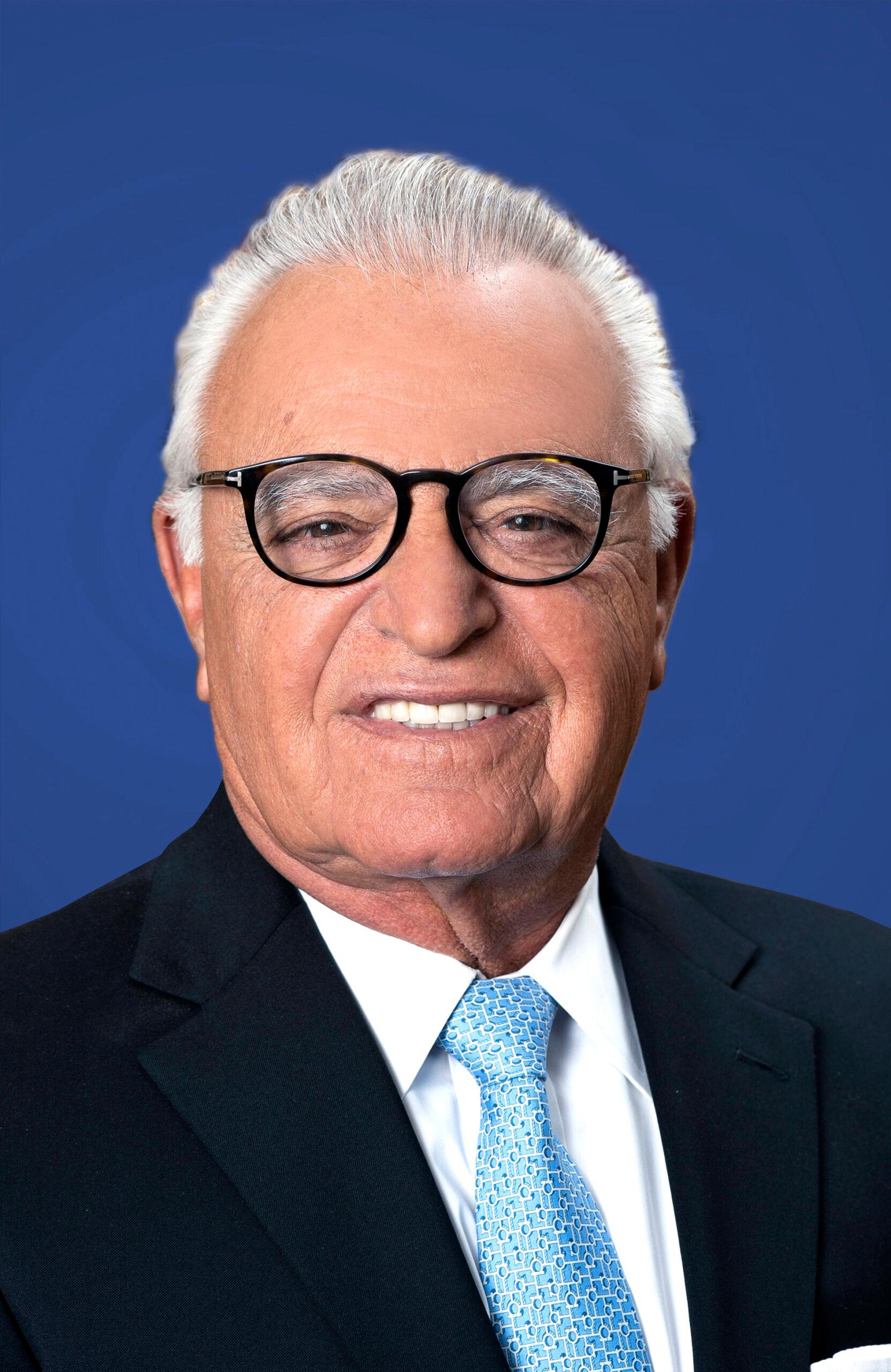
Albert Sebag’s net worth is primarily derived from his position as the founder and CEO of Guidepoint, one of the world’s leading expert network firms. While he does not appear on public billionaire indices, industry analysis of the expert network sector suggests his net worth is estimated in the high hundreds of millions to the low billions, depending on Guidepoint’s 2026 private market valuation and his retained equity stake.
The Foundation of Albert Sebag’s Wealth: Guidepoint
To understand Albert Sebag's financial standing, one must first analyze the trajectory of Guidepoint, the cornerstone of his professional career and primary asset. Founded in 2003, originally under the name Clinical Advisors, the company was initially focused on providing healthcare-specific insights. Sebag, who holds both a PhD in Organic Chemistry and a Juris Doctor (JD), utilized his unique interdisciplinary background to identify a massive gap in how institutional investors conducted due diligence.
The transition from a niche healthcare consultancy to a global diversified expert network—rebranded as Guidepoint Global and later simply Guidepoint—marked the beginning of Sebag’s significant wealth accumulation. Expert networks operate by connecting clients (typically hedge funds, private equity firms, and management consultants) with subject matter experts for paid consultations. Guidepoint earns its revenue through a spread—charging the client a premium while paying the expert a set hourly rate.
As of 2026, the expert network industry has matured into a multi-billion dollar sector. Guidepoint has consistently ranked as one of the "Big Three" alongside Gerson Lehrman Group (GLG) and AlphaSights. Because Guidepoint remains a private entity, its exact valuation is not a matter of public record; however, revenue estimates for the firm have trended upward of $400 million to $600 million annually. Given the high margins and recurring revenue models typical of top-tier information services, Sebag’s ownership interest represents a substantial portion of his total net worth.
Academic Pedigree and Early Career Influence
Albert Sebag's path to high-net-worth status was paved by an elite education that allowed him to navigate complex regulatory and scientific landscapes. He earned his PhD in Chemistry from Drexel University and his law degree from Northeastern University School of Law. This combination of scientific rigor and legal expertise is rare among CEOs in the financial services space, providing him with a competitive edge during the early 2000s when the expert network industry faced significant scrutiny.
Before founding Guidepoint, Sebag practiced law, specifically focusing on intellectual property and litigation within the pharmaceutical and biotechnology sectors. His experience as an attorney at firms like Kenyon & Kenyon provided him with the capital and the professional network necessary to launch his own venture. While his salary as a specialized attorney was significant, it served as the "seed capital" for the entrepreneurial leap that would eventually generate a net worth orders of magnitude higher than a standard legal career trajectory.
The transition from law to business was strategic. Sebag recognized that while legal advice is valuable, the raw data and primary research provided by industry practitioners (experts) were increasingly the more valuable commodity in a fast-paced investment environment. By building a platform that moderated these connections, he moved from being a participant in the knowledge economy to an owner of the infrastructure that facilitates it.
Market Valuation and the Expert Network Industry
In 2026, the valuation of expert network firms is driven by technology integration and data compliance. For Albert Sebag, the value of his equity in Guidepoint is influenced by several key financial metrics that are standard in the information services industry:
Revenue Multiples
High-growth information services and professional networking firms often trade at multiples of 3x to 5x annual revenue. If Guidepoint’s revenue is estimated in the $500 million range, the enterprise value could conservatively sit between $1.5 billion and $2.5 billion. As the founder who guided the company through decades of growth without major public dilutive events (like an IPO), Sebag likely retains a majority or a very significant minority stake.
EBITDA Margins
Expert networks are known for their scalability. Once the internal technology platform—which Guidepoint has invested in heavily—is established, the cost of adding additional experts or clients decreases. EBITDA (Earnings Before Interest, Taxes, Depreciation, and Amortization) margins in this sector can range from 20% to 35%. A high EBITDA makes the company an attractive target for private equity buyouts, which further inflates the "paper wealth" of the primary shareholders.
Strategic Acquisitions
Guidepoint has not only grown organically but also through strategic acquisitions, such as the purchase of Innosquared in Germany to expand its European footprint. Each acquisition increases the firm's global market share and, by extension, the net worth of its CEO. By diversifying into data analytics and survey products, Sebag has ensured that Guidepoint is not merely a "broker" of phone calls but a comprehensive business intelligence platform.
Competitive Positioning and Financial Benchmarks
The net worth of an individual like Albert Sebag is often benchmarked against his direct peers in the industry. The expert network landscape is highly concentrated at the top. Understanding where Guidepoint sits relative to its competitors provides context for the scale of Sebag's financial success.
| Company | Estimated Market Position | Primary Revenue Model | Geographic Reach |
|---|---|---|---|
| Guidepoint | Top 3 Global | Subscription & Per-Consultation | Global (15+ Offices) |
| GLG (Gerson Lehrman Group) | Market Leader by Size | High-Volume Subscription | Global |
| AlphaSights | Top 3 Global | Corporate & Strategy Focus | Europe, US, Asia |
| Dialectica | Rapid Growth Challenger | European Market Focus | EMEA & Americas |
Guidepoint’s ability to maintain its position in the "Big Three" for over two decades is a testament to Sebag’s leadership. Unlike many startups that burn through venture capital, Guidepoint has focused on sustainable profitability. This conservative but aggressive growth strategy often results in higher long-term founder wealth compared to founders who dilute their ownership through multiple rounds of external funding.
The Role of Private Equity and Liquidity Events
A significant portion of a private CEO's net worth is often "trapped" in the value of the company. However, high-net-worth individuals like Sebag often participate in secondary market sales or "dividend recaps." In these scenarios, a private equity firm might buy a stake in the company, allowing the founder to "take some money off the table" without giving up control.
While there have been recurring rumors regarding a potential Guidepoint IPO or a full-scale acquisition by a larger financial data giant (such as S&P Global or Bloomberg), Sebag has remained at the helm. This suggests a high level of confidence in the continued appreciation of the company's value. In the world of high finance, holding onto equity in a profitable, growing company is often a more effective wealth-building strategy than an early exit.
Furthermore, Sebag’s wealth is likely diversified into other asset classes, including real estate and private investments. Given his background in pharmaceutical law and organic chemistry, it is reasonable to assume he maintains a portfolio of investments in biotech and life sciences, sectors where his technical knowledge allows him to identify opportunities that others might miss.
Challenges and Regulatory Impact on Valuation
No analysis of net worth is complete without considering the risks that could impact valuation. The expert network industry has faced challenges regarding insider trading and data privacy. Under Sebag’s leadership, Guidepoint has established one of the industry's most robust compliance frameworks.
The value of an expert network is intrinsically tied to its reputation. A single major compliance failure can lead to a mass exodus of institutional clients. By investing heavily in legal and compliance teams, Sebag has protected the "moat" around his business. In 2026, as AI-driven insights become more prevalent, Guidepoint’s human-verified expert data has become even more valuable, acting as a hedge against the misinformation risks associated with generative AI. This strategic pivot toward "verified intelligence" has likely bolstered Sebag's net worth as the market puts a premium on accuracy.
Philanthropy and Professional Legacy
Beyond the spreadsheets and valuation multiples, Albert Sebag has leveraged his wealth for various philanthropic endeavors. While he maintains a relatively low public profile compared to "celebrity" CEOs, his contributions to educational institutions and health-related causes are documented. Wealth at this level is often transitioned into family offices and foundations, which manage the long-term preservation and distribution of assets.
His legacy is tied to the democratization of specialized knowledge. Before firms like Guidepoint, access to a top-tier scientist or a former CEO was limited to those with personal connections. Sebag’s business model turned expertise into a liquid asset, and in doing so, he created a new category of professional services that has minted significant wealth for himself and his stakeholders.
Frequently Asked Questions
What is the primary source of Albert Sebag's wealth?
The primary source of Albert Sebag's wealth is his ownership stake in Guidepoint, a global expert network firm he founded in 2003. As CEO and founder, he holds a significant equity position in the company, which is valued based on its massive revenue stream from institutional clients, private equity firms, and consultants.
How did Albert Sebag's education contribute to his net worth?
Sebag's unique combination of a PhD in Organic Chemistry and a JD (Law degree) allowed him to specialize in the high-value sectors of biotechnology and pharmaceutical litigation. This expertise was the catalyst for founding Clinical Advisors (now Guidepoint), which initially focused on high-stakes healthcare insights before expanding globally.
Is Guidepoint a public company?
No, as of 2026, Guidepoint remains a private company. Because it is not traded on a public stock exchange, its exact valuation and Albert Sebag’s specific net worth are not publicly disclosed. However, industry analysts estimate the company’s value in the billions based on revenue and market share comparisons with competitors.
How does Guidepoint make money?
Guidepoint generates revenue through a service fee or subscription model. They connect clients who need specific information with experts who possess it. The company charges the client a premium for the connection and the use of their platform, while paying the expert an hourly rate. The difference (the "spread") covers the company's operating costs and generates profit.
How large is the expert network industry Albert Sebag operates in?
The expert network industry is a global market estimated to be worth over $2.5 billion annually in 2026. Guidepoint is one of the top three firms globally, meaning it captures a significant percentage of this total market spend, directly impacting the valuation of Sebag’s holdings.
Has Albert Sebag sold Guidepoint?
Albert Sebag has not sold Guidepoint and continues to serve as its CEO. While many founders exit after a few years, Sebag has remained at the head of the company for over two decades, presiding over its expansion from a small healthcare-focused firm to a diversified global powerhouse.
Practical Next Action: Assessing Private Equity Value
For those looking to understand the financial mechanics behind net worths like Albert Sebag's, the next logical step is to study the valuation multiples of information services companies.
If you are an investor or entrepreneur, focus on the "Expert Network" sector's shift toward AI-assisted compliance. The value of these firms is no longer just in the phone calls they facilitate, but in the proprietary data and the "compliance moat" they build. Understanding how a private company scales its EBITDA while maintaining a high barrier to entry provides the clearest picture of how founders in this space accumulate and sustain ten-figure net worths.