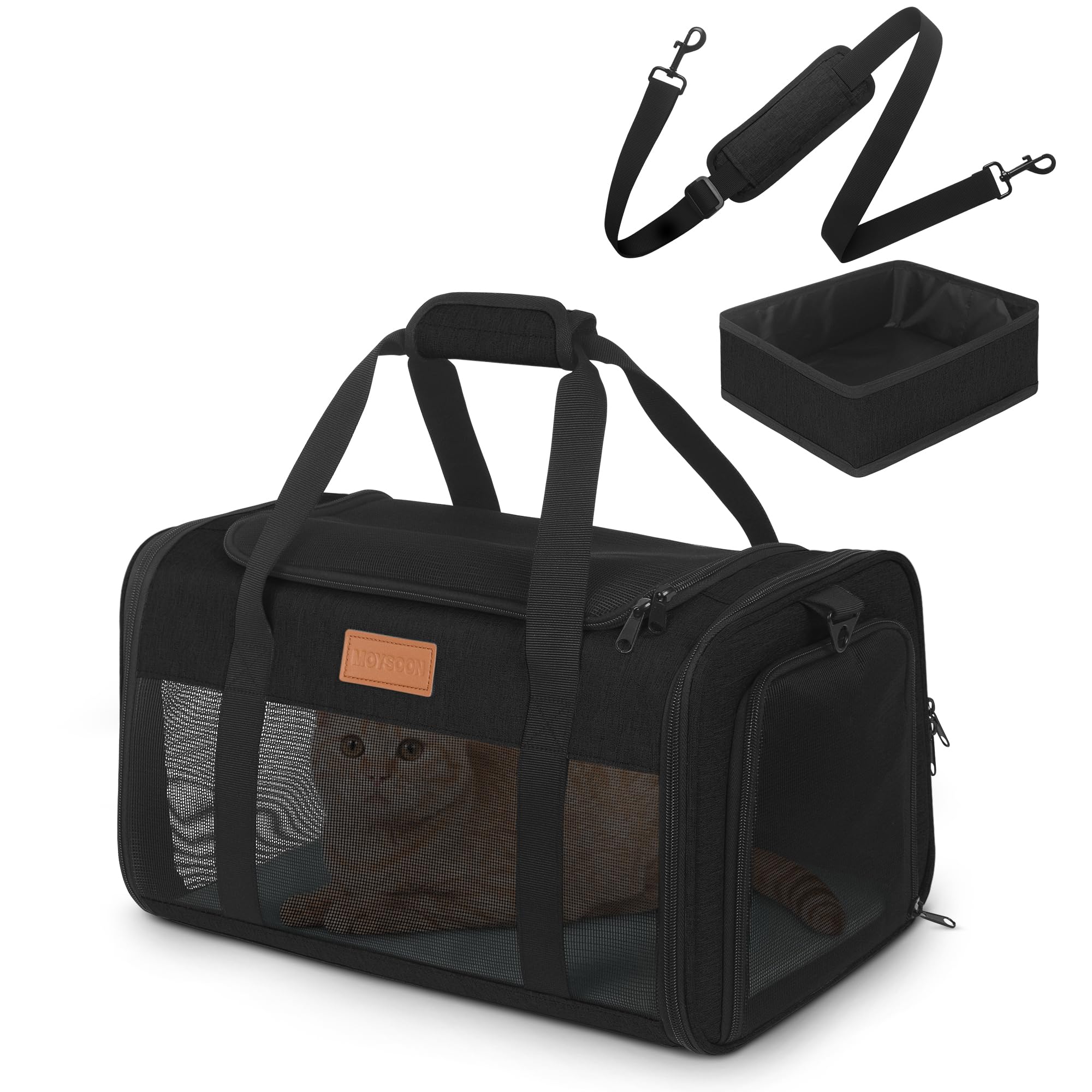
Traveling with a pet in the cabin of a commercial aircraft in Canada requires strict adherence to airline policies, container specifications, and animal welfare standards. Passengers must select an airline approved pet carrier that fits under the seat ahead while providing adequate ventilation, structural integrity, and enough space for the animal to comfortably stand, turn around, and lie down in a natural position.
Understanding the Regulatory Landscape in Canada
When preparing to fly with an animal within, to, or from Canada, travelers must navigate a multi-layered framework of regulations. Unlike checked baggage or cargo transport, in-cabin pet travel is governed primarily by individual commercial airline policies rather than a single overarching federal statute by Transport Canada. However, Canadian airlines operate under the safety oversight of the Canadian Aviation Regulations (CARs), which dictate that any carry-on item, including a pet carrier, must be securely stowed during critical phases of flight such as taxi, takeoff, and landing.
Furthermore, animal welfare laws enforced by provincial authorities and the Canadian Food Inspection Agency (CFIA) mandate that animals must be transported humanely. While the CFIA focuses heavily on international import and export requirements regarding rabies vaccination and health certificates, domestic travel relies heavily on the carrier's fitness for transport.
Airlines such as Air Canada and WestJet enforce rigorous standards regarding the exact dimensions, materials, and locking mechanisms of pet carriers. Failure to meet these criteria at the check-in counter can result in denied boarding. Therefore, understanding the intersection of airline policy and animal safety is the first step toward a successful journey.
Key Structural Requirements for In-Cabin Pet Carriers
An airline approved pet carrier is not a universal designation; rather, it is a container that satisfies the specific structural thresholds mandated by a given carrier. Because aircraft seat configurations vary significantly between wide-body and narrow-body aircraft, airlines publish precise maximum dimensions for in-cabin soft-sided and hard-sided carriers.
Dimensions and Under-Seat Clearance
The most critical constraint for any in-cabin pet carrier is its height, width, and depth. Most Canadian airlines specify that soft-sided carriers can be slightly more flexible, allowing them to compress marginally to fit under the seat.
- Soft-Sided Carriers: Generally permitted up to dimensions of approximately 40 cm x 27 cm x 21 cm (15.5 in x 10.5 in x 8.5 in), though exact measurements vary by aircraft type.
- Hard-Sided Carriers: Typically restricted to more rigid maximums, often around 43 cm x 40 cm x 23 cm (17 in x 16 in x 9 in).
Ventilation and Material Standards
Air circulation is paramount during air travel. Canadian airline standards dictate that carriers must feature adequate ventilation on at least two or three sides, typically constructed of durable plastic-coated wire mesh or heavy-duty nylon netting. The material must be tear-resistant to prevent a stressed animal from clawing through the fabric mid-flight.
Additionally, the carrier must be leak-proof. Airlines require a solid, waterproof bottom, often lined with an absorbent pad to manage potential accidents during transit. The exterior fabric should also be water-resistant and easy to clean.
Comparison of Carrier Types: Soft-Sided vs. Hard-Sided
Choosing the right carrier style depends on the animal's temperament, the aircraft model, and personal travel preferences. Both options have distinct operational advantages and limitations.
| Feature / Specification | Soft-Sided Carriers | Hard-Sided Carriers |
|---|---|---|
| Flexibility | High; compresses to fit tight under-seat spaces. | None; rigid plastic shell maintains constant shape. |
| Durability | High-grade nylon/mesh; vulnerable to determined chewing or scratching. | Molded rigid plastic; highly durable and puncture-proof. |
| Storage & Portability | Often features shoulder straps, collapsible frames, and exterior pockets. | Bulky, non-collapsible, heavier to carry through terminals. |
| Airline Acceptance | Widely accepted for regional and mainline jets with flexible under-seat clearance. | Accepted, but can be rejected if rigid dimensions exceed tight seat clearances. |
| Security & Access | Multiple zippered entry points; requires secure zipper clips. | Metal door with spring-loaded locking latch; highly secure. |
Major Canadian Airline Policies and Specifications
Navigating carrier standards requires checking the specific regulations of the airline operating the aircraft. Policies across Canadian carriers share common safety goals but differ in booking procedures, fees, and exact size tolerances.
Air Canada Pet Travel Standards
Air Canada permits cats and small dogs in the cabin on most flights, provided the animal remains inside its closed carrier at all times.
- Carrier Requirements: Air Canada recommends soft-sided carriers because they can conform to varying under-seat dimensions. The animal must be able to stand up, turn around, and lie down comfortably.
- Advance Booking: Space for pets in the cabin is strictly limited per flight. Passengers must contact Air Canada Reservations to register the pet immediately after booking their ticket.
- Documentation: For domestic flights, health certificates are generally not mandatory unless requested, but proof of up-to-date vaccinations is strongly advised. International travel requires compliance with destination country entry rules.
WestJet In-Cabin Guidelines
WestJet accommodates small pets in the cabin on most Boeing and regional aircraft.
- Carrier Requirements: Similar to Air Canada, the carrier must be leak-proof, well-ventilated, and fit entirely under the seat in front of the passenger. Maximum dimensions vary depending on whether the flight is operated by WestJet mainline or WestJet Encore (turboprop aircraft have significantly reduced under-seat clearance).
- Fees and Restrictions: WestJet charges a non-refundable pet fee per direction of travel. Only one pet carrier is permitted per guest, and the animal must be at least eight weeks old and fully weaned.
Step-by-Step Preparation and Acclimation Process
Introducing an animal to a carrier weeks before a flight significantly reduces travel-related stress. Sudden confinement in an unfamiliar, noisy airport environment can induce severe anxiety.
- Introduce the Carrier Early: Place the carrier in a common living area with the door open. Add familiar bedding, toys, and treats to encourage the pet to explore it voluntarily.
- Feed Inside the Container: Feed the animal near or inside the carrier to build positive psychological associations with the space.
- Practice Short Confinement Sessions: Once the pet is comfortable entering the carrier, close the door for a few minutes while remaining nearby. Gradually increase the duration over several days.
- Simulate Movement: Pick up the carrier and walk around the house or take a short trip in a vehicle to get the animal accustomed to motion and changing sounds.
- Prepare for Security Screening: At airport security checkpoints, pets must be removed from their carriers so the container can be scanned through the X-ray machine. Training the pet to walk calmly on a leash or harness while being held by the handler is essential for this step.
Common Mistakes to Avoid When Choosing a Carrier
Many travelers encounter travel disruptions due to preventable oversights regarding carrier selection and preparation.
- Buying Based on Weight Rather Than Dimensions: Airlines restrict carriers by physical measurements, not just the animal's weight. A lightweight dog that is too tall to stand up inside the carrier will fail inspection.
- Ignoring Aircraft Type Variations: Booking a flight on a smaller regional aircraft with a hard-sided carrier that exceeds tight under-seat dimensions frequently leads to gate checks or denied boarding.
- Inadequate Ventilation: Selecting a fashion-forward carrier with minimal mesh panels restricts airflow, causing the carrier to fail airline safety standards.
- Forgetting Leak-Proof Linings: Failing to place an absorbent pad inside the waterproof tray can result in rejected boarding if an inspection reveals a risk of leakage.
- Modifying the Carrier: Attempting to alter a carrier by cutting extra holes or removing mesh compromises its structural integrity and violates airline regulations.
Frequently Asked Questions
Can I use a wire kennel as an airline approved pet carrier in the cabin?
No. Wire kennels are strictly prohibited in the cabin by all major Canadian airlines because they lack solid leak-proof bottoms and do not conform to under-seat stowage requirements. Wire crates are reserved exclusively for checked baggage or cargo transport.
What happens if my pet carrier is slightly too large for the aircraft seat?
Gate agents and flight attendants inspect pet carriers during boarding. If a carrier does not fit completely under the seat without blocking the aisle or encroaching on foot space, the airline may refuse transport, require the pet to travel in the cargo hold (if space permits), or cancel the passenger's boarding privileges.
Do I need a veterinary health certificate for domestic flights within Canada?
For purely domestic flights within Canada, major airlines do not universally require a veterinary health certificate, but they strongly recommend carrying proof of rabies vaccination. However, destination-specific provincial regulations or multi-leg itineraries involving international connections may impose strict health documentation rules.
Can I open the carrier during the flight to comfort my pet?
No. Canadian aviation regulations and airline safety policies explicitly prohibit opening the pet carrier or removing the animal from the container at any time while on board the aircraft, including during taxi, flight, and landing.
Are there limits on the number of pets allowed per passenger?
Yes. Commercial airlines restrict each ticketed passenger to a single pet carrier. If traveling with multiple pets, additional passengers must be booked to accommodate separate carriers, subject to overall aircraft cabin limits.