Navigating air travel in the San Diego region requires balancing the convenience of the central San Diego International Airport against the regional accessibility of secondary airports like McClellan-Palomar, Tijuana International, and cross-border options. Travelers must weigh flight frequency, ground transportation, and international connectivity to determine the most efficient route for their specific itinerary and budget.
Understanding the Regional Airport Ecosystem
The San Diego metropolitan area is serviced by a tiered hierarchy of airports. Most travelers default to San Diego International Airport (SAN), but the region’s geography—characterized by its proximity to the Mexican border and the sprawling North County suburbs—presents several distinct alternatives. Understanding the operational scope of these facilities is the first step in effective travel planning.
San Diego International Airport (SAN)
San Diego International Airport, often referred to as Lindbergh Field, is the primary gateway for the region. As of 2026, it serves as a major hub for both domestic and international carriers. Because it is located just three miles from downtown San Diego, it offers the highest density of flight options and the most robust ground transportation network, including the San Diego Trolley and various ride-share hubs.
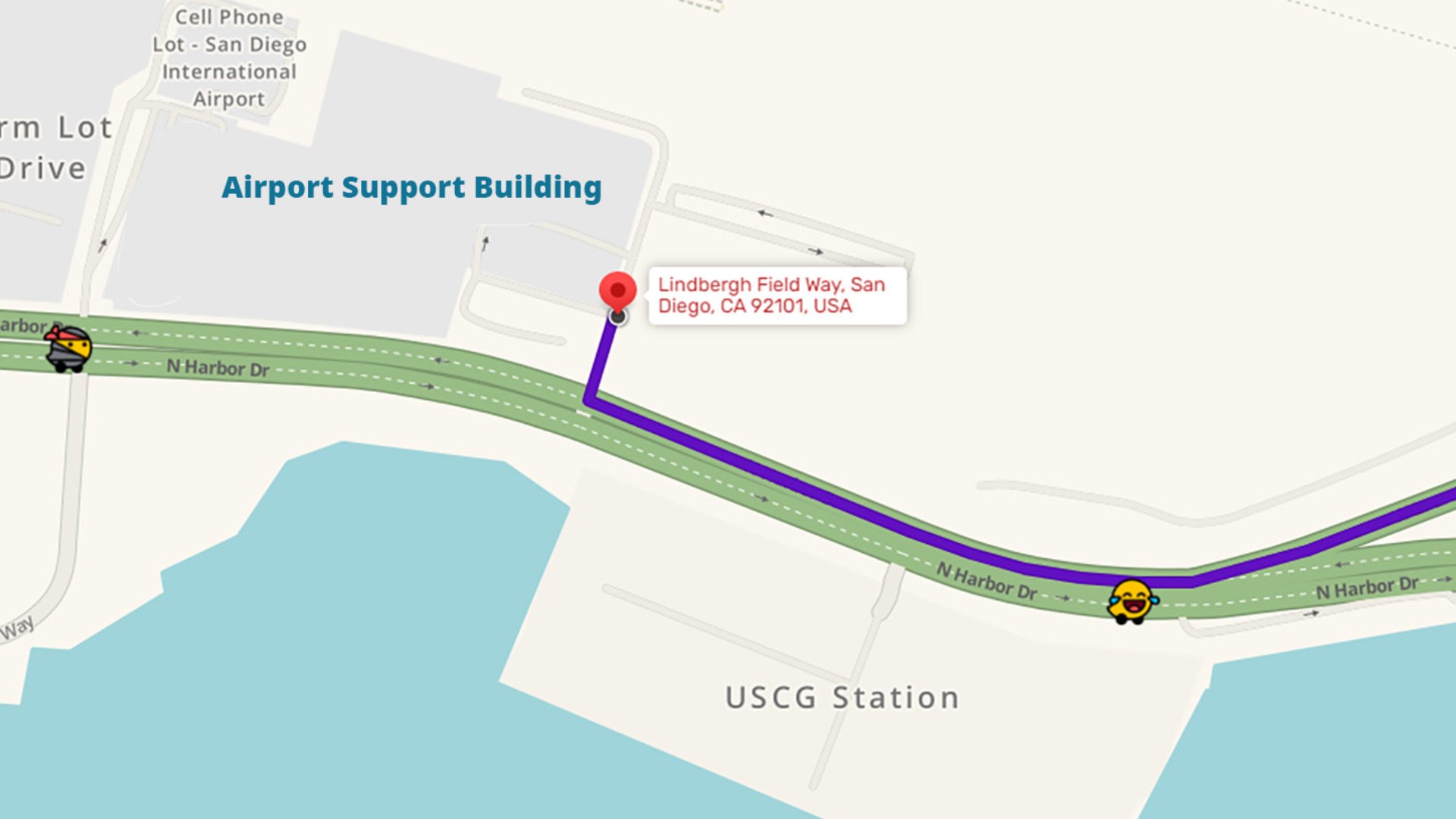
The primary advantage of SAN is its central location; however, it is also one of the busiest single-runway commercial airports in the United States. Travelers should account for potential congestion during peak hours, particularly when accessing the terminal through the Harbor Drive corridor.
McClellan-Palomar Airport (CLD)
Located in Carlsbad, roughly 30 miles north of downtown San Diego, McClellan-Palomar Airport (CLD) serves the North County area. This facility is primarily utilized by corporate aviation and limited commercial service. For residents or business travelers based in coastal North County, this airport offers a significantly less stressful experience compared to the congestion of SAN, though flight frequency is substantially lower.
Tijuana International Airport (TIJ) and the CBX Terminal
A unique feature of the San Diego air travel landscape is the Cross Border Xpress (CBX). This is an enclosed pedestrian bridge connecting a terminal on the U.S. side (located in Otay Mesa) directly to the passenger terminal at Tijuana International Airport (TIJ).
This option is highly advantageous for those flying to destinations within Mexico or Central/South America. By using the CBX bridge, travelers avoid the unpredictability of traditional land border crossings. Once across, they have access to an extensive network of Mexican domestic flights that are often significantly cheaper than flights departing from U.S. soil.
Comparative Analysis of San Diego Area Airports
Selecting the right airport depends on your destination, your willingness to navigate international border requirements, and your proximity to the facility.
| Airport | Primary Utility | Geographic Focus | Major Advantage |
|---|---|---|---|
| SAN | Full-Service Commercial | Downtown / Metro | Highest frequency/connectivity |
| CLD | Regional / Corporate | North County | Proximity / Efficiency |
| TIJ (via CBX) | International (Mexico/LATAM) | South Bay / Border | Cost / Direct access to Mexico |
Logistics and Requirements for Access
Navigating San Diego International (SAN)
To successfully transit through SAN, travelers should utilize the "Fly Well" guidelines updated for 2026. The airport provides a consolidated rental car center, which is accessed via a shuttle from the terminals. For those using public transit, the San Diego Metropolitan Transit System (MTS) provides a direct connection to the airport via the Route 992 bus, which links the airport to the Santa Fe Depot, connecting travelers to the regional Trolley and Coaster train systems.
Utilizing the Cross Border Xpress (CBX)
Using the CBX bridge is not merely a matter of buying a flight ticket; it is a specialized procedure that requires specific documentation.
- Purchase Tickets: You must purchase a CBX ticket in addition to your flight.
- Documentation: Regardless of your nationality, you must have a valid passport and an FMM (Forma Migratoria Múltiple) if you are traveling into Mexico.
- Pre-flight: It is recommended to arrive at the CBX terminal at least 2.5 hours before an international flight, as this provides a buffer for the security and customs checkpoint.
- Return Path: When returning to the U.S. from TIJ, you must clear U.S. Customs and Border Protection at the CBX terminal. Ensure you have your Global Entry or SENTRI card ready if you are a member of these programs, as they are accepted at the CBX crossing.
Strategic Decision-Making: How to Choose
When planning your trip, evaluate your needs against these three criteria:
1. Cost versus Time
If you are traveling to central or southern Mexico, checking flights departing from TIJ via CBX often results in lower airfares. However, you must factor in the cost of the CBX ticket and the time required for cross-border processing. If you are traveling domestically within the U.S., SAN remains the most cost-effective choice when considering total travel time.
2. Ground Transportation Constraints
If you reside in North County (Escondido, Oceanside, Carlsbad), the commute to SAN can take over an hour during rush-hour traffic. In this case, checking schedules at McClellan-Palomar (CLD) can save you the stress of navigating the I-5 or I-805 corridors. If you are unable to find a flight at CLD, consider utilizing the Coaster train to reach the downtown Santa Fe Depot, from which you can take a quick bus or ride-share to SAN.
3. International Connectivity
For travelers heading to regions outside of North America, SAN provides the most consistent access to major international hubs (such as London, Tokyo, or various European cities). While TIJ provides excellent coverage for Latin America, it does not serve as a primary transit point for transatlantic or transpacific travel.
Common Mistakes and Troubleshooting
Ignoring Peak Traffic Patterns
The most common mistake for travelers in San Diego is underestimating the congestion on the freeways surrounding the airport. I-5 and I-805 are notoriously busy between 7:00 AM–9:00 AM and 3:00 PM–6:00 PM. Always add an extra 45 minutes to your transit time if your airport arrival window falls within these periods.
Misunderstanding CBX Eligibility
A frequent error is assuming that the CBX terminal is a standard airport terminal. It is a border crossing. You cannot access the CBX bridge unless you have a confirmed flight ticket departing from or arriving at TIJ within 24 hours of your crossing. Ensure your digital boarding pass is accessible, as mobile connectivity at the border can be inconsistent.
Relying Solely on Ride-Share Apps
While ride-sharing is ubiquitous in San Diego, surge pricing during major events at the nearby Petco Park or the San Diego Convention Center can drive prices significantly higher than expected. Always check the status of local events in downtown San Diego before assuming ride-share will be your primary, affordable transit method to the airport.
Frequently Asked Questions
Which airport is closest to the San Diego Convention Center?
San Diego International Airport (SAN) is the closest facility. It is approximately 3 miles away. Depending on traffic, a ride-share or taxi will typically take 10 to 15 minutes. Public transit options, such as the Trolley, can also be utilized by taking a short shuttle from the airport to the nearest transit hub.
Is the CBX terminal safe for international travelers?
Yes, the CBX terminal is a secure, enclosed, and monitored facility. It is subject to U.S. Customs and Border Protection oversight, and the bridge itself is restricted to ticketed passengers only. It is widely considered a safe and efficient way to bypass the high-traffic pedestrian border crossings in downtown San Diego or San Ysidro.
Can I park my car at the CBX terminal for long-term trips?
Yes, the CBX terminal provides secure, paid long-term parking lots. It is highly recommended to book your parking online in advance, as the lots can reach capacity during holiday travel periods and weekends.
Does McClellan-Palomar Airport offer flights to major hubs?
CLD serves primarily regional and corporate traffic. While it offers limited commercial connectivity, it is not a hub for major transcontinental flights. It is best used for regional "hop" flights to larger airports where you can connect to your final destination.
Are there luggage restrictions for the CBX bridge?
The CBX bridge has similar luggage policies to standard airport terminals, but you must be able to manage your own baggage while crossing. Porter services are available for a fee if you have a significant amount of luggage. It is best to check the current luggage weight and size guidelines on the official CBX website before you arrive.
Recommendation for Travelers
For the most reliable and efficient experience, prioritize flights departing from San Diego International Airport (SAN) for all domestic U.S. travel. If your final destination is in Mexico, conduct a price comparison between flights departing from SAN and those departing from TIJ (via CBX), factoring in the total transit time and the cost of the CBX crossing pass. Always utilize real-time traffic monitoring apps when heading to the airport, regardless of the facility, to adjust your departure time based on real-world freeway conditions.