Selecting an AI security cloud service in 2026 requires balancing the protection of large language models (LLMs) and training data against the operational demands of cloud-native deployment. Organizations must evaluate services based on their ability to perform real-time model monitoring, input sanitization, output filtering, and secure integration with existing CI/CD pipelines while maintaining compliance with regional data governance frameworks.
Understanding the Landscape of AI Security in the Cloud
As of 2026, the integration of generative AI into enterprise workflows has created a specialized security niche. Traditional cybersecurity measures—designed for static applications and network perimeters—often fail to address the unique vulnerabilities inherent in AI systems, such as prompt injection, model inversion, and data poisoning. AI security cloud services are designed to bridge this gap by offering specialized middleware and API-level protection for AI workloads.
When comparing these services, you are not merely evaluating a software product but a multi-layered security ecosystem. A primary concern for any stakeholder is the separation of data. Unlike legacy security software, modern AI security solutions must monitor the "reasoning" process of an AI model to detect anomalous behaviors. This requires deep inspection of inputs and outputs in real-time, often necessitating low-latency architectural designs that do not become a bottleneck for production applications.
Key Technical Evaluation Criteria
To effectively compare providers, you must assess them across four distinct technical dimensions: visibility, control, governance, and model robustness.
1. Visibility and Monitoring
The foundation of AI security is observability. You need a platform that logs not just API calls, but the semantic context of interactions. Ask if the service provides "explainability" reports that help security teams understand why a specific prompt was blocked. Are the logging mechanisms compliant with your regional data residency requirements (such as GDPR or CCPA)? Effective platforms will offer a dashboard that visualizes traffic patterns, identifying spikes in suspicious query types that might indicate an ongoing automated attack.
2. Control and Policy Enforcement
Control involves the ability to implement fine-grained policies. A superior service allows you to define custom rules for input and output filtering. For example, if your organization handles PII (Personally Identifiable Information), the service must have an automated mechanism to detect and redact sensitive information before it reaches a third-party LLM. The ability to update these policies dynamically, without requiring a redeployment of your own AI models, is a critical efficiency feature.
3. Model Robustness and Red-Teaming
Modern security services are moving beyond passive filtering into proactive defense. Look for features that simulate adversarial attacks (red-teaming) against your deployed models. This includes testing for jailbreak attempts that try to bypass your system prompts. A robust service should provide a "trust score" for prompts and responses, allowing your application to automatically flag or reject low-confidence interactions.
4. Integration and Scalability
How does the service sit in your stack? Some providers function as a proxy, meaning all traffic goes through their gateway. Others offer SDKs that integrate directly into your application code. Proxy-based services are generally easier to deploy but may introduce latency. SDK-based integrations offer more granular control and potentially lower latency but require more effort to maintain across your software development lifecycle.
Comparison Table: Service Delivery Models
| Feature | Gateway/Proxy Models | SDK/API Wrapper Models | Native Cloud Integrations |
|---|---|---|---|
| Deployment | Quick, no code changes | Moderate, code refactoring | Seamless in specific ecosystems |
| Latency | High (extra network hop) | Minimal | Low (internal pathing) |
| Visibility | High (full traffic flow) | High (application context) | Varies by provider |
| Best For | Legacy app retrofitting | Custom build applications | Cloud-native AWS/Azure/GCP users |
Operationalizing Your Selection Process
Before committing to a vendor, establish a validation framework using your organization’s specific use cases.
- Perform a Gap Analysis: Document your current AI architecture. If you are using proprietary models hosted internally, your security requirements will differ significantly from those using commercial APIs like GPT-4, Claude, or Gemini. Commercial API users need more focus on output filtering and usage cost control, while internal model developers need protection against model weight theft and fine-tuning data leakage.
- Define Threat Profiles: Identify what you are trying to protect. Are you concerned about data leakage (preventing secrets from reaching the LLM) or integrity (preventing the LLM from being manipulated to output harmful or inaccurate information)? Your answer determines the priority of features in your comparison.
- Pilot Testing: Do not rely on marketing claims. Request a proof-of-concept (PoC) that runs against a mirrored production environment. Test the service against known prompt-injection datasets—many of which are maintained by the OWASP Top 10 for LLMs project—to verify that the service actually catches the attacks it claims to mitigate.
Common Pitfalls in AI Security Procurement
A common mistake is assuming that "security" is a single product feature. In 2026, many general-purpose cybersecurity vendors have added "AI modules" to their existing suites. While these can be effective for general network traffic, they often lack the linguistic intelligence required to inspect complex prompt interactions.
Another frequent oversight is the cost of latency. Every security check adds milliseconds. In real-time customer support bots, adding 300ms of latency per turn can significantly degrade the user experience. Always measure the "Time to First Token" (TTFT) with and without the security service enabled during your evaluation.
Finally, ignore the lure of "set it and forget it" solutions. The field of adversarial machine learning evolves faster than any other branch of cybersecurity. A vendor that does not release regular updates to its detection heuristics or that relies on static rules is a liability. Ensure the vendor demonstrates a commitment to active research and rapid patch cycles.
Frequently Asked Questions
How does an AI security gateway differ from a standard WAF?
A Web Application Firewall (WAF) inspects HTTP traffic for common threats like SQL injection or cross-site scripting. An AI security gateway specifically parses natural language inputs to detect prompt injection, persona mimicry, and the unauthorized extraction of system instructions, which are invisible to traditional WAFs.
Can AI security services prevent hallucination?
No. While these services can detect inaccurate information by comparing model outputs against trusted knowledge bases (a process called Grounding or RAG verification), they cannot "fix" a model that is inherently hallucinating due to probabilistic training. They serve as a guardrail rather than a core model correction tool.
Is it necessary to use a third-party security service if I use cloud-native AI tools?
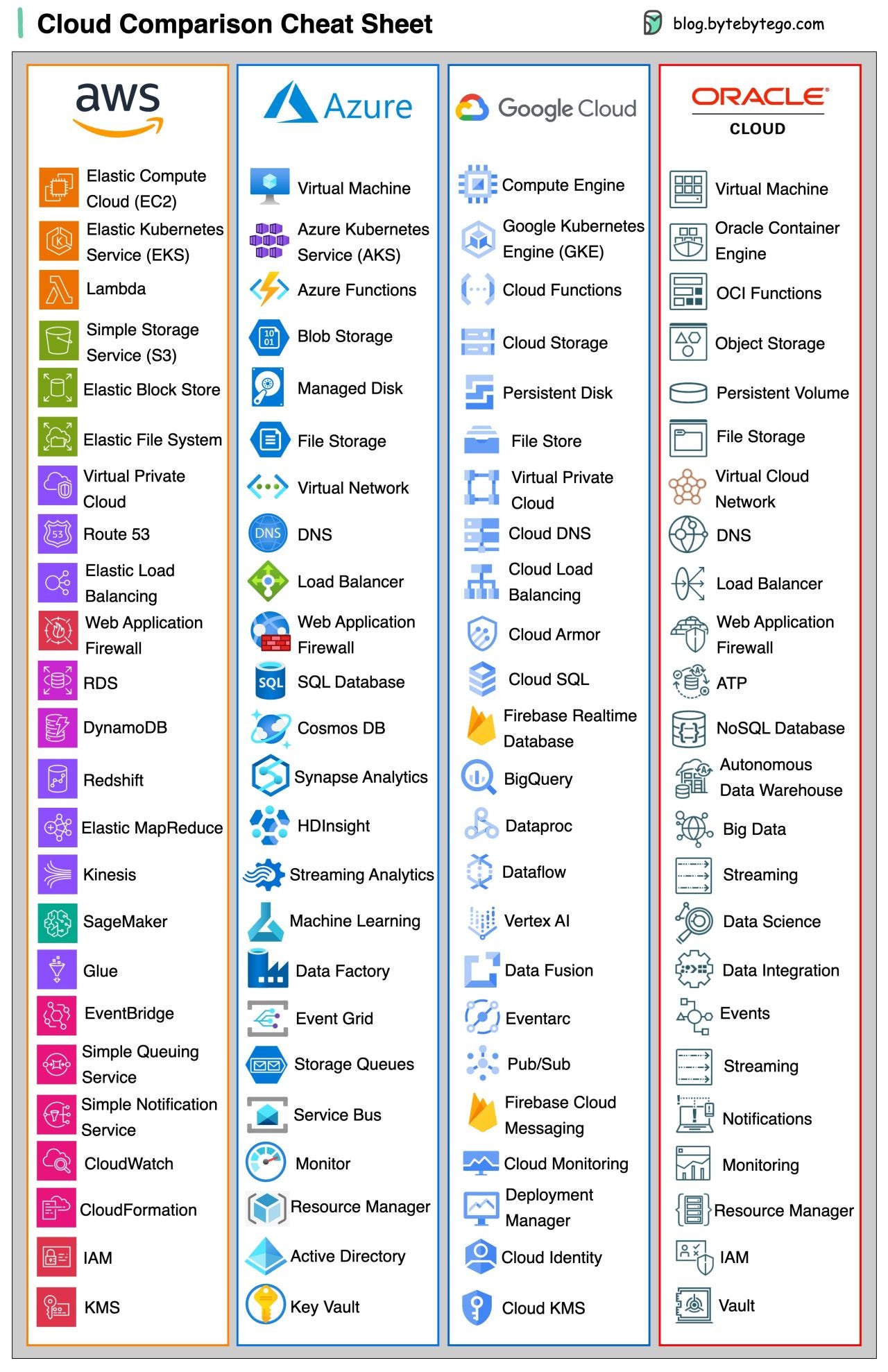
While major cloud providers (AWS, Azure, GCP) offer integrated security features, they are often designed for platform-wide data protection. Dedicated AI security services provide an additional layer of model-specific intelligence and policy orchestration that can manage risk across multi-cloud environments, which is common in enterprise setups.
How are costs structured for AI security services in 2026?
Most providers utilize a tiered model based on the number of tokens processed or the number of API calls made. Some offer flat-rate enterprise pricing for high-volume users. When budgeting, factor in both the per-token cost and the potential for increased latency impacting your infrastructure resource usage.
Does using an AI security provider impact data privacy compliance?
In many cases, yes. By acting as an intermediary, these services handle your data. You must ensure the vendor is SOC2 Type II compliant and offers BAA (Business Associate Agreement) or DPA (Data Processing Agreement) terms that align with your specific legal obligations.
Next Steps for Implementation
Begin by auditing your current AI footprint. Categorize your models by risk level—public-facing chatbots represent higher risks than internal coding assistants. Once prioritized, conduct a performance benchmark on your top two candidates. Focus on the ease of integration with your existing CI/CD pipelines and the vendor’s responsiveness to threat intelligence updates. Prioritize vendors that offer "human-in-the-loop" workflows, allowing your team to review flagged interactions and tune detection sensitivity manually, ensuring the security layer supports rather than hinders your AI-driven innovation.