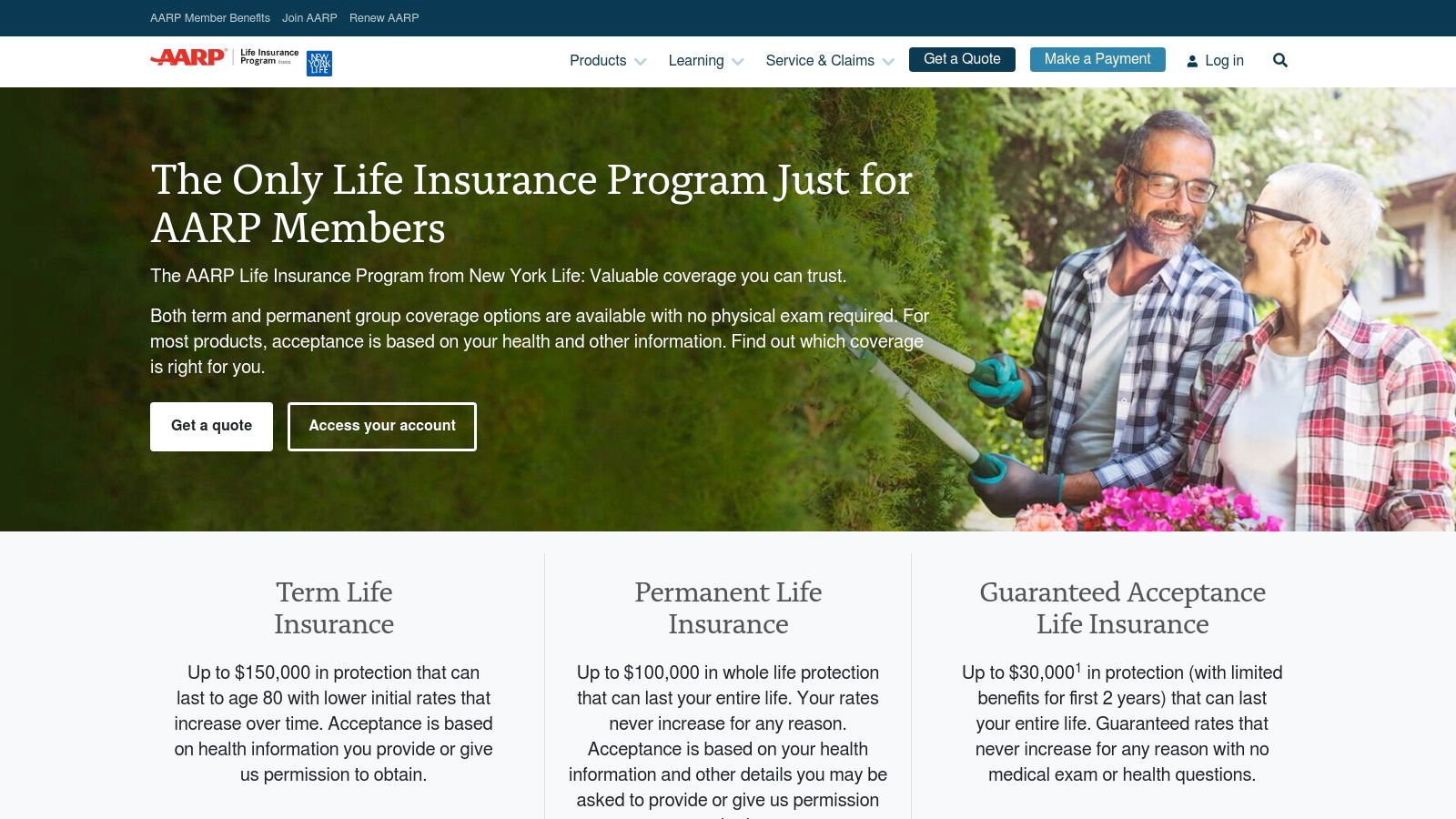
AARP-approved life insurance refers to insurance products offered by third-party carriers, such as New York Life Insurance Company, which bear the AARP brand endorsement. These policies are designed specifically for AARP members, often emphasizing simplified underwriting, group rates, and accessibility for older adults. They generally include term life and permanent (whole) life insurance options tailored to member needs.
Understanding the AARP Life Insurance Program Structure
When researching "AARP approved" life insurance, it is critical to distinguish between the organization itself and the providers that issue the policies. AARP does not act as an insurance carrier. Instead, the organization partners with licensed insurance companies to offer products that meet specific criteria developed for their membership base.
The most prominent relationship in this space is with the New York Life Insurance Company. Since 1996, New York Life has been the exclusive provider for the AARP Life Insurance Program. This means that when you apply for coverage under the "AARP brand," you are actually entering into a contract with New York Life, which remains responsible for underwriting, policy issuance, and claims administration.
This structure provides a layer of institutional stability for applicants. AARP acts as a liaison, conducting due diligence to ensure that the products offered align with the financial security goals of its members. However, the regulatory burden and the legal contract remain strictly between the policyholder and the insurance company. Prospective buyers should view the "AARP approved" status as a stamp of institutional trust rather than a direct guarantee of coverage terms or premium rates by AARP itself.
Available Product Categories
The AARP Life Insurance Program typically segments its offerings into three primary categories. Each is designed to address a different stage of financial planning, from income replacement during working years to final expense coverage in later life.
1. Term Life Insurance
Term life is designed for temporary needs. Coverage lasts for a specific period—often until age 80—providing a death benefit if the policyholder dies within that timeframe. These policies are usually renewable and do not require a medical exam, though they may require the applicant to answer health-related questions. Because these are group policies, premiums can increase as the insured person enters higher age bands, which is a departure from the "level premium" structure common in individual commercial policies.
2. Permanent (Whole) Life Insurance
Permanent life insurance, specifically the type offered through the AARP program, is designed to provide lifelong protection. Unlike term insurance, these policies are intended to remain in force until death, provided premiums are paid. They often build cash value over time, which can be accessed through policy loans or withdrawals. This product is frequently used by members who want to cover final expenses or leave a legacy, ensuring the benefit does not expire at a specific age.
3. Guaranteed Acceptance Life Insurance
This is a specific subset of permanent life insurance that focuses on accessibility. As the name suggests, "guaranteed acceptance" means that applicants who meet the age requirements—typically between 50 and 80—will not be denied coverage based on their health status. There are no medical exams and no health questions. However, these policies usually feature a "graded benefit" clause, meaning the full death benefit is only payable after a waiting period (often two years), during which a limited return of premiums is offered if the policyholder passes away.
Eligibility and Requirements
To participate in the AARP Life Insurance Program, you must be a member of AARP. Membership is available to individuals aged 50 and older, though spouses of members may sometimes qualify for coverage depending on specific policy guidelines.
The application process is generally streamlined compared to traditional "fully underwritten" insurance. In a traditional individual insurance market, an applicant might undergo a blood test, a physical exam, and provide years of medical records. AARP-branded products focus on "simplified issue" or "guaranteed issue" models.
Key Factors in Eligibility:
- AARP Membership: You must hold a valid, active membership at the time of application and throughout the duration of the coverage.
- Age Limits: Specific products have strict entry age requirements. For example, some permanent life products may have a maximum entry age of 80.
- Residency: Coverage availability can vary by state due to local insurance regulations. While the program is nationwide, specific riders or product features may be restricted in certain jurisdictions.
- Health Disclosure: While many AARP-branded products are simplified-issue, you may still need to disclose major health conditions if you are applying for non-guaranteed policies. Failing to disclose accurate information can lead to policy rescission during the contestability period.
Comparing AARP-Branded Coverage vs. Individual Market Policies
When evaluating whether to pursue an AARP-approved plan, it is helpful to compare it against the broader individual life insurance market.
| Feature | AARP-Branded (Group) | Traditional Individual Policy |
|---|---|---|
| Underwriting | Simplified or Guaranteed | Fully Underwritten |
| Medical Exam | Generally Not Required | Often Required |
| Premiums | Age-Band Escalation | Usually Level for Term |
| Customization | Standardized Options | Highly Customizable |
| Ownership | Master Policy (Group) | Individual Contract |
The primary advantage of the AARP-branded approach is the ease of acquisition. For individuals with pre-existing conditions or those who prefer to avoid the medical examination process, these products offer a clear pathway to coverage. Conversely, healthy individuals who are willing to undergo medical underwriting can often find lower "level-premium" costs in the individual market, where their excellent health profile is rewarded with better pricing.
The Role of Premiums and Age-Banding
One of the most important technical aspects of the AARP Life Insurance Program is the premium structure. Most group-term life insurance policies operate on a "step-rate" basis. This means that as you move into a higher age category (e.g., from 65 to 70), your premium will increase automatically.
In contrast, a standard individual 20-year term policy locks in a price that remains the same for the entire 20-year duration. When evaluating AARP insurance, you must project your long-term budget. While the initial premiums may seem affordable, the cumulative cost of premiums as you age into the 70s and 80s can become significant. It is vital to request an "age-banded premium schedule" from the provider to understand exactly how much your costs will rise over the next decade.
Practical Steps to Evaluate Your Needs
Before applying for any life insurance, follow this methodical approach to ensure the policy aligns with your financial reality:
- Define the Purpose: Determine why you need the insurance. Is it to pay off a mortgage, cover final burial expenses, or provide an inheritance? Final expense needs rarely require large coverage amounts, making guaranteed-acceptance policies a potential fit. Debt coverage requires a higher benefit amount that aligns with your loan balances.
- Audit Existing Coverage: Before purchasing a new policy, review any workplace life insurance, existing personal policies, or veteran benefits you may have. You may already have sufficient coverage, or you may be able to increase your existing group coverage.
- Request a Quote: Use the AARP/New York Life online portal to obtain a personalized quote. Ensure the quote includes the premium schedule for the next five to ten years, not just the first year’s cost.
- Review the Fine Print: Read the "Certificate of Insurance" provided by the carrier. Pay close attention to exclusions, such as suicide clauses or active-duty military service limitations.
- Consult a Financial Professional: Because life insurance is a long-term financial commitment, discuss the policy with a fee-only financial planner or an insurance agent who is not affiliated with the specific carrier you are considering. This ensures an objective second opinion.
Frequently Asked Questions
Can I be denied coverage for an AARP-branded life insurance policy?
If you apply for a term or permanent life policy that requires health questions, yes, you can be denied based on your medical history. However, the AARP program also offers guaranteed acceptance products. In these specific cases, you cannot be denied for health reasons, provided you meet the age requirements for that specific policy.
Does the AARP membership fee cover the cost of the life insurance?
No. Your AARP membership dues are entirely separate from your life insurance premiums. The membership simply grants you access to apply for these specific insurance products. You must maintain your membership to keep certain policy benefits, though the insurance contract itself is managed by the carrier.
Is the death benefit from these policies taxable?
Generally, life insurance death benefits are received income-tax-free by the beneficiary. However, there are complex scenarios involving estate taxes. If your total estate exceeds the federal estate tax exemption limit, the death benefit may be included in the taxable value of your estate. Always consult with a tax advisor regarding your specific situation.
Can I cancel my policy if I change my mind?
Yes. Most policies come with a "free-look" period, usually 30 days from the date of receipt, during which you can cancel the policy and receive a full refund of any premiums paid. After this period, you can cancel at any time, but you will not receive a refund of premiums paid for the time the coverage was in force.
Does the price of my AARP-branded policy increase over time?
Most term-based group policies in the AARP program utilize age-banded premiums, meaning your costs will increase as you grow older. Permanent (whole) life policies generally feature level premiums, meaning the cost remains the same for as long as the policy is in effect, provided you pay on time.
Final Recommendation: Verification Before Application
The most effective way to secure coverage through the AARP Life Insurance Program is to treat it like any other financial product: perform an objective assessment of your needs and compare it against other options. Visit the official website associated with the AARP Life Insurance Program (managed by New York Life) to view current rate tables and policy documentation. Avoid third-party "comparison" sites that may prioritize carriers based on affiliate commissions rather than your personal benefit.
Before finalizing any application, confirm that the coverage amount meets your specific obligations and that the premium structure fits your long-term retirement budget. If your health allows, compare these group-rate offerings against fully underwritten individual term policies, as the latter can often provide better long-term value for healthy applicants.