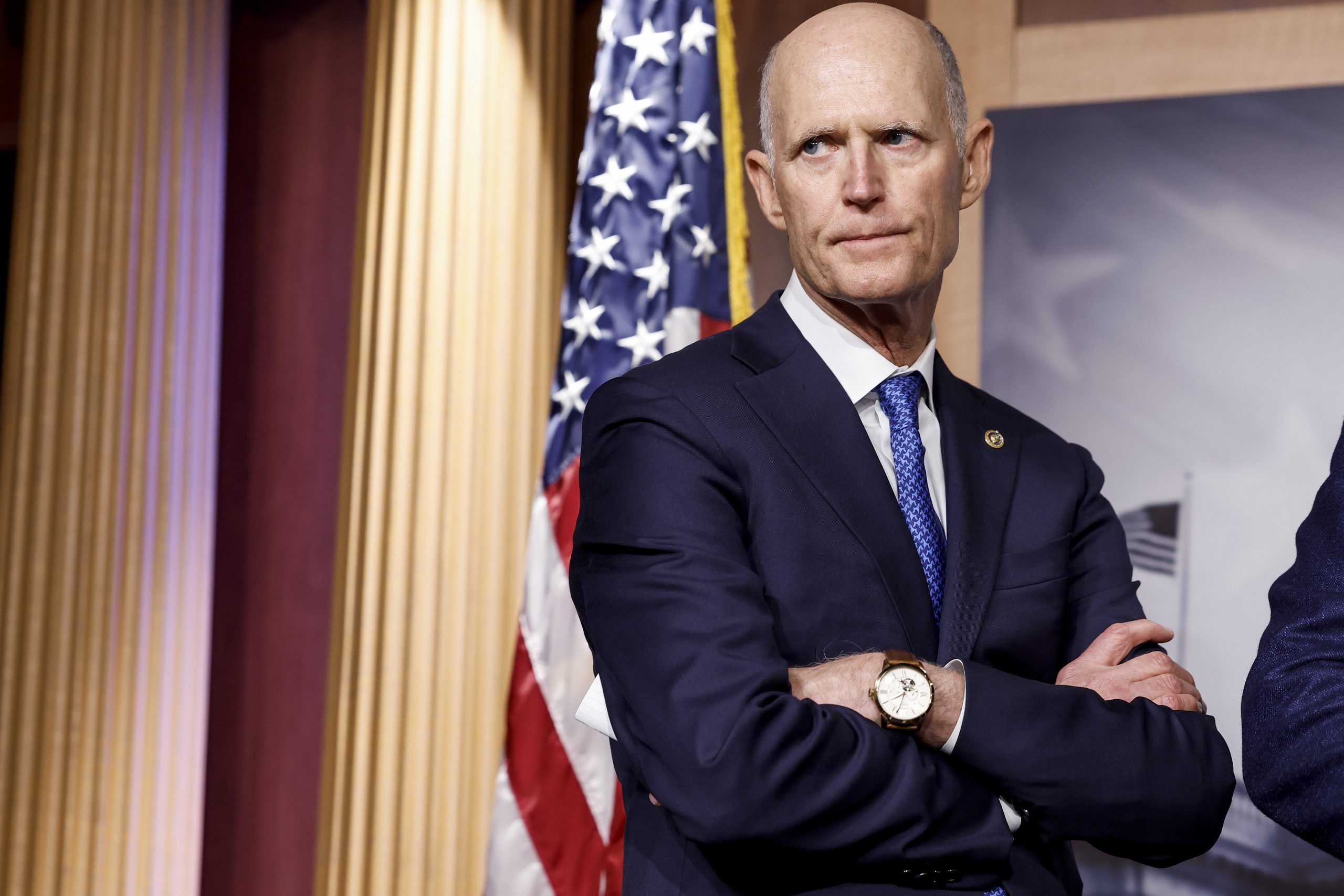
In 2011, during his first year as Governor of Florida, Rick Scott reported a personal net worth of approximately $83.8 million. This figure, disclosed in his mandatory state financial filings, represented a significant portion of the wealth he accumulated as a healthcare executive, though it excluded various assets held independently by his wife, Ann Scott.
The financial profile of Rick and Ann Scott has been a subject of intense public and political scrutiny since Rick Scott first entered the Florida gubernatorial race in 2010. As a former healthcare CEO who founded Columbia Hospital Corporation (which later became HCA Healthcare), Scott transitioned from the private sector to public service with one of the highest net worths in the history of the Florida governorship. By the time his first full year in office concluded in 2011, the public received a detailed look at the $83.8 million valuation of his estate, a figure that sparked discussions regarding transparency, the use of blind trusts, and the intersection of private wealth and public policy.
Understanding the $83.8 million figure requires looking beyond a single number. It involves examining the specific types of investments held by the Scott family, the impact of his 2010 campaign spending on his liquid assets, and the legal structures used to manage his wealth while serving in high office.
The 2011 Financial Disclosure: Breaking Down the $83.8 Million
In June 2011, Rick Scott filed his "Full and Public Disclosure of Financial Interests" (Form 6) with the Florida Commission on Ethics. This document is a requirement for constitutional officers in Florida, intended to provide the public with a snapshot of an official's financial health and potential conflicts of interest.
The disclosure reported a net worth of $83,762,556 as of December 31, 2010. This was a decrease from the approximately $218 million net worth he had reported during his campaign just a year earlier. The discrepancy was largely attributed to three factors: the massive personal expenditure on his gubernatorial campaign, the transfer of assets into a blind trust, and the exclusion of assets solely owned by his wife, Ann Scott.
Assets and Investments
The bulk of Scott’s 2011 net worth was tied up in a variety of diversified investments. Unlike many politicians whose wealth is concentrated in real estate or traditional retirement accounts, Scott’s portfolio was characterized by private equity, venture capital, and substantial holdings in the healthcare and service sectors.
The 2011 filing highlighted several key components:
- The Blind Trust: A significant portion of his assets was moved into a blind trust managed by a long-term business associate. This was intended to insulate the Governor from day-to-day knowledge of his investments to prevent conflicts of interest.
- Richard L. Scott Investments: This entity served as the primary vehicle for his various private equity moves.
- Real Estate: The Scotts' primary residence in Naples, Florida, was a major asset, though Florida disclosure rules sometimes value homestead property differently than commercial holdings.
- Cash and Equivalents: Despite the campaign spending, Scott maintained substantial liquidity in various money market accounts and bank deposits.
The Role of Ann Scott's Wealth
It is important to note that the $83.8 million figure was specifically for Rick Scott. Under Florida law at the time, officials were not strictly required to disclose the full breadth of their spouse's independent assets unless they were held jointly or the official had a legal interest in them. Ann Scott was an active investor and held significant assets in her own right, including the First Lady's interest in various family-owned companies and trusts. Some estimates of the household net worth during this period were significantly higher, often cited in the $200 million range when accounting for the assets controlled by Ann Scott.
The Campaign Spending Impact
One of the most notable reasons for the "lower" reported net worth in 2011 compared to 2010 was the cost of his 2010 election. Rick Scott broke records for self-funding a political campaign in Florida.
According to campaign finance records, Scott spent roughly $73 million of his own money to secure the governorship. This expenditure was a direct hit to his personal liquidity and net worth. By the time he took office in January 2011, his balance sheet reflected this massive transfer of personal wealth into political capital. For many analysts, the 2011 disclosure was the first official look at the "post-campaign" financial status of the Scott family.
Historical Comparison of Rick Scott's Reported Net Worth
The following table illustrates the fluctuations in Rick Scott's reported net worth during his early transition from the private sector to the Florida Governor's Mansion.
| Reporting Period | Context | Reported Net Worth (Approx.) | Key Factors |
|---|---|---|---|
| 2010 (Campaign) | Initial Disclosure | $218 Million | Pre-campaign spending; included broader asset estimates. |
| 2011 (June Filing) | First Year in Office | $83.8 Million | Reflection of $73M campaign spend and trust transfers. |
| 2012 (June Filing) | Second Year in Office | $83.0 Million | Market fluctuations and continued blind trust management. |
| 2013 (June Filing) | Third Year in Office | $132.7 Million | Significant growth in investment returns and trust assets. |
Note: Figures are based on annual filings with the Florida Commission on Ethics. Years represent the filing year for the previous calendar year's assets.
The Blind Trust Controversy and Transparency
The $83.8 million figure in 2011 was not without controversy. In an effort to avoid conflicts of interest, Scott utilized a "qualified blind trust." Under this arrangement, an independent trustee manages the assets, and the public official is not supposed to know the specific composition of the trust's holdings.
However, critics pointed out several issues with this structure in 2011:
- The Trustee: The trust was managed by Alan Baehr, a person with long-standing professional ties to Scott, leading to questions about how "blind" the trust truly was.
- Specific Assets (Solantic): One of the most contentious assets was Solantic, a chain of urgent care centers Scott co-founded. While Scott eventually sold his shares in Solantic in early 2011, the timing and the transfer of those assets to his wife's trust became a point of contention for political opponents.
- The "Blind" Disclosure: Because the assets were in a trust, the 2011 disclosure only listed the total value of the trust rather than the individual stocks or companies within it. This led to a lawsuit later in his tenure by a Democratic fundraiser seeking more transparency regarding the Governor's holdings.
Sources of the Scott Family Fortune
To understand how Rick and Ann Scott reached a net worth of $83.8 million (and much more when combined), one must look at Rick Scott's career before 2011. His wealth was not inherited; it was the result of aggressive and successful entrepreneurship in the healthcare industry.
Columbia/HCA Healthcare
In the late 1980s, Rick Scott founded Columbia Hospital Corporation. Through a series of rapid acquisitions, he turned the company into the largest private for-profit healthcare company in the United States. When he left the company in 1997, he received a settlement and stock worth hundreds of millions of dollars. Although the company later paid massive fines related to Medicare fraud—a point often raised by his political detractors—the personal wealth Scott retained from this era formed the bedrock of his financial portfolio.
Richard L. Scott Investments (RLSI)
After leaving the healthcare giant, Scott founded Richard L. Scott Investments, a private equity firm based in Naples. This firm focused on investing in a wide array of industries, including:
- Healthcare Services: Investing in clinics and medical technology.
- Manufacturing: Diversifying into industrial components.
- Technology: Early-stage venture capital in software and services.
- Energy: Strategic investments in oil and gas during the mid-2000s.
By the time he ran for Governor in 2010, his investment firm had successfully grown his initial HCA windfall through diversified private equity holdings.
Financial Context: The 2011 Florida Economy
When Rick Scott took office and disclosed his $83.8 million net worth, Florida was still reeling from the Great Recession. The state's unemployment rate was high, and the real estate market—a primary driver of the state's economy—was in a state of collapse.
Scott campaigned on a "7-7-7" plan (700,000 jobs over 7 years). His personal wealth was often used as a talking point: his supporters saw it as proof of his business acumen and his ability to fix the state's economy, while critics saw it as a sign that he was out of touch with the struggles of average Floridians.
In a symbolic gesture of his financial independence, Scott famously refused to take his state salary as Governor, which was approximately $130,000 per year. This further emphasized the fact that his $83.8 million net worth made the public salary negligible to his personal finances.
Managing the Wealth: Ann Scott's Role
Ann Scott’s involvement in the family's financial planning was significant. In 2011, while Rick Scott was navigating the restrictions of his first year in office, Ann Scott maintained her own investment interests. This included the Frances Annette Scott Revocable Trust, which held various assets that were often at the center of discussions regarding "family" wealth vs. "governor" wealth.
For example, when Rick Scott faced pressure regarding his ownership of Solantic clinics due to potential conflicts with state healthcare policy, the shares were reportedly transferred to his wife's trust before the ultimate sale of the company. This maneuver was legal under the rules of the time but contributed to the complexity of determining the couple's true total net worth in 2011.
Frequently Asked Questions
Why did Rick Scott's net worth decrease between 2010 and 2011?
The primary reason for the drop from roughly $218 million to $83.8 million was his self-funding of his 2010 gubernatorial campaign. He spent approximately $73 million of his own money. Additionally, different reporting requirements for state office versus general campaign estimates, and the transfer of certain assets to his wife's name or separate trusts, accounted for the remainder of the difference.
What happened to Rick Scott's interest in Solantic in 2011?
In early 2011, amid concerns about conflicts of interest regarding state-mandated drug testing and other healthcare policies, Rick Scott sold his controlling interest in Solantic (a chain of urgent care clinics). The sale was to a private equity firm, and the proceeds became part of his overall investment portfolio.
Was Ann Scott's net worth included in the $83.8 million figure?
No. The $83.8 million figure reported in the 2011 Florida Commission on Ethics filing was for Rick Scott individually. While joint assets were included, assets held solely by Ann Scott or in her private trusts were generally not required to be detailed in the same way under the state's disclosure rules at that time.
How does Rick Scott's 2011 wealth compare to other Florida Governors?
Rick Scott was significantly wealthier than his predecessors. For comparison, Jeb Bush reported a net worth of roughly $1.3 million when he took office in 1999, and Charlie Crist reported approximately $466,000 in 2007. Scott's $83.8 million made him one of the wealthiest individuals to ever hold the office of Governor in Florida.
Did Rick Scott make money while serving as Governor?
Yes, his net worth increased substantially over his two terms. While he took no salary, his investments in the blind trust performed exceptionally well. By 2018, his final year as Governor, his reported net worth had climbed back up to approximately $232 million, driven by the recovery of the stock market and successful private equity exits.
Practical Takeaway: Navigating Political Financial Disclosures
The 2011 disclosure of Rick and Ann Scott’s net worth serves as a case study in how complex private wealth is integrated into the public sector. For researchers or interested citizens, these disclosures are public records accessible through the Florida Commission on Ethics.
When analyzing such figures, it is crucial to distinguish between:
- Reported Net Worth: The specific number on the Form 6, which may exclude spousal assets.
- Total Household Wealth: The broader financial picture including trusts and family-held companies.
- Liquidity vs. Assets: Most of the Scott wealth in 2011 was in non-liquid investments, which fluctuate with market conditions.
For those tracking the financial histories of public officials, the 2011 Scott filing remains a pivotal document that highlights the challenges of transparency in the era of high-net-worth "citizen-politicians."