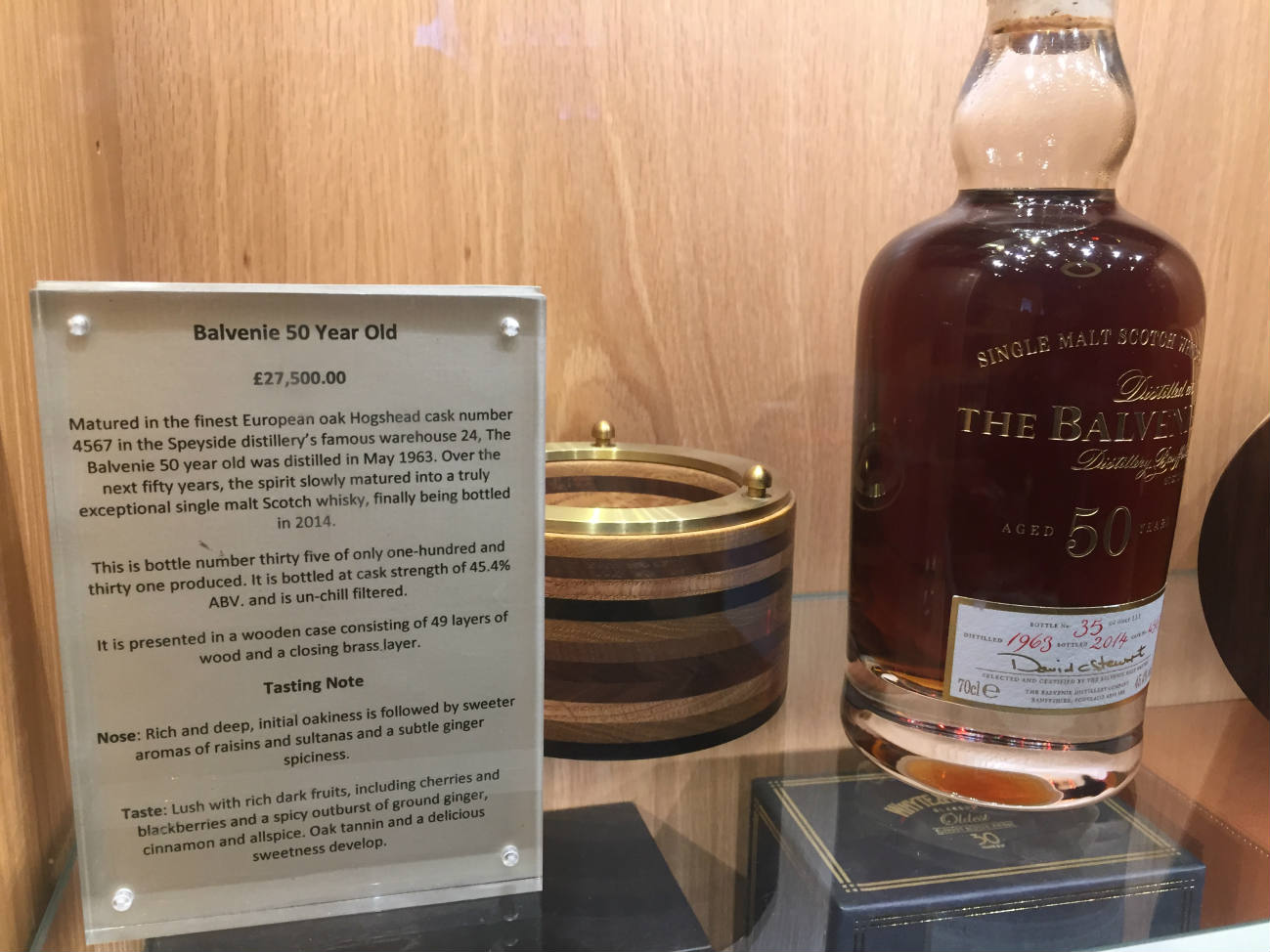
Acquiring a 50 year old scotch requires balancing extreme rarity, historical cask management, and significant financial investment against authentic accessibility, open market availability, and practical tasting opportunities.
The world of ultra-aged single malt Scotch whisky occupies a fascinating intersection of liquid history, rigorous cask management, and economic exclusivity. When enthusiasts and investors discuss a 50 year old scotch, they are talking about spirits that were distilled during an entirely different geopolitical and industrial era—frequently the early 1970s, 1960s, or even the 1950s. At this level of maturation, the interaction between the oak cask and the distillate reaches a critical juncture. The wood has imparted decades of deep coloration, complex tannins, and concentrated phenolic compounds, but it also risks overpowering the delicate fruit and cereal notes of the original spirit.
Balancing rarity and accessibility in this tier is a formidable challenge. On one hand, physical scarcity dictates that only a fraction of a percent of all Scotch laid down in warehouses survives half a century without evaporating entirely—a loss known as the "angel's share." On the other hand, accessibility is no longer merely about walking into a local liquor store and purchasing a bottle; it encompasses financial liquidity, allocation lists, secondary auction platforms, high-end hospitality pours, and independent bottler releases. Understanding how these forces interact allows collectors, investors, and connoisseurs to approach half-century-old whiskies with strategic insight rather than mere aspiration.
The Mechanics of Maturation: Why 50 Years is a Watershed Moment
To understand why a 50 year old scotch commands intense fascination, one must first examine the biological and chemical processes occurring inside an oak cask over five decades. Scotch whisky does not age in the bottle; it evolves exclusively while interacting with the wood in a bonded warehouse, absorbing oxygen, extracting lignin, vanillins, and lactones, and expelling harsh volatile compounds through the porous staves.
The Mathematics of the Angel's Share
Every year, approximately 1.5% to 2% of a cask's volume evaporates into the Scottish atmosphere. Over fifty years, this cumulative loss can reduce the liquid volume inside a standard 250-litre hogshead or sherry butt by 50% to over 70%.
- Concentration: As the volume decreases, the remaining alcohol and flavor compounds become intensely concentrated.
- Cask Strength Drop: Many 50-year-old expressions drop naturally in alcohol-by-volume (ABV) due to the relative humidity of the dunnage warehouse, sometimes dipping below the legal 40% ABV threshold required to be called "Scotch whisky," forcing distillers to carefully manage or marry casks before bottling.
- Wood Dominance: The longer the spirit stays in wood, the greater the risk of over-oaking. Master blenders must monitor these rare casks closely, often transferring them to neutral refill casks to halt aggressive tannin extraction while preserving the aged profile.
Historical Distillation Practices
Whiskies bottled at fifty years of age were produced using methods that differ markedly from modern high-volume operations. Distillers in the mid-1970s often utilized older barley strains, traditional floor maltings (or specific industrial malt specifications), direct-fired copper pot stills that imparted heavier oiliness to the spirit, and active Spanish or American oak casks seasoned with genuine Oloroso or Pedro Ximénez sherry. These historical nuances mean that a 50 year old scotch is effectively a liquid time capsule, capturing agricultural and industrial conditions that no longer exist in modern mass production.
Defining Rarity in the Ultra-Aged Whisky Market
Rarity in the spirits market is rarely accidental; it is a combination of natural attrition, deliberate corporate release strategies, and historical production volume. When evaluating a 50 year old single malt, rarity operates on several distinct levels.
Physical Scarcity and Cask Survival
The primary driver of rarity is simple mathematics. In the post-WWII decades, the Scotch whisky industry experienced booms and catastrophic slumps, most notably the "whisky loch" overproduction crisis of the early 1980s. Many distilleries that operated in the 1970s were mothballed, dismantled, or consolidated, meaning that surviving casks from those eras are finite. When a distillery releases a 50-year-old expression, it typically consists of a single cask—yielding perhaps 100 to 200 bottles—or a small batch of married casks yielding a few hundred bottles globally. Once these bottles are opened and consumed, that exact liquid is permanently gone from existence.
Official Releases Versus Independent Bottlers
The market for half-century-old Scotch is bifurcated between official distillery bottlings (often packaged in hand-blown crystal decanters with bespoke wooden presentation boxes) and independent bottler releases.
| Bottling Type | Typical Presentation | Pricing & Allocation | Market Transparency |
|---|---|---|---|
| Official Distillery (OB) | Luxury crystal decanters, custom boxes, certificate of authenticity. | High price point, restricted allocation via mailing lists or high-end merchants. | High provenance, direct from distillery records. |
| Independent Bottler (IB) | Standard or elegant custom glassware, straightforward labeling. | Often distributed through specialist retailers, variable secondary market tracking. | High historical value, showcases forgotten single casks. |
Independent bottlers such as Gordon & MacPhail, Cadenhead’s, or Signatory Vintage have historically played a vital role in making aged Scotch accessible by purchasing casks decades prior and releasing them under their own labels, occasionally bypassing the hyper-luxury marketing overhead associated with major multinational brands.
The Accessibility Paradox: Price, Placement, and Pours
Accessibility in the context of a 50 year old scotch rarely means affordability in the conventional sense. Instead, accessibility is measured across three distinct vectors: financial investment, physical distribution, and experiential access through hospitality.
Financial Valuation and Market Dynamics
Prices for official 50-year-old single malts from renowned distilleries like The Macallan, Glenfiddich, Highland Park, or Bowmore frequently range from $25,000 to over $100,000 per bottle at retail, with secondary auction prices fluctuating based on demand, packaging condition, and global economic sentiment.
- Primary Market: Purchasing directly from the distillery or authorized luxury stockists at initial release prices.
- Secondary Market: Engaging with specialized auction houses (such as Whisky Auctioneer, Sotheby’s, or Christie’s) where older, discontinued batches trade according to real-time collector demand.
- Asset Class Perception: While ultra-aged spirits are increasingly viewed as liquid assets, high transaction fees, storage insurance, and verification requirements mean that treating them as reliable financial investments carries considerable risk compared to traditional equities.
Experiential Accessibility: Bar Programs and Tastings
For the enthusiast who wishes to taste a 50-year-old whisky without purchasing an entire bottle, experiential accessibility has expanded through high-end hotel bars, specialized whisky lounges, and brand-hosted masterclasses. Establishments in global financial hubs (such as London, New York, Tokyo, and Edinburgh) maintain cellar lists where a 1.5 oz or 2 oz pour can be purchased. While individual pours frequently cost several hundred to over a thousand dollars, this model democratizes the experience, allowing connoisseurs to evaluate decades of maturation without committing six figures to inventory ownership.
Verification, Provenance, and Avoiding Counterfeits
As the financial valuation of old and rare Scotch rises, the market inevitably attracts fraudulent activity, ranging from refilled authentic bottles to entirely counterfeit packaging. Ensuring authenticity is a mandatory step for any serious buyer or collector.
- Trace the Paper Trail (Original receipts, import docs)
- Inspect Closure & Seal Integrity (Wax, lead, capsule)
- Examine Glass Details (Mold seams, etched batch codes)
- Cross-Reference Cask Numbers with Distillery Records
Key Indicators of Authenticity
- Cask and Bottle Numbering: Most ultra-aged releases feature laser-etched bottle numbers that correspond directly to distillery ledger entries and certificates of authenticity.
- Fill Level: Due to natural evaporation, inspect for a fill level appropriate to the age of the bottle. A completely pristine, full fill on a 50-year-old bottle with a cork closure can sometimes warrant closer inspection.
- Capsule and Label Typography: High-end brands utilize proprietary security inks, heavy-weight rag papers, and flawless embossing. Misspellings, pixelated printing, or inconsistent font weights are immediate red flags.
Tasting and Evaluating a 50 Year Old Scotch
Tasting a whisky of this vintage requires a distinct approach compared to standard-release or younger single malts. The drinking experience is as much about sensory archaeology as it is about immediate flavor gratification.
Sensory Characteristics
- Color: Expect deep mahogany, polished chestnut, or dark amber tones derived from extended oak contact, often without the addition of artificial caramel coloring (E150a).
- Nose: The aromatic profile is typically dominated by tertiary notes: aged leather, beeswax, polished mahogany, pipe tobacco, old books, dark cherries, fig syrup, and subtle, integrated wood smoke rather than aggressive peat.
- Palate: The mouthfeel can range from silky to surprisingly drying. Flavors unfold in slow succession, revealing dark chocolate, espresso, stewed plums, ginger, and a long, warming finish that lingers for hours.
Preparation and Resting
Because 50-year-old spirits are fragile and have been locked inside glass decanters or bottles for an extended period, they require careful aeration. Pouring a measure and allowing it to rest in a tulip-shaped Glencairn glass for 20 to 30 minutes allows trapped ethanol vapors to dissipate and permits the complex aromatic esters to fully open. Adding water should be approached with extreme caution; many ultra-aged whiskies have naturally drifted down in ABV and possess delicate flavor structures that can be easily muted by even a few drops of water.
Frequently Asked Questions
Why is 50 year old scotch so expensive?
The high cost is driven by extreme liquid loss (angel's share) over five decades, the capital tied up in warehouse space for half a century, strict scarcity of surviving casks from the 1960s and 1970s, and luxury packaging components such as hand-blown crystal decanters and custom cabinetry.
Does whisky continue to age once it is bottled?
No. Unlike wine, Scotch whisky does not mature or improve in the bottle. Once the liquid is separated from the wood cask and sealed in glass, the chemical aging process halts completely. A 50-year-old whisky bottled in 2026 tastes identical today to how it would taste if stored correctly for the next century.
How should a 50 year old bottle of Scotch be stored?
Bottles should be stored upright in a cool, dark environment with stable temperature control (ideally between 12°C and 18°C or 55°F to 64°F). Storing them horizontally can cause high-ABV alcohol to degrade the cork over time, leading to taint or crumbling when opened.
Are independent bottlers a better value than official distillery releases?
Independent bottlers frequently offer higher liquid-to-price value because they lack the extensive luxury marketing overhead, bespoke crystal manufacturing costs, and global corporate branding budgets associated with official distillery flagships.
Can I buy a single pour of a 50-year-old Scotch at a bar?
Yes. Many high-end cocktail lounges, hotel bars, and specialist whisky establishments in major metropolitan cities maintain rare spirits menus offering fractional pours (1 oz or 2 oz) of 50-year-old single malts.
Practical Recommendations for Collectors and Connoisseurs
Approaching the market for a 50 year old scotch requires defining your primary objective. If your goal is liquid consumption and historical appreciation, seek out independent bottlers or specialized bar programs to experience the profile without major capital outlay. If your goal is long-term collection or commemorating a major milestone (such as a fiftieth birthday or corporate anniversary), prioritize official distillery releases complete with pristine documentation, tamper-evident seals, and verifiable provenance from reputable auction houses or primary authorized merchants. Always inspect the fill level, cross-reference registry databases, and store your acquisition upright away from direct sunlight to preserve its integrity for future generations.