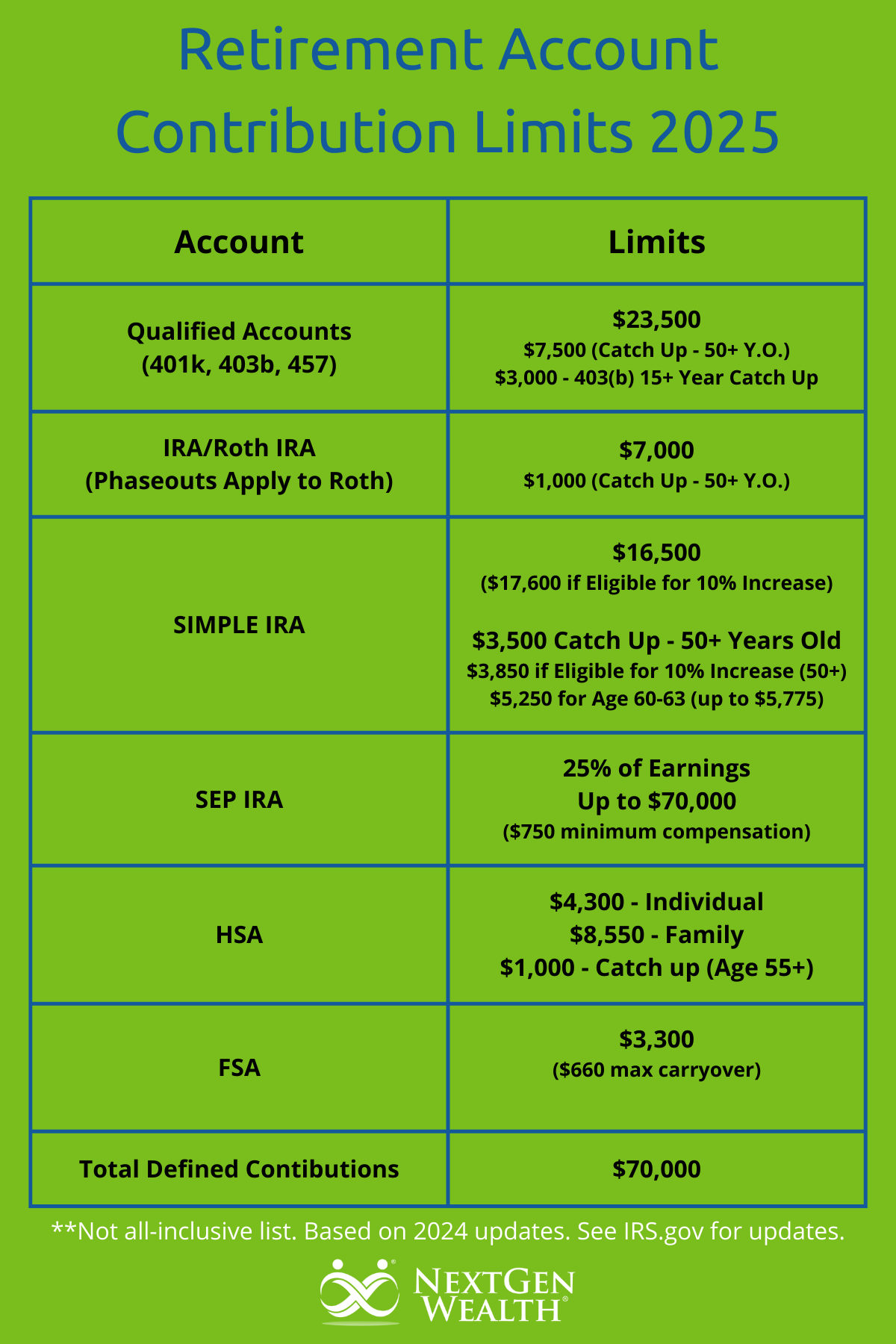
For married couples planning their retirement finances, navigating the Internal Revenue Service (IRS) guidelines for employer-sponsored retirement plans requires a clear understanding of individual caps, catch-up rules, and joint household savings strategies. In 2024, the standard individual contribution limit for a 401(k) plan is $23,000, meaning a married couple with two separate workplace plans can collectively contribute up to $46,000 before factoring in any eligible catch-up contributions or employer matching programs.
Planning for retirement as a married household involves far more than simply adding two numbers together. Tax laws, employment structures, and age-based thresholds create a dynamic landscape that directly affects how couples maximize their wealth-building potential. Because 401(k) contributions are managed strictly on an individual basis by the IRS, understanding how these caps apply to dual-earner versus single-earner households is essential for optimizing tax deductions and building long-term security.
Disclaimer: The following information is for educational and informational purposes and should not be construed as professional financial, tax, or legal advice. Tax laws and retirement contribution limits are subject to change based on federal regulations. Consult a certified public accountant or qualified financial planner for guidance tailored to your specific financial situation.
The Baseline 2024 401(k) Contribution Limit for Individuals
To understand what married couples can save, you must first examine the rules governing individual accounts. Under Internal Revenue Code Section 402(g), the elective deferral limit for employees who participate in 401(k), 403(b), most 457 plans, and the federal government's Thrift Savings Plan was set at $23,000 for the 2024 tax year.
This figure represents a $550 increase from the 2023 limit of $22,500. The adjustment is calculated annually by the IRS based on cost-of-living increases tied to the Consumer Price Index.
Crucially, this $23,000 limit applies on an per-person basis, not a per-household basis. This design principle forms the foundation of retirement savings math for married couples. The IRS does not recognize a joint 401(k) account; every worker must maintain their own individual account under their employer's plan or establish a solo 401(k) if they are self-employed.
How Limits Apply to Dual-Earner vs. Single-Earner Married Couples
The total amount a married couple can save in a 401(k) depends heavily on whether one spouse or both spouses earn income and have access to workplace retirement plans.
Dual-Earner Households
When both spouses are employed and have access to traditional or Roth 401(k) plans, the mathematics are straightforward. Each spouse can contribute up to the individual maximum of $23,000.
- Spouse A Contribution: Up to $23,000
- Spouse B Contribution: Up to $23,000
- Combined Base Maximum: $46,000
This dual-stream approach allows high-earning households to shelter a significant portion of their combined adjusted gross income (AGI) from federal income taxes if they utilize traditional pre-tax contributions.
Single-Earner Households
In households where only one spouse is employed and earning taxable compensation, the savings capacity under workplace retirement plans is restricted to a single individual limit.
- Working Spouse Contribution: Up to $23,000
- Non-Working Spouse Contribution: $0 (under a standard workplace 401(k))
- Combined Base Maximum: $23,000
To address this disparity, Congress permits non-working spouses to build retirement savings through alternative vehicles like a Spousal IRA, which allows a working spouse to fund an individual retirement account on behalf of a non-working partner, subject to separate annual IRS caps.
Catch-Up Contributions for Older Workers in 2024
For married couples where one or both spouses are age 50 or older, the IRS allows additional savings through catch-up contributions. These provisions are designed to help older workers accelerate their savings as they approach retirement age.
Standard Catch-Up Contributions (Ages 50 to 89)
For 2024, individuals who turned 50 or older by December 31, 2024, are eligible to make an additional catch-up contribution of $7,500. This rule has remained unchanged from the previous year.
- When added to the base limit of $23,000, the total individual contribution limit for workers aged 50 and older is $30,500.
- If both spouses are 50 or older and both contribute to separate workplace plans, the couple can collectively save up to $61,000 in base and catch-up contributions, excluding employer matches.
The Special "Super Catch-Up" Provision (Ages 60 to 63)
Under the SECURE 2.0 Act, a special catch-up contribution tier was created for workers aged 60, 61, 62, and 63. However, taxpayers must note that the implementation timeline for these specific rules took effect starting in the 2025 tax year, meaning they did not apply to the 2024 tax year. For 2024, the catch-up limit for all workers aged 50 and older remained capped at $7,500 regardless of whether they fell into the 60–63 age bracket.
Overview of 2024 Retirement Account Limits
To provide a clear reference for household planning, the following table summarizes the primary IRS contribution limits for 401(k) plans and related accounts for the 2024 tax year.
| Account Type / Category | 2024 Individual Limit (Under Age 50) | 2024 Catch-Up Limit (Ages 50+) | Total Limit (Ages 50+) |
|---|---|---|---|
| Traditional & Roth 401(k) | $23,000 | $7,500 | $30,500 |
| Traditional & Roth IRA | $7,000 | $1,000 | $8,000 |
| Traditional 403(b) / 457 Plans | $23,000 | $7,500 | $30,500 |
| Combined Married Couple 401(k) | $46,000 | $15,000 (if both 50+) | Up to $61,000 |
Source: Internal Revenue Service (IRS) Technical Guidance (IR-2023-203).
Total Defined Contribution Limits: Section 415 Caps
While the $23,000 limit governs how much an employee can defer from their salary on a pre-tax or Roth basis, a broader limit governs the total amount that can go into a participant's 401(k) account in a single year. This includes employee elective deferrals, employer matching contributions, and any profit-sharing additions.
Under Internal Revenue Code Section 415(c)(1)(A), the total annual additions to a participant's account for 2024 cannot exceed $69,000 (or $76,500 for those aged 50 and older including catch-up contributions).
This distinction is vital for married couples who own small businesses or participate in plans with generous employer matches. Even if an employee's salary deferral is capped at $23,000, total household accumulation can be significantly higher if employers contribute substantial matching funds or profit-sharing distributions to each spouse's individual account.
Strategic Allocation and Tax Considerations for Couples
Maximizing retirement contributions as a married couple involves balancing cash flow needs with long-term tax optimization. Because tax brackets and deduction thresholds are calculated jointly when filing taxes as "Married Filing Jointly," strategic allocation can yield substantial tax savings.
Pre-Tax vs. Roth 401(k) Contributions
Couples must decide whether to contribute to traditional pre-tax 401(k) accounts or Roth 401(k) accounts.
- Pre-Tax Contributions: Lower the couple's current taxable income dollar-for-dollar. This is particularly advantageous for high-income dual-earner couples looking to drop into a lower tax bracket.
- Roth Contributions: Made with after-tax dollars, meaning no immediate tax break is received, but qualified withdrawals in retirement are entirely tax-free.
Couples often benefit from a diversification strategy—having one spouse contribute to a pre-tax account while the other utilizes a Roth account, or splitting contributions within a single plan if the employer offers both options.
Avoiding Excess Deferrals
A common pitfall for dual-earner married couples, particularly those changing jobs mid-year or managing multiple side hustles via solo 401(k) plans, is accidentally contributing more than the statutory limit across different plans.
While the IRS limits contributions per individual across all plans they participate in, plan administrators do not communicate with one another. If a worker contributes $15,000 to Employer A's 401(k) and then moves to Employer B and contributes another $10,000, their total contribution of $25,000 exceeds the $23,000 limit by $2,000.
To correct an excess deferral:
- Contact the plan administrator immediately upon discovery.
- Request a distribution of the excess contribution along with any earnings.
- Withdraw the funds no later than April 15 of the following year to avoid double taxation and IRS penalties.
Frequently Asked Questions
Can a married couple share a single 401(k) account?
No. By federal law, 401(k) accounts are strictly individual entities tied to an employee's workplace plan. A married couple cannot pool their contributions into a single joint 401(k) account. Each working spouse must contribute to their own separate employer-sponsored plan or individual retirement account.
How does a non-working spouse save for retirement if they have no 401(k)?
While a non-working spouse cannot contribute to a workplace 401(k), the working spouse can fund a Spousal IRA on their behalf. For 2024, an eligible couple can contribute up to $7,000 per person ($8,000 if aged 50 or older) across separate traditional or Roth IRAs, effectively doubling the household's tax-advantaged IRA savings capacity.
What happens if we exceed the 401(k) contribution limit?
Exceeding the annual contribution limit results in "excess deferrals." If not corrected by withdrawing the excess amount and associated earnings by April 15, the excess funds are subject to taxation twice: once in the year they were contributed and again when withdrawn in retirement. Additionally, early withdrawal penalties may apply if rules are not followed.
Does the employer match count toward the $23,000 individual limit?
No. The $23,000 limit (or $30,500 for those 50 and older) applies solely to employee elective deferrals. Employer matching contributions and profit-sharing additions do not count toward this employee cap. Instead, they count toward the broader Section 415 limit of $69,000 total additions per person for 2024.
Can both spouses make catch-up contributions if they are over 50?
Yes. Catch-up contribution rules apply independently to each individual. If both spouses are age 50 or older and both participate in separate workplace 401(k) plans, each spouse can contribute an additional $7,500, bringing their individual maximums to $30,500 each and their household maximum to $61,000.
Conclusion and Recommended Next Actions
Maximizing retirement savings as a married couple requires careful coordination of individual earnings, workplace benefits, and IRS limits. For the 2024 tax year, understanding the $23,000 individual cap—and the $7,500 catch-up limit for workers aged 50 and older—ensures that households do not leave valuable tax-advantaged space on the table.
To optimize your household strategy, begin by reviewing your year-to-date pay stubs to verify your current contribution rates. Coordinate with your spouse to calculate your total combined deferrals, factoring in any employer matching structures and potential side-business solo 401(k) accounts. If you encounter complex tax situations, shifting income brackets, or concerns about excess contributions, schedule a consultation with a qualified financial planner or tax professional to ensure compliance and alignment with your long-term retirement goals.