The 2017 Audi Q7 redesigned the brand’s flagship three-row midsize luxury SUV, introducing the 4M generation built on Volkswagen Group’s MLB Evo platform. While praised for its quiet cabin, advanced Virtual Cockpit, and responsive handling, the 2017 Q7 suffers from specific mechanical, electrical, and structural vulnerabilities that emerge over time. Owners and prospective buyers frequently encounter issues ranging from early brake noise and infotainment glitches to mid-life coolant leaks, front suspension wear, and high-mileage oil consumption.
Understanding how these failure patterns align with vehicle mileage helps owners budget for repairs and perform preventative maintenance before minor symptoms cause major component breakdowns.
Understanding the 2017 Audi Q7 Baseline
The 2017 Audi Q7 represented a major shift from its predecessor (the 4L generation), shedding approximately 700 pounds while incorporating new electronic architectures and updated powertrains. In North America, the vehicle offered two primary engine options paired with an 8-speed ZF automatic transmission and standard Quattro all-wheel drive:
- 3.0-Liter Supercharged V6 (EA837 Evo): Rated at 333 horsepower and 325 lb-ft of torque, this engine powers the majority of 2017 Q7 models on the market.
- 2.0-Liter Turbocharged Inline-4 (EA888 Gen 3): Introduced later in the model year as an entry-level option, producing 252 horsepower and 273 lb-ft of torque.
Although the 4M platform brought significant improvements in structural rigidity and fuel economy, early production year models—such as the 2017 Q7—carry a higher rate of initial design oversights than later model years (2018–2019). Identifying when specific problems typically manifest provides a clear roadmap for ownership maintenance.
Timeline of Common 2017 Audi Q7 Issues by Mileage
Vehicle degradation in the 2017 Audi Q7 generally follows a predictable timeline. Below is a breakdown of common problems grouped by the mileage intervals where they most frequently surface.
Early Ownership Phase: 0 to 30,000 Miles
During the initial warranty period, problems predominantly center around electronic software calibration, trim hardware, and braking components.
1. Excessive Brake Squeal and Premature Rotor Wear
One of the most persistent early complaints from 2017 Audi Q7 owners involves loud, high-pitched squealing from the front brakes during light stopping applications.
- Root Cause: Audi utilized high-friction semi-metallic brake pad compounds designed to stop the 5,000-pound vehicle safely. However, harmonic vibration between the pad backing plate and the caliper housing causes audible squeal. Additionally, original equipment rotors tend to wear prematurely, often requiring replacement alongside pads in under 25,000 miles.
- Resolution: Audi issued technical service bulletins (TSBs) advising technicians to install revised dampening shims, spring clips, and updated brake pad compounds. Many owners transition to aftermarket ceramic pads to reduce noise and dust.
2. MMI Infotainment and Virtual Cockpit Glitches
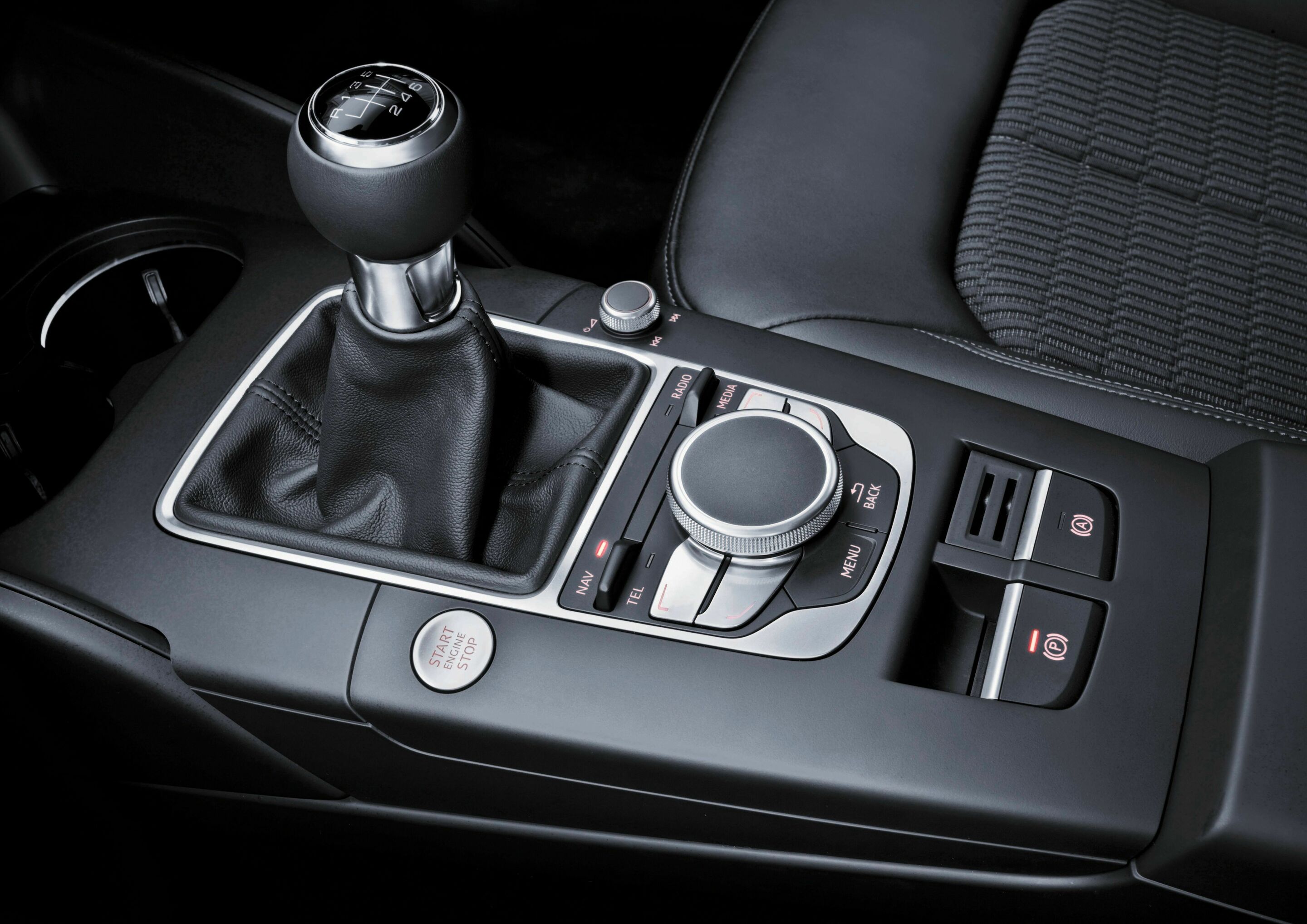
The 2017 Q7 introduced Audi's refreshed Multi Media Interface (MMI) system along with the optional digital Virtual Cockpit display screen. Software instability in early build dates created several user interface anomalies.
- Common Symptoms: Black out or frozen central MMI screens, failure of the motorized screen to pop up upon ignition, random Bluetooth disconnections, and loss of satellite navigation calibration.
- Resolution: Dealership software updates (Flash Updates) resolve the majority of MMI logic errors. In cases where hardware fails, the MMI main unit (located in the glovebox) requires replacement.
3. Power Tailgate Sensor Misalignment
The hands-free tailgate release sensor, triggered by kicking a foot under the rear bumper, frequently stops responding or triggers inadvertently while washing the vehicle. Realigning the sensor harness and updating the comfort control module software usually restores operation.
Mid-Life Phase: 30,000 to 60,000 Miles
As the 2017 Q7 transitions past its factory bumper-to-bumper warranty, mechanical components subject to thermal stress and chassis loads begin showing wear.
- 0 - 30k Miles
- Brake Squeal
- MMI Glitches
- Tailgate Bugs
- 30k - 60k Miles
- Thermostat & Water Pump
- Control Arm Bushings
- PCV Valve Failure
- 60k - 100k+ Miles
- Timing Chain Tensioner Rattle
- Excessive Oil Consumption
- Air Suspension Leaks
1. Thermostat and Water Pump Failures (Coolant Leaks)
Coolant system failures represent one of the highest-frequency mechanical issues on the 3.0T V6 EA837 engine.
- Mechanism of Failure: The OEM water pump housing and thermostat housing are constructed from composite plastics that degrade after repeated thermal expansion cycles. The thermostat can stick in the closed position (causing sudden engine overheating) or open position (preventing the engine from reaching operating temperature and setting a Check Engine Light for fault code P0128).
- Vacuum-Actuated System Risk: The water pump incorporates a vacuum solenoid to control coolant flow during warm-up. Internal seal failure inside the pump can draw engine coolant into the vacuum lines, contaminating solenoids, changeover valves, and potentially the main engine vacuum pump.
- Signs to Watch For: Low coolant warnings on the dash, sweet coolant odor from the engine bay, dried pink crust around the front engine accessories, or engine temperature gauge spikes.
2. Front Suspension Control Arm Bushing Wear
Because of the Q7’s heavy curb weight and multi-link front suspension setup, the hydraulic rubber bushings in the upper and lower control arms experience severe stress.
- Symptoms: Clunking or popping noises when driving over small bumps, low-speed turning clicks, steering wheel vibration at highway speeds, and premature wear along the inner edges of the front tires.
- Repair Considerations: Replacing just the rubber bushings requires specialized hydraulic press tools. Many mechanics recommend replacing complete control arm assemblies with upgraded solid-rubber aftermarket arms to extend service life.
3. Crankcase Ventilation Valve (PCV / Oil Separator) Breakdown
The positive crankcase ventilation (PCV) valve module resides deep within the engine valley beneath the supercharger assembly on the 3.0T engine.
- Failure Symptoms: A torn internal PCV diaphragm creates abnormal crankcase vacuum, producing a high-pitched whistling or howling sound from the engine compartment. Additional symptoms include rough idling, oil consumption spikes, and misfire codes (P0300 series).
- Labor Overhead: Because the supercharger must be unbolted and removed to access the PCV assembly, labor hours dominate the repair cost.
High-Mileage Phase: 60,000 to 100,000+ Miles
In higher-mileage territory, maintenance demands shift to complex engine internal assemblies, drive lines, and luxury chassis features like air suspension.
1. Excessive Engine Oil Consumption
Oil consumption is an ongoing area of concern for older Audi engines, and the 2017 Q7 3.0T is not exempt.
- Primary Causes: Carbon deposits accumulate inside the oil control ring grooves on the pistons, preventing the rings from scraping excess oil off the cylinder walls during the downstroke. That trapped oil burns in the combustion chamber, depositing further carbon on intake valves and exhaust catalysts.
- Severity: Severe cases can consume 1 quart of engine oil every 800 to 1,200 miles.
- Mitigation: Regular 5,000-mile oil change intervals (halving Audi’s factory-recommended 10,000-mile interval) using high-grade synthetic oil helps prevent carbon ring pack fouling. Engine piston ring soaking procedures using chemical solvents can sometimes free stuck rings without an engine teardown.
2. Timing Chain Rattle on Cold Start
The EA837 3.0T engine utilizes four timing chains located at the rear of the engine, driven off the crankshaft facing the transmission bellhousing.
- The Problem: Over time, the hydraulic timing chain tensioners lose pressure while the vehicle sits overnight. Upon a cold start, the timing chain slaps against the plastic guide rails for 1 to 3 seconds until oil pressure builds.
- Critical Threshold: A brief rattle lasting under two seconds during cold starts is considered acceptable by service guidelines. However, a continuous metallic rattle lasting longer than three seconds indicates failing hydraulic tensioners or worn plastic guides.
- Repair Reality: Because the timing drive sits at the rear of the block, fixing the timing chains or lower tensioners requires lowering the engine and transmission from the vehicle, resulting in substantial labor fees.
3. Adaptive Air Suspension Strut and Compressor Failures
Models equipped with the optional Adaptive Air Suspension offer exceptional ride comfort, but mechanical wear increases significantly after 70,000 miles.
- Air Bag Leaks: The rubber air bladders crack due to dry rot and road debris exposure. A leaking air strut causes one corner of the car to sag after sitting overnight.
- Compressor Burnout: If an air bag leak is left unaddressed, the pneumatic air suspension compressor runs continuously to compensate for the pressure drop, causing the pump motor to overheat and burn out.
Major 2017 Audi Q7 Recalls and Technical Service Bulletins
Safety recalls issued by the National Highway Traffic Safety Administration (NHTSA) cover manufacturing defects that must be repaired free of charge by authorized dealerships regardless of vehicle age or warranty status.
| NHTSA Campaign | Affected System | Summary of Issue & Risk | Corrective Action |
|---|---|---|---|
| 16V640000 | Structure: 3rd Row Seat | Third-row seat back frame may yield or fold forward under luggage load during a collision due to inadequate locking mechanism. | Dealers install a reinforcement bracket on the third-row seat structure. |
| 17V436000 | Fuel System, Gasoline | Flange on the fuel pump module can crack over time due to environmental stress, leading to fuel leaks and fire risk. | Dealers replace the fuel pump flange with a revised part and apply a protective cap. |
| 19V547000 / 21V503000 | Airbags: PODS System | Passenger Occupant Detection System (PODS) sensor mat in front passenger seat can degrade, disabling the passenger airbag inadvertently. | Dealers replace the PODS sensor mat and seat heating element wiring harness. |
| 21V947000 | Rear Suspension Alignment | Alignment lock nuts on the rear axle trailing arms can corrode and break, causing sudden alignment shifts or loss of vehicle control. | Dealers replace affected rear axle nuts and bolts and perform a full four-wheel alignment. |
Summary Table: 2017 Audi Q7 Common Fault Timeline & Repair Profiles
The table below summarizes key mechanical vulnerabilities, their typical emergence points, primary symptoms, and expected repair complexity.
| Issue Description | Emergence Window | Key Warning Symptoms | Major Risk Factors | Estimated Repair Scope |
|---|---|---|---|---|
| Brake Squeal / Rotor Wear | 10,000 – 30,000 mi | Loud squealing during light braking, pedal pulsation. | High pad friction compound, heavy vehicle mass. | Low: Pad and rotor replacement with updated TSB shims or ceramic pads. |
| Coolant Leak (Water Pump/Thermostat) | 40,000 – 60,000 mi | Low coolant warning light, overheating, pink crust near belt drive. | Plastic housing thermal decay, vacuum line fluid ingress. | Moderate: Water pump, thermostat, and system vacuum line inspection. |
| Front Control Arm Bushing Failure | 45,000 – 70,000 mi | Front-end clunk over bumps, highway vibration, inner tire shoulder wear. | Weight of vehicle on multi-link suspension bushings. | Moderate: Control arm assembly replacement and four-wheel alignment. |
| PCV / Oil Separator Diaphragm Tear | 50,000 – 80,000 mi | Whistling engine noise, rough idle, misfire codes, sudden oil burn increase. | High crankcase vacuum, heat degradation of rubber membrane. | Moderate-High: Supercharger removal required to replace PCV assembly. |
| Excessive Oil Consumption | 60,000 – 90,000+ mi | Adding 1+ quarts of engine oil per 1,000 miles, black exhaust residue. | Stuck piston oil control rings, extended oil change intervals. | High: Piston ring chemical flush, PCV replacement, or engine rebuild in severe cases. |
| Timing Chain Tensioner Rattle | 70,000 – 100,000+ mi | Metallic rattling sound lasting >3 seconds on cold engine startup. | Hydraulic tensioner leak-down, plastic guide wear. | Very High: Engine-out service to access rear-mounted timing components. |
| Air Suspension Bag / Pump Failure | 75,000 – 100,000+ mi | Vehicle sagging on one corner, "Suspension Malfunction" warning on dash. | Dry-rotted rubber bladders, pump motor thermal failure. | High: Replacement of air struts, relay, or compressor assembly. |
Engine Deep Dive: 3.0T V6 Supercharged vs. 2.0T I4 Turbocharged
Choosing between the two engines available in the 2017 Q7 comes down to performance requirements versus mechanical risk profiles.
| 3.0T Supercharged V6 | 2.0T Turbocharged I4 |
|---|---|
| • 333 HP / 325 lb-ft Torque• Excellent towing capacity• Higher performance envelope | • 252 HP / 273 lb-ft Torque• Slightly higher city fuel economy• Less weight over front axle |
| Vulnerabilities:- Supercharged clutch squeal- Rear-mounted timing chain system- PCV under intake supercharger | Vulnerabilities:- Turbocharger wastegate rattle- Front-mounted timing chain wear- Plastic oil pan seal leaks |
The 3.0T V6 (EA837 Evo)
This supercharged engine uses a Eaton Roots-type twin-screw supercharger mounted inside the engine V. It delivers continuous, linear power without turbo lag, making it ideal for towing up to 7,700 lbs when properly equipped.
- Supercharger Magnetic Clutch Issue: The EA837 Evo introduced a magnetic clutch on the supercharger pulley to decouple the blower under light loads for fuel savings. The clutch pack can develop an audible squeak or chirp upon engagement around 2,000 RPM. Audi issued updated clutch software and modified hardware to address the squeak.
- Rear Timing Chain Drive: As detailed earlier, servicing the rear timing chain assembly remains the engine's major long-term maintenance hurdle.
The 2.0T I4 (EA888 Gen 3)
The 2.0-liter turbocharged four-cylinder is lighter and easier to work on in certain service procedures, but it works significantly harder to move the Q7’s heavy chassis.
- Turbocharger Wastegate Play: The pneumatic wastegate actuator linkage on the turbocharger can develop mechanical play, causing a rattling sound during deceleration and eventually triggering boost pressure regulation codes (P0299 Turbo Underboost).
- Front-Mounted Timing Chain: Unlike the 3.0T V6, the 2.0T features front-mounted timing chains. While chain stretch can still occur near 100,000 miles, replacing timing components on the 2.0T does not require pulling the engine out of the vehicle, lowering repair costs significantly compared to the V6.
Maintenance Strategies to Prevent Common Failures
Preventative maintenance is essential for keeping ownership costs manageable on a 2017 Audi Q7. Relying solely on Audi’s standard factory schedule can leave components vulnerable to premature wear.
1. Halve the Engine Oil Change Interval
Audi suggests a 10,000-mile or 1-year oil change frequency. Independent Audi specialists strongly recommend changing engine oil every 5,000 miles or 6 months using full-synthetic oil that meets Audi VW 502 00 / 504 00 specifications. Shorter oil service intervals remove suspended carbon particles before they settle into the piston ring lands, significantly delaying oil consumption issues.
2. Flush Coolant and Inspect Vacuum Lines
Because the 3.0T engine uses vacuum control through the water pump, inspect vacuum hoses for trace contamination during every major service. Replace the engine coolant every 4 years or 50,000 miles to prevent acid buildup from degrading plastic coolant housings.
3. Service the ZF 8HP Automatic Transmission
Audi terms the fluid inside the ZF 8-speed automatic transmission as "lifetime fill." However, ZF (the transmission manufacturer) recommends servicing the transmission fluid and filter pan every 50,000 to 60,000 miles. Performing this service clears metal wear particles and protects internal valve bodies from fluid breakdown.
4. Keep Sunroof Drains and Plenum Drains Clear
Water intrusion is a documented issue on the 2017 Q7. Leaves and dirt block the front firewall drains and panoramic sunroof drain tubes. When water backs up, it overflows into the interior footwells, corroding sensitive electronic control modules located beneath the floor carpet. Clean out drain valves annually using compressed air or flexible drain snakes.
Buyer’s Checklist for Used 2017 Audi Q7 Models
If shopping for a pre-owned 2017 Audi Q7 on the secondary market, perform the following verification steps before finalizing a purchase:
- Cold Engine Start Test: Request that the vehicle sit overnight before your inspection. Have an assistant start the engine while you stand near the hood with the engine cover removed. Listen for a loud metallic clattering or rattling noise during the first 3 seconds of running.
- Scan for Hidden Diagnostic Codes: Use an Audi-specific diagnostic scanner (such as VCDS or OBDeleven) rather than a generic OBD-II reader. Check for historical codes related to fuel trim limits, engine vacuum systems, thermostat regulation, and air suspension pressure drop.
- Inspect Front Tires for Asymmetric Wear: Look closely at the inner tread shoulders of both front tires. Heavy inner edge wear points directly to worn upper or lower control arm bushings.
- Test Climate and MMI Controls: Cycle the MMI screen up and down multiple times. Verify that the Virtual Cockpit shifts between views without flickering or dropping screen segments. Turn on the front passenger seat heater to confirm the PODS airbag detection light switches on and off correctly.
- Review Recall Records: Cross-reference the vehicle’s VIN on the NHTSA Recalls Database to verify that all safety recalls—specifically the fuel pump flange and third-row seat bracket modifications—were documented and completed by an authorized dealer.
Frequently Asked Questions
Is the 2017 Audi Q7 a reliable car?
The 2017 Audi Q7 delivers average to below-average long-term reliability compared to midsize luxury peers. While its transmission and structural chassis are robust, engine accessories (water pump, thermostat, PCV valve) and electronic components require more frequent maintenance as the vehicle approaches 60,000 miles.
How much does it cost to fix a coolant leak on a 2017 Audi Q7 3.0T?
Repairing a coolant leak caused by a failing water pump and thermostat on the 3.0T engine generally costs between $1,200 and $2,200 at an independent repair shop. Costs increase if coolant has entered the vacuum solenoid system, requiring hose flushing and valve replacement.
Can you drive a 2017 Audi Q7 with a timing chain rattle?
If the rattling sound on a cold start lasts less than 1 to 2 seconds and stops immediately once oil pressure builds, the vehicle can generally be driven safely. However, if the rattle persists for several seconds or occurs when the engine is warm, the vehicle should be evaluated by a professional. Driving with severely worn timing chain tensioners risks chain slippage, which can lead to valve-to-piston contact and total engine destruction.
Why is my 2017 Audi Q7 burning so much oil?
Oil consumption on the 3.0T engine is usually caused by carbon-clogged oil scraper rings on the pistons, a failed PCV valve/oil separator diaphragm, or a combination of both. Replacing the PCV valve under the supercharger and switching to 5,000-mile oil change intervals are the recommended first steps to resolve the problem.
Does the 2017 Audi Q7 require premium gasoline?
Yes, Audi specifies 91 octane premium unleaded fuel for both the 3.0T supercharged V6 and the 2.0T turbocharged inline-4 engines. Using lower-octane fuel causes engine knocking, prompts the engine computer to retard ignition timing, reduces fuel economy, and accelerates carbon build-up.
Final Recommendation and Next Actions
The 2017 Audi Q7 remains a compelling option in the luxury three-row SUV segment, offering executive interior quality, refined driving dynamics, and capable all-weather performance. However, owning one past the warranty phase requires an active approach to mechanical maintenance.
- For Current Owners: Prioritize replacing the factory thermostat, water pump, and PCV valve proactively around the 60,000-mile mark. Reduce oil change intervals to 5,000 miles, and clean out sunroof drains at least once a year.
- For Used Car Buyers: Request complete service records showing consistent oil changes and recall compliance. Prioritize vehicles equipped with the 3.0T V6 that pass a cold-start timing chain inspection, or set aside a $3,000 to $4,000 emergency repair fund to address common mid-life cooling system and suspension repairs.