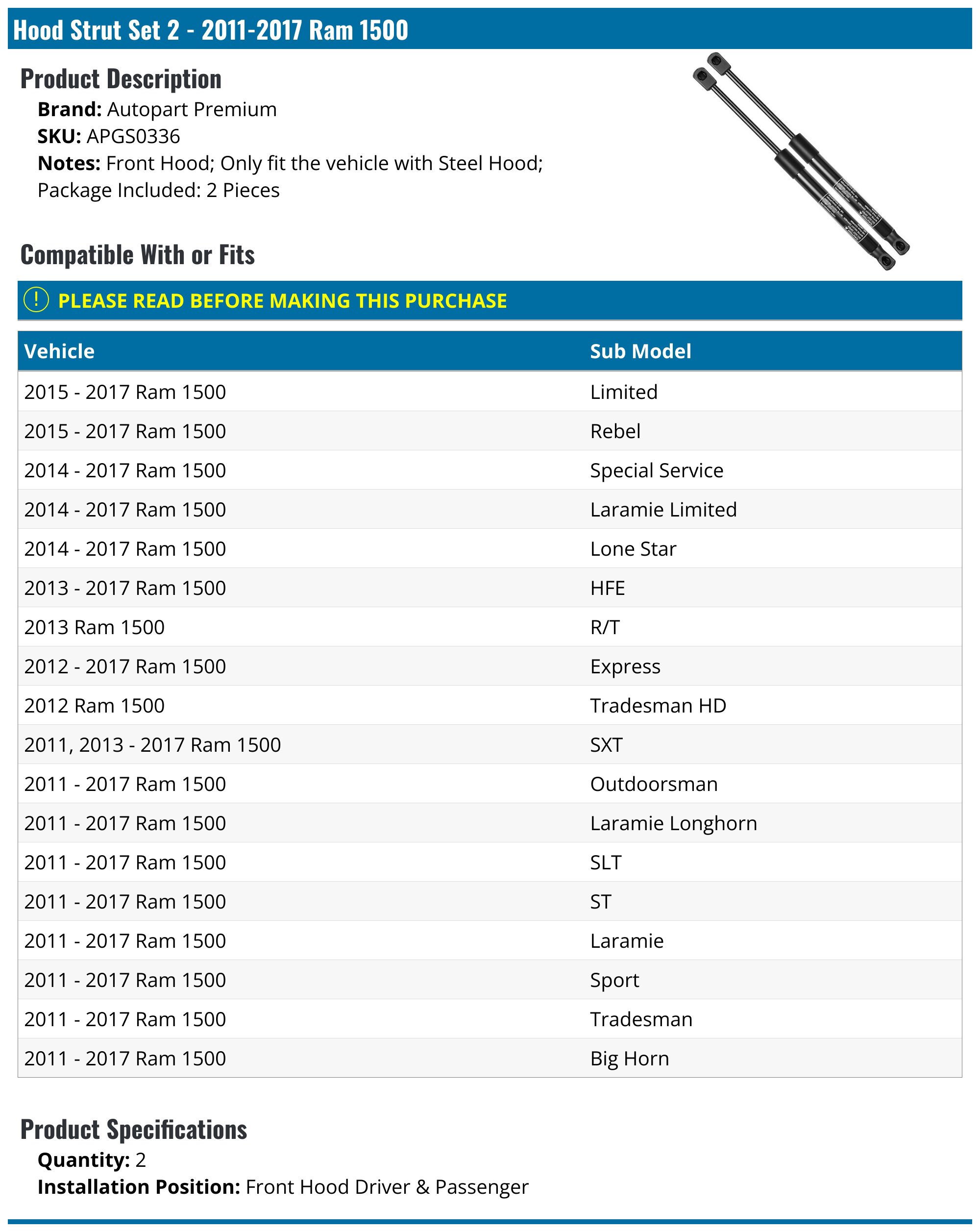
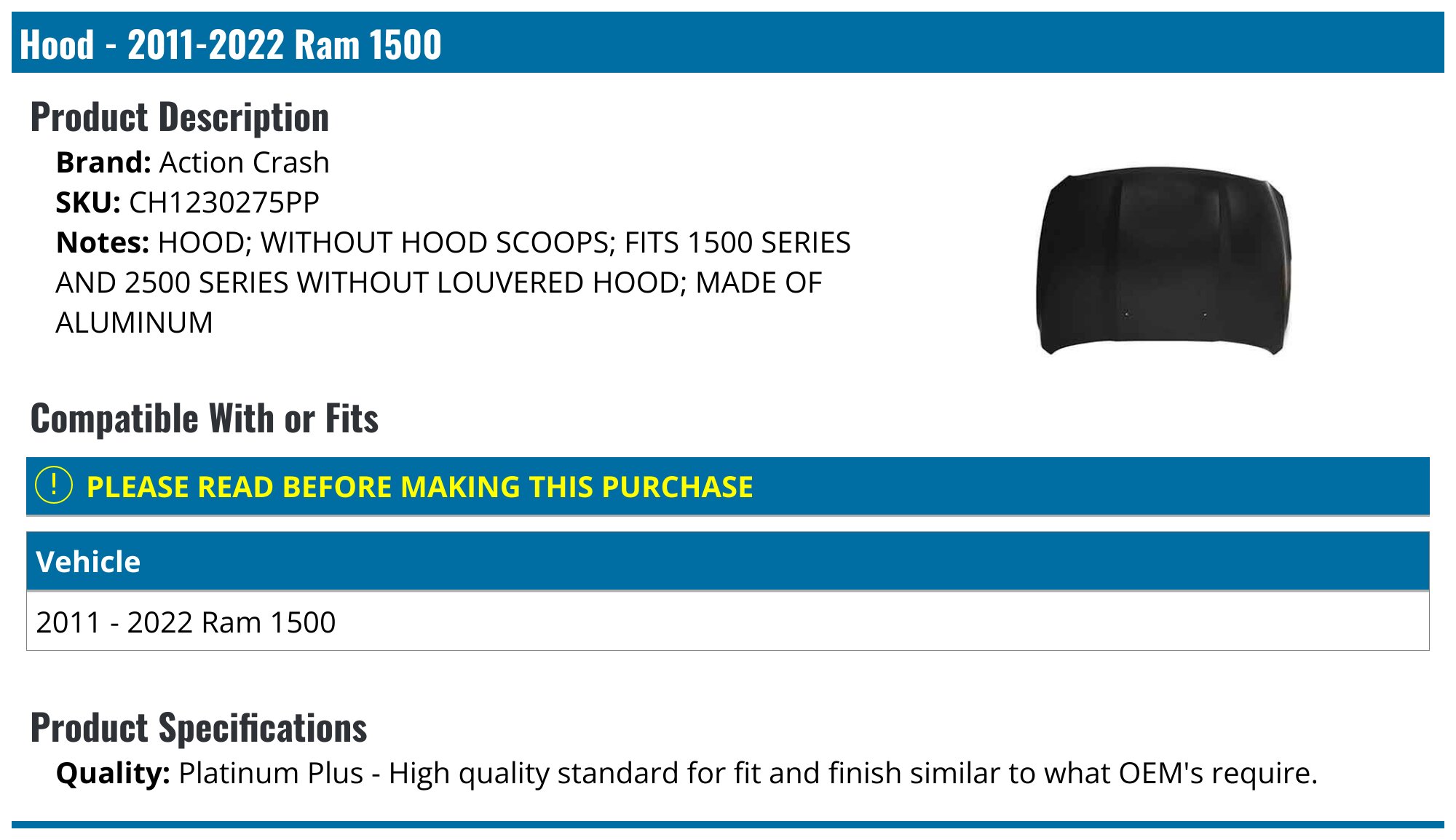
The 2014 Ram 1500, 2500, and 3500 trucks sit in a unique generation bridging classic styling with modern updates, making hood fitment a critical consideration for custom builds, repairs, and front-end upgrades. Whether you are replacing a damaged factory panel after a collision or upgrading to an aggressive performance hood, verifying exact fitment prevents costly alignment issues and ensures proper clearance for cooling components, latches, and weatherstripping.
Navigating Ram truck body parts requires careful attention to generation changes, trim levels, and the distinct structural differences between light-duty (1500) and heavy-duty (2500/3500) models during the 2013-2018 production cycle.
Decoding the 2014 Ram Generation and Body Styles
To understand hood fitment for a 2014 Ram truck, you must first recognize the structural layout of the fourth-generation Ram platform. The fourth-generation Ram trucks span from the 2009 model year through 2018 (with the Ram 1500 "Classic" continuing production even later). However, 2013 introduced a major mid-cycle refresh that drastically altered the front fascia, grille openings, and headlight design for the 1500 models, while the heavy-duty models underwent a similar structural shift for the 2010-2018 eras.
The 2014 Ram 1500 features a completely different front-end geometry compared to the 2009-2012 models. While the basic cab and bed dimensions remained consistent, the leading edge of the hood, the contour lines meeting the grille, and the headlight pockets were redesigned during the 2013 refresh. Consequently, a hood from a 2011 Ram 1500 will not cleanly fit a 2014 Ram 1500 without modifying or swapping the entire front clip, including the grille, headlights, and front bumper fascia.
| Model Year Range | Ram 1500 Fitment Group | Ram 2500/3500 Group |
|---|---|---|
| 2009 – 2012 | Pre-Facelift Gen 4 | Independent Heavy Duty |
| 2013 – 2018 | Post-Facelift Gen 4 | Unified HD Generation |
| 2019 – Present | "Classic" Body Style | Fourth-Gen Continuation |
Ram 1500 vs. Heavy Duty (2500/3500) Hood Differences
One of the most common pitfalls in Ram parts sourcing is assuming that light-duty (1500) and heavy-duty (2500/3500) hoods are interchangeable. While Ram 1500 and heavy-duty trucks share a remarkably similar cabin silhouette, their front-end architecture diverges significantly beneath the surface.
The Ram 2500 and 3500 trucks utilized the older heavy-duty front-end styling in 2014, featuring a taller, more upright grille and a significantly higher hood line to accommodate heavy-duty cooling stacks and the massive Cummins diesel engine options. Attempting to install a 2014 Ram 1500 hood onto a 2014 Ram 2500 will result in severe alignment gaps, improper latch engagement, and incompatibility with the heavy-duty grille surround. Always cross-reference your specific Gross Vehicle Weight Rating (GVWR) before purchasing a replacement panel.
Factory Hood Options and Trim Variances
Within the 2014 model year, factory hoods varied depending on the trim level and functional requirements of the engine bay. Knowing your original equipment manufacturer (OEM) configuration helps determine whether an aftermarket replacement will match your truck's aesthetic and functional needs.
Standard Crown Hoods
The base and mid-tier trims—such as the Tradesman, Express, SLT, and Lone Star—typically feature a clean, smooth stamped-steel hood with subtle center character lines. These hoods prioritize aerodynamics and factory utility without functional vents or scoops. They are lightweight, cost-effective to replace, and widely available in both OEM steel and certified aftermarket CAPA-certified sheet metal.
Sport and Performance Hoods
Higher-end trims like the Sport, Laramie, and specialized packages feature the iconic twin-snorkel performance hood. These hoods incorporate aggressive aesthetic styling with stamped faux or functional air extractors. When swapping a standard hood for a Sport performance hood, verify whether the under-hood insulation pads, washer nozzle lines, and hood light harnesses transfer directly, as mounting clips occasionally vary between flat and sculpted panels.
Aftermarket Upgrades: Steel vs. Fiberglass vs. Carbon Fiber
When factory steel replacement hoods are unavailable or too expensive, vehicle owners frequently turn to aftermarket alternatives. Each material class offers distinct advantages and challenges regarding weight, durability, paint preparation, and fitment precision.
- Stamped Steel: The gold standard for collision repair. Steel hoods match the exact weight, thermal expansion rates, and crash-test crumple zones of factory panels. CAPA-certified steel aftermarket hoods generally require minimal bodywork before painting.
- Fiberglass: Popular among custom builders seeking aftermarket styling, such as ram-air scoops or cowl inductions. Fiberglass hoods are lightweight but require extensive test-fitting, trimming of latch plates, and block-sanding (gel coat prep) to achieve a smooth, factory-like paint finish.
- Carbon Fiber: Primarily used for lightweight off-road racing or aesthetic styling. These panels demand specialized UV-resistant clear coats to prevent yellowing and often require hood pins due to the lighter structural rigidity compared to heavy steel latches.
Step-by-Step Hood Removal and Installation Prerequisites
Replacing a 2014 Ram hood is a two-person job due to the size, weight, and awkward balance of the panel. Rushing the process can result in damaged cowl panels, chipped paint, or misaligned latch pins.
Before picking up a wrench, gather the necessary tools: a metric socket set (typically 10mm and 13mm), a trim removal tool for push-pins, a permanent marker or paint pen to trace hinge locations, a hood prop rod or support stand, and masking tape to protect fender edges.
- Protect Surrounding Surfaces: Apply layers of painters tape along the top edges of the front fenders and the leading edge of the cowl panel. This prevents accidental scratching if the heavy hood slips during unbolting.
- Disconnect Utilities: Open the hood and locate the windshield washer fluid supply line. Disconnect the rubber hose from the plastic T-fitting, securing the line so it does not slip back into the cowl. Unclip any under-hood light wiring harnesses if equipped.
- Mark Hinge Positions: Using a metallic paint pen or fine marker, trace the exact outline of the hood hinges against the underside of the hood bracket. This ensures your replacement hood returns to the exact factory alignment plane, minimizing gap discrepancies.
- Support the Panel: Have an assistant firmly support the weight of the hood from the front edge.
- Remove Bolts: Remove the four mounting bolts (two per side) securing the hood to the hinges. Avoid loosening the bolts that attach the hinge to the firewall, as this alters factory door-to-hood alignment settings.
- Lift and Clear: Carefully lift the hood straight up and away from the vehicle, guiding the rear corners past the windshield wipers and cowl.
Alignment, Gap Adjustments, and Latch Tuning
Once the new hood is bolted loosely to the hinges, final adjustments are required to achieve even panel gaps along the fenders and a flush transition at the grille.
Lower the hood gently until it rests on the safety catch—do not slam it. Inspect the gaps on both the driver and passenger sides. They should remain uniform from the cowl down to the headlights. If adjustment is needed, slightly loosen the hinge-to-hood bolts and shift the panel laterally or longitudinally as indicated by your alignment marks.
Next, inspect the hood latch and rubber bumper stops. The two adjustable rubber bump-stops located on the radiator core support control the height of the hood's leading edge. Rotate these stops clockwise or counter-clockwise until the top surface of the hood sits perfectly flush with the top of the fenders. Finally, verify that the secondary safety latch engages securely and that the release cable pulls smoothly without binding.
Common Fitment Mistakes to Avoid
Avoiding common pitfalls saves time, money, and frustration during a Ram front-end overhaul.
- Ignoring Production Mid-Years: Never order a hood based solely on the model year "2014" without confirming whether your Ram 1500 has the early or late front fascia, or if it is a heavy-duty model sharing a platform with previous years.
- Skipping Dry Test-Fits: Always test-fit aftermarket fiberglass or carbon-fiber hoods completely before sending them to the paint shop. Paint warranties rarely cover labor or fitment modification costs once the panel has been sprayed.
- Over-Tightening Bolts: Steel and aluminum threads on hinges and brackets strip easily. Torque mounting bolts to factory specification rather than relying on brute force.
- Neglecting Safety Latches: Never drive a truck with a newly installed hood without verifying positive engagement of the primary latch and secondary safety hook. High-speed wind lift can force an unsecured hood backward into the windshield.
Frequently Asked Questions
Will a 2015 Ram 1500 hood fit a 2014 Ram 1500?
Yes. The 2013 through 2018 Ram 1500 models (as well as the 1500 Classic up through later production years) share an identical front-end sheet metal platform. A hood from a 2015 model will bolt directly onto a 2014 light-duty Ram without modification.
Can I install a heavy-duty Ram 2500 hood on a Ram 1500?
No. The Ram 1500 and Ram 2500/3500 utilize completely different front body stampings, grille heights, and inner fender structures. Cross-installing these components is structurally impossible without extensive custom fabrication of the entire front clip.
Do aftermarket hoods come pre-painted?
The vast majority of aftermarket hoods arrive either bare (in the case of raw carbon fiber), coated in a black or gray electrophoretic deposition primer (EDP), or sporting a flat gel-coat finish (fiberglass). Professional body shop preparation, priming, blocking, and color-matching are required before final installation.
How do I adjust uneven hood gaps on my Ram?
Uneven gaps are corrected by loosening the hinge bolts connecting the hood to the hinge arms and shifting the hood left, right, forward, or backward. Height discrepancies are adjusted using the threaded rubber bumper stops located on the upper radiator core support.
Are Ram Sport hoods functional?
Factory Ram Sport hoods feature cosmetic extraction vents rather than fully open engine bay pathways in most standard trims. However, many aftermarket replicas and enthusiast modifications allow these vents to be opened up for genuine heat extraction.
Conclusion and Next Actions
Successfully sourcing and installing a hood for a 2014 Ram truck hinges on correctly identifying your specific trim level, confirming light-duty versus heavy-duty platform differences, and taking time to carefully align the panel during installation. Whether restoring a daily driver with an OEM steel replacement or upgrading to an aggressive aftermarket style, methodical preparation ensures a professional, factory-quality finish. Begin your project by verifying your truck's exact build specifications and inspecting local parts suppliers for CAPA-certified sheet metal or trusted aftermarket alternatives.