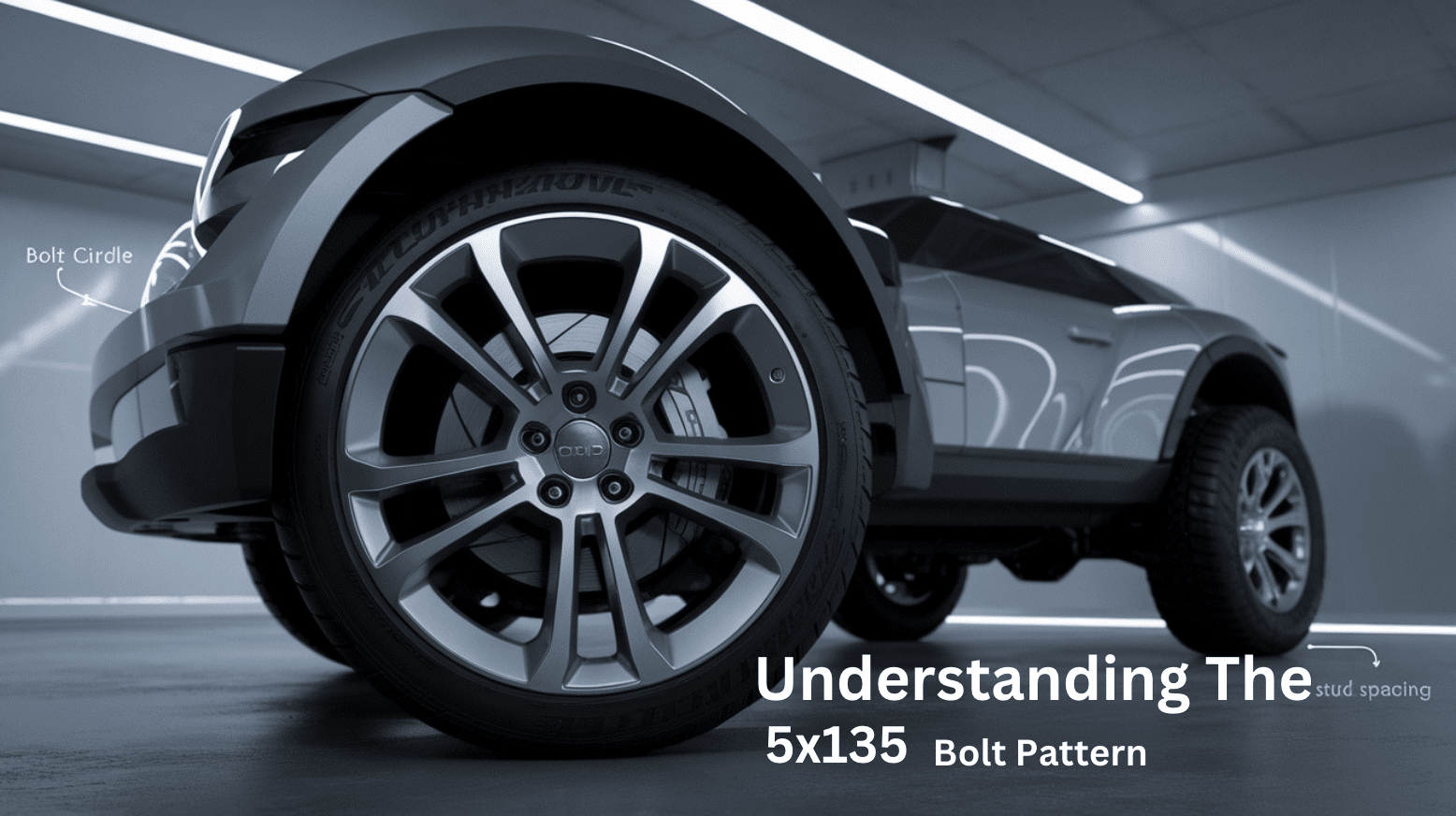
The 2013 Ford Edge utilizes a 5x114.3mm (5x4.5 inches) bolt pattern. This specific configuration consists of five lug holes arranged in a circle with a diameter of 114.3 millimeters, a standard measurement for many mid-sized Ford vehicles and a wide variety of aftermarket wheel options.
Navigating wheel fitment for the 2013 Ford Edge requires more than just knowing the bolt pattern. As these vehicles continue to be popular choices on the secondary market in 2026, understanding the interplay between bolt pattern, center bore, offset, and thread pitch is essential for maintaining safety and performance. This guide provides a deep dive into the technical requirements for selecting and installing wheels on a 2013 Ford Edge, covering all trim levels from the fuel-efficient SE to the performance-oriented Sport.
Understanding the 5x114.3mm Bolt Pattern
The bolt pattern, often referred to as the "lug pattern," is the first and most critical measurement when identifying compatible wheels. For the 2013 Ford Edge, the "5" indicates the number of lug nuts used to secure the wheel to the hub. The "114.3" represents the diameter of the imaginary circle formed by the centers of those five lugs.
In the United States, this pattern is frequently called 5x4.5 inches. While the metric and imperial measurements are functionally identical, it is important to ensure that any wheel you purchase is explicitly rated for one of these two designations. Because the 5x114.3mm pattern is one of the most common configurations in the automotive world—used extensively by manufacturers like Toyota, Honda, and Nissan—there is a massive selection of aftermarket wheels available. However, just because the bolt pattern matches does not guarantee the wheel will clear the brake calipers or sit flush with the fender.
The Significance of Center Bore and Hub-Centric Design
A critical but often overlooked specification for the 2013 Ford Edge is the center bore, which measures 63.4 mm. The center bore is the large hole in the middle of the wheel that fits over the mounting hub of the axle.
Ford designs the Edge as a hub-centric vehicle. This means the weight of the vehicle is supported by the center of the hub rather than the lug studs themselves. The lug nuts are primarily responsible for clamping the wheel against the mounting surface, not for centering the wheel or carrying the vertical load of the car.
Aftermarket Considerations: Hub-Centric Rings
When shopping for aftermarket wheels in 2026, you will likely encounter wheels with a "universal" center bore, often 73.1mm or larger. While these wheels will bolt onto your Edge because the 5x114.3 pattern matches, the gap between the 63.4mm Ford hub and the larger wheel bore can lead to vibrations, steering wheel shimmy, and increased stress on the lug studs.
To solve this, you must use hub-centric rings. These are plastic or aluminum spacers that fill the gap, ensuring the wheel is perfectly centered. For a 2013 Ford Edge, you would typically need a ring with an outer diameter matching the wheel (e.g., 73.1mm) and an inner diameter of 63.4mm.
Thread Pitch and Lug Nut Specifications
The 2013 Ford Edge moved to a metric standard that differs from earlier Ford SUVs. It uses M14 x 1.5 wheel studs.
- M14: Refers to the 14mm diameter of the stud.
- 1.5: Refers to the thread pitch, meaning there is 1.5mm of distance between each thread.
Earlier generations of Ford vehicles often used 1/2"-20 imperial studs. It is vital not to confuse these, as attempting to force an imperial nut onto a metric M14 stud will strip the threads, necessitating an expensive hub or stud replacement.
Torque Requirements
Properly securing your wheels is a matter of safety. For the 2013 Ford Edge, the factory-recommended torque specification is 100 lb-ft (135 Nm).
Using an impact wrench without a torque stick or failing to use a calibrated torque wrench can lead to two major issues:
- Under-torquing: The lug nuts may vibrate loose over time, leading to wheel detachment.
- Over-torquing: This can stretch the studs beyond their elastic limit, cause the brake rotors to warp due to uneven pressure, or crack the wheel seat.
Always torque the lug nuts in a star pattern (crossing from one side to the other) to ensure the wheel seats evenly against the rotor.
Offset and Backspacing for Different Trim Levels
The 2013 Ford Edge was offered in several trims (SE, SEL, Limited, and Sport), which came with wheel sizes ranging from 17 inches to 22 inches. Despite the difference in wheel diameter, the offset requirements remain relatively consistent to ensure proper suspension clearance.
Offset (ET) is the distance from the wheel's mounting surface to its true centerline. The 2013 Ford Edge typically uses a positive offset between +35mm and +50mm.
- High Positive Offset (+50mm): Common on factory 18" and 20" wheels. This keeps the wheel tucked inside the wheel well, maintaining the factory scrub radius and steering feel.
- Low Positive Offset (+35mm): Common in the aftermarket. This pushes the wheel slightly further out toward the fender, providing a "wider" stance.
If you choose a wheel with too low an offset (e.g., +20mm), the tire may rub against the fender lip during deep suspension compression or full-lock turns. Conversely, too high an offset may cause the inner rim or tire sidewall to contact the strut assembly or brake lines.
2013 Ford Edge Wheel Specification Summary
The following table summarizes the essential fitment data for a 2013 Ford Edge across all standard configurations.
| Specification | Measurement |
|---|---|
| Bolt Pattern | 5x114.3mm (5x4.5") |
| Center Bore | 63.4 mm |
| Thread Pitch | M14 x 1.5 |
| Lug Nut Torque | 100 lb-ft (135 Nm) |
| Lug Nut Hex Size | 19 mm or 21 mm (Aftermarket varies) |
| Standard Offset Range | +35mm to +52mm |
| Stock Wheel Sizes | 17x7.5", 18x8.0", 20x8.0", 22x9.0" |
Trim-Specific Considerations
Ford Edge Sport (22-Inch Wheels)
The Sport trim is unique because it came factory-equipped with massive 22x9-inch wheels. If you are replacing these wheels, be aware that they are significantly heavier than the 18-inch variants found on the SEL. Ensure that any aftermarket replacement has an appropriate load rating. The Edge is a heavy crossover, and wheels designed for smaller sedans—even if they share the 5x114.3 pattern—may not be structurally sufficient for the Edge’s Gross Vehicle Weight Rating (GVWR).
Ford Edge SE and SEL (17 and 18-Inch Wheels)
Owners of the SE and SEL often look to "up-size" to 20-inch wheels for better aesthetics. When doing so, you must maintain the overall rolling diameter of the tire to keep the speedometer accurate. For example, if moving from a 235/65R17 to a 245/50R20, the difference in height is minimal, ensuring that the ABS and traction control systems continue to function correctly.
Common Installation Mistakes and Troubleshooting
1. Using the Wrong Lug Nut Seat
Standard 2013 Ford Edge wheels use a 60-degree conical (tapered) seat. Some European wheels use a "ball seat" (rounded), and some older specialty wheels use a "mag seat" (flat with a shank). Using a ball-seat nut on a conical-seat wheel will prevent the nut from centering correctly and will eventually damage the wheel.
2. Ignoring the "Star Pattern"
When mounting the wheel, it is tempting to tighten the nuts in a circular fashion. This often results in the wheel being slightly cocked on the hub. Always tighten in a 1-3-5-2-4 sequence.
3. Neglecting Hub Corrosion
By 2026, many 2013 Ford Edges have seen significant road salt or moisture. Rust buildup on the face of the hub can prevent a new wheel from sitting flush. Before installing wheels, use a wire brush to clean the mounting surface and the center pilot of the hub. A very thin layer of anti-seize can be applied to the center pilot to prevent the wheel from "seizing" to the hub in the future, but never apply anti-seize or grease to the lug stud threads, as this results in inaccurate torque readings and can lead to stud failure.
Frequently Asked Questions
Can I use wheels from a Ford Explorer on a 2013 Ford Edge?
Generally, yes. The 2011–2019 Ford Explorer shares the 5x114.3mm bolt pattern and the 63.4mm center bore. However, you must verify the offset. Explorer wheels often have a slightly different offset that might cause the wheel to sit deeper in the wheel well. Always perform a "test fit" on the front hub to ensure the wheel clears the brake caliper before mounting tires.
Will a 5x112 or 5x120 wheel fit my Ford Edge?
No. While 5x112 (common on Audi/VW) and 5x120 (common on BMW/Honda Pilot) look similar, they will not fit. Attempting to force these wheels on will bend the studs. There is no safe way to use these patterns without expensive and often unsafe bolt-pattern adapters, which are generally not recommended for daily driving crossovers like the Edge.
What happens if I use the wrong center bore?
If the wheel’s center bore is smaller than 63.4mm, the wheel simply won't fit over the hub. If the bore is larger (e.g., 70.1mm) and you do not use hub-centric rings, the wheel will be "lug-centric." This often causes the vehicle to shake at highway speeds (60–70 mph) because the wheel is not perfectly centered on the axle.
Do I need to replace my TPMS sensors when changing wheels?
If you are moving your current tires to new wheels, you can usually swap the Tire Pressure Monitoring System (TPMS) sensors. However, if you are buying a second set of wheels for winter tires, you will need new sensors. The 2013 Ford Edge uses 315MHz sensors. After installation, the car must be put into "train mode" to recognize the new sensor positions.
How do I measure my bolt pattern to be sure?
For a 5-lug wheel, measuring is slightly more complex than a 4-lug. You measure from the back of one lug hole to the center of the second lug hole away from it. On a 2013 Ford Edge, this measurement will be approximately 114.3mm. A more accurate way is to use a dedicated bolt pattern gauge, which is available at most automotive parts stores.
Final Recommendations for 2013 Ford Edge Owners
When choosing wheels for your 2013 Ford Edge, prioritize the 5x114.3mm bolt pattern and the 63.4mm center bore. For the best driving experience, seek out "hub-centric" wheels specifically designed for Ford vehicles to avoid the need for adapter rings. If you are upgrading to larger wheels, ensure the load rating is appropriate for a 4,000+ lb vehicle and stick to an offset between +35mm and +45mm for a balanced fitment. Finally, always use a torque wrench set to 100 lb-ft to ensure your wheels remain securely fastened, and re-check the torque after the first 50 miles of driving on new wheels.