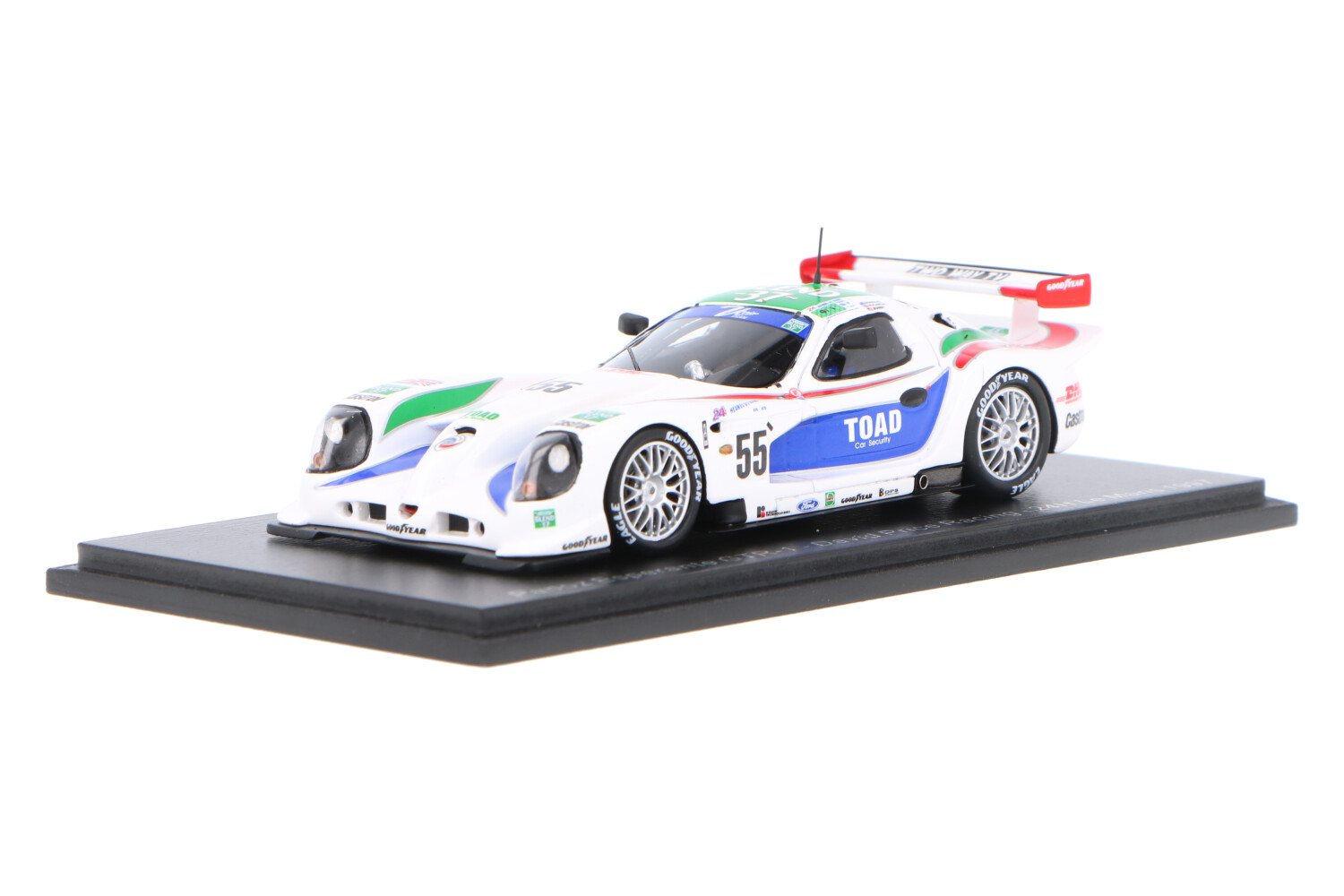
The concept of a 12-seat Panoz GTR-1 road car is a physical and mechanical impossibility. The Panoz Esperante GTR-1 was a dedicated, ultra-rare homologation special built strictly as a two-seater racing car and a single-seat road-legal variant, featuring a unique front-engine, rear-wheel-drive layout with a massive front overhang designed to conquer endurance championships like the 24 Hours of Le Mans.
Disambiguation and the Origins of the Panoz GTR-1
To understand why a 12-seat variant of the Panoz GTR-1 does not exist, it is necessary to examine what the Panoz GTR-1 actually was. Developed in the late 1990s by Panoz Auto Development in conjunction with Élan Motorsport Technologies and Multimatic, the GTR-1 was built to compete in the GT1 class of international sports car racing, including the FIA GT Championship and the 24 Hours of Le Mans.
Under GT1 regulations, manufacturers were required to build at least one road-legal version of their race car to achieve homologation. Panoz successfully built a single road-going GTR-1 (often referred to as the Q9 Hybrid precursor or the street-legal GTR-1 chassis). This vehicle retained the iconic, unconventional design of the race car: a front-mid-engine layout housing a potent 6.0-liter Ford-sourced V8 engine, a carbon-fiber composite body, and a cockpit strictly configured for a driver and, depending on the specific build phase, at most a single passenger.
The idea of a "12-seat" version directly contradicts the fundamental engineering principles of a high-performance GT1 endurance racer. A car designed to sustain extreme speeds on Mulsanne Straight cannot accommodate twelve occupants while maintaining aerodynamic efficiency, structural rigidity, weight distribution, or safety compliance. Therefore, any mention of a 12-seat Panoz GTR-1 road car circulates purely as internet folklore, misremembered vehicle statistics, or satirical hyperbole.
Engineering Realities: Why a 12-Seat Layout is Impossible for a GT1 Racer
Supercars and GT1 homologation specials prioritize weight reduction, aerodynamic downforce, and centralized mass. Exploring the physical constraints of the Panoz GTR-1 architecture highlights why a 12-seat configuration defies automotive design.
| Design Aspect | Panoz GTR-1 Reality |
|---|---|
| Seating Capacity | 1 to 2 occupants (Driver + optional passenger) |
| Engine Placement | Front-mid-engine (behind the front axle, ahead of the) |
| Powertrain | 6.0L Ford-Roush V8 / Direct injection racing setup |
| Chassis Construction | Carbon-fiber composite monocoque over steel roll cage |
| Primary Purpose | FIA GT1 Endurance Racing and Homologation Special |
Powertrain and Weight Distribution
The Panoz GTR-1 positioned its V8 engine far forward in the chassis, sitting almost entirely ahead of the passenger cell to comply with specific aerodynamic goals and weight distribution targets. Behind this massive engine bay sat a compact cockpit tailored exclusively for a driver enclosed in a multi-point roll cage. Extending a chassis to seat twelve people would transform the lightweight racing coupe into a commercial van or limousine, destroying the power-to-weight ratio and completely altering the center of gravity.
Aerodynamic Constraints
The GTR-1 is famous for its long nose and cab-rearward stance, a shape dictated by the necessity to channel air cleanly over the vehicle and feed massive radiators. Adding rows of seating to accommodate twelve passengers would require an extended wheelbase and a raised roofline, ruining the low-slung, wind-cheating profile required to break 200 mph on the Mulsanne Straight.
Structural Integrity and Safety
GT1 cars rely on rigid carbon-fiber monocoques designed to protect one or two occupants during high-speed impacts. Expanding the cabin to hold twelve people without a complete redesign of the chassis would render the vehicle structurally unsound and incapable of passing even basic automotive safety standards, let alone FIA motorsport crash tests.
Tracing the Origins of Automotive Myths Online
Rumors regarding absurd vehicle specifications—such as multi-seat hypercars or limousine-style race cars—frequently emerge due to several distinct digital phenomena:
- AI-Generated Hallucinations: Automated content generators and low-quality web scrapers occasionally combine disparate automotive terms (e.g., "12-cylinder engine," "12-hour race," and "Panoz GTR-1") into nonsensical specifications like "12-seat road car."
- Translation Errors: Automated translation tools can misinterpret technical terms regarding seating capacity, engine cylinders, or gear ratios, transforming standard specifications into fictional metrics.
- Forum Saturation: Car enthusiast forums often dabble in hypothetical "what-if" scenarios, joking about absurd modifications that later get indexed by search engines as factual statements.
Understanding the True Panoz GTR-1 Road Car
For automotive enthusiasts interested in the actual history of the Panoz GTR-1 road car, the facts are far more compelling than internet myths. Only one authentic street-legal GTR-1 was completed for the road, serving as the ultimate expression of Don Panoz’s unorthodox racing vision.
Key Specifications of the Real GTR-1 Road Car
- Engine: Aluminum-block 6.0-liter Ford-derived V8 engine built by Roush.
- Horsepower: Approximately 600 horsepower at high RPMs.
- Transmission: 6-speed sequential manual transaxle.
- Bodywork: Lightweight carbon fiber body panels styled identically to the endurance racers that competed at Le Mans, Sebring, and Petit Le Mans.
- Legality: Fully registered for road use, featuring necessary concessions such as handbrake systems, modified exhaust routing for emissions compliance, and adjusted ride heights for public roadways.
Frequently Asked Questions
Was a 12-seat Panoz GTR-1 ever manufactured?
No. The Panoz GTR-1 was exclusively designed as a high-performance GT1 race car with a single-seat or two-seat configuration. Only one road-legal version was ever produced for private use, and it seats a maximum of two people.
What is the seating capacity of the actual Panoz GTR-1 road car?
The authentic Panoz GTR-1 road car accommodates a maximum of two occupants (a driver and one passenger), mirroring the cockpit layout of its racing counterpart.
Why does the Panoz GTR-1 have such a long front end?
The car features a front-mid-engine layout where the V8 engine sits behind the front axle centerline. This design was chosen by Panoz engineers to achieve optimal weight distribution, improve high-speed stability, and accommodate unique aerodynamic ducting.
How many Panoz GTR-1 race cars and road cars were built?
Panoz and its partner Multimatic built a limited number of chassis for competition during the late 1990s (around six to ten total race cars, depending on the chassis updates and hybrid experiments like the Q9), with only a single chassis converted into a true road-legal specification.
Where can I see a real Panoz GTR-1?
The surviving Panoz GTR-1 race cars and the rare road-legal variant occasionally appear at major historic motorsport events, automotive museums, and high-end concours d'elegance gatherings curated by collectors and motorsport historians.
Practical Guidance for Automotive Researchers
When researching rare sports cars, homologation specials, and bespoke racing machinery, rely strictly on authenticated manufacturer records, verified motorsport registries (such as Le Mans starting grids and FIA documentation), and reputable automotive historians. Disregard exaggerated online specifications or sensationalized claims regarding impossible vehicle configurations. If an automotive listing or article claims the existence of a multi-seat hypercar or a passenger-van endurance racer, cross-reference the claim with primary chassis data and official technical blueprints.