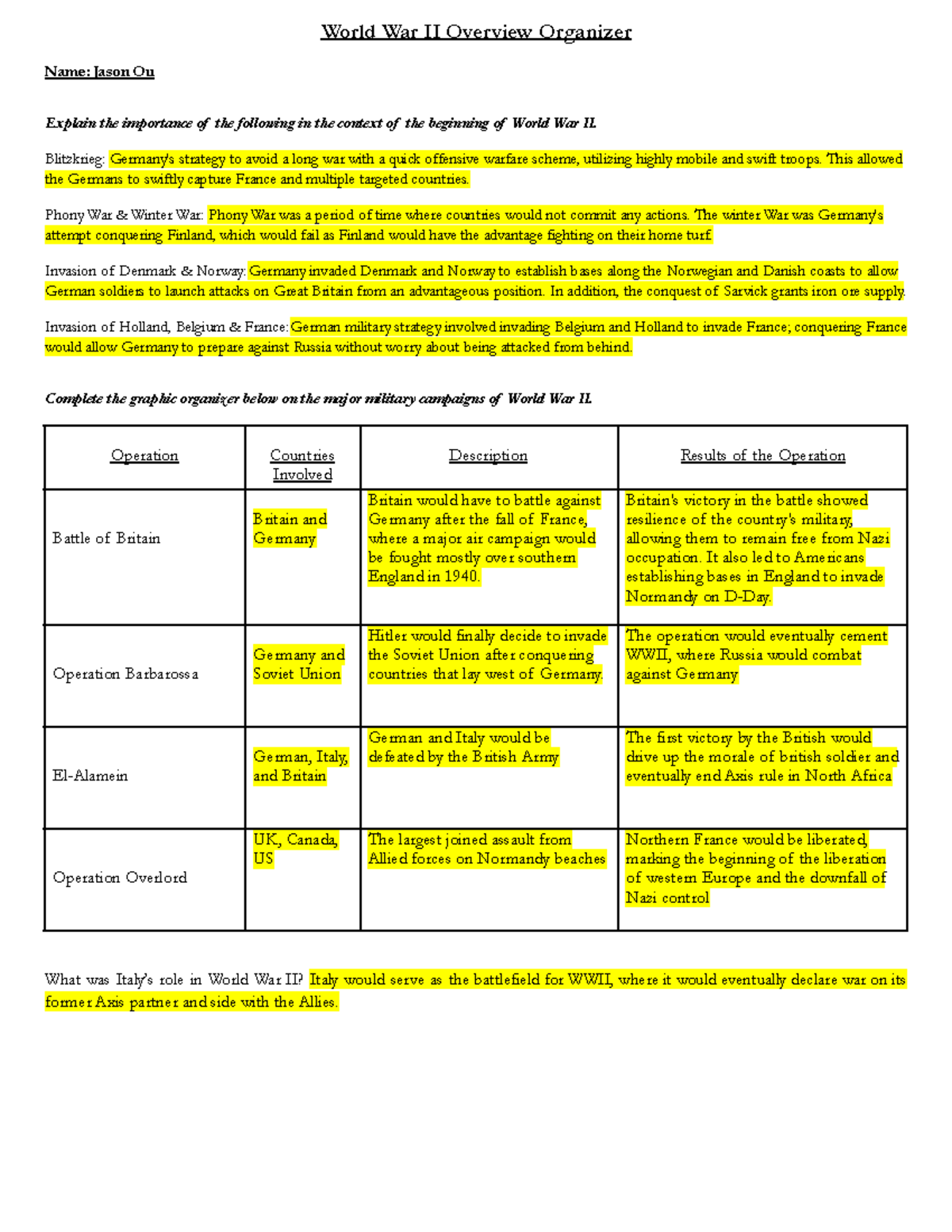
World War II catalyzed an unprecedented era of technological advancement, transforming fundamental scientific theories into battlefield innovations at a staggering pace. Driven by total industrial mobilization, the Allied and Axis powers funneled immense resources into research and development, giving birth to radar, the atomic bomb, ballistic missiles, advanced cryptography, and jet propulsion that fundamentally reshaped both military strategy and post-war civilian life.
The Genesis of Wartime Research and Development
The technological landscape of World War II differed vastly from previous global conflicts. While World War I relied heavily on industrial-scale mechanical engineering—such as trench systems, heavy artillery, and early chemical warfare—World War II integrated theoretical physics, electronics, and advanced chemistry directly into combat operations.
Governments realized that military victory depended on mobilizing civilian scientists. In the United States, the establishment of the Office of Scientific Research and Development (OSRD) in 1941 bridged the gap between academic laboratories and the military. Similar centralized efforts occurred in Great Britain, Germany, and the Soviet Union. This institutional alignment allowed breakthroughs from academic physics and chemistry to move rapidly from the laboratory bench to mass production facilities.
Mobilization and Industrial Capacity
Scientific discovery alone did not guarantee military dominance; industrial capacity and manufacturing precision dictated which innovations could be deployed at scale. The transition from a prototype to millions of functional units required unprecedented manufacturing standards. Interchangeable parts, synthetic material substitutes, and mass-assembly techniques enabled nations to produce complex electronic and mechanical systems under wartime constraints.
Radar and Electronic Warfare
Perhaps the single most strategically decisive technological advancement of the war was Radio Detection and Ranging (Radar). Building on pre-war international research in radio wave reflection, both British and German engineers developed operational radar systems during the late 1930s.
The British Chain Home Network
Great Britain, anticipating aerial bombardment, constructed the Chain Home radar network along its southern and eastern coasts. Operating on high-frequency radio waves, these stations could detect incoming German Luftwaffe formations while they were still over the English Channel. This early warning system provided the Royal Air Force Fighter Command with critical minutes to scramble interceptors, serving as a primary factor in Britain's victory during the Battle of 1943.
The Cavity Magnetron Breakthrough
A major limitation of early radar was its bulky size and long wavelengths, which required massive antenna arrays. In 1940, British physicists John Randall and Harry Boot invented the cavity magnetron at the University of Birmingham. This device generated high-power microwaves (centimeter wavelengths), enabling the creation of compact, high-resolution airborne radar.
Airborne radar allowed night-fighters to track enemy bombers independently of searchlights and enabled maritime patrol aircraft to detect surfaced German U-boats in total darkness, severely disrupting the German submarine campaign in the Atlantic.
Cryptography and the Birth of Computing
The complexity of modern military operations demanded secure communications, making code-making and code-breaking a vital domain of technical warfare.
The Enigma Machine and Ultra
The German military relied on the Enigma machine, an electromechanical rotor cipher device that scrambled plain text into millions of possible combinations. The sheer number of potential daily settings made manual decryption mathematically impossible.
Polish cryptologists, led by Marian Rejewski, made the foundational breakthroughs in the 1930s by reverse-engineering the Enigma wiring. When the German military increased the complexity of Enigma procedures prior to the invasion of Poland, Polish intelligence shared their methods with British cryptanalysts at Bletchley Park.
At Bletchley Park, a multidisciplinary team including mathematician Alan Turing developed electromechanical devices called Bombes. These machines automated the process of testing potential Enigma settings, allowing Allied intelligence—designated as Ultra—to read high-level German military communications regularly.
The Colossus Computer
To break even more complex German teleprinter ciphers (known to the British as Tunny), Bletchley Park engineers designed and built Colossus in 1943. Operating under the direction of engineer Tommy Flowers, Colossus is widely recognized as the world's first programmable, electronic digital computer. Utilizing vacuum tubes to process data at unprecedented speeds, Colossus automated the decryption of high-command strategic intercepts, significantly shortening the war in Europe.
Aerospace Engineering: Jet Propulsion and Ballistic Missiles
Aviation underwent a revolutionary transition during the war, moving from piston-driven propellers to jet engines and long-range rocket propulsion.
Jet Aircraft Development
While traditional propeller-driven fighters reached aerodynamic limits near the speed of sound, engineers sought alternative propulsion methods. In Germany, Hans von Ohain designed the first operational jet engine, leading to the deployment of the Messerschmitt Me 262 in 1944. The Me 262 was significantly faster than any Allied propeller fighter.
Simultaneously, Great Britain developed its own jet propulsion program based on the independent patents of Frank Whittle, resulting in the deployment of the Gloster Meteor in 1944. While jet aircraft saw limited combat use due to fuel shortages, material scarcity, and late introduction, they marked the obsolescence of piston engines in high-performance military aviation.
The V-Weapon Program and Long-Range Rockets
Germany invested heavily in long-range strategic rocketry, overseen by Wernher von Braun at the Peenemünde Army Research Center. This program yielded two primary weapons:
- V-1 Flying Bomb: A pulse-jet-powered cruise missile that flew autonomously along a pre-set compass heading before its engine shut down, causing it to dive onto targets like London and Antwerp.
- V-2 Rocket (A-4): The world's first long-range guided ballistic missile. Powered by a liquid-propellant rocket engine (alcohol and liquid oxygen), the V-2 traveled at supersonic speeds, reaching the edge of space before descending silently onto targets. Because it traveled faster than sound, victims received no warning prior to impact.
While the V-weapons caused significant civilian casualties, they were strategically inefficient. Their high production costs and poor accuracy meant they diverted vital industrial resources without altering the strategic outcome of the conflict.
Nuclear Physics: The Manhattan Project
The most scientifically complex and historically consequential technological initiative of World War II was the Manhattan Project, a clandestine research and development undertaking led by the United States with major contributions from the United Kingdom and Canada.
Fission and the Uranium Breakthrough
Following the discovery of nuclear fission by German chemists Otto Hahn and Fritz Strassmann in 1938—and its theoretical explanation by Lise Meitner and Otto Frisch—physicists realized that splitting uranium atoms could release immense amounts of energy and trigger a self-sustaining chain reaction. Fearing that Nazi Germany would develop a fission bomb first, physicist Albert Einstein co-signed a 1939 letter to President Franklin D. Roosevelt, urging accelerated research.
Industrial Scale Production
The Manhattan Project required solving unprecedented engineering challenges, primarily separating the rare, fissile isotope Uranium-235 from the more abundant Uranium-238, and producing Plutonium-239 in nuclear reactors designed by Enrico Fermi and his team at the University of Chicago.
Major facilities were constructed across the United States:
- Oak Ridge, Tennessee: Dedicated to uranium enrichment using gaseous diffusion and electromagnetic separation.
- Hanford, Washington: Focused on plutonium production using large-scale nuclear reactors.
- Los Alamos, New Mexico: The central scientific laboratory where physicists J. Robert Oppenheimer and multidisciplinary teams designed and assembled the final weaponized devices.
The successful detonation of the first nuclear device at the Trinity test on July 16, 1945, ushered humanity into the nuclear age. The subsequent deployment of atomic bombs against Hiroshima and Nagasaki in August 1945 accelerated the unconditional surrender of Japan, closing the global conflict while permanently altering international geopolitics.
Comparison of Major WWII Technological Domains
| Technological Domain | Primary Innovators | Strategic Purpose | Post-War Civilian Impact |
|---|---|---|---|
| Radar Systems | Britain, US, Germany | Early warning, interception, maritime patrol | Air traffic control, meteorology, modern navigation |
| Cryptography & Computing | Britain, Poland, US | Secure communications, breaking encrypted intercepts | Modern computer science, digital data processing |
| Jet Propulsion | Germany, Britain | High-speed aerial combat | Commercial jet aviation, global air transport |
| Ballistic Missiles | Germany | Long-range strategic bombardment | Space exploration, satellite launch vehicles |
| Nuclear Physics | US, UK, Canada | Decisive strategic weapon development | Nuclear power generation, medical isotopes |
Medical and Material Innovations
Beyond combat systems, World War II accelerated developments in medicine and industrial materials that permanently altered civilian life.
Penicillin Mass Production
Discovered by Alexander Fleming in 1928, penicillin remained a laboratory curiosity until wartime demands necessitated effective treatments for infected battlefield wounds. During the early 1940s, British and American researchers—notably Howard Florey and Ernst Chain—developed techniques for the large-scale industrial fermentation of Penicillium mold. By D-Day in 1944, sufficient quantities of penicillin were available to treat Allied wounded, drastically reducing mortality rates from sepsis and gangrene.
Synthetic Materials
Resource shortages forced nations to develop synthetic substitutes for natural commodities. Germany, cut off from natural rubber supplies, expanded its production of synthetic rubber (Buna). Similarly, the United States developed synthetic rubber programs and introduced nylon, which replaced silk in parachutes, tire cords, and ropes.
Frequently Asked Questions
Which technology had the greatest immediate impact on the outcome of World War II?
While the atomic bomb ended the war in the Pacific, radar had the most pervasive tactical impact throughout the conflict. Radar provided the strategic early warning required to win the Battle of Britain, guided anti-aircraft artillery, enabled night interception, and allowed Allied navies to locate and destroy German U-boats in the Atlantic.
How did the Manhattan Project manage to keep such massive operations secret?
The Manhattan Project operated under strict compartmentalization. Workers at different sites, such as Oak Ridge or Hanford, performed isolated tasks without knowing the ultimate purpose of the materials they produced. Military security, strict censorship of scientific publications, and localized management minimized the risk of espionage, though Soviet spies like Klaus Fuchs still successfully infiltrated the project.
Did Germany successfully deploy jet aircraft in large numbers?
Germany deployed the Messerschmitt Me 262 into combat starting in mid-1944, making it the world's first operational jet fighter. However, chronic shortages of strategic materials (such as nickel and chromium for engine turbines), fuel scarcity, and Allied bombing raids on manufacturing plants prevented Germany from fielding enough aircraft to alter air superiority.
What was the primary difference between German V-1 and V-2 weapons?
The V-1 was a pulse-jet-powered cruise missile that flew at subsonic speeds within the atmosphere and emitted a distinct buzzing sound before engine cutoff. The V-2 was a supersonic ballistic rocket that traveled into the upper atmosphere before descending at speeds exceeding Mach 4, making interception impossible with contemporary defense technology.
How did Bletchley Park change the trajectory of modern computing?
Bletchley Park’s cryptanalytic requirements necessitated the automation of repetitive mathematical calculations. This need drove the development of electromechanical Bombes and eventually the electronic Colossus computer, establishing foundational engineering principles for electronic data processing, algorithmic decryption, and programmable computing architectures.
Summary and Next Actions
World War II compressed decades of technological evolution into six intense years of development. The race for military supremacy yielded foundational breakthroughs in electronics, computing, aerospace, nuclear physics, and medicine that continue to define modern technological infrastructure. To explore this topic further, examine original documents released by the U.S. National Archives, historical evaluations from the Imperial War Museums, or academic texts detailing the institutional history of wartime scientific mobilization.