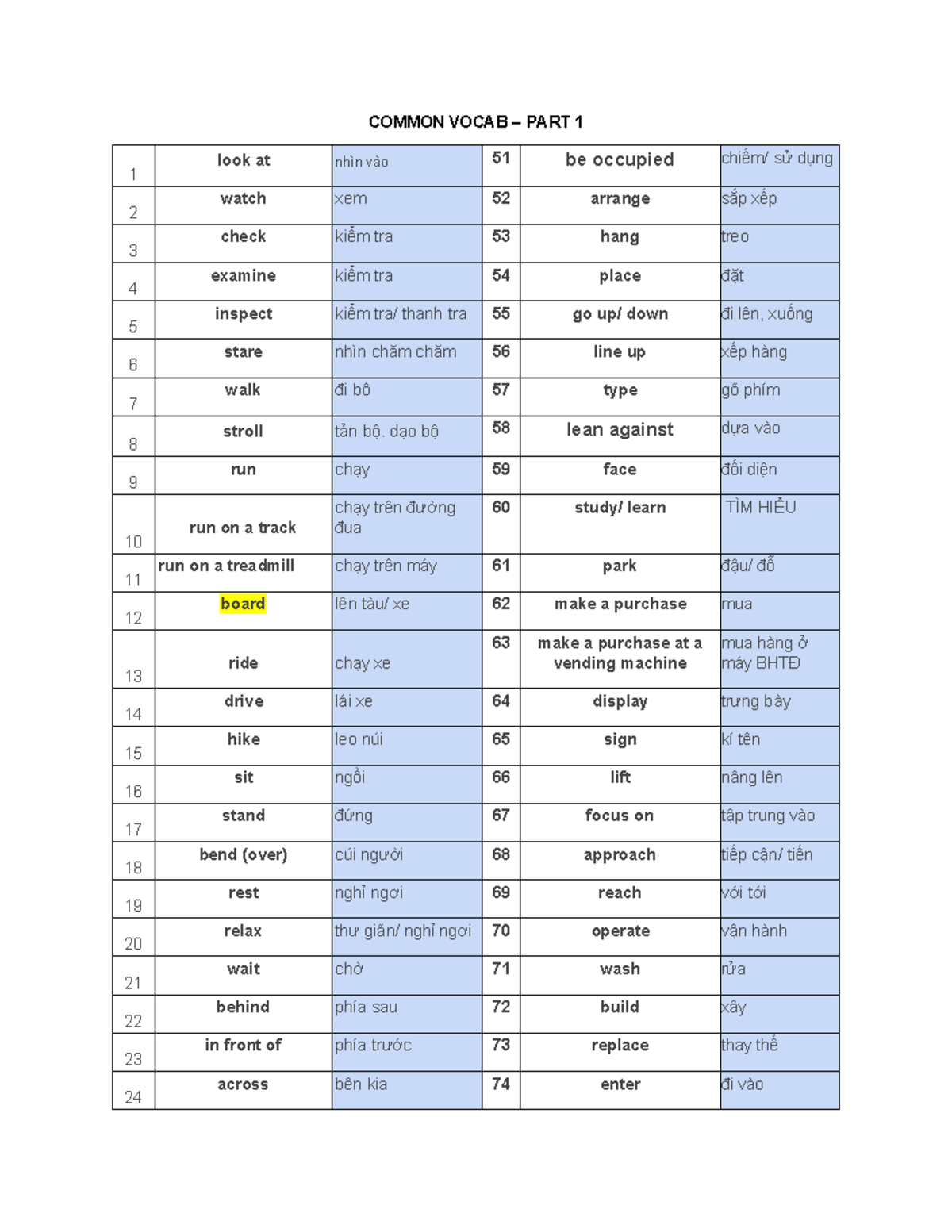
In common usage, pt 1 is the standard abbreviation for Part 1. It signifies the first installment of a multi-part series, document, or video. Whether found in social media captions, academic papers, or technical manuals, it indicates that the current content is the beginning of a larger sequence that requires subsequent parts for completion.
The abbreviation "pt" serves as a shorthand for the word "part," and the numeral "1" designates its primary position in a sequence. While seemingly simple, the implementation of "pt 1" has evolved significantly with the rise of digital storytelling and fragmented information consumption. In 2026, it remains a foundational tool for organizing complex information and driving audience engagement across various platforms.
The Linguistic and Functional Roots of Pt 1
The use of "pt 1" is rooted in the necessity of brevity and organization. Linguistically, abbreviations are designed to convey the maximum amount of information using the minimum number of characters. In the context of "pt 1," the "p" and "t" are taken from the start and end of the word "part," or simply the first two letters depending on the stylistic convention, followed by a numerical identifier.
Historically, this convention was primarily found in print media, such as multi-volume encyclopedias or serialized novels in the 19th and 20th centuries. However, the transition to digital-first communication has cemented "pt 1" as the dominant shorthand. In modern documentation, it serves as a signpost, telling the reader or viewer that they are at the "starting line."
Functionally, "pt 1" performs three critical roles:
- Categorization: It labels the content as part of a specific group or "set."
- Sequencing: It establishes a chronological or logical order.
- Expectation Management: It signals to the consumer that more information is forthcoming, preventing the frustration that might occur if a story or data set felt abruptly truncated.
Pt 1 in the Landscape of Social Media (2026)
In 2026, the most frequent encounter with "pt 1" occurs on short-form video platforms such as TikTok, Instagram Reels, and YouTube Shorts. Despite the expansion of video length limits on these platforms, creators continue to utilize the "pt 1" format as a strategic tool for audience retention and algorithm optimization.
The Strategic Hook and the Cliffhanger
Creators often break a single story or tutorial into multiple segments, labeling the first as "pt 1." This is rarely due to technical limitations; rather, it is a psychological strategy. By labeling a video "pt 1," the creator creates a "loop" in the viewer's mind. If the content is engaging, the viewer will naturally look for "pt 2" to find the resolution. This behavior signals to the platform's algorithm that the creator's content is highly engaging, leading to broader distribution.
Navigational Challenges
A common issue in 2026 social media usage is the "missing Part 2." Because "pt 1" is often used to hook viewers, creators may wait hours or even days to post the follow-up. This has led to the common user comment: "Is pt 2 up yet?" Understanding "pt 1" in this context requires recognizing it as an invitation to follow a profile or check back later, rather than just a simple label.
Pt 1 in Professional and Technical Documentation
Outside of the social media sphere, "pt 1" maintains a more formal and structural role. In professional environments, breaking large projects or documents into parts is essential for clarity and project management.
Project Management and Phasing
In project management, "pt 1" often refers to the "Discovery" or "Initiation" phase. For example, a project titled "Global Infrastructure Upgrade: Pt 1" would likely cover the initial assessment, budgeting, and planning stages. By isolating these components, stakeholders can review and approve specific segments of a project without being overwhelmed by the entire scope at once.
Technical Manuals and Standard Operating Procedures (SOPs)
For complex machinery or software implementation, technical writers use "pt 1" to denote foundational knowledge. This might include safety warnings, hardware requirements, or basic installation steps. The logic is that a user must master "pt 1" before it is safe or productive to move on to "pt 2" (configuration) or "pt 3" (advanced operation).
| Context | Usage of "pt 1" | Primary Goal |
|---|---|---|
| Social Media | Video captions/titles | Engagement, hooks, and views |
| Academic Research | Series of papers or chapters | Logical flow of evidence |
| Business Reports | Executive summaries or initial phases | Digestibility of complex data |
| Legal Documents | Sections of a statute or contract | Precision and referencing |
| Streaming/Film | Title of a sequel or episode | Narrative continuity |
The Psychology of Pt 1: The Zeigarnik Effect
The reason "pt 1" is such a powerful tool in common usage is explained by a psychological phenomenon known as the Zeigarnik Effect. This principle suggests that people remember uncompleted or interrupted tasks better than completed ones.
When a user sees "pt 1," their brain registers an "open loop." This creates a mild psychological tension that can only be resolved by consuming the subsequent parts. This is why "pt 1" is frequently used in storytelling, news reporting, and even educational content. It transforms a passive viewer into an active seeker of information. In the high-speed information environment of 2026, capturing and holding this attention is the primary goal of almost all digital communication.
Common Variations and Synonyms
While "pt 1" is the most common informal abbreviation, several other variations exist depending on the required level of formality or the specific medium.
- Part I: The use of Roman numerals usually indicates a higher level of formality. This is common in film titles (e.g., Dune: Part Two), legal codes, and classic literature.
- Vol. 1 (Volume 1): Typically reserved for books, magazines, or large-scale data sets. A "volume" implies a physical or digital "book" that contains multiple chapters.
- Phase 1: Used predominantly in business, construction, and clinical trials. It implies a temporal progression—something that happens during a specific window of time.
- Ch. 1 (Chapter 1): Specific to narrative or educational text. Unlike "pt 1," a "chapter" is usually contained within a single larger work, whereas "pt 1" might be a standalone entity.
Best Practices for Using Pt 1 in Communication
If you are a content creator, writer, or business professional using "pt 1" in 2026, certain standards should be followed to ensure your audience remains informed rather than frustrated.
- Immediate Availability: On social media, try to have "pt 2" ready or already posted. Labeling a video "pt 1" without a follow-up can lead to negative sentiment and unfollows.
- Clear Titling: Use a descriptive title alongside "pt 1." Instead of just "The Secret: Pt 1," use "The Secret to Better Sleep: Pt 1 – Morning Routines." This tells the user exactly what to expect in the first segment.
- Consistent Formatting: Choose one style (pt 1, Pt. 1, Part 1) and stick to it throughout the series. Inconsistency can make your work look unprofessional and confuse automated search or indexing tools.
- Logical Breaking Points: Do not break a "pt 1" mid-sentence or mid-thought unless you are intentionally creating a cliffhanger. In technical or educational content, "pt 1" should feel like a complete, self-contained lesson that builds toward the next.
Navigating the Challenges of Sequential Content
The ubiquity of "pt 1" has created a "fragmentation" of information. For users, the challenge is often finding the subsequent parts in an ocean of content.
How to Find "Pt 2" and Beyond
If you are consuming content labeled "pt 1" and cannot find the next installment, utilize these strategies:
- Check the Comments: On platforms like TikTok, the creator or other users often "pin" a comment linking to the next part.
- Creator Playlists: Most video platforms in 2026 allow creators to group videos. Look for a playlist title that matches the "pt 1" subject.
- Search Queries: Use the specific title plus "pt 2" in the search bar.
- Profile Feed: Often, the next part is the very next video posted on the creator's profile.
Troubleshooting Common Misunderstandings
Sometimes, "pt" can be confused with other abbreviations, leading to clarity issues in specialized fields.
- Weight vs. Sequence: In some contexts, "pt" stands for "pint" (a unit of volume). However, "pt 1" would rarely mean "1 pint" unless it was on a grocery list or a chemistry label.
- Typography: In design, "pt" stands for "point" (e.g., "12pt font"). "pt 1" here would be nonsensical, as point sizes are usually much larger.
- Medical Terminology: In a medical setting, "pt" is a common abbreviation for "patient." "pt 1" might refer to the first patient in a study or a specific room.
In "common usage"—meaning the general public's daily interaction with media and text—the "Part 1" definition is the overwhelming standard.
Summary of the Role of Pt 1
As we navigate the information-dense landscape of 2026, "pt 1" serves as a vital structural element. It bridges the gap between the need for deep, comprehensive information and the reality of short attention spans. It allows for the serialization of life, from the way we learn new skills to the way we consume entertainment. By recognizing "pt 1" as both a label and a psychological tool, users can better navigate their digital environments, and creators can more effectively reach their audiences.
Frequently Asked Questions
Does "pt 1" always mean there will be a "pt 2"? Logically, yes. Using the label "pt 1" creates an explicit promise to the audience that the content is incomplete and that at least one more installment exists or is planned. In social media, however, some creators use "pt 1" as a "hook" and may never actually produce a "pt 2" if the first video does not perform well.
Is there a difference between "Pt 1" and "Part 1"? There is no functional difference in meaning. "Pt 1" is the abbreviated, informal version suited for social media captions, text messages, and internal notes. "Part 1" or "Part I" is the formal version used in titles, academic publications, and official documents.
Why do some videos start with "Pt 1" but feel like they are in the middle of a story? This is a creative technique called "in media res" (starting in the middle of the action). Creators use "pt 1" to label the first video they post, even if the story they are telling began earlier. It is also possible that the creator is using "pt 1" to denote the first part of a specific sub-topic within a larger story.
Can "pt 1" refer to a version number? Usually, no. Version numbers are typically formatted as "v1" or "v1.0." While a "Version 1" is the first part of a software's life, "pt 1" specifically refers to a sequence of content meant to be consumed in order, whereas versioning refers to the evolution and replacement of an item.
What is the best way to label the first part of a series for SEO? In 2026, the best practice is to include both the keyword and the part number. For example: "How to Bake Sourdough Bread (Pt 1: The Starter)." This provides clarity for both human readers and search engine algorithms, ensuring the content is indexed as the beginning of a sequence.
Is "pt 1" used in legal settings? Yes, but typically in its full form "Part 1" or using Roman numerals "Part I." It is used to divide complex statutes, contracts, or regulations into manageable, referable sections. In a legal context, "Part 1" often contains definitions and the scope of the document.
Practical Recommendation: When creating content or documents, use pt 1 only when you are certain the information cannot be reasonably contained in a single installment. If you use it, ensure that pt 2 is either immediately accessible or has a clearly defined release schedule. This builds trust with your audience and ensures the logical integrity of your information.