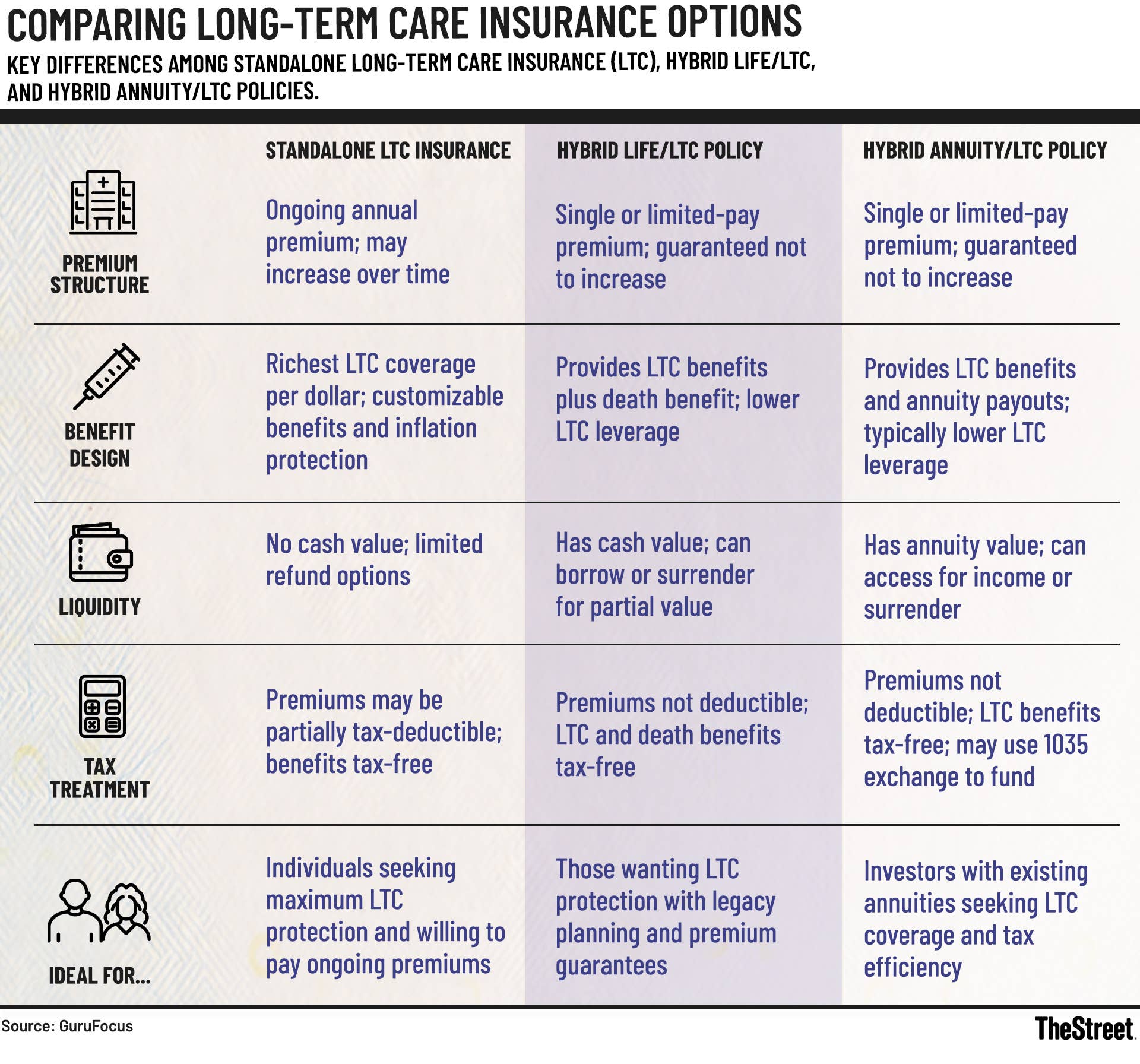
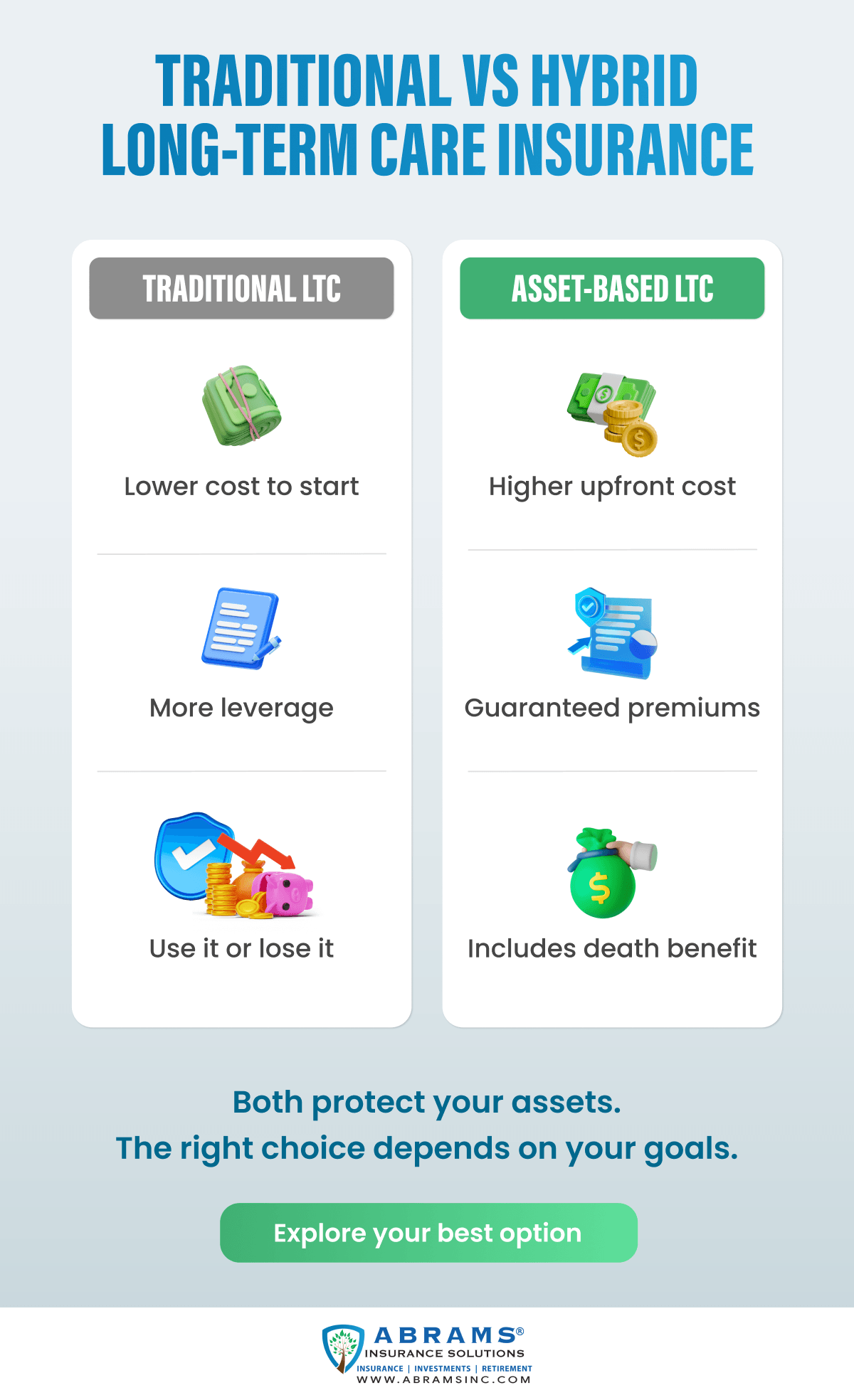
Hybrid life insurance policies with long-term care (LTC) benefits provide a dual-purpose financial safety net by combining permanent life insurance with a long-term care rider. These policies ensure that if you require professional care, you can access your death benefit early to pay for it; if you do not, your beneficiaries receive a tax-free death benefit, effectively eliminating the "use it or lose it" risk associated with traditional long-term care insurance.
The Evolution of Hybrid Long-Term Care Insurance in 2026
As we navigate 2026, the landscape of retirement planning has shifted significantly toward "linked-benefit" or hybrid policies. For decades, consumers faced a binary choice: purchase traditional long-term care insurance, which often came with volatile premiums and no value if never used, or rely solely on personal savings. Hybrid policies have bridged this gap, becoming the dominant choice for middle-to-upper-income Americans who want to protect their estates from the rising costs of assisted living and home health care.
A hybrid policy is essentially a life insurance contract—typically Universal Life or Whole Life—that includes a specific rider allowing the policyholder to accelerate the death benefit to pay for qualified long-term care expenses. In 2026, these products have become more sophisticated, offering "extension of benefits" riders that can provide LTC coverage far exceeding the original life insurance face value. This structure provides a "triple-tax advantage": the LTC benefits are generally tax-free, the death benefit is tax-free, and the cash value grows on a tax-deferred basis.
Indemnity vs. Reimbursement: The Most Critical Choice
When evaluating the best hybrid options in 2026, the first technical distinction a buyer must understand is the difference between the indemnity model and the reimbursement model. This choice impacts how you receive your money and how much control you have over your care.
The Cash Indemnity Model
Policies using the cash indemnity model, such as those offered by Nationwide and Securian, are highly coveted in 2026. Once a physician certifies that you cannot perform two of the six Activities of Daily Living (ADLs)—which include bathing, dressing, eating, toileting, transferring, and continence—or that you have severe cognitive impairment, the insurance company sends you a check for your full monthly benefit.
The primary advantage here is flexibility. You do not need to submit monthly receipts or invoices. You can use the funds to pay a family member to care for you, modify your home, or even pay for massage therapy or nutritional support that might not be "coded" as medical care. In an era where home-based care is the preferred choice for most seniors, the indemnity model provides the most autonomy.
The Reimbursement Model
The reimbursement model, utilized by companies like Lincoln Financial and Brighthouse, requires the policyholder to submit receipts for "qualified" long-term care services. The insurance company then reimburses the policyholder or the care provider for those specific costs, up to the monthly maximum.
While reimbursement policies can sometimes be slightly more cost-effective in terms of premium, they involve significant administrative hurdles. You are often restricted to using licensed care agencies, which can be problematic if you live in a rural area or prefer to hire an independent caregiver. For 2026 planners, the reimbursement model is generally recommended only if the premium savings are substantial enough to offset the loss of flexibility.
Top Hybrid Insurance Providers and Their Best Options
In 2026, several carriers stand out for their financial stability, product features, and claims-paying history. When searching for the best options, these four providers consistently lead the market based on product depth and consumer protections.
1. Nationwide: CareMatters II
Nationwide remains a top contender in 2026 due to its commitment to the cash indemnity structure. CareMatters II is designed for individuals who want maximum control.
- Key Feature: 100% cash indemnity.
- Best For: Those who want to ensure they can pay family members for care or use the money for non-traditional wellness expenses.
- Inflation Options: Nationwide offers robust 3% and 5% compound inflation protection, which is essential given that the cost of nursing home care has continued to outpace general inflation through 2026.
2. OneAmerica: Asset Care
OneAmerica is unique in the 2026 marketplace because it is one of the few carriers that offers a Lifetime (Unlimited) Benefit option. While most hybrid policies cap coverage at 4 to 7 years, OneAmerica allows you to purchase a rider that pays for as long as you live.
- Key Feature: Unlimited benefit duration and the ability to cover two people (joint policy) under one contract.
- Best For: Couples who are concerned about "long-tail" risks like Alzheimer’s or dementia, where care can last for a decade or more.
- Financial Foundation: They often use a Whole Life chassis, providing more certainty in cash value growth compared to Universal Life-based hybrids.
3. Lincoln Financial: MoneyGuard Fixed Advantage
As one of the pioneers of the hybrid space, Lincoln’s MoneyGuard series remains a benchmark for transparency. In 2026, the "Fixed Advantage" version focuses on ease of use and a streamlined claims process.
- Key Feature: A "Benefit Stream" that simplifies how the transition from the life insurance portion to the extension-of-benefits portion occurs.
- Best For: Healthy individuals looking for a "reimbursement" model that is backed by one of the largest pools of LTC data in the industry.
- Benefit: They offer a variety of "Return of Premium" (ROP) options, allowing you to get your money back if your financial situation changes and you no longer want the policy.
4. Securian Financial: SecureCare III
Securian has gained significant market share by 2026 by offering a cash indemnity product that is often priced very competitively for younger applicants (ages 45–55).
- Key Feature: Highly competitive pricing for those who fund the policy with a single premium or a 5-year short-pay.
- Best For: High-net-worth individuals who want to reposition a portion of their "idle" cash into a liquid-ish asset that provides massive LTC leverage.
Comparing the Leading 2026 Hybrid LTC Options
The following table compares the primary features of the top-performing hybrid policies currently available. Note that specific premiums depend on age, gender, and health status.
| Carrier | Policy Name | Benefit Type | Max Benefit Period | Joint Coverage? |
|---|---|---|---|---|
| Nationwide | CareMatters II | Cash Indemnity | 2–7 Years | No |
| OneAmerica | Asset Care | Reimbursement | Unlimited (Lifetime) | Yes (Joint) |
| Lincoln Financial | MoneyGuard Fixed Adv. | Reimbursement | 3–7 Years | No |
| Securian | SecureCare III | Cash Indemnity | 4–7 Years | No |
| Pacific Life | PremierCare Choice | Reimbursement | 2–8 Years | No |
Strategic Funding: How to Pay for Your Policy
One of the reasons hybrid policies have surged in popularity in 2026 is the variety of ways they can be funded. Unlike traditional LTC insurance, which requires ongoing annual premiums that can increase over time, hybrids often allow for "guaranteed" premium structures.
Single Premium (Lump Sum)
Many consumers in their 50s and 60s use a "repositioning" strategy. They take $100,000 to $250,000 from a low-yielding savings account or CD and move it into a hybrid policy. This immediately creates a pool of LTC benefits worth $400,000 to $800,000 (depending on age and inflation riders) while maintaining a death benefit for heirs.
1035 Exchanges
Under Section 1035 of the Internal Revenue Code, you can exchange an existing life insurance policy or annuity that has significant cash value for a new hybrid LTC policy without triggering a tax event. This is a common strategy in 2026 for seniors who have old "legacy" policies they no longer need for income replacement but want to use for health care protection.
Multi-Pay Options (10-Pay or To Age 65)
For younger professionals, 2026 market trends show a preference for "10-Pay" plans. You pay a set premium for 10 years, after which the policy is "paid up" and fully guaranteed. This eliminates the risk of premium increases during retirement, a major pain point of traditional insurance.
Understanding the "Inflation Protection" Necessity
By 2026, the average annual cost of a private room in a nursing home has surpassed $120,000 in many U.S. markets. When selecting a hybrid option, the inflation rider is perhaps more important than the initial benefit amount.
Most experts recommend a 3% Compound Inflation rider as a minimum. While a 5% rider offers more protection, the cost difference in 2026 is substantial. If you buy a policy with a $5,000 monthly benefit at age 55 without inflation protection, that $5,000 will have significantly less purchasing power by the time you are 85. With 3% compound inflation, that $5,000 benefit grows to over $12,000 per month over 30 years, keeping pace with the rising costs of healthcare professionals and facilities.
Underwriting: Can You Qualify?
Hybrid policies require medical underwriting, but in 2026, the process has become more "fluid-less." Many carriers now use "simplified issue" underwriting for applicants under age 60, which relies on a telephone interview and a review of your digital medical records and prescription history rather than a physical exam with blood draws.
However, certain conditions remain "knock-out" triggers across almost all hybrid carriers:
- Active use of a walker or wheelchair.
- Diagnosis of Alzheimer’s or Parkinson’s.
- Recent TIA (mini-stroke) or multiple heart events within a short window.
- Current participation in physical therapy for an unresolved injury.
If you have minor health issues like well-controlled hypertension or type 2 diabetes, you can still qualify for "Standard" or even "Preferred" rates in 2026, provided your records show consistent compliance with medical advice.
Common Mistakes to Avoid
- Waiting Too Late: The "sweet spot" for hybrid LTC is between ages 45 and 62. Beyond age 65, the cost of the LTC rider increases dramatically, and the "leverage" (the ratio of premium to benefit) decreases.
- Choosing Based on Death Benefit Alone: Remember that the primary goal of this product is LTC. If you maximize the death benefit, you often end up with a smaller LTC pool. Balance the two based on your specific estate goals.
- Ignoring the Elimination Period: Most hybrid policies have a 90-day elimination period (like a deductible in days). You must pay for the first 90 days of care out of pocket. Some policies offer a "0-day" elimination for home care but keep 90 days for facility care. Verify these terms before signing.
- Neglecting the 7702B Status: Ensure the policy is "Tax Qualified" under Internal Revenue Code Section 7702B. This ensures that the LTC benefits you receive are not counted as taxable income. All major carriers (Nationwide, Lincoln, etc.) meet this standard, but some "life insurance with chronic illness riders" (Section 101(g)) have different, often more restrictive, tax treatments.
Frequently Asked Questions
What happens if I never need long-term care?
If you never use the long-term care benefits, the policy functions like a standard life insurance contract. Upon your death, your beneficiaries will receive the full death benefit tax-free. This is the primary advantage over traditional LTC insurance, where the premiums are lost if no care is needed.
Can I use a hybrid policy to pay for care provided by my children?
Yes, but generally only if you have a Cash Indemnity policy. Indemnity carriers like Nationwide and Securian do not restrict who provides the care or how you spend the money. Reimbursement-style policies usually require the caregiver to be a licensed professional from an agency, which often excludes immediate family members.
Are premiums for hybrid policies guaranteed to stay the same?
In most cases, yes. Unlike traditional LTC insurance, which allows the company to request rate increases from state regulators, most hybrid policies are built on a permanent life insurance chassis with "guaranteed" premiums. If you choose a 10-Pay or Single-Pay option, your costs are locked in from day one.
Is the death benefit reduced if I use the LTC benefits?
Yes. Hybrid policies work by "accelerating" the death benefit. If you have a $200,000 death benefit and you use $150,000 for long-term care, the remaining death benefit for your heirs would be $50,000. However, many policies include a "Residual Death Benefit" (usually 5% to 10% of the original amount) that remains even if you exhaust the entire LTC pool.
How does 2026 pricing compare to previous years?
Pricing in 2026 has stabilized following the interest rate fluctuations of the early 2020s. Higher interest rates have allowed insurance companies to offer slightly better "leverage" on premiums compared to the record-low rate environment of 2020-2021. However, the rising cost of healthcare services means that while the insurance is a better value, the amount of coverage you need to buy has increased.
Practical Next Steps for 2026 Planning
To find the best hybrid option for your specific situation, your first step should be to request a "Linked-Benefit Comparison" from an independent specialist who represents multiple carriers. Unlike "captive" agents who work for a single company, an independent broker can run side-by-side illustrations for Nationwide, OneAmerica, and Lincoln Financial.
Once you have the illustrations, focus on the Total LTC Pool at age 80 or 85, rather than the initial premium. This shows you how much care you will actually have available when you are most likely to need it. Finally, confirm the underwriting requirements to ensure your health history aligns with the carrier’s current 2026 guidelines.