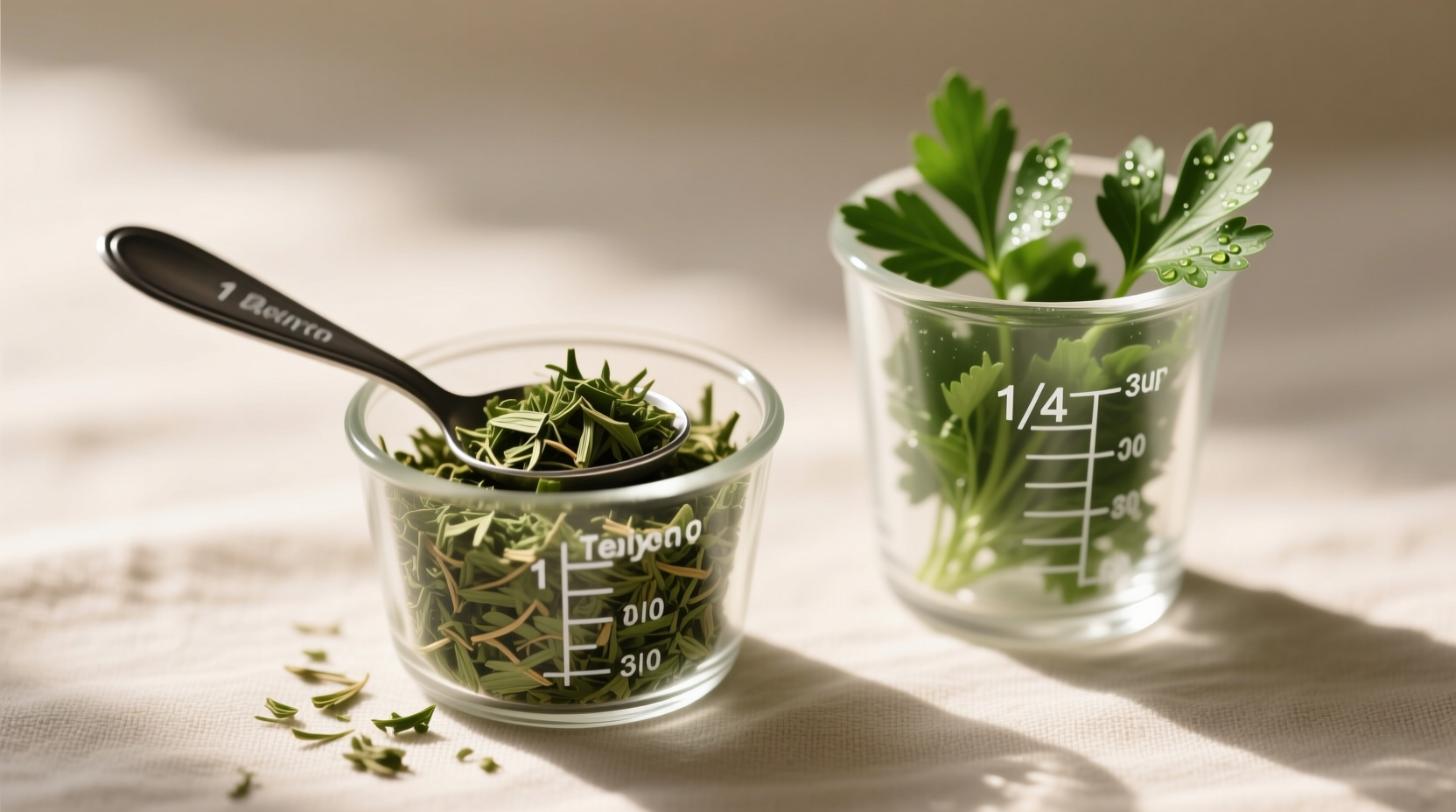
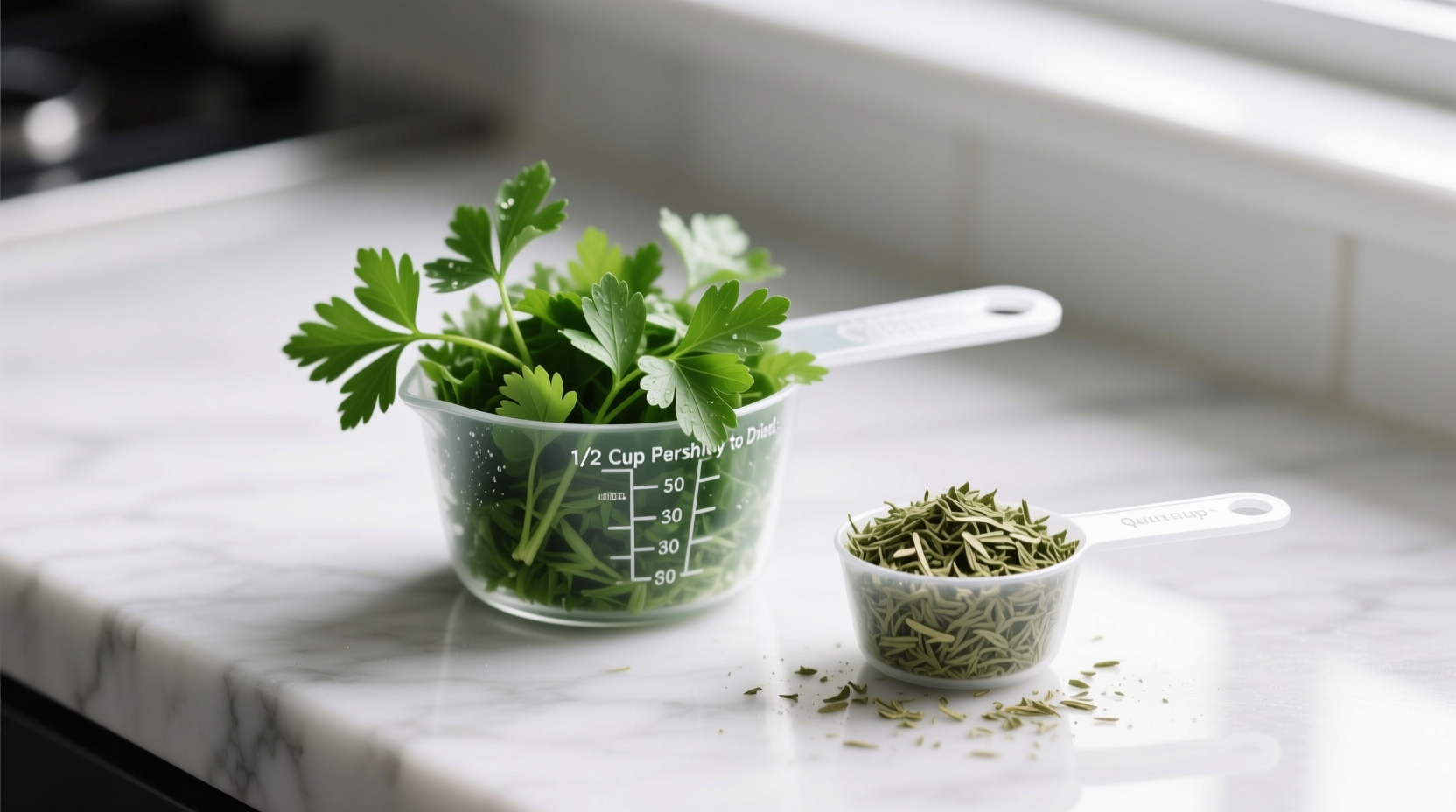
To convert 1/4 cup of fresh parsley to its dried equivalent, the standard ratio is 1 tablespoon plus 1 teaspoon (or 4 teaspoons total) of dried parsley. Because the drying process concentrates the essential oils and flavor of the herb, you require a significantly smaller volume of dried parsley to match the potency of fresh leaves.
The Science of the 1:3 Herb Conversion Ratio
In culinary arts, the most reliable rule of thumb for substituting dried herbs for fresh is the 1:3 ratio. This means you use one part of the dried version for every three parts of the fresh version. To understand why this specific conversion exists, we must look at the physical changes that occur during the dehydration process.
Fresh parsley is composed of approximately 80% to 90% water. When parsley is dried, whether through air-drying, oven-drying, or industrial dehydration, this water content is evaporated. As the water leaves the plant cells, the leaves shrink and become brittle. However, the essential oils—which contain the flavor-providing compounds like myrcene, limonene, and menthatriene—remain behind in a concentrated state.
Consequently, a single teaspoon of dried parsley contains roughly the same amount of aromatic compounds as three teaspoons (one tablespoon) of fresh parsley. If you were to use a 1:1 ratio, the intensity of the dried herb would likely overwhelm the dish, potentially introducing a dusty or overly medicinal flavor profile.
The Volumetric Math for 1/4 Cup
To arrive at the conversion for 1/4 cup, we use standard US kitchen measurements:
- 1 cup = 16 tablespoons
- 1/4 cup = 4 tablespoons
- 1 tablespoon = 3 teaspoons
- Total volume of 1/4 cup fresh = 12 teaspoons
Applying the 1:3 ratio (12 teaspoons divided by 3) results in 4 teaspoons of dried parsley. Since 3 teaspoons equal 1 tablespoon, this is most easily measured as 1 tablespoon plus 1 teaspoon.
Parsley Conversion Reference Table
The following table provides quick-reference conversions for various volumes of parsley, ensuring precision in recipes ranging from small garnishes to large batches of soup or sauce.
| Fresh Parsley Volume | Dried Parsley Equivalent | Common Culinary Use |
|---|---|---|
| 1 Teaspoon | 1/3 Teaspoon | Small spice rubs or single servings |
| 1 Tablespoon | 1 Teaspoon | Salad dressings and marinades |
| 2 Tablespoons | 2 Teaspoons | Omelets and sautéed vegetables |
| 1/4 Cup (4 Tbsp) | 1 Tbsp + 1 Tsp (4 Tsp) | Standard soups, stews, and meatballs |
| 1/3 Cup | 1 Tablespoon + 2-1/4 Teaspoons | Large batches of pasta sauce |
| 1/2 Cup | 2 Tablespoons + 2 Teaspoons | Chimichurri or herb-heavy stuffings |
| 1 Cup | 5 Tablespoons + 1 Teaspoon | Tabbouleh or large-scale meal prep |
Understanding the Varieties: Flat-Leaf vs. Curly Parsley
When calculating conversions, it is important to identify which type of fresh parsley your recipe calls for. The two most common varieties—Italian Flat-Leaf (Petroselinum crispum neapolitanum) and Curly Parsley (Petroselinum crispum)—have different densities and flavor intensities.
Italian Flat-Leaf Parsley
Italian parsley is widely preferred by chefs for its robust, peppery flavor and smoother texture. It stands up better to heat than the curly variety. Because the leaves are flat, they pack more tightly into a measuring cup. If a recipe calls for "1/4 cup packed fresh Italian parsley," the flavor profile is denser. In this case, you might lean toward a slightly "heaping" tablespoon of dried parsley to match that intensity.
Curly Parsley
Curly parsley is often used as a decorative garnish, but it also appears in many traditional recipes. Its ruffled leaves create more air pockets when measured in a cup. A 1/4 cup of chopped curly parsley is often lighter in weight than the same volume of flat-leaf. If you are substituting dried parsley for curly fresh parsley, a "level" measurement of 4 teaspoons of dried herb is usually sufficient.
When to Use Dried vs. Fresh Parsley
While the conversion ratio solves the measurement problem, it does not address the functional differences between fresh and dried herbs. Understanding when a substitution is appropriate is key to maintaining the integrity of your dish.
Ideal Scenarios for Dried Parsley
Dried parsley is best utilized in dishes with long cooking times or significant moisture.
- Soups and Stews: Adding dried parsley during the simmering process allows the leaves to rehydrate and slowly release their concentrated oils into the liquid.
- Spice Rubs: For dry rubs used on meats or poultry, dried parsley is essential as fresh leaves would burn or create unwanted steam under high heat.
- Breadings: When mixing herbs into breadcrumbs for frying or baking, dried parsley provides a consistent flavor and color without the moisture that could make the coating soggy.
When Fresh Parsley is Non-Negotiable
In some instances, substituting with dried parsley—even with the correct conversion—will result in a suboptimal dish.
- Garnishing: Dried parsley often looks like dust or small dark flakes. It lacks the vibrant green color and "lift" that fresh parsley provides as a finishing touch.
- Raw Applications: In dishes like Tabbouleh, where parsley is a primary salad green, or in fresh pestos, dried parsley cannot replicate the crisp texture and bright, grassy notes.
- Brightening a Heavy Dish: Fresh parsley contains volatile compounds that provide a "bright" acidity-like finish. Dried parsley loses these top notes during dehydration.
How to Measure Fresh Parsley Accurately
The accuracy of your 1/4 cup to 4-teaspoon conversion depends heavily on how you measure the fresh herb initially.
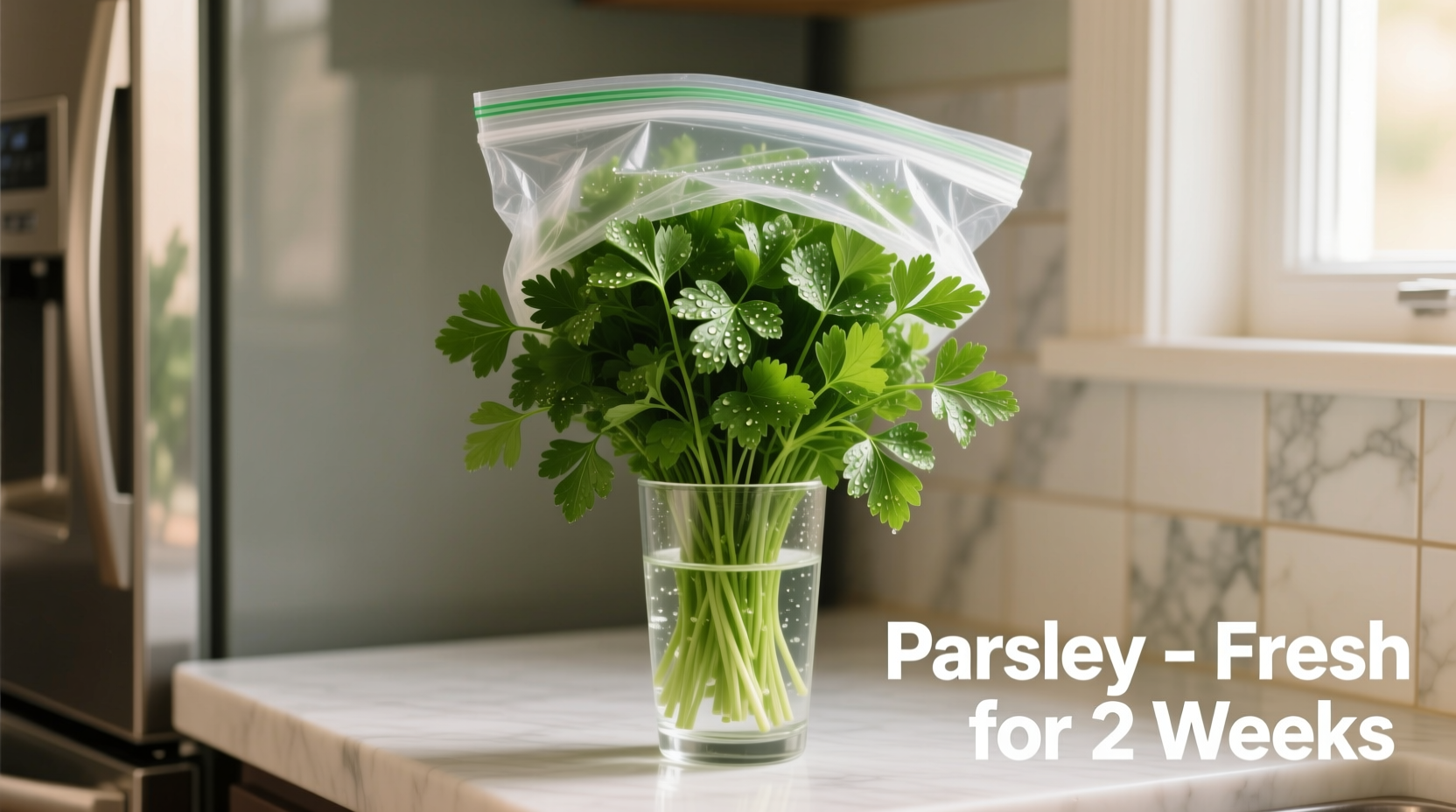
- Wash and Dry First: Always wash parsley in cold water to remove grit, but ensure it is completely dry before chopping. Wet parsley clumps together, leading to inaccurate volume measurements.
- Remove Thick Stems: While thin stems are edible and flavorful, large, woody stems should be discarded or saved for stock. Measure only the chopped leaves and tender stems.
- The Chop Consistency: A "coarse chop" results in larger pieces and more air in the cup. A "fine mince" packs more densely. Most standard conversions assume a standard medium chop. If your recipe specifies "finely minced," you may need to use slightly more dried parsley to compensate for the higher density of the fresh measurement.
- Avoid Packing: Unless the recipe specifically says "packed," do not press the parsley down into the measuring cup. Lightly fill the cup and level it off.
The Impact of Shelf Life on Dried Parsley Potency
As of 2026, the quality of commercially available dried herbs has improved with better sealing technology, but they still degrade over time. The 1:3 ratio assumes your dried parsley is relatively fresh.
Dried parsley typically maintains its peak flavor for 6 to 12 months. After this point, the essential oils dissipate. To test if your dried parsley is still viable, rub a small amount between your palms and sniff. If the aroma is faint or smells like dry hay rather than herbs, the potency has decreased. In such cases, you may need to increase the conversion (e.g., using 5 or 6 teaspoons of old dried parsley to equal 1/4 cup fresh), though it is generally better to replace the bottle.
To extend the life of your dried herbs, store them in a cool, dark place away from the stove. Heat and light are the primary catalysts for the oxidation of herbal oils.
How to Make Your Own Dried Parsley
If you have an abundance of fresh parsley and want to ensure you have high-quality dried parsley for future conversions, you can dehydrate it at home. Home-dried parsley often retains more color and flavor than store-bought varieties.
Oven-Drying Method
- Preheat your oven to the lowest possible setting (usually between 140°F and 170°F).
- Spread clean, dry parsley leaves in a single layer on a parchment-lined baking sheet.
- Bake for 1 to 2 hours, checking frequently. The parsley is done when it crumbles easily between your fingers.
- Allow it to cool completely before crushing and storing in an airtight glass jar.
Air-Drying Method
This is the most traditional method but requires a low-humidity environment.
- Bundle the parsley stems together with twine.
- Hang the bundle upside down in a well-ventilated area away from direct sunlight.
- Cover the bundle with a perforated paper bag to catch falling leaves and protect from dust.
- Dry for 1 to 2 weeks.
Troubleshooting Common Conversion Mistakes
Even with the 1 tablespoon plus 1 teaspoon conversion, flavor imbalances can occur. Here is how to troubleshoot them:
- The dish tastes "earthy" or "dusty": This often happens when dried parsley is added too late in the cooking process. If you forgot to add it early, try rehydrating the dried parsley in a teaspoon of warm water for a few minutes before adding it to the dish.
- The color is dull: Dried parsley will never match the neon-green of fresh parsley. To compensate, consider adding a tiny pinch of fresh lemon zest or a drop of lemon juice to mimic the "brightness" of fresh herbs.
- Texture issues: In delicate sauces, the flakes of dried parsley can feel gritty. Using a finely ground dried parsley or pulsing your dried herbs in a spice grinder for a second can help them integrate more smoothly.
Alternative Substitutes for Parsley
If you find that you have neither 1/4 cup of fresh parsley nor the 4 teaspoons of dried parsley required, you may need to look toward other herbs.
- Chervil: Known as "French Parsley," it is the closest flavor match. Use it in a 1:1 ratio with the parsley requirements.
- Cilantro: While visually similar to flat-leaf parsley, the flavor is vastly different. Only use this if the flavor profile of the dish (such as Latin or Asian cuisine) can accommodate the citrusy, soapy notes of cilantro.
- Celery Leaves: The inner, light-green leaves of a celery stalk have a very similar flavor to parsley. They can be chopped and used as a 1:1 substitute for fresh parsley.
FAQs
Can I use the same conversion for dried parsley flakes and ground parsley?
Most recipes referring to "dried parsley" mean the standard dried flakes found in spice aisles. If you are using a concentrated "ground parsley powder," you should reduce the amount. Use approximately 1.5 to 2 teaspoons of powder for 1/4 cup of fresh parsley, as the powder is much denser than flakes.
Should I crush dried parsley before adding it?
Yes. To release the remaining oils in dried parsley, it is helpful to crush the flakes between your palms or using a mortar and pestle just before adding them to the pot. This physical friction warms the oils and increases the aromatic impact.
Is dried parsley as healthy as fresh parsley?
Fresh parsley is an excellent source of Vitamin K, Vitamin C, and Vitamin A. While the drying process preserves many of the minerals and Vitamin K, it significantly reduces the levels of heat-sensitive vitamins like Vitamin C. For health-focused recipes, fresh is generally superior.
Does the 1:3 ratio apply to all herbs?
Generally, yes, the 1:3 ratio applies to most leafy herbs like basil, oregano, and cilantro. However, for "hard" herbs like rosemary or thyme, which are less watery to begin with, the ratio is often closer to 1:2. Parsley follows the 1:3 rule strictly due to its high water content.
Can I rehydrate dried parsley to use as a garnish?
While you can soak dried parsley in a bit of water or oil to soften it, it will not regain its structural integrity or vibrant color. It will remain limp and dark, making it an unsuitable garnish for dishes where aesthetics are important.
Practical Recommendation
When substituting 1/4 cup fresh parsley with 4 teaspoons of dried parsley, always add the dried herb earlier in the cooking process—ideally during the last 20 minutes of simmering for hot dishes. This timing allows the herb to soften and the flavors to meld. If you are making a cold dish, such as a pasta salad, allow the dish to sit in the refrigerator for at least an hour after adding the dried parsley to ensure the flakes aren't dry or crunchy when served.