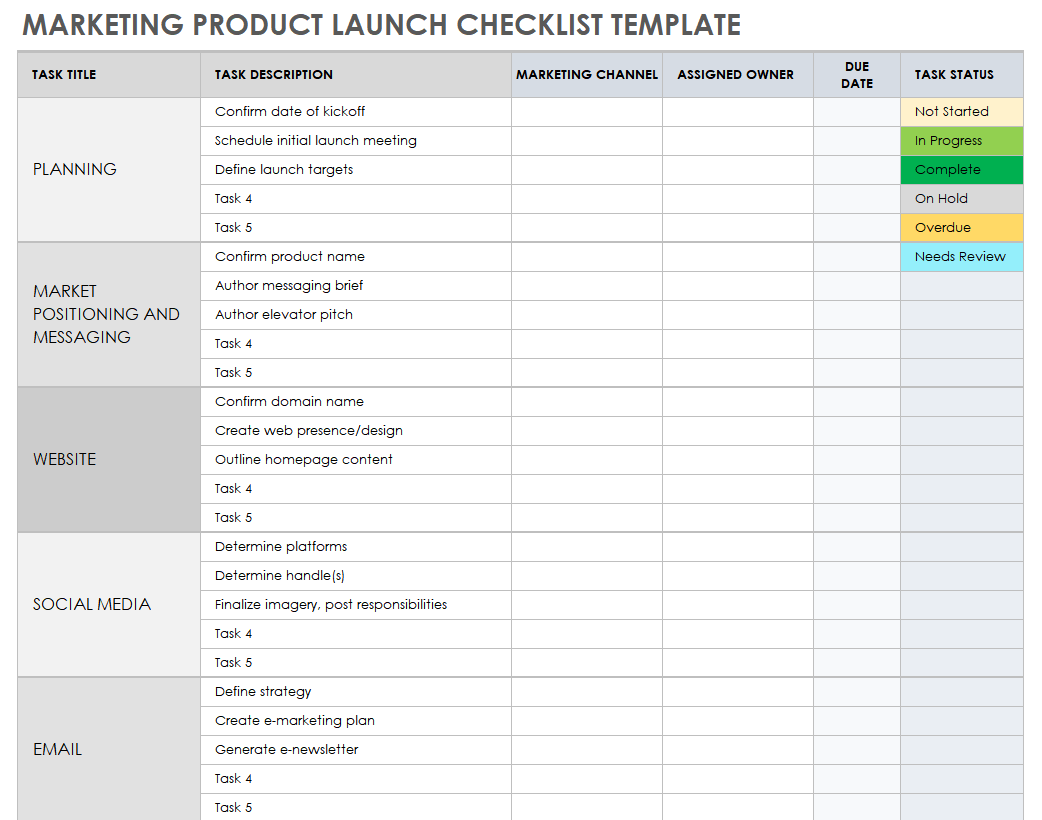
A pharma product launch checklist is a strategic, cross-functional roadmap used to coordinate regulatory approval, market access, and commercial execution. It aligns departments—from R&D and Medical Affairs to Marketing and Supply Chain—ensuring that a new therapy reaches the right patients at the optimal time while maximizing its commercial potential and therapeutic impact.
Successfully bringing a new drug to market in 2026 requires more than just a regulatory green light; it demands a sophisticated integration of data analytics, patient-centricity, and payer-focused value propositions. The complexity of modern healthcare systems means that launch preparation must begin at least 18 to 24 months before the anticipated approval date. This guide provides a detailed breakdown of every critical milestone required to navigate the current pharmaceutical landscape.
Phase 1: Strategic Foundation and Market Insight (T-24 to T-18 Months)
The earliest phase of a pharma product launch checklist focuses on defining what the product is and where it fits in the current medical landscape. In 2026, the "Target Product Profile" (TPP) remains the cornerstone of this process. The TPP is a dynamic document that outlines the drug’s intended use, target population, dosage, safety profile, and, crucially, its differentiated value compared to existing standards of care.
Defining the Value Proposition
A value proposition is no longer just about clinical efficacy; it must address the economic and humanistic outcomes. Stakeholders must ask: Does this drug reduce hospital readmissions? Does it improve the quality of life in a measurable way that payers will recognize? By T-24 months, the Market Access team should be working closely with Clinical Development to ensure that Phase III trials are capturing the secondary endpoints necessary for reimbursement.
Competitive Intelligence and Landscape Mapping
Understanding the competitive environment is vital. This involves mapping out current treatments and those in the pipeline. In 2026, this includes monitoring biosimilars and digital therapeutics that might compete for the same patient pool. Deep-dive situational analysis helps identify "white spaces"—unmet needs where the new product can establish a foothold.
Initial Stakeholder Mapping
Identifying Key Opinion Leaders (KOLs) and patient advocacy groups early ensures that the scientific narrative is grounded in real-world clinical needs. These relationships must be managed with strict adherence to compliance guidelines to avoid any perception of pre-approval promotion.
Phase 2: Regulatory Submission and Compliance (T-18 to T-12 Months)
As clinical data matures, the focus shifts toward the formal regulatory process. Whether dealing with the FDA (U.S.), EMA (Europe), or other regional bodies, the precision of the submission package determines the launch timeline.
The Dossier Preparation (NDA/BLA/MAA)
The New Drug Application (NDA) or Biologic License Application (BLA) is the culmination of years of research. The checklist must include rigorous quality checks for the Common Technical Document (CTD). In 2026, regulatory agencies increasingly expect real-world evidence (RWE) to supplement traditional clinical trial data, particularly for orphan drugs or accelerated pathways.
Labeling and Packaging Strategy
The "Label" (Prescribing Information or Summary of Product Characteristics) defines the legal boundaries of what the marketing team can claim. Negotiating the label with regulators is a high-stakes activity. Simultaneously, packaging must be designed to meet global serialization requirements to prevent counterfeiting, as mandated by the Drug Supply Chain Security Act (DSCSA).
Compliance and Legal Frameworks
Every piece of communication, from a scientific slide deck to a social media post, must pass through a Medical, Legal, and Regulatory (MLR) review committee. Establishing the SOPs for this committee early prevents bottlenecks during the high-volume months leading up to the launch.
Phase 3: Market Access, Pricing, and Reimbursement (T-12 to T-6 Months)
In the 2026 healthcare environment, a drug is only successful if it is accessible. This phase of the pharma product launch checklist is dedicated to ensuring that payers (insurance companies, government bodies, and PBMs) agree to cover the medication at a sustainable price.
Health Economics and Outcomes Research (HEOR)
HEOR teams must translate clinical data into economic models. This includes Cost-Effectiveness Analysis (CEA) and Budget Impact Models (BIM). Payers are increasingly looking for "value-based contracting," where the price of the drug may be tied to the actual health outcomes achieved by the patient.
Pricing Strategy
Setting the "Wholesale Acquisition Cost" (WAC) involves balancing R&D recovery, market competitiveness, and public perception. In 2026, transparency in pricing is a significant regulatory and social focus. Companies must also plan for "Gross-to-Net" (GTN) calculations, accounting for the heavy discounts and rebates required by middle-men in the distribution chain.
Payer Engagement
Early engagement with payers (where legal) allows a company to share the "unmet need" narrative before the drug is approved. This helps payers forecast their budgets and reduces the time between FDA approval and "formulary inclusion," which is the point at which patients can actually get their prescriptions filled.
Phase 4: Medical Affairs and Scientific Communication (T-9 to T-3 Months)
Medical Affairs serves as the bridge between the clinical world and the commercial world. Their role is to ensure the scientific community understands the data behind the new therapy.
Medical Science Liaison (MSL) Deployment
MSLs are the field-based scientific experts who engage with healthcare providers (HCPs). Their checklist items include:
- Developing the Scientific Platform (the core evidence-based story).
- Conducting Advisory Boards to gather feedback on clinical data.
- Educating HCPs on the disease state (without mentioning the unapproved drug).
Publication Planning
A robust peer-reviewed publication strategy ensures that clinical trial results are available in respected journals. This builds the "evidence base" that physicians rely on when making prescribing decisions. In 2026, this also includes presenting data at major medical congresses (like ASCO or AHA) and utilizing digital posters to increase reach.
Phase 5: Commercial Readiness and Omnichannel Marketing (T-6 Months to Launch)
The commercial team is responsible for the "Go-to-Market" strategy. In 2026, this has evolved from traditional sales reps to a sophisticated "omichannel" approach.
Branding and Creative Development
This includes the product name, logo, and the "core visual aid" used by sales teams. The branding must resonate emotionally with patients while remaining clinically professional for physicians. All assets must be finalized and pre-cleared by regulatory teams.
Sales Force Training and Deployment
Even in a digital age, the sales force remains a critical touchpoint. Training must cover:
- Disease state knowledge.
- Clinical data and the drug's mechanism of action (MOA).
- Compliance (what they cannot say).
- Handling objections from skeptical physicians.
Omnichannel Execution
Modern launches utilize AI-driven marketing to reach HCPs through their preferred channels—email, webinars, social media, or in-person visits. The checklist must ensure that the "Customer Relationship Management" (CRM) system is loaded with target physician lists and that the data privacy protocols (GDPR/CCPA) are strictly followed.
Phase 6: Supply Chain, Distribution, and Logistics (T-3 Months to Launch)
If the drug isn't on the pharmacy shelf on launch day, all previous efforts are wasted. The supply chain must be bulletproof.
Inventory Stocking
This involves shipping the "initial fill" to wholesalers and specialty pharmacies. For biologics, this requires a sophisticated "cold chain" infrastructure to maintain specific temperatures throughout transit.
Patient Support Programs (PSPs)
In 2026, many specialty drugs require significant patient support, such as injection training, financial assistance (co-pay cards), and navigation of insurance "prior authorizations." Setting up a "Hub" service to manage these patient needs is a critical checklist item for high-cost therapies.
Summary Checklist Table for 2026 Pharma Launch
The following table summarizes the high-level milestones across the launch lifecycle.
| Category | Key Activity | Primary Owner | Target Timeline |
|---|---|---|---|
| Strategy | Finalize Target Product Profile (TPP) | R&D / Commercial | T-24 Months |
| Strategy | Conduct Situational / Competitive Analysis | Marketing | T-21 Months |
| Regulatory | Submit NDA / BLA to Regulatory Agencies | Regulatory Affairs | T-12 to T-15 Months |
| Access | Develop Global Value Dossier (GVD) | Market Access | T-12 Months |
| Medical | Finalize Peer-Reviewed Publication Plan | Medical Affairs | T-9 Months |
| Commercial | Finalize Brand Identity and Core Visuals | Marketing | T-6 Months |
| Logistics | Validate Cold Chain & Serialization | Supply Chain | T-4 Months |
| Commercial | National Sales Meeting & Final Training | Sales / Training | T-1 Month |
| Post-Launch | Pharmacovigilance & Phase IV Studies | Medical / Safety | Launch + 3 Months |
Phase 7: The Launch Window and Post-Launch Monitoring (Launch to +6 Months)
The "Launch Day" is a milestone, not the finish line. The first six months are critical for establishing momentum.
Performance Tracking (KPIs)
The team must track Key Performance Indicators (KPIs) such as:
- New to Brand Prescriptions (NBRx): How many new patients are starting the drug?
- Total Prescriptions (TRx): Overall volume.
- Formulary Access: What percentage of lives are covered by insurance?
- Share of Voice: How much of the digital/social conversation is the brand capturing?
Pharmacovigilance (Safety Monitoring)
Once a drug is used in the "real world" beyond the controlled environment of a clinical trial, safety monitoring becomes paramount. Any adverse events must be reported to the FDA or EMA within strict timelines.
Phase IV and Real-World Evidence
Post-marketing studies (Phase IV) are often required by regulators or used by commercial teams to prove long-term efficacy. This data is essential for maintaining market access and expanding the drug’s label to new indications in the future.
Common Mistakes in Pharma Product Launches
Despite rigorous planning, many launches underperform. Identifying these pitfalls in the checklist can prevent failure.
- Late Market Access Involvement: If the Market Access team isn't involved during Phase II clinical trials, the Phase III trials might not collect the data payers need, leading to poor reimbursement.
- Siloed Departments: If Marketing and Medical Affairs don't align on the "Scientific Narrative," the market receives conflicting messages, leading to confusion among HCPs.
- Underestimating the "Hub": For complex therapies, if the patient support system is clunky or difficult to navigate, physicians will stop prescribing the drug regardless of its efficacy.
- Over-reliance on Sales Reps: In 2026, physicians spend less time with reps. A checklist that doesn't prioritize a robust digital and peer-to-peer (KOL) strategy will likely fail.
FAQs
When should a pharma product launch checklist officially begin?
A comprehensive checklist should begin 18 to 24 months before the expected approval date. This allows sufficient time for "Market Access" teams to shape the clinical trial endpoints to meet payer requirements and for "Medical Affairs" to establish a scientific presence in the therapeutic area.
What is the most critical factor for launch success in 2026?
Market Access and Reimbursement have become the dominant factors. Even a clinically superior drug will fail if payers do not cover it or if the out-of-pocket costs for patients are prohibitive. Proving "value" beyond just "efficacy" is essential.
How does the 2026 regulatory environment impact the checklist?
Regulators are increasingly focused on diversity in clinical trials and the inclusion of Real-World Evidence (RWE). The checklist must now include specific steps to ensure trial data represents the actual patient population and that digital monitoring tools are used to gather post-market safety data.
What role does Artificial Intelligence play in the launch checklist?
AI is used for predictive analytics to identify "high-potential" prescribers, optimize the supply chain to prevent stockouts, and personalize digital marketing content for HCPs. AI-driven "Next Best Action" (NBA) engines are now a standard part of the commercial checklist.
How do you define a "successful" pharma launch?
Success is usually measured by achieving specific milestones within the first 6 to 12 months, including the number of patients treated, the percentage of "covered lives" (insurance access), and reaching the "break-even" point where revenue exceeds the ongoing commercial investment.
Final Recommendation
For project managers and executives, the key to a successful pharma product launch in 2026 is cross-functional agility. The traditional "waterfall" approach—where one department finishes its work and hands it to the next—is no longer sufficient.
Next Step: Implement a centralized "Launch Readiness" digital platform where all departments can track their milestones in real-time. This ensures that a delay in regulatory labeling is immediately visible to the marketing and supply chain teams, allowing for rapid adjustment of timelines and resources. Success is found in the synchronization of the parts, not just the excellence of the individual functions.