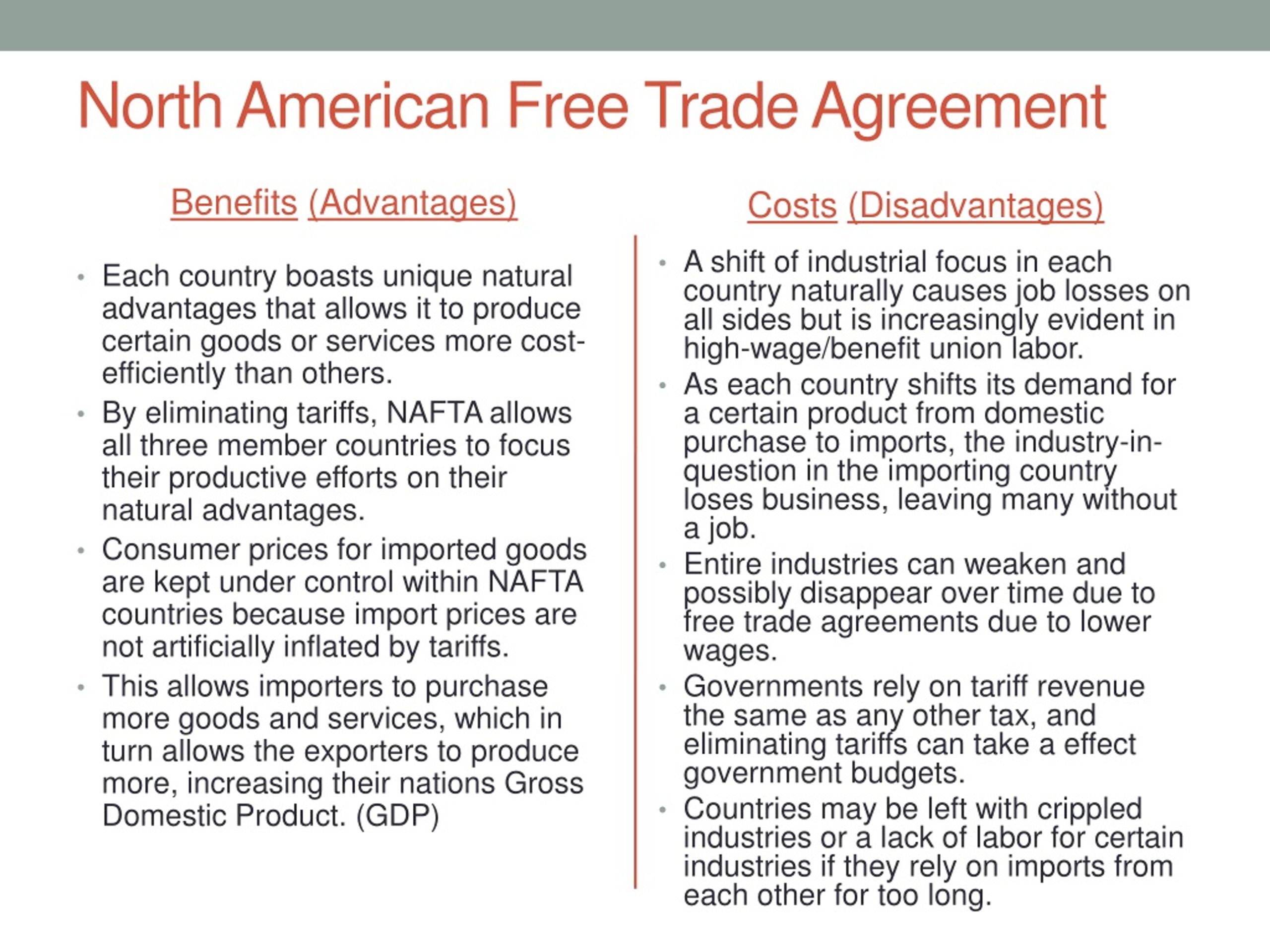
The primary example of free trade in North America is the United States-Mexico-Canada Agreement (USMCA). Serving as the successor to the North American Free Trade Agreement (NAFTA), the USMCA facilitates a nearly duty-free marketplace for over 500 million consumers, regulating trade through modernized rules on digital commerce, labor standards, and automotive manufacturing.
Free trade in North America is not merely the absence of tariffs; it is a complex regulatory framework designed to integrate the supply chains of three distinct nations into a single economic powerhouse. As of 2026, the USMCA governs approximately $1.5 trillion in annual trade. Understanding how this agreement functions requires a deep dive into its specific chapters, the evolution from its predecessor, and the technical requirements businesses must meet to qualify for its benefits.
The Evolution of North American Trade: From NAFTA to USMCA
To understand the current state of free trade in North America, one must look at the transition that occurred at the turn of the decade. NAFTA, which took effect in 1994, was a groundbreaking agreement that eliminated most tariffs on goods produced within the region. However, by the late 2010s, the economic landscape had shifted. The rise of the internet, the global nature of data, and the evolution of the automotive industry rendered the original 1994 text obsolete.
The USMCA, which entered into force on July 1, 2020, was designed to address these gaps. It is often referred to as "NAFTA 2.0," but this label undersells the significant structural changes involved. While it preserved the zero-tariff core of NAFTA for most industrial and agricultural goods, it introduced rigorous new standards for labor rights, environmental protection, and digital trade—areas that were barely concepts when the original agreement was drafted.
In 2026, we are currently at a critical juncture: the Joint Review. According to the agreement's "sunset clause," the three nations must conduct a formal review of the USMCA in its sixth year (2026) to decide whether to extend it for another 16-year term. This makes the technical understanding of its successes and frictions more relevant than ever for policymakers and businesses alike.
Key Pillars of the USMCA Framework
The USMCA is composed of 34 chapters and numerous side letters, but several core pillars define its impact on North American trade.
1. Rules of Origin and the Automotive Sector
The automotive industry is the backbone of North American manufacturing. The USMCA introduced some of the most complex Rules of Origin (ROO) in any trade agreement. To qualify for 0% tariffs, a passenger vehicle must now meet a Regional Value Content (RVC) requirement of 75%, a significant increase from NAFTA’s 62.5%.
Furthermore, the agreement introduced a first-of-its-kind Labor Value Content (LVC) requirement. This mandate requires that 40% to 45% of a vehicle's content be made by workers earning at least $16 USD per hour. This measure was specifically designed to level the playing field between high-wage and lower-wage manufacturing hubs, ensuring that free trade supports equitable wage growth across the continent.
2. Digital Trade and Data Sovereignty
Unlike NAFTA, the USMCA contains a comprehensive chapter on Digital Trade. In 2026, where the "economy" and the "digital economy" are increasingly indistinguishable, these rules are vital. The agreement prohibits customs duties on electronically transmitted products (such as software, music, and e-books) and prevents governments from forcing companies to store data locally (data localization). This ensures that a tech firm in Vancouver can serve clients in Monterrey or Dallas without the overhead of maintaining physical servers in every jurisdiction.
3. Agricultural Market Access
Agriculture remains a sensitive topic in North American trade. The USMCA expanded access for U.S. dairy, poultry, and egg producers into the Canadian market, while providing reciprocal benefits for Canadian sugar and dairy products. It also established modern sanitary and phytosanitary (SPS) measures to ensure that food safety regulations are based on science and are not used as disguised barriers to trade.
Technical Comparison: NAFTA vs. USMCA
The following table highlights the technical shifts that define modern free trade in North America as of 2026.
| Feature | NAFTA (Old Standard) | USMCA (2026 Standard) |
|---|---|---|
| Auto Regional Value Content | 62.5% | 75% |
| Labor Value Content (LVC) | None | 40-45% at $16+/hour |
| Digital Trade Chapter | None | Comprehensive protections against duties and localization |
| De Minimis Thresholds | Low (e.g., $20 CAD in Canada) | Increased (e.g., $40/$150 CAD in Canada) |
| Intellectual Property | Basic protections | 70 years of copyright; biologics protections |
| Sunset Clause | Indefinite | 16-year lifespan with 6-year joint reviews |
| State-Owned Enterprises | Limited coverage | Strict transparency and non-discrimination rules |
Procedures for Claiming Preferential Treatment
For a business to benefit from this free trade example, it cannot simply ship goods across a border. It must comply with strict administrative procedures. In 2026, the process is significantly more streamlined than in the past, thanks to the elimination of the formal "Certificate of Origin" form (formerly Form 434).
Certification of Origin
Under USMCA, there is no longer a government-mandated form. Instead, a certification of origin can be completed by the importer, exporter, or producer on a commercial invoice or any other document. The certification must contain nine specific data elements, including:
- Identification of the certifier.
- Exporter/Producer/Importer details.
- Description and HS Tariff Classification of the good.
- Origin criteria (the specific rule that makes the good "North American").
Record Keeping and Verifications
Customs authorities (CBP in the US, CBSA in Canada, and SAT in Mexico) have the right to conduct audits. Under USMCA, businesses must maintain all records proving their claim for five years. Failure to provide a clear paper trail showing that raw materials were sourced within the region can lead to the retroactive application of tariffs, plus interest and penalties.
The Impact on Small and Medium-Sized Enterprises (SMEs)
A unique aspect of this free trade example is Chapter 25, which specifically addresses Small and Medium-Sized Enterprises. This is the first time a North American trade agreement has included a dedicated chapter for smaller businesses.
The agreement encourages the creation of digital platforms to help SMEs navigate the complexities of cross-border trade. Furthermore, the increase in De Minimis thresholds is a major win for e-commerce. In Canada, the duty-free limit was raised to $150 CAD (with a $40 CAD limit for sales tax), and Mexico raised its duty-free limit to $117 USD. This allows small businesses to ship across borders with significantly less friction, as lower-value shipments bypass many of the cumbersome formal entry procedures.
Intellectual Property and Innovation
Free trade is as much about protecting ideas as it is about moving physical goods. The USMCA provides robust protections for Intellectual Property (IP), which is essential for the high-tech and pharmaceutical sectors.
- Copyright: The term of copyright protection is now 70 years after the death of the author (up from 50 in many previous contexts).
- Trade Secrets: The agreement provides strong civil and criminal protections for trade secrets, including against theft by state-owned enterprises.
- Pharmaceuticals: While controversial during negotiations, the final agreement balances market exclusivity for new drugs with provisions that allow for the entry of generic competition after specific periods.
Challenges and Dispute Settlement
No free trade agreement is without friction. The USMCA includes three main types of dispute settlement mechanisms:
- State-to-State (Chapter 31): For general disputes regarding the interpretation of the agreement.
- Antidumping/Countervailing Duties (Chapter 10): A carryover from NAFTA that allows for independent panels to review duty determinations.
- Rapid Response Labor Mechanism (RRM): A unique tool that allows for the suspension of USMCA benefits for specific facilities if they are found to be violating workers' rights to collective bargaining and association.
As of 2026, the RRM has been used extensively, particularly in the manufacturing sector in Mexico, to ensure that the "free" in free trade also implies "fair" labor practices.
Frequently Asked Questions
What makes a product "made in North America" for USMCA?
A product is considered "originating" if it is wholly obtained or produced in one or more of the three countries, or if it undergoes a "substantial transformation." This is usually measured by a tariff shift (changing from one HS code to another through manufacturing) or by meeting a specific Regional Value Content (RVC) percentage.
Can individuals benefit from USMCA, or only corporations?
Individuals benefit primarily through lower prices on consumer goods and the ability to import items across borders with higher tax-free limits (De Minimis). Additionally, the USMCA includes provisions for TN Visas, allowing certain professionals from Canada and Mexico to work in the U.S. (and vice versa) with simplified permit processes.
Does USMCA cover environmental protections?
Yes. Chapter 24 of the USMCA is a legally binding environmental chapter. It includes obligations to combat illegal wildlife trade, protect the ozone layer, and reduce marine litter. Crucially, these environmental provisions are subject to the same dispute settlement mechanisms as the commercial portions of the agreement.
How does the 2026 Review affect current trade?
The 2026 Review is a "health check" for the agreement. While it does not automatically end the agreement, it requires the three nations to sit down and address any "points of friction," such as dairy quotas or automotive rules. If one country refuses to renew, the agreement enters an annual review cycle until the 16-year mark is reached.
Are there any products excluded from USMCA free trade?
While most goods are duty-free, some remain subject to "Most Favored Nation" (MFN) tariffs if they do not meet the strict Rules of Origin. Additionally, certain "sensitive" sectors, such as some specific types of timber or refined sugars, may have quotas or temporary restrictions depending on ongoing trade actions or side agreements.
Practical Recommendation for Navigating North American Free Trade
For businesses and professionals looking to leverage the USMCA in 2026, the first step is to perform a thorough Harmonized System (HS) Code classification of your products. Since the benefits of free trade are tied to these codes, an incorrect classification can lead to either overpaying duties or facing penalties for non-compliance.
Next, companies should implement a robust Supplier Management System. Because the USMCA requires high percentages of regional content, you must ensure your suppliers provide valid certifications of origin for the components they sell to you. In the 2026 landscape, automated trade compliance software has become the industry standard for tracking these requirements in real-time, ensuring that your supply chain remains "North American" and your goods remain duty-free.
For more detailed technical specifications on specific products, consult the official resources provided by the U.S. Trade Representative (USTR), Global Affairs Canada, or the Secretaría de Economía in Mexico.