An associate degree in retail management is a two-year undergraduate program that provides foundational knowledge in business operations, sales strategies, inventory control, and team leadership. It prepares students for supervisory roles by blending technical retail skills with core business principles, offering a practical pathway to management in a fast-paced global industry.
Understanding the Scope of Retail Management in 2026
Retail management is the process of overseeing the daily operations of a retail business, ensuring that products reach consumers efficiently while maintaining profitability. While many entry-level positions in retail require only a high school diploma, the complexity of modern commerce has made formal education increasingly valuable. An associate degree acts as a bridge between frontline service work and professional corporate or store management.
In 2026, the retail landscape is defined by omnichannel integration, where physical storefronts and digital platforms operate as a single ecosystem. An associate degree program now covers more than just floor management; it encompasses data analytics, e-commerce logistics, and personalized customer experience (CX) strategies. This degree typically consists of 60 credit hours and is offered by community colleges, technical institutes, and specialized business schools.
There are two primary types of associate degrees in this field:
- Associate of Applied Science (AAS) in Retail Management: This is a terminal degree designed for immediate entry into the workforce. It focuses heavily on technical and vocational skills.
- Associate of Science (AS) or Associate of Arts (AA) in Retail Management: These are transfer-oriented degrees. They include more general education requirements, making it easier to transition into a four-year Bachelor’s degree program later.
Core Curriculum and Learning Objectives
The curriculum for an associate degree in retail management is designed to provide a 360-degree view of how a retail business functions. Students move beyond the "how-to" of scanning items and stocking shelves to the "why" of profit margins and consumer behavior.
Principles of Retailing
This foundational course explores the history and evolution of retail. Students examine different retail formats—from big-box retailers and specialty boutiques to e-commerce giants. Key topics include market segmentation, site selection (for physical stores), and the legal environment of retail trade.
Customer Service Excellence
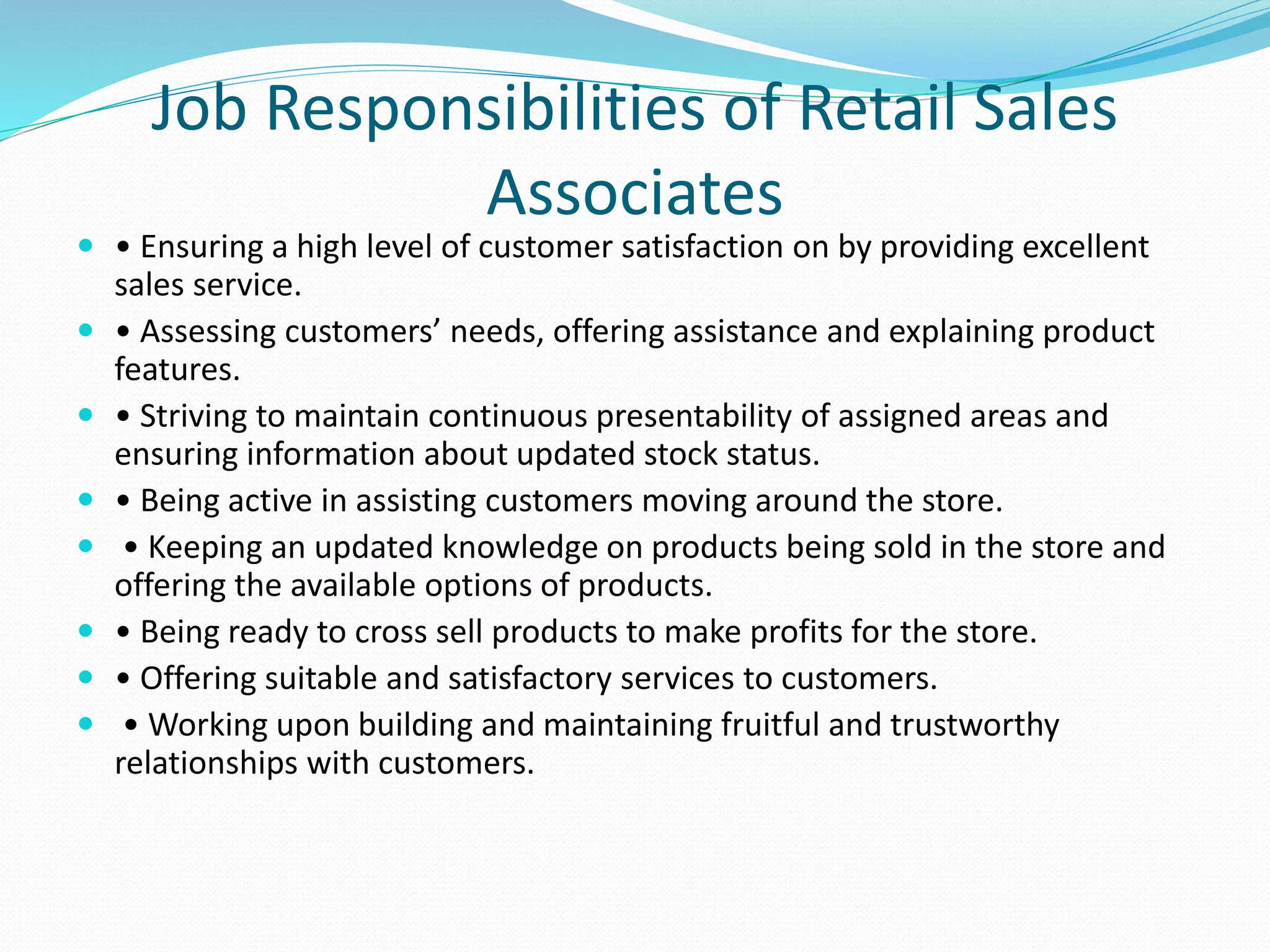
In a competitive market, service is a primary differentiator. This course teaches advanced communication strategies, conflict resolution, and the psychology of the consumer. In 2026, this also includes managing customer interactions across social media, live chat, and AI-driven interfaces.
Retail Accounting and Business Math
Managers must be comfortable with numbers. This coursework covers profit and loss (P&L) statements, inventory valuation, markdowns, and break-even analysis. Students learn how to calculate Key Performance Indicators (KPIs) such as sales per square foot and inventory turnover rates.
Visual Merchandising
Visual merchandising is the art and science of presenting products in a way that stimulates interest and sales. Students learn about store layout, lighting, color theory, and digital signage. The curriculum often includes the use of planograms—detailed diagrams that show where specific products should be placed on shelves to maximize visibility.
Human Resources and Supervision
Retail is a labor-intensive industry. This module focuses on recruiting, training, and motivating a diverse workforce. It covers labor laws, performance evaluations, and the development of leadership styles necessary to manage high-turnover environments effectively.
Admission Requirements and Prerequisites
Entering an associate degree program is generally straightforward, making it an accessible option for both recent high school graduates and working professionals looking to upskill.
- Educational Background: A high school diploma or a General Education Development (GED) certificate is mandatory.
- Transcripts: Applicants must submit official transcripts from all previously attended institutions. While a high GPA is not always required for community colleges, it can impact eligibility for certain scholarships.
- Placement Testing: Many colleges require students to take placement exams in English and Mathematics (such as the ACCUPLACER). Depending on the results, students might need to take developmental or remedial courses before starting the core degree requirements.
- Application Fees: Fees typically range from $20 to $50, though many institutions waive these during "college application weeks" or for students with financial need.
Comparing Associate Degree Types
Choosing the right degree path depends on your long-term career goals. If you want to start working as a department manager immediately, an AAS might be best. If you eventually want to reach a regional or corporate executive level, an AS or AA is often the better foundation.
| Feature | Associate of Applied Science (AAS) | Associate of Science (AS) / Arts (AA) |
|---|---|---|
| Primary Focus | Technical and vocational skills for the job. | Theoretical foundation and general education. |
| Transferability | Limited; some credits may not transfer to a university. | High; designed to transfer to 4-year programs. |
| Course Load | More retail-specific courses (e.g., Inventory Lab). | More core academics (e.g., Psychology, College Algebra). |
| Completion Time | 2 Years (Full-time). | 2 Years (Full-time). |
| Career Goal | Immediate entry-level management. | Path toward a Bachelor’s in Business/Retail. |
The Cost of Education in 2026
The cost of an associate degree varies significantly based on the type of institution and the student’s residency status. As of 2026, community colleges remain the most cost-effective route.
- In-District Community Colleges: Tuition generally ranges from $3,500 to $5,000 per year. For a two-year program, the total tuition is often under $10,000.
- Out-of-State Public Colleges: Costs can rise to $10,000–$15,000 per year.
- Private Vocational Schools: These programs may offer accelerated schedules but can cost $15,000 to $25,000 annually.
Financial Aid and Support: Most students are eligible for the Free Application for Federal Student Aid (FAFSA). Beyond federal grants like the Pell Grant, retail-specific scholarships are often available through organizations like the National Retail Federation (NRF). Many major retailers (e.g., Walmart, Starbucks, Target) also offer tuition reimbursement programs for employees pursuing degrees in retail management or business.
Career Opportunities and Salary Outlook
An associate degree opens doors to roles that involve higher levels of responsibility and better compensation than entry-level clerk positions.
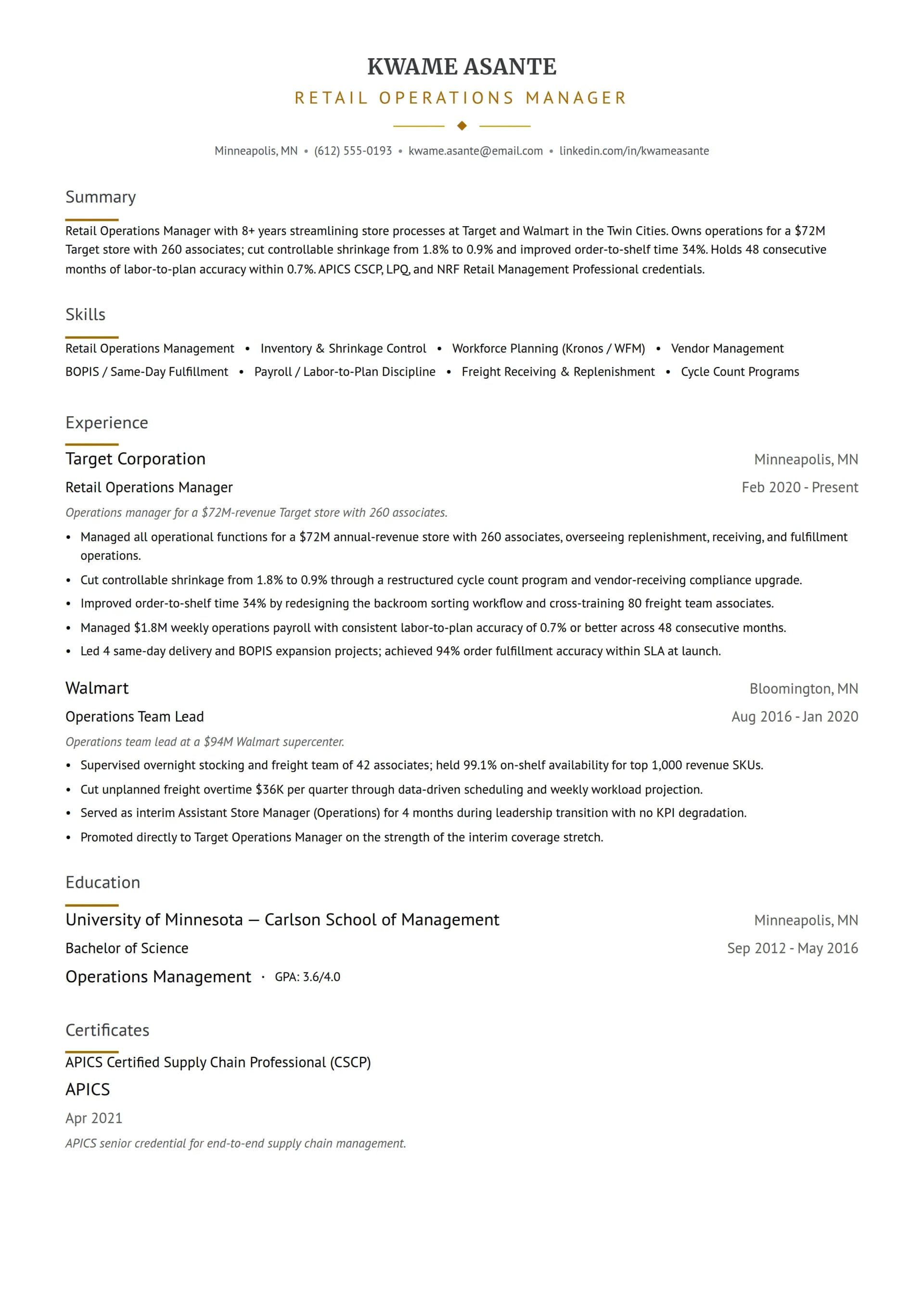
Assistant Store Manager
Assistant managers handle the day-to-day operations under the Store Manager's guidance. They supervise staff, handle customer escalations, and ensure the store meets its sales targets. In 2026, the average salary for this role ranges from $48,000 to $62,000, depending on the retailer and location.
Department Manager
In larger "big box" stores, department managers oversee a specific section, such as Electronics, Apparel, or Home Goods. They are responsible for the inventory levels and visual presentation of their specific area. Salaries typically range from $42,000 to $55,000.
Visual Merchandiser
These professionals specialize in the aesthetic and functional layout of the store. They may work for a single store or travel between several locations within a district. The role requires a blend of creativity and analytical thinking to understand how layout affects sales data. Salaries range from $45,000 to $58,000.
Logistics and Supply Chain Coordinator
With the rise of e-commerce, retail management graduates are increasingly found in distribution centers. They manage the flow of goods from warehouses to consumers or retail outlets. This technical role often commands salaries between $50,000 and $65,000.
The Evolution of Retail: Skills for 2026
The retail industry has undergone significant transformation. A degree program in 2026 emphasizes skills that were considered "optional" a decade ago.
1. Data Literacy: Modern managers must interpret "Big Data." This includes understanding heat maps of customer movement in stores, analyzing conversion rates from email marketing, and using predictive analytics to forecast inventory needs for seasonal shifts.
2. Sustainability Management: Consumers in 2026 prioritize ethical sourcing and environmental impact. Retail management programs now include modules on sustainable supply chains, waste reduction in packaging, and "circular economy" practices, such as in-store recycling or resale programs.
3. Artificial Intelligence (AI) Proficiency: Retailers use AI for personalized marketing and automated inventory replenishment. Managers need to understand how to interact with these systems and troubleshoot when automated logistics do not align with local market realities.
Common Challenges and How to Overcome Them
Pursuing an associate degree while working in retail—a sector known for irregular hours—can be challenging.
- Time Management: Many retail management students work full-time. Opting for asynchronous online programs allows students to complete coursework during off-peak hours or late at night.
- Technical Difficulty: For some, the transition to the analytical side of retail (accounting and data) is difficult. Most colleges offer free tutoring services specifically for business mathematics and accounting.
- Keeping Pace with Tech: The retail tech stack changes rapidly. Students should supplement their degree with micro-credentials or certifications in specific platforms like Salesforce or specialized Warehouse Management Systems (WMS).
Step-by-Step Path to Enrollment
- Research Programs: Look for institutions accredited by bodies like the Accreditation Council for Business Schools and Programs (ACBSP). This ensures the credits will be recognized by employers and other universities.
- Submit FAFSA: Complete your financial aid paperwork as early as possible to maximize your grant and loan options.
- Meet with an Academic Advisor: Discuss your career goals to determine if an AAS or an AS degree is the better fit for your specific trajectory.
- Enroll in Core Classes: Start with "Principles of Retailing" and "Business Communication" to build a strong foundation.
- Seek an Internship: Many programs require or highly recommend an internship. This provides real-world experience and often leads to a job offer before graduation.
Frequently Asked Questions
Can I get a retail management degree entirely online?
Yes, many accredited community colleges and universities offer 100% online associate degrees in retail management. These programs are designed for working professionals and typically offer the same curriculum as on-campus options, often using virtual simulations to teach store layout and inventory management.
Is an associate degree enough to become a Store Manager?
While some large-scale retailers prefer a Bachelor’s degree for Store Manager positions at high-volume locations, an associate degree combined with 3-5 years of progressive experience is often sufficient. Many retailers promote from within, valuing the combination of formal education and "on-the-ground" experience.
What is the difference between Retail Management and Business Administration?
Retail management is a specialized branch of business administration. While business administration covers general concepts applicable to any industry (finance, HR, law), retail management applies those concepts specifically to the sale of goods to consumers, focusing on store operations, merchandising, and retail logistics.
Does this degree cover e-commerce?
By 2026, almost all reputable retail management programs have integrated e-commerce into their core curriculum. You will likely study digital storefronts, "click-and-collect" (BOPIS) models, and the integration of social media shopping with physical inventory.
Are there professional certifications I should get alongside my degree?
The National Retail Federation (NRF) Foundation offers several recognized certifications, such as the "Retail Industry Fundamentals" and "Customer Service & Sales" credentials. These can complement your degree and make your resume stand out to recruiters.
Final Recommendation
If you are currently working in retail and feel stuck in an entry-level role, or if you are interested in the fast-paced world of commerce, an Associate of Science in Retail Management is a highly strategic investment. For those intending to advance to corporate roles, ensure your chosen program is transfer-friendly. Start by contacting your local community college’s admissions office to request a degree audit and see how your existing work experience might count toward elective credits through Prior Learning Assessment (PLA) programs.