Annie Lang revolutionized communication science by introducing the Limited Capacity Model of Motivated Mediated Message Processing (LC4MP). Her framework shifted media research from measuring passive long-term effects to analyzing real-time cognitive and biological processing. By combining cognitive psychology with evolutionary biology, Lang explained how humans allocate limited mental resources to encode, store, and retrieve media messages.
The Foundations of Media Processing: Shifting from Mass Effects to Cognitive Science
For much of the twentieth century, communication research focused primarily on mass media outcomes, asking what media does to people. Models ranging from early direct-effects theories to cultivation analysis and agenda-setting examined macro-level sociological impacts. However, these paradigms often treated the human mind as a black box, assuming that exposure to a message automatically led to predictable psychological or behavioral results.
In the late 1980s and 1990s, Dr. Annie Lang, a researcher at Indiana University Bloomington, spearheaded a paradigm shift by bringing cognitive science and psychophysiology into communication studies. Instead of asking what media does to people, Lang asked how the human brain processes media in real time.
Lang recognized that media messages are complex clusters of visual, auditory, and narrative information. Human beings do not consume media in static bursts; rather, they process continuous streams of sensory stimuli using a cognitive system that evolved for physical survival in a natural environment. By applying concepts from information processing cognitive psychology—originally developed by scholars such as Donald Broadbent and Richard Shiffrin—Lang established a framework to measure processing mechanisms as they occur millisecond by millisecond.
This cognitive turn transformed communication from a descriptive social science into an experimental science grounded in human biology. It provided researchers with the tools to explain why certain television cuts capture visual attention, why emotional health campaigns succeed or fail, and how complex media structures alter memory retention.
Core Mechanics of the Limited Capacity Model (LCM)
First formalized in detail by Annie Lang in her seminal 2000 paper published in the Journal of Communication, the Limited Capacity Model (LCM) rests on a foundational premise: human beings are information processors with a strictly limited pool of mental resources.
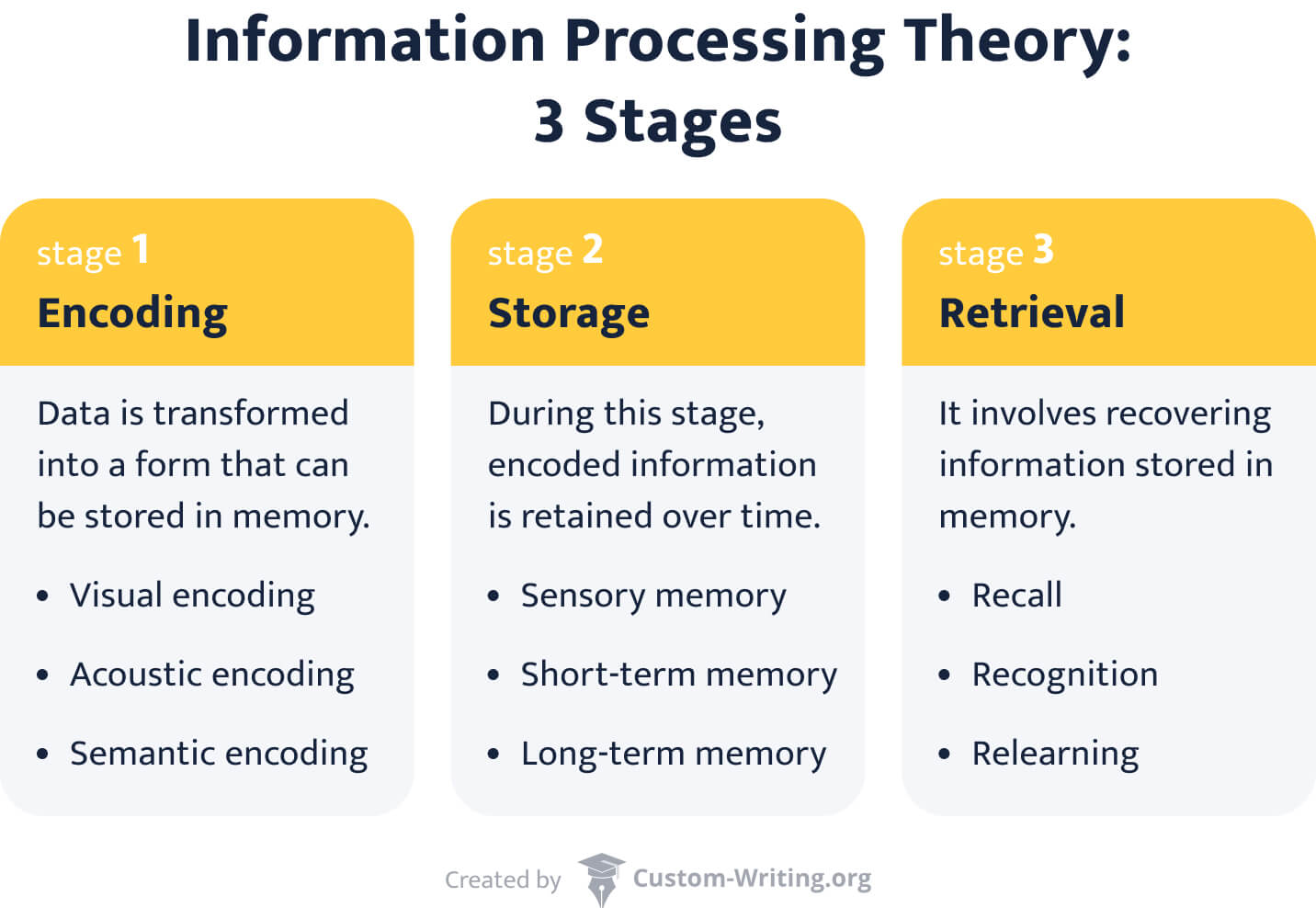
When individuals interact with a media message, their cognitive system performs three continuous, simultaneous sub-processes:
Encoding: The mental process of selecting sensory information from the media environment and converting it into a cognitive representation in working memory.
Storage: The process of linking newly encoded mental representations to existing long-term memory networks for future retention.
Retrieval: The process of searching long-term memory to bring previously stored information back into working memory to aid ongoing processing or interpretation.
INCOMING MEDIA STREAM
- ENCODING (Sensory to Working Memory)
- STORAGE (Working to Long-Term Memory)
- RETRIEVAL (Long-Term to Working Memory)
- ENCODING (Sensory to Working Memory)
Crucially, these three sub-processes do not operate independently; they compete for the same finite pool of cognitive capacity. Cognitive resources are allocated to these processes through two distinct mechanisms: controlled allocation and automatic allocation.
- Controlled Allocation: Driven by the user's conscious goals, intentions, and interest. For example, a student watching an educational video actively directs cognitive resources toward encoding and storing the presenter's statements.
- Automatic Allocation: Driven by structural features of the media message or evolutionary triggers. Features such as structural cuts, movement, sudden sounds, graphics, or emotionally charged imagery trigger an involuntary orienting response (OR). The orienting response is an evolutionary reflex that forces the brain to automatically allocate processing capacity toward a novelty or threat in the environment.
When the total capacity required by encoding, storage, and retrieval exceeds the total capacity available, the system experiences cognitive overload. Under overload conditions, performance across one or more sub-processes degrades. For instance, a video featuring rapid camera cuts and dramatic sound effects may force the viewer to allocate nearly all available capacity to encoding the fast-paced visual inputs. As a result, insufficient capacity remains for storage, meaning the viewer pays attention to the screen but fails to consolidate the message into long-term memory.
From LCM to LC4MP: Integrating Evolutionary and Motivational Systems
While the original LCM effectively explained how cognitive capacity constraints affect media reception, it treated the processing human mind largely as a computer processing information. In the mid-2000s, Annie Lang updated the framework into the Limited Capacity Model of Motivated Mediated Message Processing (LC4MP), incorporating evolutionary biology and emotional motivation.
The LC4MP acknowledges that human cognitive processing is driven by two underlying evolutionary motivational systems:
- The Appetitive System (Approach): Associated with reward-seeking, exploration, food, mating, and positive affect. When activated, the appetitive system encourages closeness and engagement with the environment.
- The Aversive System (Avoidance/Defense): Associated with danger, threat avoidance, fear, and self-preservation. When activated, the aversive system prepares the organism to withdraw, defend, or escape.
These two systems operate independently in a dual-system model known as evaluative space, rather than as a single bipolar continuum from bad to good. Media messages can activate either system independently or both simultaneously (a state known as coactivation).
- EVOLUTIONARY MOTIVATION
- APPETITIVE SYSTEM (Approach/Reward)
- Positivity Offset (Low-Threat/Explore)
- AVERSIVE SYSTEM (Avoid/Protection)
- Negativity Bias (High-Threat/Protect)
- APPETITIVE SYSTEM (Approach/Reward)
The activation of these systems dictates how cognitive resources are distributed to media:
Positivity Offset
In neutral or low-threat environments, the appetitive system is slightly more active than the aversive system. This evolutionary default encourages organisms to explore their environment, seek out novelty, and acquire information when no immediate danger is present. In media contexts, mild curiosity or entertaining content engages the appetitive system, promoting steady cognitive resource allocation to encoding and storage.
Negativity Bias
When a threat or negative stimulus appears, the aversive system responds more aggressively than the appetitive system does to positive stimuli of equal magnitude. Because surviving a threat is historically more urgent than securing a reward, negative or fear-inducing media content (such as graphic news footage or public health warnings) rapidly mobilizes cognitive capacity. The aversive system prioritizes immediate encoding to evaluate the threat, often sacrificing storage or deep contextual processing unless carefully balanced.
By integrating these biological drivers, LC4MP transformed communication theory from a static model of memory capacity into a dynamic account of how human emotions, survival instincts, and media structures interact.
Comparative Overview: Key Components of LC4MP
To understand how LC4MP functions as a comprehensive model, it is useful to examine how cognitive sub-processes, motivational systems, and structural inputs interact:
| Model Sub-system / Process | Primary Biological / Cognitive Mechanism | Common Media Triggers | Direct Impact on Memory and Attention |
|---|---|---|---|
| Encoding | Conversion of sensory input into working memory | Structural cuts, sudden motion, auditory cues, novelty | Increases immediate visual and auditory attention; populates short-term mental representations. |
| Storage | Associative linking of new input to long-term memory networks | Narrative clarity, self-relevance, deliberate pacing, emotional resonance | Enhances long-term recall and retention of key message elements; impaired by cognitive overload. |
| Retrieval | Activation of stored long-term memory into working memory | Known symbols, familiar brand logos, narrative cues, explicitly asked questions | Facilitates comprehension and contextual understanding; consumes processing capacity. |
| Appetitive System | Activation of approach/reward neurobiology | Humorous content, appealing food imagery, sexual stimuli, pleasant music | Promotes sustained exploration, positive evaluation, and steady message storage. |
| Aversive System | Activation of defense/withdrawal neurobiology | Threatening imagery, alarming sound effects, graphic warnings, sad narratives | Triggers rapid initial attention allocation via negativity bias; can cause defensive avoidance if overstimulated. |
| Cognitive Overload | Exhaustion of total available processing resources | Hyper-pacing, chaotic visual transitions, dense text over complex visuals | Causes sub-process failure—typically reducing storage and retrieval despite high immediate encoding. |
Methodological Innovations: Measuring Real-Time Media Processing
A distinguishing feature of Annie Lang's work is her insistence on physiological measurement. Rather than relying solely on post-hoc self-report surveys—which are vulnerable to memory bias, social desirability, and rationalization—Lang pioneered the use of continuous psychophysiological measures in communication laboratories.
These physiological tools allow researchers to track sub-conscious processing continuous with the media experience:
Heart Rate Deceleration
The human heart rate slows down during moments of intake-orienting attention. When a sensory change occurs in a media stream (such as a camera transition), the autonomic nervous system triggers a momentary heart rate deceleration. Tracking heart rate over time allows researchers to measure continuous changes in cognitive resource allocation to encoding.
Electrodermal Activity (EDA / Skin Conductance)
Skin conductance responses (SCR) measure subtle changes in sweat gland activity controlled by the sympathetic nervous system. EDA serves as a direct index of emotional arousal. Higher skin conductance reflects stronger activation of the underlying appetitive or aversive motivational systems.
Facial Electromyography (EMG)
By placing micro-electrodes over specific facial muscles, researchers measure emotional valence (positive vs. negative reaction):
- Corrugator supercilii muscle: Muscle activity above the eyebrow correlates with negative affect and aversive system activation (frowning).
- Zygomaticus major muscle: Muscle activity along the cheek correlates with positive affect and appetitive system activation (smiling).
Secondary Task Reaction Time (STRT)
To measure available cognitive capacity directly during media consumption, researchers use STRT protocols. While watching a media segment, participants are instructed to press a button as quickly as possible whenever they hear an unexpected secondary tone.
If a viewer responds slowly to the tone, it indicates that the media message is consuming most of their cognitive capacity. If the viewer responds rapidly, it indicates that free cognitive capacity remains.
EXPERIMENTAL PSYCHOPHYSIOLOGY SETUP
| Physiological Measure | Cognitive / Emotional Indicator |
|---|---|
| Heart Rate Deceleration | Immediate cognitive resource allocation |
| Electrodermal Activity | Sympathetic arousal & emotional intensity |
| Facial EMG (Corrugator) | Aversive activation (Negative valence) |
| Facial EMG (Zygomaticus) | Appetitive activation (Positive valence) |
| STRT Reaction Speed | Real-time cognitive load & available capacity |
These methodological standards are maintained across research institutions such as the Media Psychology Lab at Indiana University Bloomington and documented across publications archived by the International Communication Association (ICA).
The Evolution of LC4MP in Modern and Interactive Digital Environments
Although LC4MP was originally designed during the dominance of traditional broadcast media (television, radio, and print), its core premises apply directly to contemporary digital environments. Because human cognitive architecture has not fundamentally changed, the rapid evolution of media technology has intensified—rather than obsolete—the capacity dynamics Lang described.
- BROADCAST ERA
- Linear Video
- Moderate Structural Cuts
- Scheduled Content
- Passive Reception
- Impact:
- Manageable Cognitive Load
- Balanced Memory Storage
- DIGITAL & INTERACTIVE ERA
- Short-Form Video (TikTok/Reels)
- Continuous Micro-Cuts & Audio
- Algorithmic Orienting Hooks
- Interactive / Immersive Dynamics
- Impact:
- Continuous Cognitive Overload & Impaired Long-Term Retention
Short-Form Video and Algorithmic Feeds
Modern social platforms (such as TikTok, YouTube Shorts, and Instagram Reels) rely heavily on high-frequency structural edits, rapid visual changes, and immediate audio hooks. From an LC4MP perspective, these platforms are engineered to exploit the brain's orienting response.
The relentless stream of novelty triggers continuous automatic resource allocation to encoding. However, because new videos appear every few seconds, viewers operate in a state of perpetual cognitive overload. The processing system never enters a period of quiet consolidation, resulting in high immediate engagement but minimal long-term storage or message recall.
Interactive Media and Video Games
In interactive video games, cognitive capacity allocation is even more demanding than in passive television viewing. Users must allocate controlled resources to operational inputs (game controllers, tactical decisions) while simultaneously processing complex visual and auditory environments.
LC4MP research in gaming shows that high user control increases appetitive motivation and spatial presence, but excessive task difficulty can exhaust available cognitive resources, leading to performance collapse or emotional frustration.
Virtual Reality (VR) and Immersive Tech
Virtual reality environments present dense visual, spatial, and auditory information. The high sensory realism strongly activates both the appetitive and aversive systems, making emotional responses in VR feel intense and immediate.
Applying LC4MP to VR design helps developers balance sensory immersion with cognitive load, ensuring that users do not suffer from disorientation, motion sickness, or processing exhaustion.
Practical Applications and Scholarly Impact
The insights provided by Annie Lang and LC4MP extend far beyond theoretical communication studies. The model guides practice across multiple applied fields:
Public Health Communication
Designing effective anti-smoking, anti-drug, or public safety campaigns requires careful management of emotional arousal. LC4MP demonstrates that using severe threat appeals (such as graphic medical images) can backfire. If the message triggers intense aversive system activation without providing immediate, manageable action steps, viewers undergo defensive processing—tuning out the message or failing to store the safety instructions. Health communicators use LC4MP principles to balance negative threat cues with positive, reassuring solutions to maximize message encoding and retention.
Educational Design and Instructional Tech
Instructional designers use LC4MP to build effective digital learning tools. By avoiding extraneous visual decorations, overly complex animations, or redundant text-to-speech audio, designers reduce unnecessary automatic resource allocation. This ensures that learners retain sufficient cognitive capacity to store key concepts into long-term memory.
User Experience (UX) and Interface Design
Interface designers apply cognitive load principles to prevent digital fatigue. Streamlining navigation menus, reducing intrusive pop-up notifications, and maintaining visual consistency help users conserve cognitive resources for their primary tasks.
Media Literacy and Digital Well-being
Understanding that algorithmic platforms are designed to trigger continuous orienting responses empowers individuals to manage their digital consumption. Media literacy frameworks grounded in LC4MP teach users how structural pacing influences mental fatigue, attention fragmentation, and memory retention.
Frequently Asked Questions
What is the main difference between LCM and LC4MP?
The original Limited Capacity Model (LCM) focused primarily on the cognitive sub-processes (encoding, storage, retrieval) and resource allocation mechanisms. The expanded LC4MP integrated evolutionary biology, explicitly detailing how two underlying motivational systems (the appetitive and aversive systems) drive cognitive resource allocation based on emotional stimuli.
How does LC4MP explain cognitive overload?
Cognitive overload occurs when the total resources required to perform encoding, storage, and retrieval exceed the individual's limited pool of available cognitive capacity. When overload happens, the brain prioritizes immediate processing (typically encoding continuous inputs) at the expense of deep processing, leading to poor memory retention and degraded comprehension.
Why are psychophysiological measures so important in Annie Lang's research?
Psychophysiological measures—such as heart rate, skin conductance, and facial EMG—allow researchers to track human processing mechanisms as they happen in real time, millisecond by millisecond. This avoids the biases, memory gaps, and post-hoc rationalizations inherent in traditional self-report survey questionnaires.
How do structural features in media affect processing?
Structural features, such as camera cuts, visual movement, loud noises, and graphic animations, trigger involuntary evolutionary reflexes known as orienting responses. These responses automatically force the brain to allocate cognitive capacity toward encoding the new sensory information, regardless of whether the viewer consciously intended to pay attention.
How is LC4MP applied to modern social media analysis?
LC4MP explains why modern short-form video feeds are engaging yet difficult to remember. The rapid pacing and frequent structural cuts repeatedly trigger automatic orienting responses and high emotional arousal, keeping encoding active while depriving the brain of the cognitive resources and time necessary to consolidate messages into long-term memory.
Conclusion and Strategic Takeaways
Annie Lang’s development of the Limited Capacity Model of Motivated Mediated Message Processing fundamentally reshaped communication science. By grounding media effects in human cognitive architecture and evolutionary biology, her work established a rigorous framework for understanding how mind and media interact.
For researchers, creators, and media practitioners, LC4MP provides actionable guidelines:
- Balance Structure and Content: Avoid overwhelming users with rapid structural edits or sensory clutter if the goal is long-term information retention. High structural pacing gains immediate attention but trades off message memory.
- Manage Emotional Intensity: When using fear, threat, or high-arousal cues in health or instructional messaging, pair them immediately with clear, simple action steps to prevent defensive avoidance or cognitive overload.
- Respect Capacity Constraints: Design digital environments, educational platforms, and software interfaces with human cognitive limitations in mind, ensuring that processing capacity remains available for primary goals.
To further explore foundational research in media psychophysiology and cognitive communication, review published studies in the Journal of Communication or consult the academic repositories maintained by the International Communication Association.