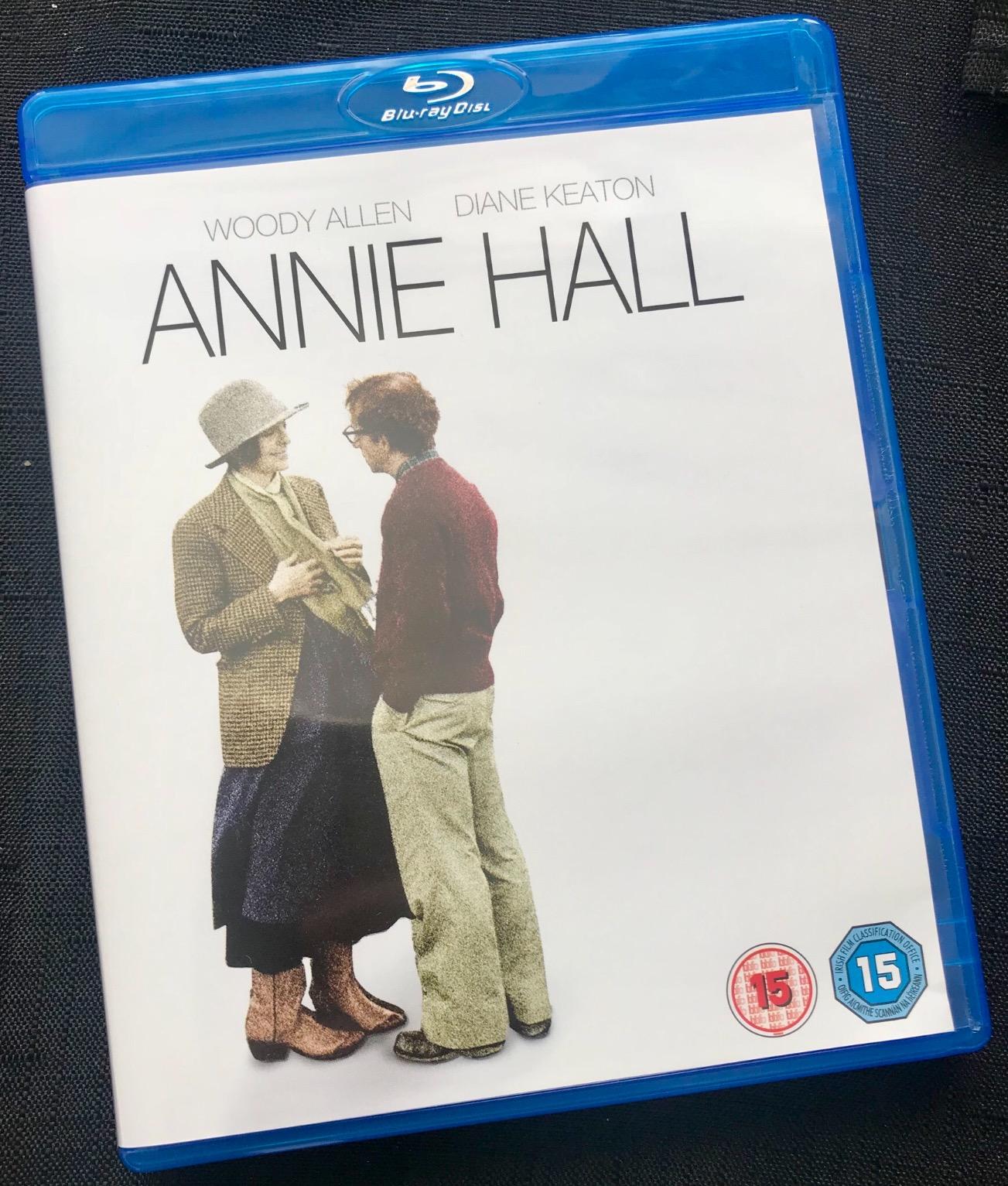
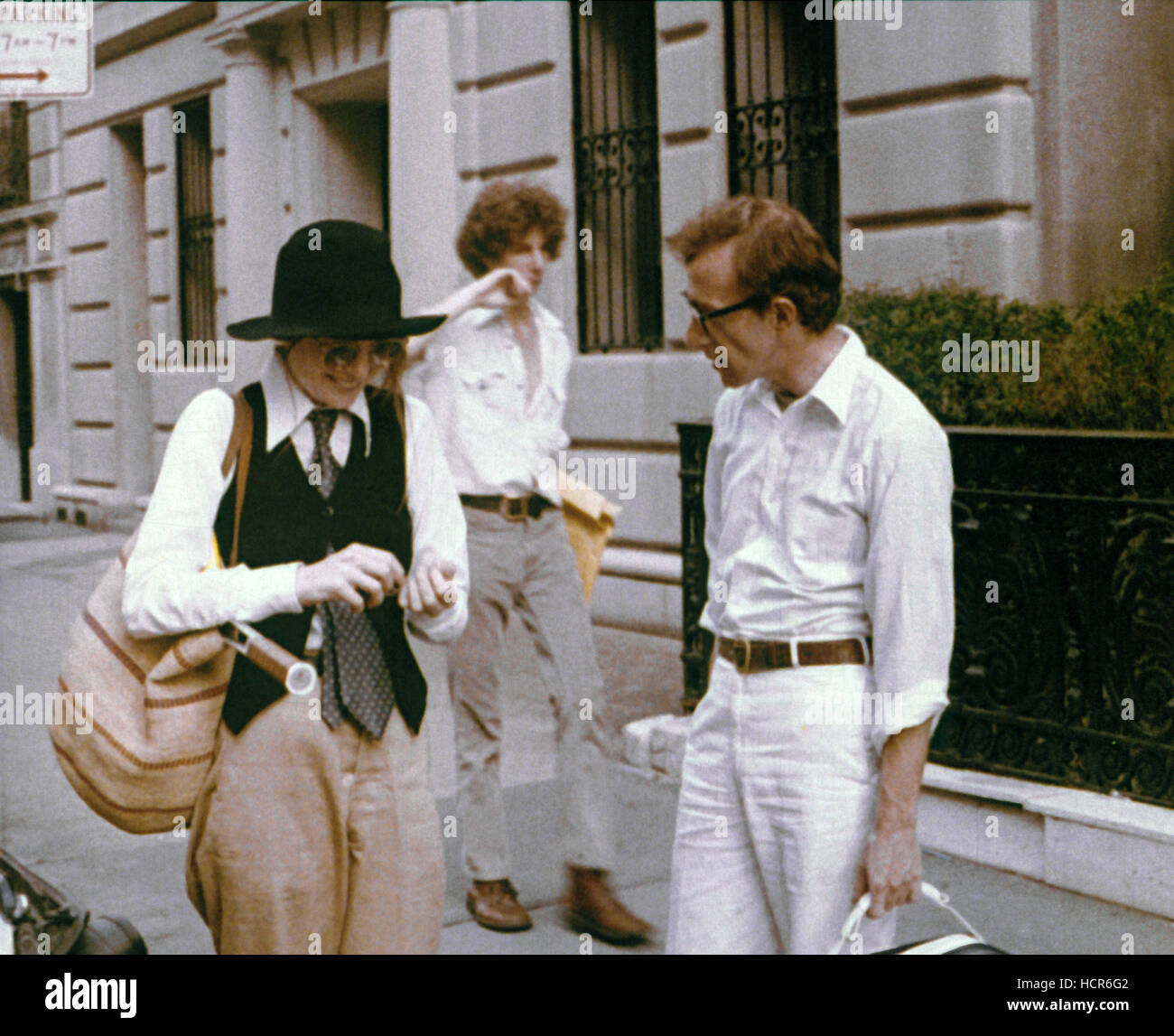
Released in 1977, Annie Hall fundamentally transformed the cinematic comedy by replacing broad slapstick and formulaic happy endings with psychoanalytic introspection, structural experimentation, and emotional realism. Co-written by Woody Allen and Marshall Brickman, and starring Allen alongside Diane Keaton, the film established a new paradigm for modern romantic screenwriting and directorial technique.
The Cinematic Landscape Before Annie Hall
Prior to the late 1970s, mainstream American film comedy was largely divided into distinct, traditional categories. Classic Hollywood had built its comic foundation on screwball farces, physical slapstick, and theatrical situational comedies. Directors like Frank Capra, Howard Hawks, and later Billy Wilder crafted legendary romantic comedies, but these works relied on clear narrative arcs, heightened situations, and an unspoken contractual agreement with the audience: despite misunderstandings, the central couple would inevitably end up together.
By the late 1960s and early 1970s, the comedy genre had begun to incorporate the cynicism and visual freedom of the New Hollywood movement. However, romantic comedies remained largely tied to escapist structures or romanticized idealism. Woody Allen’s own early directorial efforts—including Take the Money and Run (1969), Bananas (1971), and Sleeper (1973)—were brilliant, gag-dense comedies heavily indebted to the Marx Brothers, Bob Hope, and silent slapstick masters. While visually inventive, these films prioritized joke density and absurdity over psychological veracity.
| Traditional Rom-Coms (Pre-1977) | Annie Hall (1977 Onward) |
|---|---|
| Linear narrative structure | Fragmented, memory-based |
| Slapstick / Situational | Psychoanalytic subtext |
| Mandatory happy ending | Bittersweet, realistic end |
| Archetypal caricatures | Complex, evolving characters |
Annie Hall marked a decisive break from both the studio-era romantic formula and Allen’s own early parody style. Developed initially under the working title Anhedonia (a psychological term describing the inability to feel pleasure), the project evolved from a sprawling, non-linear murder mystery and stream-of-consciousness character study into a tightly focused examination of how romantic relationships form, dissolve, and lingeringly shape human identity.
Formal Experimentation and Narrative Deconstruction
The primary technical achievement of Annie Hall lies in its radical subversion of classic cinematic syntax. Allen and cinematographer Gordon Willis—famous for his dark, moody lighting on The Godfather—approached the visuals not like a standard bright studio comedy, but like an expressive, naturalistic art film. Beyond its visual depth, the film systematically dismantled the "fourth wall" and disrupted chronological storytelling to mirror the fragmented nature of memory and self-analysis.
Direct Address and Breaking the Fourth Wall
From its iconic opening frame, Annie Hall rejects cinematic distance. The film begins with Alvy Singer (Woody Allen) standing alone in a medium close-up against a plain wall, addressing the camera directly to deliver a monologue about neurosis, aging, and the demise of his relationship with Annie (Diane Keaton). Throughout the narrative, Alvy continuously interrupts scenes to speak to the audience, solicit opinions from passersby on the street, or comment on the absurdity of his immediate situation.
The most famous execution of this technique occurs during the movie theater lobby scene. Frustrated by a pretentious academic behind him in line spouting misinterpretations of media theorist Marshall McLuhan, Alvy breaks character, steps out of the scene, and pulls the actual Marshall McLuhan from behind a movie poster to publicly refute the patron's claims. By directly involving the audience in his subjective frustration, Allen established a meta-cinematic vocabulary that remains a staple of contemporary comedy.
- Subjective Memory Perspective
- Direct-to-Camera Addresses & Monologues
- Multi-Media Devices (Animation, Subtitles)
- Honest Psychological & Emotional Representation
Subtext Subtitles and Stream-of-Consciousness Devices
Annie Hall repeatedly uses visual devices to externalize psychological subtext. In the famous balcony scene following Alvy and Annie's initial meeting, the characters engage in casual, polite banter about art and photography while dynamic printed subtitles appear on the bottom of the screen, revealing their true, insecure internal thoughts:
- Verbal Dialogue: Annie talks casually about her photography interest.
- Subtext Subtitle: "I hope he doesn't think I'm a complete idiot."
- Verbal Dialogue: Alvy responds with intellectual praise.
- Subtext Subtitle: "I wonder what she looks like naked."
Additionally, the film utilizes:
- Split-Screen Parallel Analysis: Simultaneously showing Alvy and Annie in their respective psychoanalysts' offices, highlighting their starkly opposing perceptions of their intimacy ("How often do you have sex?" Alvy: "Hardly ever. Maybe three times a week." Annie: "Constantly. I'd say three times a week.").
- Animation Interludes: Integrating an animated sequence based on Disney's Snow White to depict Alvy's projection of his romantic anxieties.
- Time Travel and Memory Collisions: Allowing adult Alvy and Annie to walk into scenes from their childhood memories, interacting with past versions of themselves and their relatives.
Character Complexity and the Bittersweet Realism of Modern Love
Before Annie Hall, screen couples were largely defined by external plot obstacles: disapproving parents, rival suitors, financial hardship, or mistaken identities. Annie Hall shifted the source of conflict internally to the psychological incompatibilities, personal evolution, and existential fears of the protagonists.
| Traditional Rom-Com Conflict | Annie Hall Internal Conflict |
|---|---|
| Misunderstandings | Emotional growth shifts |
| Evil rivals / In-laws | Existential neurosis |
| External plot contrivances | Psychological mismatch |
Alvy Singer: The Unapologetic Neurotic
Alvy Singer represented a distinct departure from the handsome, confident leading men of studio tradition. He is an explicitly neurotic, urban Jewish intellectual obsessed with mortality, antisemitism, and cultural critique. Rather than hiding these traits behind a heroic facade, the film presents Alvy’s intellect as both his primary charm and his fatal flaw. His inability to exist in the present moment or tolerate life outside of Manhattan ultimately isolates him.
Annie Hall: Autonomy, Growth, and Identity
Diane Keaton’s portrayal of Annie Hall fundamentally altered how female leads were written in comedic cinema. Annie is not a passive love interest waiting to be rescued, nor is she a static foil for Alvy’s jokes. Over the course of the film, Annie undergoes profound personal, artistic, and intellectual growth:
- She transitions from a hesitant, self-effacing singer to a confident performing artist.
- She moves from intellectual dependence on Alvy to pursuing her own education and career opportunities in Los Angeles.
- She ultimately outgrows the relationship, recognizing that Alvy's neuroses, which initially offered security, have become restrictive.
The film's ending reinforces this commitment to character integrity. Instead of forcing a contrived reconciliation, Alvy and Annie part ways. Their brief meeting in New York years later is marked by warm nostalgia rather than romantic reunion. The film concludes with Alvy’s famous voiceover comparing relationships to the old joke about needing the eggs: relationships may be irrational, crazy, and absurd, but people keep going through it because most of us need the eggs.
Diane Keaton’s Cultural and Style Revolution
Diane Keaton’s contribution to Annie Hall extended far beyond her Academy Award-winning performance; she reshaped late-20th-century fashion and female self-expression. Working closely with costume designer Ruth Morley and incorporating her own personal wardrobe—much of it drawn from high-end menswear and vintage stores—Keaton created an iconic aesthetic that defied traditional Hollywood gender norms.
- Diane Keaton's "Annie Look"
- Tailored Menswear
- Oversized vests
- High-waisted pants
- Vintage Accessories
- Wide-brim hats
- Silk ties & scarves
- Authentic Mannerisms
- "La-di-da" catch
- Unfiltered affect
- Tailored Menswear
The "Annie Hall look"—characterized by oversized vests, wide silk ties, baggy trousers, floppy hats, and layered button-down shirts (many provided by designer Ralph Lauren)—became an immediate international fashion trend.
Beyond aesthetics, Keaton brought an unvarnished authenticity to her delivery. Expressions like "La-di-da, la-di-da" and her distinctive nervous laughter felt unscripted, introducing a conversational cadence that contrasted sharply with the polished, rhythmic banter of classical Hollywood comedies.
Architectural Shift in Comedy: Traditional vs. Annie Hall Era
To understand how Annie Hall restructured the genre, it is useful to evaluate its structural elements against both prior conventions and the modern conventions it inspired.
| Narrative / Cinematic Element | Traditional Pre-1977 Romantic Comedy | Annie Hall (1977) | Post-Annie Hall Legacy |
|---|---|---|---|
| Primary Conflict Source | External obstacles (family, money, rivals) | Internal psychology and personal growth | Emotional baggage, personal identity |
| Narrative Structure | Linear, chronological three-act structure | Fragmented, non-linear memory flow | Non-linear, subjective, frame narratives |
| Visual Style | Flat, brightly lit, stage-like composition | Cinematic, naturalistic lighting (Gordon Willis) | Cinematic realism and artistic compositions |
| Fourth-Wall Integrity | Strictly preserved (proscenium style) | Frequently shattered (direct camera address) | Routine meta-commentary and direct address |
| Resolution Tone | Definitive happy ending (marriage/reconciliation) | Bittersweet, realistic parting of ways | Ambiguous, authentic emotional endings |
| Female Lead Function | Romantic prize or traditional romantic foil | Evolving, autonomous individual | Complex co-protagonist with independent arc |
| Dialogue Technique | Polished, theatrical, gag-to-gag pacing | Conversational, subtext-driven, overlapping | Naturalistic dialogue with internal subtext |
Legacy and Influence on Modern Film and Television
The structural and thematic breakthroughs of Annie Hall established a template that reshaped independent and studio filmmaking for decades. The film demonstrated that a comedy could achieve massive commercial success and critical prestige (winning four Academy Awards, including Best Picture) without sacrificing stylistic risk or emotional honesty.
- Annie Hall (1977)
- Film Legacy
- When Harry Met Sally (1989)
- High Fidelity (2000)
- (500) Days of Summer (2009)
- Television Legacy
- Seinfeld
- Curb Your Enthusiasm
- Fleabag
- Character Archetypes
- The Unapologetic Intellectual
- The Evolving Co-Protagonist
- The Meta-Narrator
- Film Legacy
Influence on Romantic Cinema
Direct descendants of Annie Hall's narrative DNA can be traced through multiple generations of cinema:
- When Harry Met Sally... (1989): Written by Nora Ephron and directed by Rob Reiner, the film directly borrows Annie Hall's documentary-style commentary, Manhattan setting, and focus on male-female friendship, while leaning back toward a classic resolution.
- High Fidelity (2000): Adapted from Nick Hornby's novel, the film relies entirely on direct camera address, top-five list monologues, and subjective relationship autopsies modeled on Alvy Singer’s introspective style.
- (500) Days of Summer (2009): Employs non-linear chronologies, split-screen comparisons of expectation versus reality, and a bittersweet conclusion where the protagonists part ways after mutual growth.
Influence on Television and Auteur Comedy
The conversational pacing, neurosis-driven narrative engine, and meta-commentary of Annie Hall laid the groundwork for television's single-camera comedy revolution.
Larry David and Jerry Seinfeld adapted Alvy Singer’s observational, neurotic comedy into Seinfeld, while David expanded the unfiltered, social-friction comedy in Curb Your Enthusiasm.
Modern multi-award-winning series such as Phoebe Waller-Bridge’s Fleabag rely heavily on breaking the fourth wall to expose internal subtext, a direct evolution of the techniques popularized by Allen and Keaton in 1977.
Key Lessons for Screenwriters and Filmmakers
For writers, directors, and film scholars studying the comedic form, Annie Hall offers several foundational principles for storytelling:
- Prioritize Character Psychology Over Plot Mechanics: True comedic tension arises when characters act according to their ingrained habits, fears, and neuroses rather than artificial plot contrivances.
- Match Form to Theme: If a film is about the subjective, selective nature of romantic memory, the visual and structural format should reflect that subjectivity through non-linear editing, fantasy sequences, and direct commentary.
- Respect the Subtext: Dialogue is often most effective when characters are not directly stating what they feel. Using visual tools (like subtitles or split screens) can reveal emotional truth without sacrificing narrative tension.
- Embrace Bittersweet Authenticity: Audiences connect deeply with endings that feel emotionally truthful, even if they do not deliver a perfect, fairy-tale resolution.
Frequently Asked Questions
What Academy Awards did Annie Hall win?
At the 50th Academy Awards held in April 1978, Annie Hall won four major Oscars: Best Picture, Best Director (Woody Allen), Best Actress (Diane Keaton), and Best Original Screenplay (Woody Allen and Marshall Brickman).
Why was Annie Hall originally titled Anhedonia?
The initial script focused more broadly on Alvy Singer’s existential inability to experience pleasure—a clinical condition known as anhedonia—wrapped in a murder mystery narrative. During editing, Allen and editor Ralph Rosenblum realized the romantic relationship between Alvy and Annie was the heart of the film, leading them to re-cut the narrative and rename it after Keaton's character (whose real surname was Hall and nickname was Annie).
How did Diane Keaton influence her character’s fashion in the film?
Diane Keaton chose most of her character's clothes herself, combining vintage menswear, ties, vests, and wide-brimmed hats. Costume designer Ruth Morley initially expressed reservations, but Woody Allen encouraged Keaton to wear what she liked, resulting in a wardrobe that defined 1970s fashion.
Who played the cameo role of the media theorist in the theater line?
The real-life media theorist Marshall McLuhan made a brief cameo appearance. In the scene, Alvy Singer pulls McLuhan from behind a movie lobby sign to tell a loud patron that he knows nothing about McLuhan’s work.
Did Annie Hall invent breaking the fourth wall in film?
No. Breaking the fourth wall existed long before Annie Hall, seen in early theater, Marx Brothers films, Jean-Luc Godard’s French New Wave works (Breathless), and TV shows like The George Burns and Gracie Allen Show. However, Annie Hall popularized the technique within mainstream American romantic comedy, using it to serve deep psychological character analysis.
Summary and Viewing Recommendations
Annie Hall remains a cornerstone of cinematic history because it expanded what comedy could accomplish. By blending technical experimentation with psychological depth and fashion-defining characterization, Woody Allen and Diane Keaton demonstrated that screen comedy could be as structurally audacious and emotionally profound as any dramatic art form.
For those analyzing the film today, pair a viewing of Annie Hall with preceding 1970s comedies like Sleeper (1973) to see Allen's sudden leap in cinematic naturalism, followed by modern descendants like High Fidelity (2000) or Fleabag (2019) to appreciate how its formal innovations continue to shape contemporary storytelling.
EDITORIAL CATEGORY METADATA: