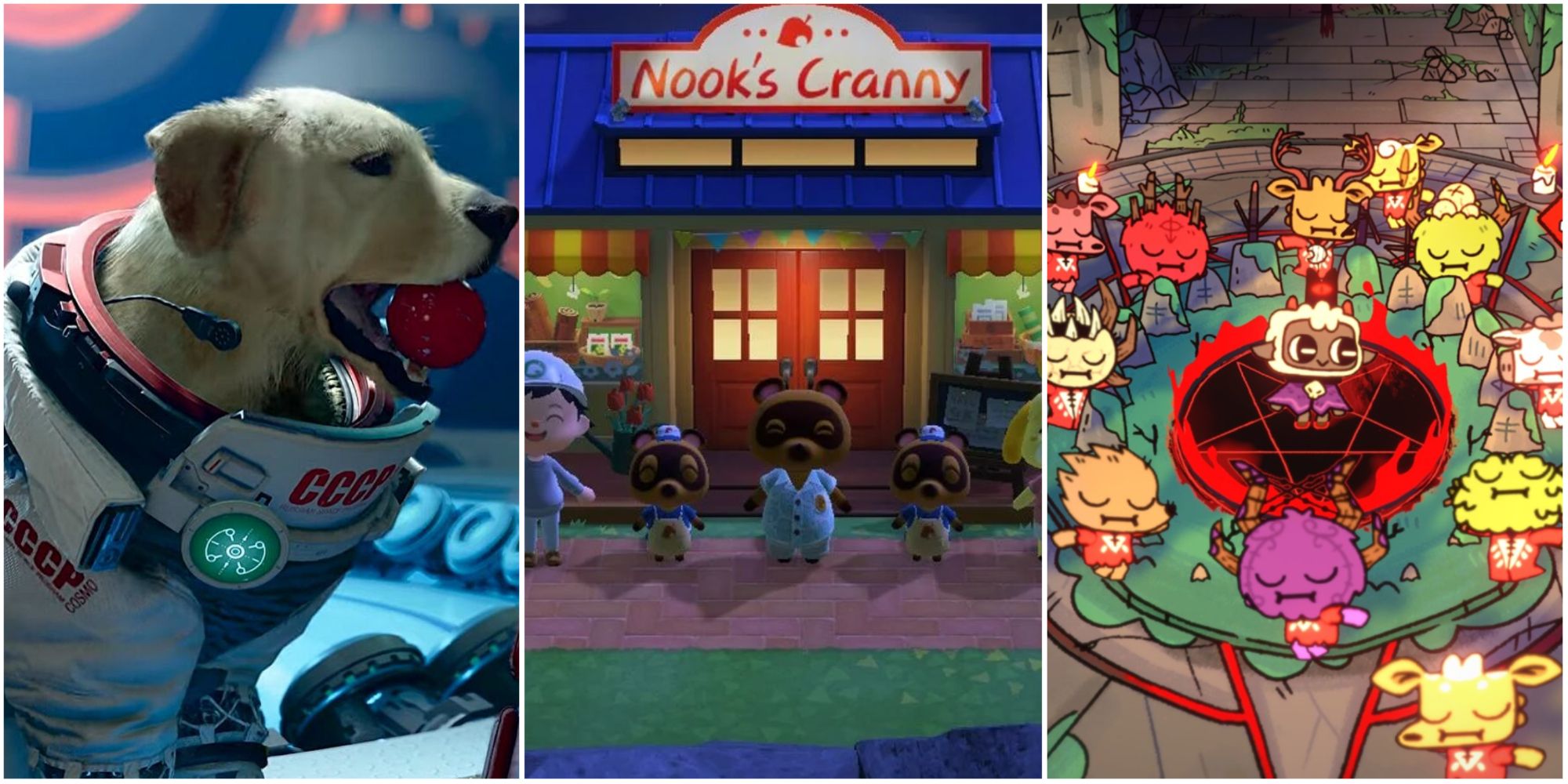
Animal video games encompass a broad category of interactive entertainment where non-human creatures serve as playable protagonists, central gameplay subjects, or managed assets. Spanning realistic wildlife survival simulations, cozy pet management titles, chaotic sandbox games, and narrative action-adventures, these games offer players unique ecological perspectives, relaxed progression loops, or complex biological management systems across all modern gaming platforms.
Understanding the Animal Video Game Landscape
The market for animal video games has expanded significantly beyond basic virtual pets. Today, animal-centric titles appeal to diverse gaming demographics, from hardcore simulation enthusiasts seeking deep biological accuracy to casual players looking for low-stress companion experiences. Understanding how these games are categorized helps players find titles that align with their mechanical preferences and platform setup.
1. Animal Protagonist Adventures
These games place players directly into the paws, hooves, wings, or fins of an animal. Rather than humanizing the character completely, modern animal protagonist titles often emphasize non-human locomotion, sensory perspectives, and spatial interaction. Gameplay generally revolves around navigation, environmental puzzle-solving, stealth, or survival in human-dominated or wild environments.
2. Zoo and Habitat Management Simulators
In management simulators, animals function as complex entities within a larger ecological or financial ecosystem. Players design habitats, manage dietary needs, organize breeding programs, and ensure species welfare. Success in these games relies on understanding biological requirements, spatial design, and financial sustainability.
3. Cozy Farming and Village Life Sims
Cozy animal games prioritize relaxed gameplay, creative customization, and social interactions with anthropomorphic animal characters or domestic pets. These titles typically eliminate failure states, high-speed combat, and punishing survival timers, replacing them with fishing, crafting, interior design, and friendship mechanics.
4. Ecosystem and Wildlife Survival Sims
Survival simulations focus on biological authenticity, food chain dynamics, and environmental threats. Players navigate predator-prey relationships, seasonal migrations, weather obstacles, and territorial management, experiencing the raw realities of wild animal life.
Key Gameplay Mechanics in Animal Video Games
What separates a memorable animal game from a standard title with animal skins is how well its core mechanics reflect non-human physiology and behavior.
| Physical Locomotion | Sensory & Interaction | Ecological Systems |
|---|---|---|
| Quadruped movement | Scent tracking | Predator-prey loops |
| Vertical agility | Sound visualization | Habitat biomes |
| Aquatic/Aerial drift | Manipulating objects | Genetic breeding |
Locomotion and Movement Physics
Designing quadrupedal, avian, or marine movement requires custom physics engines. Games featuring cats or wolves must model momentum, agility, and balance differently than bipedal human characters. Jump trajectories, surface traction, and tight-space navigation define how authentic an animal protagonist feels to control.
Non-Verbal Communication and Perception
Because real animals do not communicate via human speech, developer visual design often relies on non-verbal cues. Games utilize smell tracks rendered as visible particle streams, heightened auditory rings, or behavioral animations (such as flattening ears or raised fur) to communicate threats and environmental clues to the player.
Environmental Manipulation and Agility
Unlike human characters who use hands and tools, animal protagonists interact with the world using mouths, claws, trunks, or tails. This constraint reshapes puzzle design. Players must pull levers by biting, distract NPCs by barking or meowing, or dig through dirt barriers to uncover hidden paths.
Comparison of Top Animal Video Games
The following table provides a breakdown of leading animal video games across different platforms, mechanics, and playstyles.
| Game Title | Primary Genre | Playable Animal / Subject | Target Platforms | Key Gameplay Focus |
|---|---|---|---|---|
| Stray | Narrative Adventure | Feline (Stray Cat) | PC, PS4, PS5, Xbox, Switch | Environmental agility, stealth, sci-fi exploration |
| Planet Zoo | Management Sim | 180+ Species (Managed) | PC, PS5, Xbox Series X/S | Habitat design, animal welfare, conservation management |
| Animal Crossing: New Horizons | Life Simulator | Human with Anthropomorphic Villagers | Nintendo Switch | Island building, social simulation, collection |
| Untitled Goose Game | Stealth Comedy | Goose | PC, PS4, Xbox One, Switch | Mischief-making, stealth puzzles, village disruption |
| Goat Simulator 3 | Sandbox Comedy | Goat | PC, PS5, Xbox Series X/S, Mobile | Physics chaos, multiplayer antics, mini-games |
| Ancestors: The Humankind Odyssey | Survival RPG | Early Hominids | PC, PS4, Xbox One | Lineage evolution, stamina management, wild survival |
| Shelter 2 | Survival Adventure | Lynx | PC, Mac | Raising cubs, hunting prey, surviving seasonal changes |
| Endless Ocean Luminous | Marine Exploration | Aquatic Species & Diver | Nintendo Switch | Underwater observation, marine photography, cataloging |
In-Depth Analysis of Leading Animal Video Game Titles
Immersive Animal Protagonist Games
Stray (BlueTwelve Studio)
Stray set a high benchmark for feline perspective design in video games. Set in a decaying cybercity populated by robots, players control a stray cat seeking to rejoin its family.
- Locomotion Mechanics: The game uses a contextual movement system that allows the cat to jump smoothly across narrow pipes, ledges, and rooftops without frustrating platforming misses.
- Environmental Interaction: Players can perform authentic feline behaviors—scratching carpets to open doors, knocking objects off tables, meowing to draw enemy attention, or curling up to sleep in quiet corners.
- Narrative Integration: The contrast between the agile, instinct-driven cat and its small drone companion, B-12, creates a functional partnership where the drone handles language translation and interface hacking while the cat handles spatial navigation.
Untitled Goose Game (House House)
This indie title proves that simple premises coupled with clear mechanics can yield exceptional gameplay. Players control a domestic goose whose sole goal is to disrupt the peaceful routines of a traditional English village.
- Stealth and Distraction: The game functions as a slapstick stealth puzzle. Players honk, flap wings, duck, and steal household items to complete a list of mischievous objectives.
- Contextual AI: Village inhabitants react dynamically to the goose's actions, chasing the bird away, locking gates, or repairing damaged props, forcing players to think creatively about timing and spatial movement.
Okami HD (Capcom)
Though rooted in Japanese mythology and cell-shaded action-adventure, Okami remains one of the most celebrated titles featuring a wolf protagonist. Players control Amaterasu, the sun goddess embodied as a white wolf.
- Celestial Brush System: Combat and world restoration use a real-time drawing mechanic where players freeze the screen to draw brushstrokes, creating wind, cutting obstacles, or spawning plant life.
- Wolf Behavior: Despite god-like powers, Amaterasu moves with authentic lupine weight, barking at villagers, digging up treasure, and feeding wild animals to earn divine praise.
Zoo Management and Habitat Simulators
Planet Zoo (Frontier Developments)
Planet Zoo stands as the definitive deep-simulation animal management game, combining sophisticated economic simulation with realistic biological modelling.
- Habitat Design
- Terrain & Flora
- Barriers & Space
- Animal Welfare
- Diet & Enrichment
- Social & Health
- Guest Happiness & Revenue Generation
- Ticket Sales
- Reinvest in Genetics & Conservation
- Detailed Animal Welfare Metrics: Animals in Planet Zoo possess complex needs categorized into space, terrain composition, plant coverage, social group size, hard shelter quality, and behavioral enrichment.
- Genetics and Breeding: The game models genetic diversity, inheritance of coat variations, fertility, and immunity levels. Players managing endangered species must maintain healthy breeding programs to avoid inbreeding depression and can release surplus animals to the wild for conservation credits.
- Modular Construction: Players have microscopic control over terrain editing, water filtration systems, climate control barriers, and custom enrichment structures to create naturalistic biomes.
Parkasaurus (WashBear Studio)
For players seeking a lighter, more colourful entry in the management genre, Parkasaurus presents a stylized take on prehistoric park creation.
- Biome Customization: Players alter soil types, water depth, and plant species to create specific habitat biomes suited to various dinosaur species.
- Casual Management: While maintaining employee shifts, guest satisfaction, and security fences, the game uses a relaxed art style and forgiving financial system compared to enterprise-grade management sims.
Cozy Pet and Farming Life Simulators
Animal Crossing: New Horizons (Nintendo)
Nintendo’s flagship social simulator places players in a deserted island paradise inhabited by anthropomorphic animal villagers.
- Social Progression: Building relationships with over 400 potential animal neighbors forms the narrative backbone. Each villager belongs to specific personality archetypes (such as Lazy, Jock, Peppy, or Cranky) that dictate their daily routines and conversation loops.
- Island Crafting: Players construct housing, reshape rivers, elevate terrain, and collect real-world insect and fish species to donate to a fully rendered island museum.
Calico (Peachy Keen Games)
Calico focuses on rebuilding a cat cafe in a pastel fantasy world populated by cozy creatures.
- Pet Collection: Players can discover, pet, name, and collect a wide variety of animals—ranging from domestic cats and dogs to giant bears and birds—and bring them to live in the cafe.
- Low-Stress Gameplay: The game intentionally lacks quest timers, stamina depletion, or failure penalties, emphasizing furniture placement, pastry baking, and animal interaction.
Nature, Wildlife Exploration, and Survival Games
Ancestors: The Humankind Odyssey (Panache Digital Games)
Set in prehistoric Africa 10 million years ago, Ancestors offers an uncompromising survival simulation tracking early hominid lineage.
- Sensory Identification: Players rely on visual, olfactory, and auditory senses to identify fresh water, edible plants, unknown predators, and missing clan members.
- Evolutionary Mechanics: Surviving physical injuries, snake venom, and extreme weather awards neural points. By passing generations forward, players unlock cognitive developments, bipedal walking, and tool usage across millions of years.
The Shelter Series (Might and Delight)
The Shelter series (Shelter 1, 2, and 3) explores the delicate nature of motherhood in the animal kingdom, placing players in control of a badger, lynx, and elephant respectively.
- Resource Management: Players must secure food for their young while navigating forest fires, river crossings, birds of prey, and winter starvation.
- Emotional Stakes: The series is known for its stark visual style and unyielding mechanics—losing offspring to predators or harsh weather is permanent, reinforcing the fragile balance of natural ecosystems.
How to Choose the Right Animal Video Game
Selecting the right animal game depends heavily on desired playstyle, preferred gaming hardware, and tolerance for gameplay complexity or stress.
What primary experience do you seek?
- Narrative & Agility
- Is combat preferred?
- Yes: Okami HD
- No: Stray
- Is combat preferred?
- Management & Strategy
- Do you want high detail?
- Yes: Planet Zoo
- No: Parkasaurus
- Do you want high detail?
- Cozy & Unwind
- Do you prefer farming?
- Yes: Stardew Valley
- No: Animal Crossing
- Do you prefer farming?
Match Game Mechanics to Player Age and Experience
- For Young Children & Casual Gamers: Choose titles with minimal text requirements and no penalizing mechanics, such as Neko Atsume, Alba: A Wildlife Adventure, or Goat Simulator.
- For Strategy Enthusiasts: Opt for deep simulation titles like Planet Zoo or ecosystem managers like Equilinox.
- For Action & Puzzle Players: Look into character-driven adventures such as Stray, Endless Ocean Luminous, or Untitled Goose Game.
Consider Platform Hardware Capabilities
- High-End PCs & Modern Consoles (PS5, Xbox Series X): Necessary for games with complex physical simulation, dynamic fur textures, and high particle counts like Planet Zoo or Stray.
- Handhelds & Mobile (Nintendo Switch, iOS, Android): Ideal for grid-based farming games, turn-based life simulators, and casual puzzle titles.
Frequently Asked Questions
What defines an animal video game?
An animal video game is defined by the central role non-human creatures play in its core mechanics. This includes games where players directly control an animal protagonist, manage animal populations and habitats, or build relationships within ecosystems featuring domestic or wild creatures.
Are there realistic wild animal survival games available?
Yes. Games like Ancestors: The Humankind Odyssey, Shelter 2, and The Isle focus on naturalistic survival. They incorporate real biological challenges such as scent tracking, hunting, predator avoidance, stamina management, and seasonal environmental adaptation without arcade power-ups.
What are the best animal video games for children?
For younger audiences, Animal Crossing: New Horizons, Alba: A Wildlife Adventure, Calico, and Paw Patrol World are excellent choices. They feature positive themes, non-violent objectives, vibrant visuals, and forgiving control schemes free of steep failure penalties.
Can you play management animal games on consoles?
Yes. Major simulation titles like Planet Zoo: Console Edition, Jurassic World Evolution 2, and Zoo Tycoon have adapted complex PC user interfaces for modern console controllers (PlayStation 5 and Xbox Series X/S), allowing full management functionality on TV displays.
Why are animal video games so popular in the cozy gaming sub-genre?
Animal video games naturally align with cozy gaming principles because animals evoke feelings of companionship, empathy, and nature connection. Removing human societal stressors and focusing on nurturing pets, exploring landscapes, or collecting wildlife creates low-anxiety gameplay loops favored by casual gamers.
Recommended Next Steps
To choose and set up your next animal video game experience:
- Identify Preferred Platforms: Check platform availability for your target game, especially if seeking heavy simulation titles like Planet Zoo (which require robust modern processing power) versus casual handheld games like Animal Crossing.
- Evaluate Content and Challenge Levels: Review video gameplay footage to determine whether you prefer realistic survival mechanics (which may include natural predator encounters), strategy management, or pure low-stress cozy exploration.
- Verify Demo Availability: Test free trial demos on platform stores (such as Steam, Nintendo eShop, or PlayStation Store) for titles like Untitled Goose Game or Stray to evaluate control comfort before purchasing.