Analyzing a whole life insurance policy requires evaluating both the legally binding insurance contract and the accompanying ledger illustration. To properly assess a policy, you must separate guaranteed cash values from non-guaranteed dividend projections, calculate the internal rate of return (IRR) over time, examine fee structures and riders, and verify the policy's tax status under applicable regulations.
Disclaimer: This guide is provided for educational and informational purposes only and does not constitute formal legal, tax, or financial advice. Life insurance regulations and tax rules vary by jurisdiction and personal circumstances. Consult a qualified financial advisor, CPA, or licensed insurance professional before making changes to an existing or proposed policy.
1. Deconstruct the Policy Package: Contract vs. Illustration
To conduct a thorough evaluation, you must first understand the distinction between the policy contract and the life insurance illustration.
- Whole Life Insurance Package
- Policy Contract (Legally Binding Document)
- Policy Data Page
- Cash Value Schedule
- Riders & Endorsements
- Ownership & Beneficiary Details
- Policy Illustration (Numerical Projection Ledger)
- Guaranteed Values Ledger
- Non-Guaranteed Values Ledger
- Policy Loan Terms & Rates
- Dividend Scale Assumptions
- Policy Contract (Legally Binding Document)
The Policy Contract
The policy contract is the legal agreement between the policyholder and the issuing insurance carrier. Key sections to examine include:
- The Policy Data Page (Schedule Page): Lists the base death benefit, total annual premium, breakdown of rider costs, issuing company rating, and policy owner details.
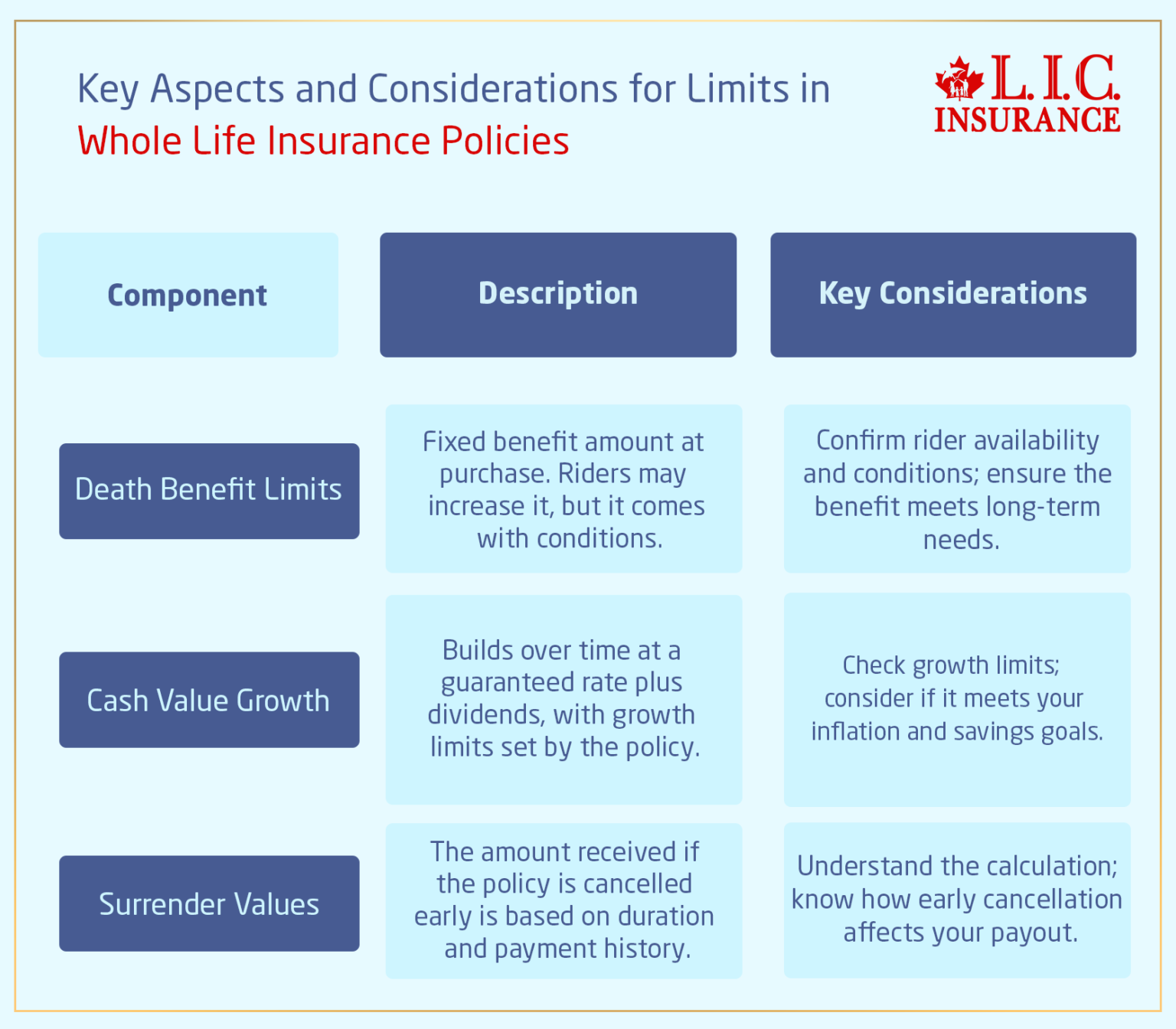
- Guaranteed Cash Value Table: Outlines the exact minimum cash value accumulation guaranteed by the carrier for every year until maturity (typically age 100 or 121).
- Rider Agreements: Detail specific add-ons such as term riders, waiver of premium, or chronic illness riders, along with their associated costs and conversion rules.
The Policy Illustration
The policy illustration is a multi-page ledger projecting how the policy will perform year by year under specific financial assumptions. Under the National Association of Insurance Commissioners (NAIC) Life Insurance Illustrations Model Regulation, illustrations must clearly distinguish between guaranteed performance and non-guaranteed elements.
- Guaranteed Ledger Column: Shows how cash values and death benefits will grow if the insurer pays zero dividends over the life of the contract. This represents the absolute floor of the policy's performance.
- Non-Guaranteed Ledger Column: Projects potential future growth using the insurer's current dividend interest rate (DIR) or dividend scale. Dividends are not guaranteed, and carriers adjust their dividend scales based on mortality experience, investment returns, and administrative expense performance.
2. Evaluate Cash Value Growth and the Dividend Mechanism
Whole life insurance policies issued by mutual or non-mutual insurers accumulate cash value over time. Understanding how premiums are allocated and how dividends function is essential for judging policy performance.
Total Premium Paid = Base Policy Fee + Mortality & Expense (M&E) Charges + Cash Value Contribution + Rider Costs
Premium Structure and Drag
During the first 3 to 10 years of a traditional whole life policy, heavy upfront costs—including agent commissions, underwriting expenses, and state premium taxes—reduce cash value accumulation.
When analyzing a policy, note the breakeven year, which is the point where the policy’s cash surrender value equals or exceeds the total cumulative premiums paid.
- Traditional Whole Life: Breakeven usually occurs between year 10 and year 15.
- High-Cash-Value / Early-Funded Policies: Designed using Paid-Up Additions (PUA) riders, these contracts often achieve cash value breakeven between year 3 and year 7.
Dividend Options and Paid-Up Additions (PUA)
Participating whole life policies earn annual dividends if the insurer performs better than its baseline actuarial assumptions. You must verify which dividend option is currently selected on the policy:
- Paid-Up Additions (PUA): Dividends automatically purchase small increments of fully paid-up whole life insurance. Each addition increases both the immediate cash surrender value and the total death benefit, compounding cash accumulation exponentially over time.
- Reduce Premiums: Dividends offset out-of-pocket premium costs.
- Accumulate at Interest: Dividends sit in an interest-bearing account managed by the insurer. Interest earned is taxable in the year credited.
- Cash Payout: Dividends are sent directly to the policyholder via check or bank transfer (generally tax-free up to total policy basis).
3. Calculate Key Financial Metrics: IRR and Net Cost
To evaluate whether a policy represents a sound financial vehicle, compare its projected returns against alternative instruments using standard financial metrics.
Cash Value Internal Rate of Return (Net IRR)
The Internal Rate of Return (IRR) measures the annual compound growth rate of the policy’s net cash surrender value relative to the total premiums paid.
- Total Premiums Paid (Outflows)
- Calculated Over N Years
- Cash Surrender Value (Inflow)
- Cash Value IRR
Calculate the IRR across several standardized time horizons:
- Year 10: Often negative or low due to early commission drag and mortality deductions.
- Year 20: Reflects baseline operational performance.
- Year 30 or Maturity (Age 65 / 100): Reveals the long-term compounding efficiency of the contract.
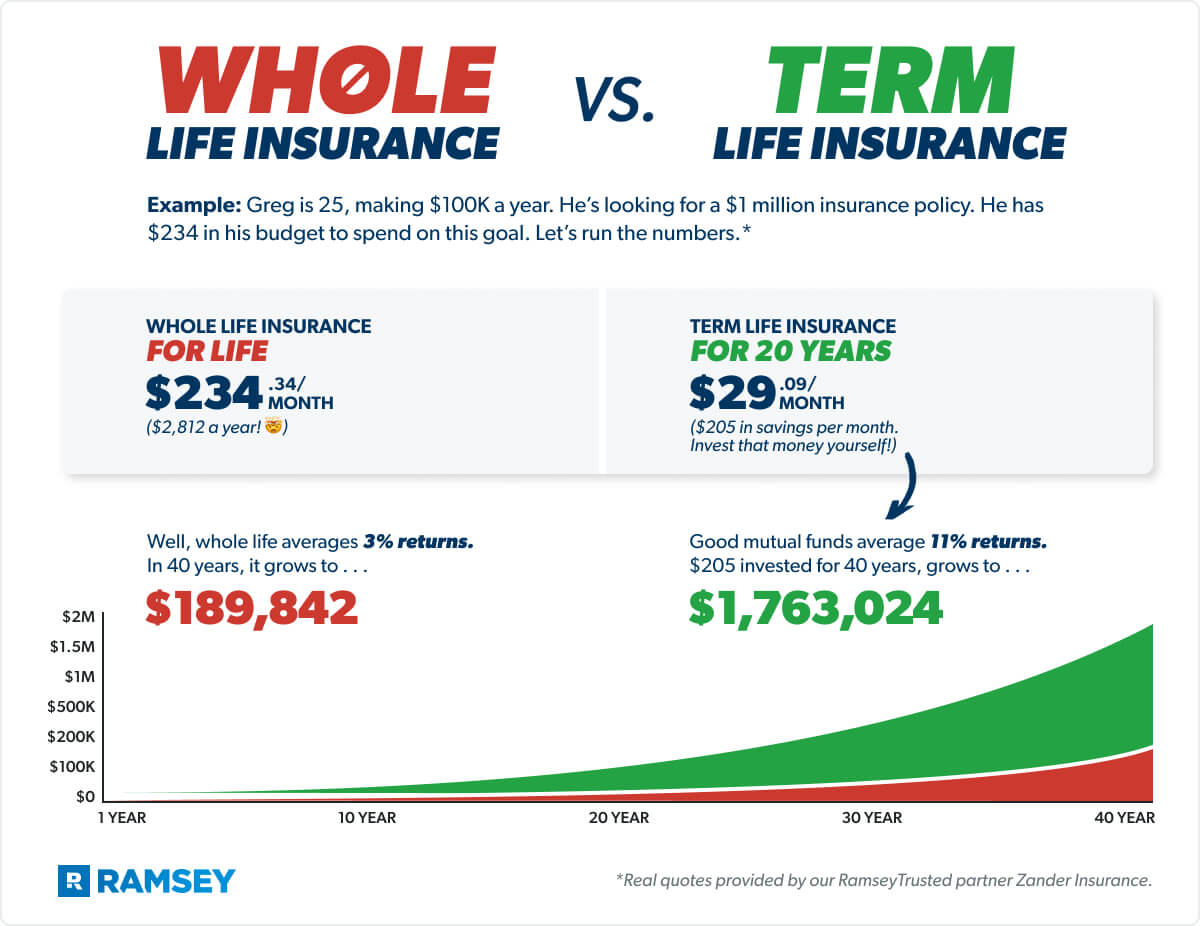
A competitive, modern whole life policy from a top-tier mutual carrier typically projects a non-guaranteed Cash Value Net IRR of 3.0% to 5.0% long-term, depending on prevailing interest rate environments and policy design.
Death Benefit IRR
The Death Benefit IRR measures the effective return yielded by the policy's death benefit payouts upon the insured's passing. This figure starts extremely high during early policy years and gradually declines over time as cumulative premiums accumulate. Comparing Death Benefit IRR against Cash Value IRR helps determine whether the policy primary serves income-protection or asset-accumulation goals.
4. Inspect Policy Loans, Interest Mechanics, and Recognition Rules
One of the defining features of whole life policy analysis is evaluating how policy loans operate. Borrowing against a policy allows the owner to access capital without triggering a tax event, but loan terms vary considerably across carriers.
Direct vs. Non-Direct Recognition
When taking a policy loan, the insurance company collateralizes an equivalent amount of your cash value. Carriers handle remaining dividend payouts on collateralized funds in one of two ways:
- Non-Direct Recognition: The insurance company pays the standard dividend rate on your entire cash value, regardless of whether a portion is pledged as collateral for an outstanding loan.
- Direct Recognition: The carrier adjusts the dividend rate paid on the specific portion of cash value backing the outstanding loan. Depending on prevailing economic conditions, this adjusted loan dividend rate may be higher or lower than the base dividend scale.
Loan Interest Rates (Fixed vs. Variable)
Review the policy contract to identify whether loan interest is charged at a fixed rate (e.g., 5% to 8% annually) or a variable rate tied to an index, such as the Moody’s Corporate Bond Yield Average. Assess whether interest is charged in advance or in arrears, as advance interest payments increase the effective loan cost.
5. Review Tax Status: MEC Testing and Section 1035 Rules
Life insurance enjoys significant federal tax advantages under U.S. tax law, but improper structuring can strip these benefits.
- Policy Structure & Funding Check
- Passes 7-Pay Test (Standard Life Insurance)
- Tax-free Death Benefit
- Tax-deferred Growth
- Tax-free Loans & Withdrawals (up to basis)
- Fails 7-Pay Test (Modified Endowment Contract)
- Tax-free Death Benefit
- Tax-deferred Growth
- LIFO Tax Treatment on Distributions
- 10% IRS Penalty on Withdrawals Before Age 59½
- Passes 7-Pay Test (Standard Life Insurance)
Modified Endowment Contract (MEC) Status
Under Internal Revenue Code Section 7702A, if cumulative premiums paid into a policy during its first seven years exceed statutory limits (known as the 7-Pay Test), the policy transforms into a Modified Endowment Contract (MEC).
While a MEC retains tax-free death benefit distributions, lifetime withdrawals and policy loans face adverse tax rules:
- Distributions follow Last-In, First-Out (LIFO) tax rules, meaning gains are taxed as ordinary income first.
- Loans or withdrawals made before age 59½ face an additional 10% IRS tax penalty on taxable growth.
Always inspect the policy illustration to confirm that scheduled premium payments (especially heavy upfront PUA payments) keep the policy safely below its annual MEC limit.
Section 1035 Exchanges
If you are analyzing an existing policy with the intent of replacing it, review Internal Revenue Code Section 1035. A 1035 exchange allows policyholders to roll the cash surrender value of an outdated policy into a new whole life or annuity contract without recognizing taxable income on historical policy gains.
6. Whole Life Insurance Evaluation Matrix
Use the following framework when reviewing policy documents, ledgers, and in-force illustrations:
| Evaluation Element | Document Source | Key Target Indicator | Potential Risk Signal / Red Flag |
|---|---|---|---|
| Financial Strength Rating | Rating Agencies (A.M. Best, S&P, Fitch, Moody's) | A+ or higher (A.M. Best Superior rating) | Carrier rating below A- or recent downgrade trend |
| Guaranteed vs. Projected Ratio | Policy Illustration Ledger | High proportion of growth driven by guaranteed table | Overly optimistic non-guaranteed dividend projections |
| Breakeven Year | Policy Ledger (Net Cash Value vs. Total Premium) | Year 3 to Year 10 depending on PUA rider design | Cash value breakeven taking longer than 15 years |
| MEC Status (7-Pay Limit) | Illustration System Warnings & Contract Pages | Cumulative premiums remain comfortably below 7-Pay limit | Policy designated as a MEC (unless intentionally structured as such) |
| Dividend Mechanism | Policy Contract / Dividends Clause | Paid-Up Additions (PUA) reinvestment active | Dividends paid in cash while policy has outstanding high-interest debt |
| Loan Structure | Policy Data Page & Loan Provisions | Clear rules on Direct vs. Non-Direct Recognition; competitive loan rates | Uncapped variable loan interest rates without clear historical index terms |
| Net Cash Value IRR (Year 20) | Financial Calculation / Ledger Spreadsheet | Positive net IRR matching or exceeding low-risk fixed income benchmarks | IRR remaining negative or near 0% after 15–20 years of continuous funding |
7. How to Request and Analyze an In-Force Illustration
If you already own a whole life insurance policy, analyzing the original sales illustration is insufficient. Market conditions and internal carrier dividend scales change over time. You must contact your insurer and request an In-Force Illustration.
Steps to Request an In-Force Ledger
- Contact the policyholder service division of the insurance company.
- Request a full In-Force Policy Illustration using current dividend scale assumptions.
- Ask the representative to include:
- A guaranteed performance ledger side-by-side with the current non-guaranteed projection.
- A breakdown of total cumulative premiums paid to date versus current net cash surrender value.
- Confirmation of the current tax basis (total out-of-pocket premiums minus tax-free distributions).
- A 7-Pay MEC compliance verification statement.
Evaluating In-Force Performance vs. Original Projections
Compare your new In-Force Illustration against the original contract projections:
- Dividend Scale Adjustments: If market interest rates have declined since policy issuance, current projected cash values will be lower than original estimates.
- Loan Performance: If you have taken policy loans, verify how unpaid interest accrual has affected total surrender values and net death benefits.
- Surrender Value Growth: Check whether annual cash value growth currently exceeds your annual premium payment. In mature whole life contracts, annual cash value gains often surpass the cost of the annual premium.
8. Common Pitfalls and Red Flags
When reviewing whole life illustrations and contracts, look out for these common analytical mistakes:
- Conflating Dividend Interest Rate (DIR) with Net Return: Insurance sales presentations sometimes highlight a carrier’s 5.5% Dividend Interest Rate. DIR is a gross credit applied to the policy's net asset value after mortality costs, administrative expenses, and risk charges are deducted. The true net IRR on total out-of-pocket premiums is lower than the headline DIR.
- Ignoring the Impact of Lapse: Terminating a whole life policy within its first 3 to 5 years usually results in severe financial losses, as surrender fees and upfront costs eliminate cash value recovery.
- Over-Reliance on Non-Guaranteed Columns: Base financial planning decisions primarily on guaranteed values, treating non-guaranteed dividends as variable upside potential.
- Mismanaging Policy Loan Interest: Policy loan interest compounds annually. If unpaid interest exceeds cash value growth, total debt can cause the policy to lapse, triggering a substantial ordinary income tax liability on all gains above your basis.
Frequently Asked Questions
What is the difference between Cash Value and Cash Surrender Value?
Cash value represents the gross total equity built up inside the policy ledger. Cash surrender value is the net amount paid to the policy owner if the contract is canceled. During early policy years, surrender charges reduce the net cash surrender value below the gross cash value figure.
How do I find the cost of insurance (COI) in a whole life policy?
Unlike Universal Life policies, traditional Whole Life contracts bundle administrative costs, agent fees, and mortality charges into a single fixed premium. These costs are not itemized year-by-year on the illustration, but their impact can be isolated by measuring the difference between total premiums paid and guaranteed cash value growth.
Can a whole life policy lose cash value?
Guaranteed cash values inside a whole life insurance contract cannot decrease due to market downturns. However, cash surrender values will fall if you surrender the policy early, take policy withdrawals, or allow unpaid policy loan interest to accumulate against your balance.
Is the death benefit of a whole life policy taxable to beneficiaries?
Under U.S. tax law (IRC Section 101(a)), death benefits paid to a named beneficiary are generally exempt from federal income tax. However, death benefit payouts may be subject to federal estate taxes if the policy owner retains ownership rights over the contract and the total estate exceeds applicable federal exemption thresholds.
What happens if I surrender a policy with an outstanding loan?
If you surrender a whole life contract that has an outstanding policy loan, the carrier uses the gross cash value to pay off the loan balance first. If the remaining cash surrender value plus loan forgiveness exceeds total out-of-pocket premiums paid (your cost basis), the excess is taxed as ordinary income in the year of surrender.
Practical Recommendation & Next Actions
To complete your analysis of a whole life insurance policy:
- Gather Primary Documents: Locate your original policy contract, schedule pages, and original sales illustration.
- Order an Updated In-Force Ledger: Contact the insurer's service team to request an updated in-force illustration reflecting current dividend scales and your current cost basis.
- Run an Independent IRR Calculation: Input total cumulative premiums paid alongside annual projected cash surrender values into a financial calculation sheet to determine your 10-year, 20-year, and age-65 Internal Rate of Return.
- Audit Policy Loans & Riders: Confirm whether your loan structure uses Direct or Non-Direct Recognition, verify variable interest terms, and evaluate whether optional riders (such as term conversion features or waiver of premium) are worth their ongoing cost.
- Engage a Fee-Only Fiduciary: If evaluating a policy surrender, policy exchange (1035), or major structural adjustment, consult a fee-only certified financial planner (CFP) or tax advisor who does not earn commissions on policy sales.