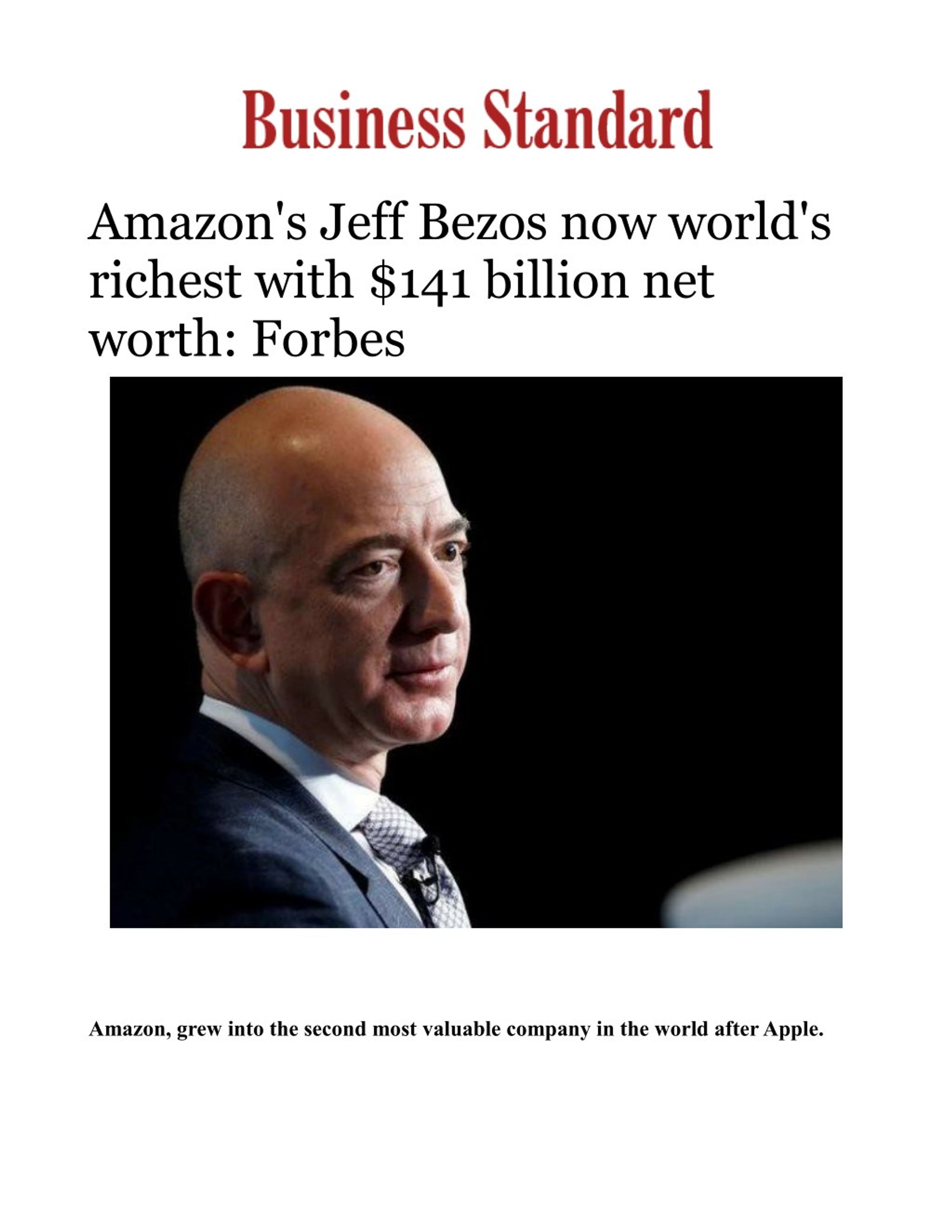
The net worth of Amazon executives is overwhelmingly tied to company equity rather than traditional cash salaries. While founder Jeff Bezos maintains a multi-billion-dollar fortune through his substantial shareholdings, top officers like CEO Andy Jassy hold fortunes valued in the hundreds of millions. These wealth profiles are primarily dictated by long-term Restricted Stock Units (RSUs) and periodic equity disclosures filed with federal regulators.
- TOTAL EXECUTIVE WEALTH
- EQUITY HOLDINGS (Primary Wealth Driver)
- Restricted Stock Units (RSUs)
- Beneficial Ownership Shares
- SEC Form 4 / DEF 14A Data
- LIQUID/CASH COMPENSATION (Secondary Component)
- Base Salary (Capped)
- Rule 10b5-1 Stock Sales
- Dividend Yields (N/A)
- EQUITY HOLDINGS (Primary Wealth Driver)
The Anatomy of Amazon Executive Compensation
Amazon’s approach to executive compensation differs significantly from many peer technology giants in Silicon Valley and Wall Street. Historically, Amazon maintained an extraordinarily low cap on cash base salaries. For decades, the maximum base salary for top leaders was capped at $160,000 to $175,000 annually. In early 2022, Amazon adjusted this corporate ceiling to $350,000 for its global corporate staff to stay competitive in a tight labor market, but cash remains a small fraction of overall executive remuneration.
The central pillar of wealth creation at Amazon is the allocation of Restricted Stock Units (RSUs). Unlike stock options, which grant the right to purchase shares at a set strike price, RSUs represent outright share awards that vest over multi-year periods. Amazon deliberately structures its executive equity grants to emphasize long-term retention over immediate payouts.
The Asymmetric Vesting Schedule
Standard corporate RSU schedules across the technology sector often vest uniformly at 25% per year over four years. Amazon, however, historically utilized an asymmetric vesting model for many employee and executive tiers:
- Year 1: 5% of total granted shares vest.
- Year 2: 15% of total granted shares vest.
- Year 3: 20% every six months (40% total for the year).
- Year 4: 20% every six months (40% total for the year).
For senior vice presidents and C-suite executives, customized multi-year RSU packages are approved by the Leadership Development and Compensation Committee of the Board of Directors. These awards often vest over periods ranging from five to six years. Because these grants are heavily back-loaded, executive net worth is exceptionally sensitive to long-term stock performance. If Amazon stock appreciates significantly during the vesting window, the executive's realized net worth expands exponentially relative to the initial target grant value.
Minimal Cash Perks and Bonus Incentives
Unlike traditional Fortune 500 corporations, Amazon does not offer cash-based incentive performance plans or annual cash bonuses to its top officers. Executive officers do not receive guaranteed annual equity top-ups; instead, they receive periodic, large-scale equity grants designed to cover extended operational horizons. Furthermore, corporate perks—such as executive life insurance, personal use of company aircraft, or pension benefits—are virtually non-existent for Amazon executives, with the major exception of security arrangements required for top leadership.
Wealth Profiles of Key Current and Former Amazon Executives
Understanding the financial standing of Amazon’s executive team requires analyzing SEC filings, including annual proxy statements (Form DEF 14A) and insider trading notices (Form 4). Below is an in-depth breakdown of the primary individuals steering the company's strategic directions.
| Executive | Core Wealth Driver | Primary Regulatory Filings |
|---|---|---|
| Jeff Bezos | ~9-10% AMZN Stock | Schedule 13D/G, Form 4 |
| Andy Jassy | CEO RSUs & AWS Equity | DEF 14A Proxy, Form 4 |
| Doug Herrington | Retail Operations RSUs | DEF 14A Proxy, Form 4 |
| Matt Garman | AWS Leadership RSUs | Form 4 Insider Disclosures |
| Brian Olsavsky | Finance/CFO RSUs | DEF 14A Proxy, Form 4 |
Jeff Bezos (Founder and Executive Chair)
Jeff Bezos’s net worth accounts for the vast majority of all wealth combined across Amazon’s executive history. Although Bezos stepped down from the Chief Executive Officer position in July 2021 to assume the role of Executive Chair, his fortune remains inextricably linked to Amazon’s market capitalization.
Bezos owns over 900 million post-split shares of Amazon common stock (adjusting for historical stock splits, including the 20-for-1 split executed in June 2022). His net worth regularly ranges between $150 billion and $200+ billion, depending on market fluctuations.
Key structural aspects of Bezos’s wealth include:
- Base Salary History: During his tenure as CEO, Bezos took an annual base salary of $81,840, without receiving stock grants or cash bonuses.
- Security Costs: Amazon pays for Bezos's personal security detail, disclosed in SEC filings as an annual corporate expense (historically around $1.6 million annually).
- Asset Liquidation: Bezos regularly sells billions of dollars in Amazon shares under structured pre-arranged trading plans (Rule 10b5-1). These proceeds fund his private aerospace company, Blue Origin, as well as philanthropic initiatives like the Bezos Earth Fund and the Day One Fund.
Andy Jassy (President and Chief Executive Officer)
Andy Jassy succeeded Jeff Bezos as President and CEO in July 2021 after building Amazon Web Services (AWS) from an internal initiative into the world's dominant cloud computing infrastructure provider. Jassy’s net worth is estimated to be between $300 million and $500 million, derived almost entirely from equity accumulated over more than two decades at the company.
When Jassy assumed the CEO position, Amazon's Board of Directors awarded him a special long-term equity grant of 61,000 shares (pre-split equivalent, translating to over 1.2 million post-split shares). This award was structured to vest over a 10-year period, with the majority of the shares back-loaded into the latter half of the decade to ensure institutional stability.
Jassy’s wealth profile reflects:
- Vesting Dynamics: Large portions of his wealth vest incrementally every six months.
- Salary Adjustment: Jassy’s base compensation rose in alignment with Amazon’s updated corporate salary structure, though equity remains over 95% of his overall compensation mix.
Doug Herrington (CEO, Worldwide Amazon Stores)
Doug Herrington oversees the vast retail ecosystem of Amazon, including physical stores, online marketplaces, customer fulfillment, and logistics operations. Herrington joined Amazon in 2005 and held various executive roles within consumables and North American retail before taking his current executive role.
Herrington's estimated net worth falls between $50 million and $100 million. His compensation structure mirrors that of other senior vice presidents, heavily reliant on multi-year RSU grants tied to operational metrics and corporate retention. Periodic SEC Form 4 filings indicate regular vesting events, followed by tax-withholding share sales and pre-planned divestitures.
Matt Garman (CEO, Amazon Web Services)
Matt Garman, who stepped into the leadership of AWS following Adam Selipsky’s departure, represents the long-term internal advancement typical of Amazon’s executive ranks. Having spent nearly two decades within AWS—working across product management, cloud storage, and global sales—Garman’s accumulated equity makes up the core of his financial holdings.
His net worth is estimated in the tens of millions of dollars ($30 million to $70 million). As AWS generates a major share of Amazon's overall operating income, executive equity grants for the cloud unit carry high strategic importance within the company's overall compensation pool.
Brian Olsavsky (Former Chief Financial Officer / Senior Leadership)
Brian Olsavsky served as Amazon's Chief Financial Officer starting in 2015, navigating the company through explosive revenue growth, international expansion, and supply chain adjustments. Olsavsky’s net worth is estimated between $40 million and $80 million. Like his C-suite peers, Olsavsky’s SEC filings reflect modest base earnings complemented by high-value equity vesting events occurring semi-annually.
Comparative Wealth Matrix of Top Amazon Leadership
The following table synthesizes the financial structures and ownership profiles of top current and recent Amazon executive leadership.
| Executive Name | Primary Corporate Title | Main Source of Net Worth | Estimated Net Worth Range | SEC Regulatory Disclosure Source |
|---|---|---|---|---|
| Jeff Bezos | Founder & Executive Chair | Founder Equity (~9-10% AMZN Shares) | $150 Billion – $200+ Billion | Schedule 13D/G, Form 4 |
| Andy Jassy | President & CEO | Cumulative AWS & CEO RSU Grants | $300 Million – $500 Million | Form DEF 14A, Form 4 |
| Doug Herrington | CEO, Worldwide Amazon Stores | Retail Operations Long-term RSUs | $50 Million – $100 Million | Form DEF 14A, Form 4 |
| Matt Garman | CEO, Amazon Web Services | Cloud Infrastructure RSU Allocations | $30 Million – $70 Million | Form 4 Insider Filings |
| Brian Olsavsky | Senior Executive (Former CFO) | Executive Financial RSU Grants | $40 Million – $80 Million | Form DEF 14A, Form 4 |
| Shelley Reynolds | VP & Worldwide Controller | Corporate Accounting Equity Grants | $20 Million – $40 Million | Form DEF 14A, Form 4 |
Note: Net worth values are estimated based on public SEC equity disclosures, historical share sales, known vesting schedules, and stock price performance. Realized wealth fluctuates based on market valuations and private expenditures.
How SEC Filings Reveal Executive Wealth
Unlike private business owners whose net worth must be estimated using broad market proxies, the net worth of executives at publicly traded firms like Amazon is subject to strict financial disclosure regulations enforced by the U.S. Securities and Exchange Commission (SEC).
- REGULATORY DISCLOSURE PATH
- FORM DEF 14A (Annual Proxy)
- Total Compensation Breakdown
- Executive Salary & RSUs
- Security Costs & Perks
- FORM 4 (Insider Trades)
- Direct Ownership Changes
- Vesting & Tax Sales
- Pre-Planned 10b5-1 Sales
- PUBLIC NET WORTH ANALYSIS
- FORM DEF 14A (Annual Proxy)
SEC Form DEF 14A (Proxy Statement)
Published annually ahead of the company's shareholder meeting, the DEF 14A Proxy Statement contains the Summary Compensation Table. This regulatory document discloses:
- Base Salaries: The explicit dollar amount paid to the CEO, CFO, and the three other highest-compensated executive officers.
- Stock Awards: The aggregate grant-date fair value of RSUs awarded during the fiscal year, calculated in accordance with FASB ASC Topic 718.
- All Other Compensation: Costs associated with personal security, relocation, or legal compliance.
SEC Form 4 (Statement of Changes in Beneficial Ownership)
Whenever an Amazon executive receives vested shares, sells stock, or surrenders shares to cover tax liabilities, they must file a Form 4 within two business days of the transaction. Form 4 filings allow financial analysts to track:
- The exact number of shares beneficially owned by the executive following a transaction.
- The execution price of sold shares.
- Whether a trade was executed automatically under a Rule 10b5-1 trading plan.
The Role of Rule 10b5-1 Trading Plans
To avoid allegations of insider trading, Amazon executives set up Rule 10b5-1 trading plans. These contracts allow insiders to establish pre-scheduled instructions to buy or sell a specific number of shares at predetermined times or target prices.
When Andy Jassy or Doug Herrington sells millions of dollars in stock, these trades are usually automated through 10b5-1 plans instituted months in advance. These regular liquidations explain why executive share holdings often remain steady or contract over time despite new RSU awards.
Economic and Governance Implications of Equity-Based Wealth
Amazon’s reliance on equity to build executive wealth carries significant governance and economic consequences for shareholders, tax authorities, and corporate strategy.
Alignment with Shareholder Interests
The primary rationale for compensating leadership with RSUs rather than cash is goal alignment. If Amazon stock declines, executive net worth drops proportionately. Conversely, sustained stock appreciation expands executive wealth.
- EQUITY VALUE IMPACT
- Stock Price Rises
- Executive Net Worth Expands Exponentially
- Shareholder Value Grows in Tandem
- Stock Price Declines
- Executive Net Worth Contracts Sharply
- Retention Risks Increase
- Stock Price Rises
However, critics point out that this structure can introduce short-to-medium-term market pressure. Because executives often sell shares upon vesting to satisfy personal liquidity needs and tax obligations, large tranches of shares periodically hit the open market.
Tax Structure: RSUs vs. Cash Income
The tax treatment of Amazon executive compensation is two-fold:
- Vesting Event (Ordinary Income): When an RSU vests, the market value of the shares on the vesting date is treated as ordinary income. Amazon routinely withhold a portion of the vesting shares—often around 30% to 50%—to satisfy federal, state, and local tax withholding obligations.
- Subsequent Sale (Capital Gains): If an executive holds the remaining shares after vesting before selling them, any subsequent gain or loss is taxed under capital gains rules. Long-term capital gains rates apply if the asset is held for more than one year post-vesting.
Compensation Comparison: Amazon vs. Peer Tech Giants
To contextualize how Amazon builds executive wealth, it is helpful to compare its equity model with other major technology organizations:
- Alphabet (Google): Grants performance-based stock units (PSUs) tied to total shareholder return (TSR) relative to the S&P 500, alongside large base salaries.
- Apple: Uses a mix of time-based RSUs and performance-based RSUs tied to financial metrics like net sales and operating income.
- Meta (Facebook): Offers competitive cash salaries paired with quarterly vesting RSU schedules, avoiding Amazon's heavily back-loaded model.
- Microsoft: Emphasizes executive cash bonuses tied to annual operational targets alongside equity grants.
Amazon stands out for its avoidance of performance-conditioned stock metrics (PSUs) for top leaders, relying instead on pure time-based vesting to incentivize long-term organizational stability.
Frequently Asked Questions
What is Andy Jassy’s base salary compared to his overall net worth?
Andy Jassy’s annual base salary is capped within Amazon's corporate compensation guidelines (historically around $175,000 to $365,000). However, the vast majority of his estimated $300 million to $500 million net worth comes from cumulative Restricted Stock Unit (RSU) awards granted over his 20+ year tenure at Amazon and AWS, rather than cash income.
How much of Amazon does Jeff Bezos still own?
Jeff Bezos owns roughly 9% to 10% of Amazon’s outstanding common stock, amounting to over 900 million post-split shares. Even after stepping down as CEO and selling billions of dollars in equity to fund projects like Blue Origin, his stock holdings represent nearly his entire multi-billion-dollar net worth.
Do Amazon executives receive annual cash bonuses?
No. Amazon does not maintain an annual cash bonus program for its top executive officers. Compensation is intentionally structured around base salary and long-term equity grants (RSUs). The company avoids cash-based performance incentives to keep executive focus on long-term shareholder value creation.
Where can the public verify official Amazon executive compensation?
Official compensation details for Amazon's named executive officers (NEOs) are published annually in the company's proxy statement (Form DEF 14A), accessible through the SEC EDGAR Database. Real-time updates on insider stock transactions are tracked via Form 4 filings.
What is an RSU vesting schedule at Amazon, and how does it affect net worth?
An RSU vesting schedule dictates when an executive officially gains ownership of granted stock. Amazon has historically used a back-loaded vesting model (e.g., 5% in year one, 15% in year two, and 40% in years three and four). Because the bulk of the shares vest in later years, an executive's realized net worth depends directly on the stock's market price at those future vesting dates.
How do Rule 10b5-1 plans impact executive stock sales?
Rule 10b5-1 plans allow Amazon executives to establish pre-determined schedules for selling company stock without violating insider trading laws. These plans specify the dates or price targets for future sales months in advance, allowing executives to liquidate vested equity for personal wealth management while maintaining regulatory compliance.
Recommendations for Financial Analysts and Researchers
For investors, corporate governance researchers, and financial analysts evaluating Amazon’s executive net worth and compensation models, follow these steps to retrieve accurate data:
- Monitor Annual Proxy Statements: Review the DEF 14A filing released every spring via SEC EDGAR. Focus on the Summary Compensation Table and the Grants of Plan-Based Awards Table to track new equity grants.
- Track Real-Time Form 4 Filings: Monitor Form 4 submissions to separate routine tax-withholding share sales from discretionary divestitures executed under Rule 10b5-1 trading plans.
- Account for Stock Splits and Corporate Adjustments: Ensure historical share counts are adjusted for corporate actions, such as the 20-for-1 stock split executed in June 2022, when evaluating multi-year holding changes.
- Cross-Reference Equity Valuations: Calculate current holdings by multiplying beneficial ownership share counts (found in proxy statements) by current market spot prices for AMZN, adjusting for unvested RSU schedules.