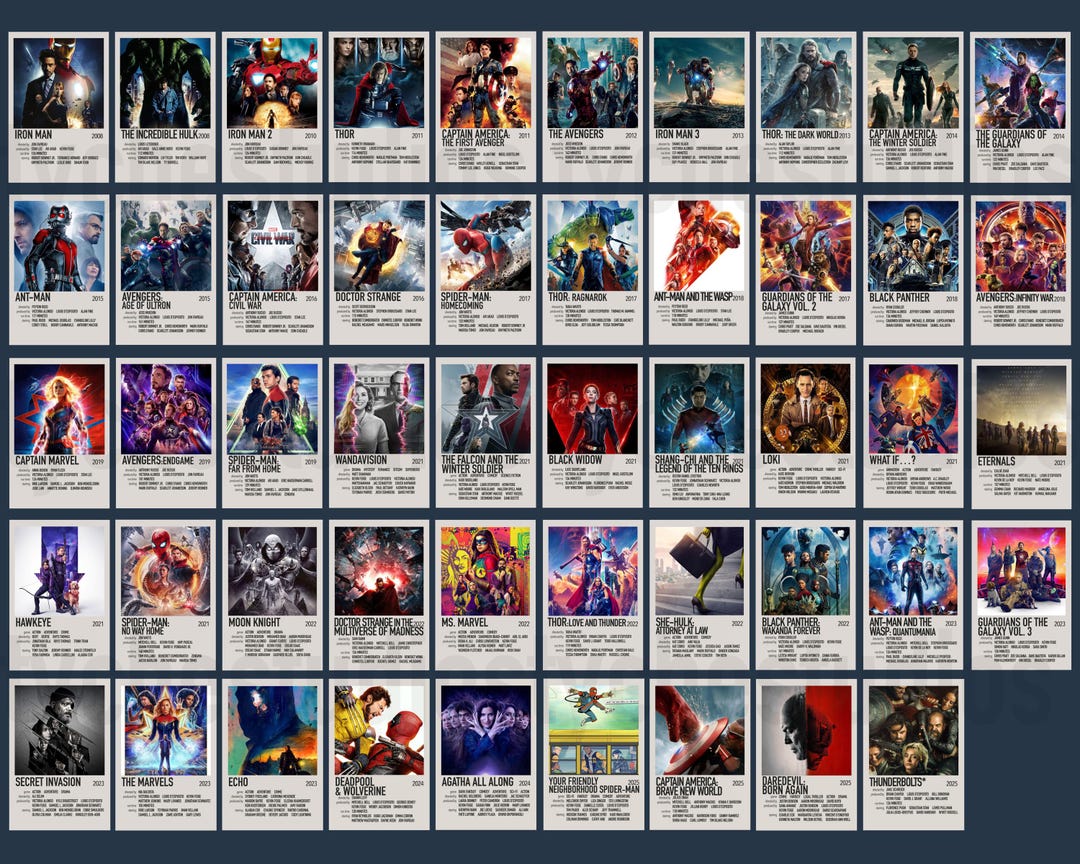
To watch all Marvel Cinematic Universe (MCU) movies in order of release date, you must start with Iron Man (2008) and progress through the various Phases of the Infinity Saga and Multiverse Saga. As of 2026, the timeline spans over 30 films, beginning with Phase One and currently navigating the climactic events of Phase Six.
Watching the Marvel Cinematic Universe in release order is the most common way for fans to experience the franchise. This method allows viewers to see the evolution of the filmmaking, the gradual introduction of the "Infinity Stones" and "Multiverse" concepts, and the natural progression of character arcs as the creators intended. Unlike a chronological watch, which places prequels like Captain America: The First Avenger first, the release order ensures that post-credit scenes and foreshadowing make logical sense.
The Foundation of a Franchise: Phase One (2008–2012)
The MCU began not with a grand plan for thirty movies, but with a risky gamble on a B-list character. Phase One is often referred to as "Avengers Assembled," as its primary goal was to introduce the core members of the original team and culminate in the first major crossover event in cinema history.
Iron Man (May 2, 2008) The film that started it all. Directed by Jon Favreau and starring Robert Downey Jr., this movie established the tone for the entire MCU: a blend of high-stakes action, technological realism, and snarky humor. It also introduced the concept of the post-credits scene, where Nick Fury mentioned the "Avengers Initiative."
The Incredible Hulk (June 13, 2008) Often considered the "black sheep" of the MCU due to Edward Norton being replaced by Mark Ruffalo in later films, this movie is still canon. It explored Bruce Banner’s struggle with the military and introduced Thunderbolt Ross, a character who would remain relevant for decades.
Iron Man 2 (May 7, 2010) This sequel did much of the heavy lifting for world-building. It introduced Black Widow (Scarlett Johansson) and War Machine (Don Cheadle), while further fleshing out the role of S.H.I.E.L.D. in the growing superhero landscape.
Thor (May 6, 2011) Marvel took a leap into the cosmic and mythological with Thor. By introducing Asgard and the God of Mischief, Loki, the MCU expanded its scope beyond Earth-bound technology to include magic and extraterrestrial civilizations.
Captain America: The First Avenger (July 22, 2011) A period piece set during World War II, this film introduced Steve Rogers and the Tesseract—the first Infinity Stone (though not named as such at the time). It established the moral heart of the Avengers.
The Avengers (May 4, 2012) The culmination of Phase One. Directed by Joss Whedon, this film proved that a shared cinematic universe could work on a massive scale. It brought the six heroes together to fight Loki and a Chitauri invasion in New York City, ending with the first glimpse of Thanos.
Expansion and Consequences: Phase Two (2013–2015)
Phase Two dealt with the aftermath of the Battle of New York. The heroes faced internal struggles, the fall of major institutions, and the realization that they were not alone in the universe.
Iron Man 3 (May 3, 2013) This film explored Tony Stark’s PTSD following the events of The Avengers. It was a more personal story that questioned whether the man makes the suit or the suit makes the man.
Thor: The Dark World (November 8, 2013) Continuing the cosmic thread, this sequel introduced the Aether (the Reality Stone) and further developed the complex relationship between Thor and Loki.
Captain America: The Winter Soldier (April 4, 2014) Widely regarded as one of the best films in the franchise, this political thriller dismantled S.H.I.E.L.D. and introduced the Winter Soldier (Bucky Barnes) and Sam Wilson (The Falcon). It shifted the tone of the MCU toward more grounded, consequential storytelling.
Guardians of the Galaxy (August 1, 2014) A massive risk that paid off, this film introduced a group of cosmic misfits. It expanded the lore of the Infinity Stones and gave us our first extended look at Thanos as a looming threat.
Avengers: Age of Ultron (May 1, 2015) The second crossover film introduced Vision, Scarlet Witch, and Quicksilver. It highlighted the friction within the team, particularly between Stark and Rogers, setting the stage for the upcoming conflict.
Ant-Man (July 17, 2015) Phase Two ended on a smaller note—literally. Ant-Man served as a palette cleanser, introducing Scott Lang and the Quantum Realm, a concept that would become vital for the resolution of the Infinity Saga.
The Infinity Saga Finale: Phase Three (2016–2019)
Phase Three is the most prolific and critically acclaimed era of the first saga. It saw the introduction of new heavy hitters like Spider-Man, Doctor Strange, and Black Panther, leading into the ultimate confrontation with Thanos.
Captain America: Civil War (May 6, 2016) Often called "Avengers 2.5," this film split the heroes into two factions over the Sokovia Accords. It featured the MCU debut of Peter Parker and T'Challa.
Doctor Strange (November 4, 2016) Marvel entered the realm of the mystic arts. By introducing Stephen Strange and the Time Stone, the franchise added a layer of reality-bending visuals and metaphysical stakes.
Guardians of the Galaxy Vol. 2 (May 5, 2017) A deeply emotional sequel focusing on Peter Quill’s lineage, this film reinforced the theme of "found family" and further explored the cosmic side of the Marvel universe.
Spider-Man: Homecoming (July 7, 2017) After his introduction in Civil War, Tom Holland’s Spider-Man received his first solo outing, focusing on a "street-level" hero trying to prove himself to his mentor, Tony Stark.
Thor: Ragnarok (November 3, 2017) Taika Waititi reinvented Thor with a colorful, comedic, and high-energy adventure that saw the destruction of Asgard and the evolution of Thor into a more powerful, albeit homeless, king.
Black Panther (February 16, 2018) A cultural phenomenon, this film introduced the hidden nation of Wakanda. It was the first MCU film to be nominated for Best Picture at the Academy Awards, praised for its depth and antagonist, Erik Killmonger.
Avengers: Infinity War (April 27, 2018) The beginning of the end. For the first time, the villain won. Thanos successfully collected all six Infinity Stones and snapped away half of all life in the universe.
Ant-Man and the Wasp (July 6, 2018) Set shortly before Infinity War, this sequel introduced Hope van Dyne as the Wasp and delved deeper into the Quantum Realm, providing the key to the heroes' future salvation.
Captain Marvel (March 8, 2019) A 1990s prequel that introduced Carol Danvers, the most powerful hero in the MCU at that time. It explained how Nick Fury came to start the Avengers initiative.
Avengers: Endgame (April 26, 2019) The monumental conclusion to the 22-movie narrative arc. The remaining Avengers used time travel (via the Quantum Realm) to undo Thanos's actions. It marked the emotional departures of Tony Stark and Steve Rogers.
Spider-Man: Far From Home (July 2, 2019) Functioning as an epilogue to Phase Three, this film dealt with a world mourning Iron Man and the "Blip," while setting up the multiverse through the deceptions of Mysterio.
The Multiverse Saga: Phase Four (2021–2022)
Following a brief hiatus, the MCU returned with a focus on the Multiverse and the introduction of new legacy characters.
Black Widow (July 9, 2021) A retrospective look at Natasha Romanoff’s past, filling in the gaps between Civil War and Infinity War while introducing her "sister," Yelena Belova.
Shang-Chi and the Legend of the Ten Rings (September 3, 2021) The first MCU film centered on an Asian lead, featuring incredible martial arts choreography and the "real" Mandarin.
Eternals (November 5, 2021) A centuries-spanning epic directed by Chloé Zhao, introducing a group of immortal beings who have shaped human history from the shadows.
Spider-Man: No Way Home (December 17, 2021) A massive box-office hit that brought back previous iterations of Spider-Man (Tobey Maguire and Andrew Garfield), officially cracking open the Multiverse on the big screen.
Doctor Strange in the Multiverse of Madness (May 6, 2022) A horror-tinted dive into alternate realities, featuring the Scarlet Witch as a formidable antagonist and the introduction of America Chavez.
Thor: Love and Thunder (July 8, 2022) Jane Foster returned as the Mighty Thor in a battle against Gorr the God Butcher. The film continued the vibrant, comedic tone of Ragnarok.
Black Panther: Wakanda Forever (November 11, 2022) A poignant tribute to the late Chadwick Boseman, the film saw Shuri take up the mantle of Black Panther while introducing Namor and the underwater kingdom of Talokan.
The Multiverse Saga: Phase Five (2023–2025)
Phase Five ramped up the stakes of the Multiverse, introducing the primary antagonist for this saga: Kang the Conqueror (and his variants).
Ant-Man and the Wasp: Quantumania (February 17, 2023) The first full look at the Quantum Realm as a civilization and the formal introduction of Kang as a multiversal threat.
Guardians of the Galaxy Vol. 3 (May 5, 2023) James Gunn’s emotional conclusion to the Guardians trilogy, focusing on Rocket Raccoon’s tragic origin and the team’s final mission together.
The Marvels (November 10, 2023) A team-up between Captain Marvel, Monica Rambeau, and Ms. Marvel, dealing with the consequences of Carol Danvers’ past actions in the Kree Empire.
Deadpool & Wolverine (July 26, 2024) The monumental entry of the X-Men characters into the MCU proper. This R-rated adventure utilized the Multiverse to bring Ryan Reynolds’ Deadpool and Hugh Jackman’s Wolverine into the fold, serving as a bridge between the Fox Marvel era and the MCU.
Captain America: Brave New World (February 14, 2025) Sam Wilson’s first solo cinematic outing as Captain America. The film explores the geopolitical ramifications of a world without Steve Rogers and the rise of "Red Hulk" (Thaddeus Ross).
Thunderbolts (May 2, 2025)* A "suicide squad" style team-up featuring anti-heroes and reformed villains like Yelena Belova, Bucky Barnes, and U.S. Agent. The asterisk in the title remains a point of mystery for the 2025-2026 audience.
The Peak of the Multiverse: Phase Six (2025–2026+)
As of 2026, the MCU is in the midst of its most ambitious crossover events since Endgame.
The Fantastic Four: First Steps (July 25, 2025) The long-awaited introduction of Marvel’s "First Family" into the MCU. Set in a retro-futuristic 1960s alternate reality, the film explores their eventual crossing into the main timeline.
Blade (November 7, 2025) The reboot of the iconic vampire hunter, starring Mahershala Ali. This film marks a significant turn toward the supernatural and darker corners of the Marvel Universe.
Avengers: Doomsday (May 1, 2026) The massive event film that shifted the focus of the Multiverse Saga. In a shocking turn, Robert Downey Jr. returned to the MCU, not as Iron Man, but as Victor von Doom. This film serves as the beginning of the end for the Multiverse Saga.
Spider-Man 4 (July 2026) Following the soft reboot of Peter Parker’s life in No Way Home, this film explores a more mature, isolated Spider-Man operating in a world that has forgotten he exists.
MCU Movie Release Schedule Table
The following table summarizes the primary MCU theatrical releases in order of their debut.
| Movie Title | U.S. Release Date | Phase |
|---|---|---|
| Iron Man | May 2, 2008 | Phase One |
| The Incredible Hulk | June 13, 2008 | Phase One |
| Iron Man 2 | May 7, 2010 | Phase One |
| Thor | May 6, 2011 | Phase One |
| Captain America: The First Avenger | July 22, 2011 | Phase One |
| The Avengers | May 4, 2012 | Phase One |
| Iron Man 3 | May 3, 2013 | Phase Two |
| Thor: The Dark World | November 8, 2013 | Phase Two |
| Captain America: The Winter Soldier | April 4, 2014 | Phase Two |
| Guardians of the Galaxy | August 1, 2014 | Phase Two |
| Avengers: Age of Ultron | May 1, 2015 | Phase Two |
| Ant-Man | July 17, 2015 | Phase Two |
| Captain America: Civil War | May 6, 2016 | Phase Three |
| Doctor Strange | November 4, 2016 | Phase Three |
| Guardians of the Galaxy Vol. 2 | May 5, 2017 | Phase Three |
| Spider-Man: Homecoming | July 7, 2017 | Phase Three |
| Thor: Ragnarok | November 3, 2017 | Phase Three |
| Black Panther | February 16, 2018 | Phase Three |
| Avengers: Infinity War | April 27, 2018 | Phase Three |
| Ant-Man and the Wasp | July 6, 2018 | Phase Three |
| Captain Marvel | March 8, 2019 | Phase Three |
| Avengers: Endgame | April 26, 2019 | Phase Three |
| Spider-Man: Far From Home | July 2, 2019 | Phase Three |
| Black Widow | July 9, 2021 | Phase Four |
| Shang-Chi and the Legend of the Ten Rings | September 3, 2021 | Phase Four |
| Eternals | November 5, 2021 | Phase Four |
| Spider-Man: No Way Home | December 17, 2021 | Phase Four |
| Doctor Strange in the Multiverse of Madness | May 6, 2022 | Phase Four |
| Thor: Love and Thunder | July 8, 2022 | Phase Four |
| Black Panther: Wakanda Forever | November 11, 2022 | Phase Four |
| Ant-Man and the Wasp: Quantumania | February 17, 2023 | Phase Five |
| Guardians of the Galaxy Vol. 3 | May 5, 2023 | Phase Five |
| The Marvels | November 10, 2023 | Phase Five |
| Deadpool & Wolverine | July 26, 2024 | Phase Five |
| Captain America: Brave New World | February 14, 2025 | Phase Five |
| Thunderbolts* | May 2, 2025 | Phase Five |
| The Fantastic Four: First Steps | July 25, 2025 | Phase Six |
| Blade | November 7, 2025 | Phase Six |
| Avengers: Doomsday | May 1, 2026 | Phase Six |
| Spider-Man 4 | July 2026 | Phase Six |
Frequently Asked Questions
Do I need to watch the Disney+ shows to understand the movies?
While most movies provide enough context to be enjoyed on their own, the Disney+ series have become increasingly integral since Phase Four. For example, WandaVision is essential for understanding Wanda’s arc in Doctor Strange in the Multiverse of Madness, and Loki provides the foundational logic for the Multiverse and the threat of Kang/Doom. To get the "full" experience, watching the series in their respective release windows is recommended.
Why is the release order better than chronological order?
Release order is generally superior for first-time viewers because it preserves the intended mystery and impact of the storytelling. Chronological order (watching Captain America: The First Avenger first) can be jarring because the technical quality of the films fluctuates (jumping from 2011 CGI to 2008 CGI) and post-credits scenes often spoil future movies or refer to characters you haven't met yet.
Which Marvel movies are not part of the MCU?
Not every Marvel movie is in the MCU. Older franchises like the original X-Men trilogy, the Fantastic Four movies (2005/2015), and the Sam Raimi Spider-Man films were produced by other studios (Fox and Sony). While some of these characters have appeared in the MCU via the Multiverse, their original solo films remain separate entities. Additionally, Sony's Spider-Man Universe (SSU), which includes Venom and Morbius, exists in a separate reality that occasionally crosses over.
How many Marvel movies are there in total?
As of mid-2026, there are 40 feature-length films in the Marvel Cinematic Universe specifically. If you include non-MCU Marvel movies (X-Men, legacy Spider-Man, Blade, etc.), the number exceeds 70.
Is Iron Man still the best place to start?
Yes. Despite being nearly two decades old, Iron Man remains the definitive entry point. It sets the stakes, the humor, and the "grounded" reality that the rest of the universe eventually builds upon. Starting anywhere else often leads to confusion regarding the significance of the "Stark" legacy and the origins of the Avengers initiative.
Recommended Next Steps for Viewers
If you are planning a marathon, your best resource is Disney+, which hosts the vast majority of these titles in 4K Ultra HD. For the Spider-Man films and The Incredible Hulk, you may need to check other platforms like Netflix or Sony's digital storefronts due to licensing agreements.
After completing the release order watch, many fans enjoy a Chronological Re-watch. This allows you to see the history of the MCU from the perspective of the timeline itself, starting with the creation of the universe in Eternals and the 1940s setting of Captain America, providing a fresh perspective on how the world evolved into the superhero-filled reality of 2026.