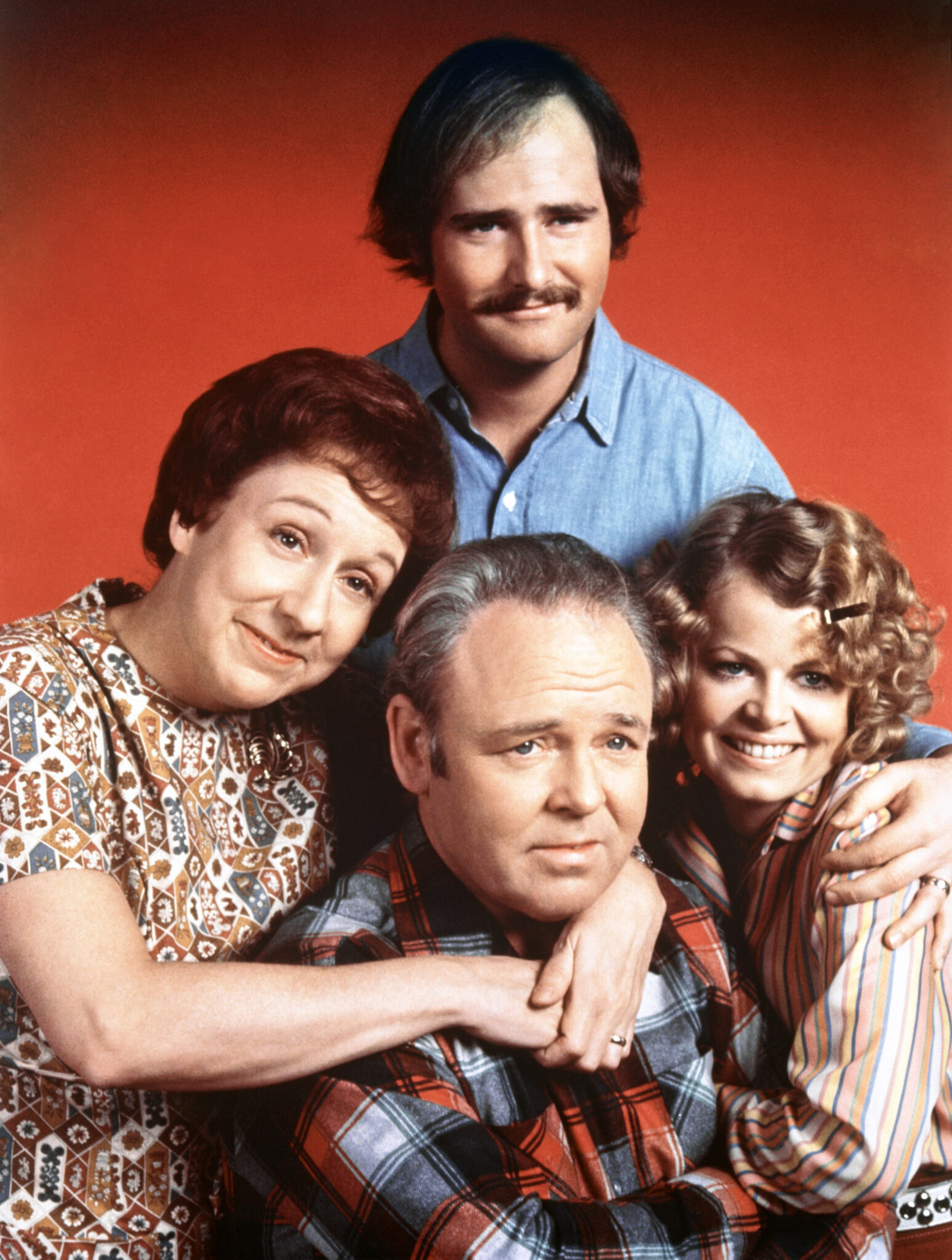
The All in the Family television series history represents a seismic shift in American broadcasting, moving from escapist sitcoms to gritty, socially conscious realism. Premiering on CBS on January 12, 1971, the show utilized a working-class family in Queens to address racism, sexism, and politics, forever changing how television reflects society.
The Genesis: From British Roots to American Rebellion
The origins of All in the Family are found across the Atlantic in the British sitcom Till Death Us Do Part. Creator Norman Lear was captivated by the dynamic between the conservative Alf Garnett and his liberal son-in-law. Lear recognized a similar friction within his own life—specifically between himself and his father—and sought to adapt the concept for an American audience.
The road to production was fraught with rejection. Before landing at CBS, the show faced a difficult development cycle at ABC. Two pilots were filmed under different titles: Justice for All in 1968 and Those Were the Days in 1969. ABC executives eventually passed on the project, fearing the central character, Archie Bunker, was too abrasive and the subject matter too volatile for the era's sensitive advertisers.
When Robert Wood took over as president of CBS, he sought to "cleanse" the network of its "rural" image (which included shows like The Beverly Hillbillies and Green Acres) in favor of "relevance." Wood saw the potential in Lear’s script. Despite intense internal pushback and the requirement of a disclaimer before the first episode, CBS greenlit the series, marking the beginning of a new era in television history.
The Core Four: A Microcosm of a Divided Nation
The success of the All in the Family television series history is inextricably linked to its cast. The show was not merely a vehicle for jokes; it was a character study of a family struggling to stay together while the world outside their door at 704 Hauser Street was rapidly changing.
Archie Bunker (Carroll O’Connor)
Archie was a dock foreman—a "lovable bigot" who feared the erosion of the world he understood. Carroll O'Connor brought a surprising depth to a role that could have easily been a caricature. Through Archie, the show explored the anxieties of the "Silent Majority," documenting a man who felt his status and values were being threatened by the civil rights movement, feminism, and the counterculture.
Edith Bunker (Jean Stapleton)
Often dismissed by Archie as a "dingbat," Edith was the moral center of the household. Jean Stapleton’s performance was a masterclass in nuance; she portrayed a woman of profound kindness and hidden wisdom. Over the years, Edith’s character arc included groundbreaking storylines regarding menopause, breast cancer scares, and the questioning of traditional gender roles, making her one of the most beloved figures in TV history.
Gloria and Mike Stivic (Sally Struthers and Rob Reiner)
The "youth" element was represented by Archie’s daughter, Gloria, and her husband, Michael Stivic. Archie famously dubbed Michael "Meathead" (dead from the neck up). Mike was a Polish-American sociology student and an outspoken liberal. Their presence in the Bunker household created a constant ideological battlefield. The clashes between Archie and Mike served as a proxy for the generational divide that defined the 1970s.
Breaking the Sitcom Mold: Taboos and Technical Innovation
Before All in the Family, sitcoms were largely sanitized. The Bunkers changed this by inviting the "real world" into the living room. The show did not shy away from the harsh language of the streets or the complex political debates of the Vietnam War era.
Addressing Social Taboos
The series was the first to tackle subjects that were previously considered "unmentionable" on network television. These included:
- Racism and Anti-Semitism: Through Archie’s unfiltered language and his interactions with neighbors like the Jeffersons.
- Sexuality and Gender: Episodes addressed homosexuality, transvestism, and women’s liberation with a frankness that shocked 1971 audiences.
- Health and Trauma: The show handled sensitive topics such as impotence, miscarriage, and even attempted sexual assault with a blend of gravity and dark humor.
Technical and Aesthetic Choices
Unlike many of its predecessors, All in the Family was recorded on videotape rather than film. This gave the show a "live" and immediate feel, more akin to a stage play than a movie. The decision to record in front of a live studio audience was pivotal; the laughter was real, and so were the moments of stunned silence. Norman Lear insisted on the authenticity of the set, which looked lived-in, slightly worn, and distinctly middle-class, contrasting with the aspirational, polished homes of 1960s sitcoms.
Cultural Dominance and the "Archie Bunker Effect"
By its second season, All in the Family had climbed to the number one spot in the Nielsen ratings, a position it held for an unprecedented five consecutive years (1971–1976). Its impact extended far beyond the television screen, sparking national conversations and even academic study.
The "Archie Bunker Effect" became a point of sociological interest. Researchers debated whether the show helped to diminish prejudice by mocking it, or if it inadvertently reinforced bigotry by making Archie a charismatic protagonist. Regardless of the interpretation, the show forced Americans to confront their own biases.
| Key Milestone | Year | Significance |
|---|---|---|
| First Broadcast | 1971 | Introduced the "Warning Label" and changed TV standards. |
| Reached #1 | 1972 | Demonstrated a massive appetite for socially relevant content. |
| "Sammy's Visit" | 1972 | Features the famous kiss between Archie and Sammy Davis Jr. |
| Smithsonian Induction | 1978 | Archie and Edith's chairs were donated to the Smithsonian Institution. |
| Series Finale | 1979 | Transitioned into the spin-off Archie Bunker's Place. |
The "Lear Universe" and the Power of Spinoffs
The All in the Family television series history is also the story of a massive media franchise. Norman Lear utilized the show as a springboard for several other successful series, many of which were equally groundbreaking.
- Maude (1972–1978): Featuring Edith’s cousin Maude Findlay, this show tackled feminism and was famously the first sitcom to feature a lead character undergoing an abortion.
- The Jeffersons (1975–1985): Following the Bunkers' neighbors, George and Louise Jefferson, this became one of the longest-running sitcoms in history, focusing on a successful Black family "moving on up" to Manhattan.
- Good Times (1974–1979): A spinoff of Maude, it was the first sitcom to feature a two-parent Black nuclear family living in public housing.
- Archie Bunker’s Place (1979–1983): After the original series ended, this continuation followed Archie as a tavern owner and dealt with the passing of the Edith character.
Legacy and Modern Reception in 2026
As of 2026, the All in the Family television series history remains a cornerstone of media studies and cultural history. While some of the language used by Archie Bunker is jarring to modern ears, the show's intent—to expose the absurdity of prejudice through satire—is widely recognized.
The physical artifacts of the show, specifically the two wingback chairs used by the Bunkers, remain among the most popular exhibits at the National Museum of American History. They represent more than just furniture; they are symbols of a turning point in American storytelling where the "common man" was finally allowed to be complicated, flawed, and deeply human on the small screen.
The show's influence can be seen in every "prestige" sitcom that followed, from Roseanne and The Simpsons to modern socially-conscious comedies. It proved that a television show could be both a massive commercial success and a vital tool for social commentary.
Critical Analysis: Why It Worked
The brilliance of the writing lay in its refusal to offer easy answers. While Mike Stivic usually "won" the intellectual arguments, the show often portrayed him as arrogant or out of touch with the practical struggles of the working class. Conversely, while Archie was often wrong, the show allowed viewers to see his vulnerability—his fear of being left behind by a society he no longer recognized. This balance ensured that the show was not a lecture, but a dialogue.
The chemistry between the leads was also essential. Despite their constant bickering, there was an underlying sense of love and loyalty in the Bunker household. This emotional core prevented the show from becoming too cynical and kept audiences coming back for 205 episodes.
Frequently Asked Questions
Why did ABC turn down the show twice? ABC executives were concerned that the character of Archie Bunker was too offensive and that the show's focus on controversial topics like race and religion would alienate viewers and advertisers. At the time, television was dominated by safe, family-friendly programming, and All in the Family represented a radical departure from that norm.
Was the laughter on the show real or a laugh track? Norman Lear insisted on recording the show in front of a live studio audience to ensure the reactions were authentic. The "live" energy was a key part of the show's success, capturing genuine gasps and laughter in response to the provocative scripts.
How did the show handle the departure of Jean Stapleton? When Jean Stapleton decided to leave the franchise, her character, Edith Bunker, was written out by having her pass away from a stroke off-screen between the first and second seasons of Archie Bunker's Place. The episode "Archie Alone" is widely considered one of the most moving half-hours in television history, as it explored Archie's profound grief.
Did the show really have a warning disclaimer? Yes. For the first episode in 1971, CBS aired a disclaimer that read: "The program you are about to see is All in the Family. It seeks to throw a humorous spotlight on our frailties, prejudices, and concerns. By making them a source of laughter, we hope to show—in a mature fashion—just how absurd they are."
How many Emmy Awards did the series win? Over its nine-season run, All in the Family won 22 Emmy Awards and was the first television series in which all four lead actors won at least one Emmy for their roles on the show.
Practical Recommendation: For those looking to explore the All in the Family television series history today, it is highly recommended to watch the series in chronological order rather than as standalone episodes. This allows you to witness the character development and the gradual shift in tone as the show moves from pure satire to a more complex blend of comedy and drama. Most episodes are available through major streaming services or via the Paley Center for Media archives for researchers and students.