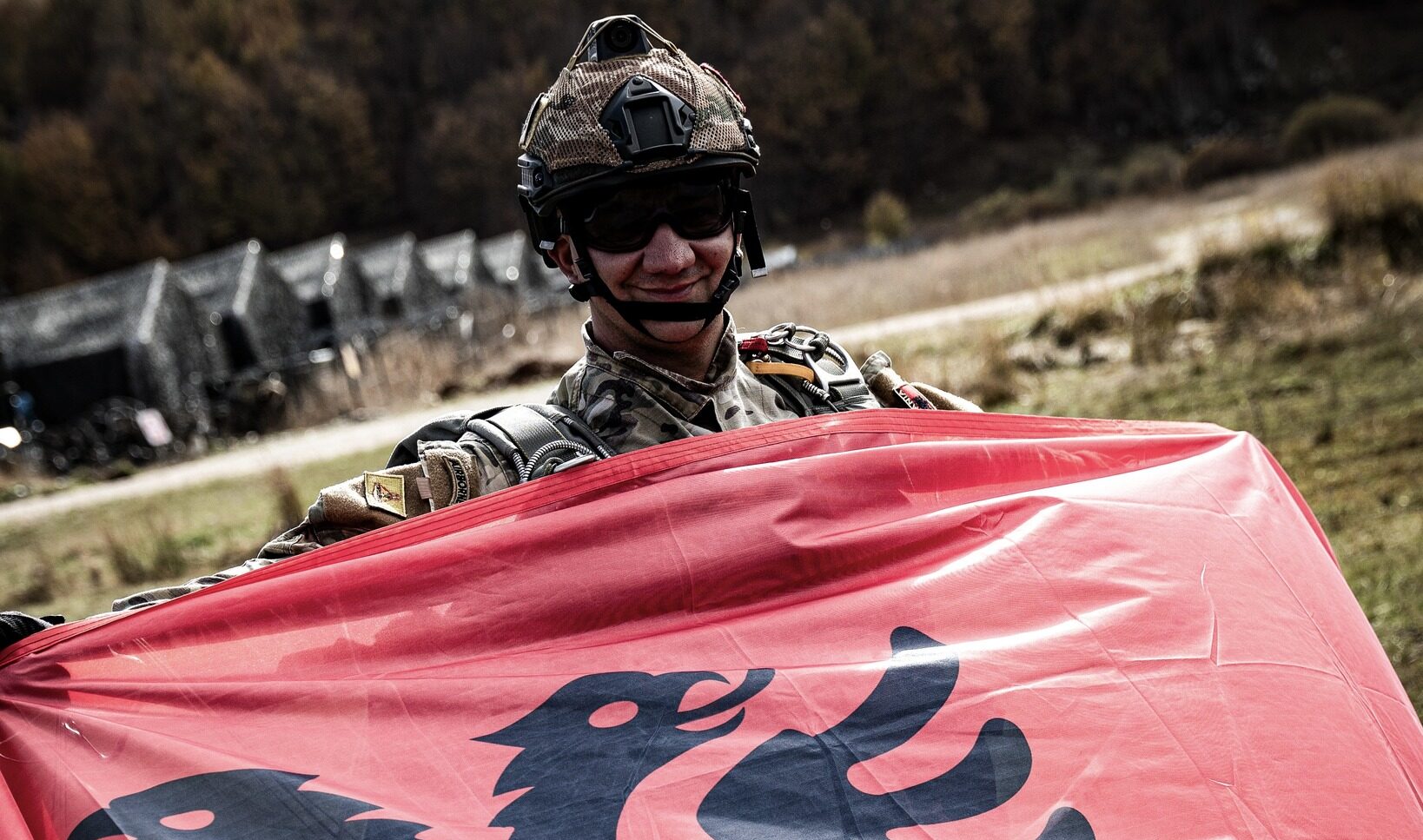
Albania is a full member of the North Atlantic Treaty Organization (NATO), having officially joined the alliance on April 1, 2009. As of 2026, Albania continues to be a vital partner in the Western Balkans, providing strategic Adriatic access, hosting key infrastructure like the Kuçovë Tactical Air Base, and consistently meeting the alliance's defense spending targets.
The Historical Journey to NATO Membership
Albania’s path to NATO was a cornerstone of its post-communist foreign policy. Following the collapse of one of the most isolationist regimes in Europe in the early 1990s, the nation pivoted sharply toward Euro-Atlantic integration. This transition was not merely a military shift but a total societal realignment toward Western democratic values and collective security.
The process began formally in 1992 when Albania became the first former communist country to apply for membership. In 1994, it joined the Partnership for Peace (PfP), a program designed to create trust and cooperation between NATO and non-member countries in Europe and the former Soviet Union. The civil unrest of 1997 temporarily slowed progress, but it also underscored the necessity of robust security institutions, leading to deeper cooperation with NATO to restructure the Albanian Armed Forces (AAF).
In 1999, Albania was granted a Membership Action Plan (MAP), providing a roadmap for the necessary political, economic, and military reforms. For the next decade, Albania worked to professionalize its military, improve the rule of law, and contribute to international peacekeeping missions to prove its reliability. The invitation to join was finally extended at the Bucharest Summit in April 2008, and the formal accession protocols were signed shortly thereafter, culminating in full membership in April 2009 alongside Croatia.
Strategic Importance in the Western Balkans
Albania’s geographical position provides NATO with a critical foothold in the Western Balkans and the Mediterranean. Bordering the Adriatic and Ionian Seas, Albania serves as a bridge between Southern Europe and the volatile regions of the East.
In 2026, the geopolitical landscape of the Balkans remains complex. Albania’s membership acts as a stabilizing force, discouraging external interference from non-NATO actors and providing a secure environment for regional economic development. The country’s commitment to the alliance is reflected in its high level of public support for NATO, which remains among the highest of all member states, often exceeding 90%.
The Kuçovë Tactical Air Base
One of the most significant developments in Albania’s NATO tenure was the transformation of the Kuçovë Air Base. Originally a Soviet-built facility, it was inaugurated as NATO’s first tactical air base in the Western Balkans in March 2024. By 2026, this facility has become a hub for NATO air operations, logistics, and training.
The base serves several critical functions:
- Air Policing: Supporting NATO's mission to ensure the integrity of alliance airspace in the region.
- Logistics Hub: Acting as a staging ground for personnel and equipment moving through Southeastern Europe.
- Training and Exercises: Providing a sophisticated environment for multinational drills, such as the biennial Defender Europe series.
Defense Spending and Military Modernization
A primary obligation of NATO membership is the commitment to defense spending. At the 2014 Wales Summit, members pledged to spend at least 2% of their Gross Domestic Product (GDP) on defense. Albania reached this milestone in 2024 and has maintained or exceeded this level through 2026.
Modernization of the Albanian Armed Forces (AAF) has focused on transitioning away from legacy Soviet and Chinese equipment toward interoperable Western technology. This shift is essential for "plug-and-play" compatibility with other NATO forces during joint operations.
Key Equipment and Capabilities
- Aviation: The acquisition of UH-60 Black Hawk helicopters has significantly enhanced Albania's medical evacuation, search and rescue, and transport capabilities.
- Unmanned Systems: Albania’s integration of Bayraktar TB2 drones provides the alliance with valuable intelligence, surveillance, and reconnaissance (ISR) data in the Balkan theater.
- Cyber Defense: As hybrid warfare becomes more prevalent, Albania has invested heavily in its National Authority for Electronic Certification and Cyber Security (AKCESK), working closely with NATO’s Cooperative Cyber Defence Centre of Excellence (CCDCOE).
| Year | Membership Status / Milestone | Primary Focus |
|---|---|---|
| 1992 | First Application | Post-Cold War transition |
| 1994 | Joined Partnership for Peace (PfP) | Initial military cooperation |
| 1999 | Membership Action Plan (MAP) | Structural and legal reforms |
| 2009 | Full NATO Membership | Integration into collective defense |
| 2024 | Kuçovë Air Base Inauguration | Infrastructure and regional air policing |
| 2026 | Active Strategic Partner | High-readiness contributions and ISR |
Collective Defense and Article 5 Obligations
The heart of NATO is Article 5 of the Washington Treaty, which states that an attack against one member is an attack against all. By being part of NATO, Albania is protected by the nuclear and conventional umbrella of the world's most powerful military alliance.
In return, Albania contributes to the "360-degree" approach to security. This involves contributing to the Enhanced Forward Presence (eFP) in the Baltic states and Poland to deter aggression on the Eastern Flank. Albanian troops are also consistently part of the KFOR mission in Kosovo, where they play a delicate but crucial role in maintaining peace in a neighboring territory.
Challenges and Future Outlook in 2026
Despite its successes, Albania faces ongoing challenges within the alliance framework. The primary focus for 2026 is the "Security and Defense Strategy," which aims to address non-traditional threats.
Resilience Against Hybrid Warfare
Albania has been a target of significant cyberattacks, most notably the 2022 attacks attributed to state-sponsored actors. In 2026, NATO continues to provide technical assistance to help Albania harden its critical infrastructure. This includes securing the national power grid, telecommunications, and government databases against digital intrusion.
Regional Integration
Albania advocates for the "Open Door" policy, supporting the NATO aspirations of other Balkan nations. The goal is to create a "security belt" in Southern Europe that minimizes the influence of adversarial powers. Albania’s role as a mentor to aspiring members is a key part of its 2026 diplomatic agenda.
Training and Joint Exercises
Albania’s participation in joint exercises is a testament to its integration. These exercises are not merely displays of force but are essential for testing interoperability—the ability of different militaries to communicate and operate together using common standards and procedures.
The Biza Training Range and the Sazan Island maritime facilities are frequently used by NATO allies for mountain warfare and naval drills. These locations offer unique topographical challenges that are highly valued by US and European special forces. By 2026, these facilities have been upgraded with digital monitoring systems to provide real-time feedback during combat simulations.
Economic and Social Impact of Membership
While NATO is a military alliance, membership has had profound economic and social effects on Albania. The security guarantee provided by NATO is a prerequisite for many foreign direct investors.
- Investment Stability: Large-scale energy projects, such as the Trans Adriatic Pipeline (TAP), rely on the long-term stability that NATO membership ensures.
- Democratic Standards: The MAP process required Albania to improve its judicial system and anti-corruption measures, which are also requirements for European Union (EU) accession.
- Disaster Response: The Euro-Atlantic Disaster Response Coordination Centre (EADRCC) has assisted Albania during domestic crises, such as the 2019 earthquake and subsequent forest fires, demonstrating the alliance's value in non-combat scenarios.
Frequently Asked Questions
When did Albania join NATO?
Albania officially joined NATO on April 1, 2009. The invitation was issued at the Bucharest Summit in 2008 after Albania successfully completed the Membership Action Plan (MAP).
Does Albania meet the 2% defense spending requirement?
Yes, as of 2026, Albania meets the NATO guideline of spending at least 2% of its GDP on defense. A significant portion of this budget is allocated to equipment modernization and the maintenance of the Kuçovë Air Base.
What is the importance of the Kuçovë Air Base?
The Kuçovë Tactical Air Base is NATO’s first major air infrastructure project in the Western Balkans. It serves as a regional hub for air policing, refueling, and logistics, enhancing the alliance's ability to respond to threats in the Mediterranean and Southeastern Europe.
Are Albanian troops involved in NATO missions?
Albanian personnel are active participants in several NATO-led missions. These include KFOR in Kosovo, the Enhanced Forward Presence (eFP) in the Baltics, and maritime security operations in the Mediterranean. They also contribute to the NATO Response Force (NRF).
How does NATO membership affect Albania's EU prospects?
While NATO and the EU are separate organizations, membership in NATO is often seen as a precursor to EU membership. The reforms required for NATO—such as strengthening the rule of law and professionalizing the bureaucracy—align closely with the EU’s "acquis communautaire."
Next Actions for Stakeholders
For researchers and policy analysts, monitoring the NATO-Albania Security Cooperation updates is essential. The focus should remain on the implementation of the 2026 defense budget and the progress of the cyber-resilience initiatives. Military professionals should look toward the upcoming Defender 2026 exercises, which will likely feature Albania as a primary host for littoral and mountain operations.
For the general public, understanding Albania’s role in NATO clarifies the nation’s position in the global security architecture. It is not just a member for its own protection but a contributor to the collective safety of the 32-nation alliance.