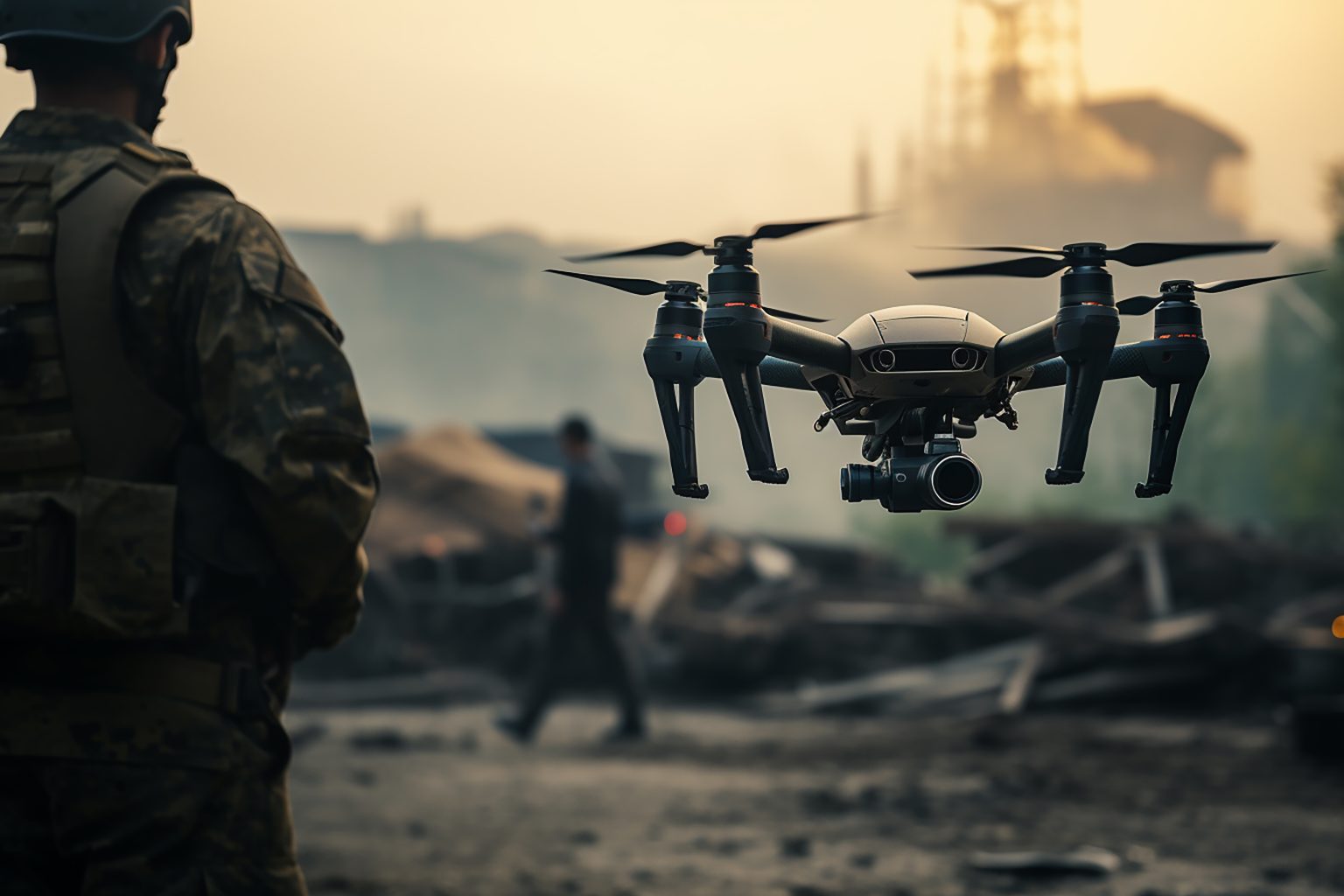
Artificial Intelligence (AI) in the military refers to the deployment of machine learning, autonomous systems, and predictive analytics to enhance battlefield awareness, logistics, and decision-making speed. As of 2026, integration focuses on human-machine teaming (HMT), where AI processes vast sensor data to augment human commanders, ensuring compliance with ethical frameworks and legal standards governing autonomous weapons.
The Evolution of Military AI Capabilities
The integration of AI into global defense strategies has transitioned from experimental R&D to core operational infrastructure. Military organizations define AI not as a replacement for human judgment, but as an indispensable tool for information superiority. In complex, high-velocity environments, the volume of data generated by satellite imagery, signal intelligence, and drone swarms exceeds the cognitive processing capacity of traditional staff structures.
By 2026, the primary use cases are segmented into three operational pillars:
- Decision Support Systems: Utilizing natural language processing and pattern recognition to synthesize intelligence reports, identifying threats and opportunities faster than manual analysis.
- Autonomous and Semi-Autonomous Platforms: Enhancing the navigation and target identification capabilities of Unmanned Aerial Vehicles (UAVs) and Unmanned Surface Vessels (USVs).
- Predictive Maintenance: Analyzing real-time telemetry from tanks, aircraft, and naval assets to anticipate mechanical failure, significantly increasing operational availability while reducing logistics footprints.
Human-Machine Teaming (HMT) and Ethical Oversight
The central tenet of modern military AI strategy is "human-in-the-loop" or "human-on-the-loop" oversight. This ensures that a human operator retains legal and moral accountability for lethal force application. International standards and national policies—such as the U.S. Department of Defense's Directive 3000.09—explicitly require that autonomous systems be designed to allow commanders and operators to exercise appropriate levels of human judgment over the use of force.
Technical implementation of this oversight involves "explainable AI" (XAI). Unlike black-box models, XAI provides justifications for the outputs generated by the algorithms. If an AI system tags a coordinate as a potential command post, the system must provide the supporting data points—such as frequency analysis or visual object detection—that led to that conclusion, allowing human operators to verify the veracity of the claim before authorizing action.
Operational Impacts on Modern Logistics
One of the most profound, albeit less visible, impacts of AI is in the domain of supply chain management and logistics. Predictive logistics models analyze thousands of variables—ranging from fuel consumption rates in specific terrain to regional geopolitical instability—to optimize supply routes.
For example, current AI-driven platforms can simulate "what-if" scenarios for the delivery of critical components during a contested logistics operation. By identifying the highest-probability delivery paths, the military can allocate assets more efficiently, ensuring that forward-deployed units remain equipped even when traditional supply chains are threatened.
Comparing AI Applications in Defense Sectors
| Application Area | Primary Function | Current Technical Status | Human Interaction |
|---|---|---|---|
| ISR Data Processing | Intelligence, Surveillance, Reconnaissance | Highly mature, wide deployment | Human-in-the-loop validation |
| Autonomous Navigation | GPS-denied environments | Developing; field-tested | Human-monitored oversight |
| Predictive Logistics | Fleet maintenance/Supply chain | Operational/Mature | Automated with periodic review |
| Cyber Defense | Threat detection/Network hardening | Highly mature | Automated active defense |
Technical Challenges: Connectivity and Robustness
The efficacy of military AI is tethered to the quality of the data environment. In a contested electromagnetic spectrum, connectivity is not guaranteed. AI systems must be "edge-ready," meaning the algorithms reside on the platform itself rather than in a cloud-based server. This transition toward edge computing allows drones or remote sensors to continue operating even if data links to a central command node are severed.
Furthermore, these systems face the challenge of "adversarial AI." Opposing forces attempt to "poison" training datasets or use deceptive inputs to trick image-recognition software. Consequently, current research is heavily focused on model robustness—ensuring that an AI system performs reliably even when faced with noisy, incomplete, or manipulated input data.
Legal and Regulatory Frameworks
Military organizations operate under strict Rules of Engagement (ROE) and the Law of Armed Conflict (LOAC). Integrating AI into these frameworks requires rigorous verification and validation (V&V) processes. Before an AI algorithm is deployed in a tactical environment, it must undergo standardized testing to ensure it adheres to International Humanitarian Law (IHL), specifically the principles of distinction (identifying combatants versus civilians) and proportionality.
As of 2026, most major military powers participate in ongoing multilateral dialogues to define norms for the responsible military use of AI and autonomy. These discussions address the risks of rapid escalation and the potential for accidental conflict triggered by algorithmic interactions between opposing automated systems.
FAQ: AI in the Military
1. Is military AI allowed to make autonomous lethal decisions? No. Current policy, including that of the United States and NATO members, mandates that a human operator remains responsible for the decision to use force. AI is used to provide options and target identification, but lethal engagement remains a human decision.
2. How does the military ensure AI doesn't make biased or incorrect decisions? Through the implementation of XAI (Explainable AI) and iterative validation cycles. AI models are trained on curated datasets and are subjected to rigorous "red-teaming," where testers attempt to force the system to make mistakes to understand its failure points before it is approved for use.
3. What is "edge computing" in a military context? Edge computing means that the AI software runs directly on the device (e.g., a drone or a ship) rather than relying on a centralized cloud server. This is essential for operations in environments where network communication is jammed or unreliable.
4. Can military AI be "hacked"? Like any software, military AI is vulnerable to cyber threats. This includes "adversarial machine learning," where an attacker attempts to confuse the AI by feeding it misleading information. Defensive measures include hardening models and using diverse sensor inputs to cross-reference data.
5. How does AI improve soldier safety? AI removes humans from "dull, dirty, and dangerous" tasks. For example, autonomous systems are increasingly used for explosive ordnance disposal (EOD) and long-duration surveillance in hostile territories, keeping soldiers out of the immediate line of fire.
Recommended Next Steps for Implementation and Study
For personnel involved in the acquisition or integration of AI technologies, the initial step should always be a technical feasibility audit. This involves assessing whether the existing data infrastructure is sufficient to support a machine-learning model. High-quality data is the prerequisite for any operational AI advantage.
Decision-makers should prioritize systems that follow a modular open-systems approach (MOSA). This allows for the integration of updated AI models as they become available without requiring a complete overhaul of the hardware platform. Regular engagement with oversight offices regarding the legal and ethical certification of these systems is necessary to maintain compliance with evolving international and domestic defense policies.