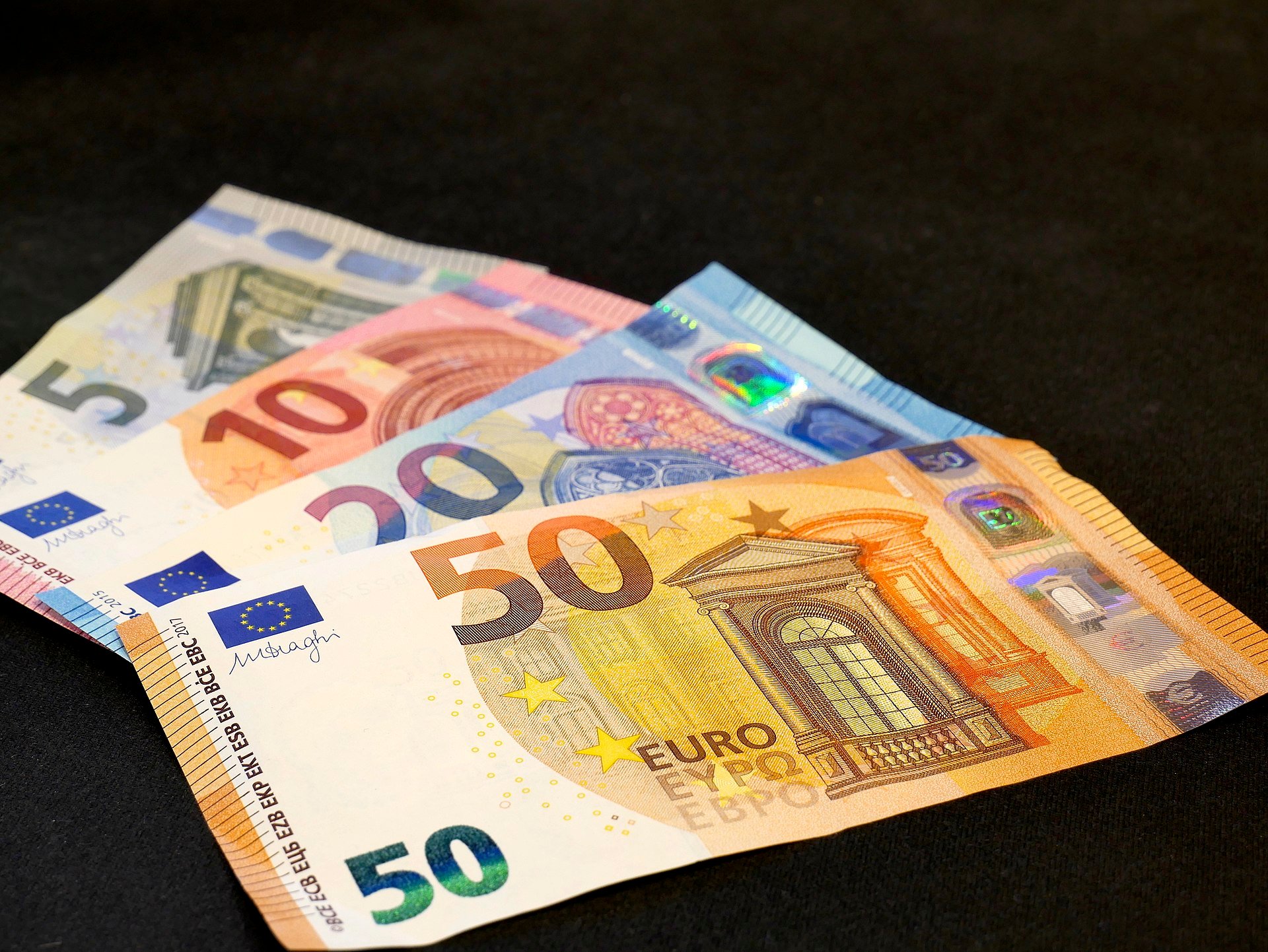
To convert 79,000 Euros (EUR) to US Dollars (USD) in 2026, the final amount depends on the live mid-market exchange rate and the provider's margin. At a hypothetical exchange rate of 1.10, €79,000 equals $86,900. However, bank markups and transaction fees can reduce the net amount received by $1,500 or more.
The conversion of €79,000 is a significant financial transaction, typically associated with down payments for real estate, luxury vehicle purchases, or international business invoices. Because the sum is substantial, even a minor fluctuation in the exchange rate—measured in "pips"—can result in a difference of hundreds of dollars. In 2026, the currency market continues to be shaped by the divergent monetary policies of the European Central Bank (ECB) and the Federal Reserve (Fed), making timing and method selection critical for any individual or entity moving this volume of capital.
Understanding the Mid-Market Rate vs. Retail Rates
When you search for "79,000 euros to dollars," the first number you see is usually the mid-market rate. This is the midpoint between the buy and sell prices of two currencies on the global interbank market. It is the "real" exchange rate used by large banks and institutional investors to trade with one another.
However, retail consumers and small-to-medium enterprises (SMEs) rarely access this rate directly. Instead, most providers apply a "spread" or a "markup."
The Spread: The Hidden Cost of Conversion
A spread is the difference between the mid-market rate and the rate offered to the customer. For a transfer of €79,000, a traditional high-street bank might offer a rate that is 3% to 5% worse than the mid-market rate.
- Mid-Market Example: €1 = $1.10 (Total: $86,900)
- Bank Rate Example (3% markup): €1 = $1.067 (Total: $84,293)
- The Loss: $2,607
This "hidden fee" is often more expensive than the transparent wire transfer fee. In 2026, digital-first fintech platforms and specialized currency brokers have significantly squeezed these margins, often offering spreads as low as 0.35% to 0.7% for sums near the €80,000 mark.
Strategic Comparison of Transfer Methods
Choosing the right platform for 79,000 Euros depends on three factors: the total cost, the speed of delivery, and the necessity of personalized guidance (such as forward contracts).
Traditional Bank Wires (SWIFT)
Banks are the most familiar route but generally the most expensive. They utilize the SWIFT network, which may involve intermediary banks that deduct their own "handling fees" during the journey. While extremely secure, a bank wire for €79,000 is best reserved for those who already have a high-tier "Premier" or "Private Banking" relationship where exchange rate markups can be negotiated downward.
Specialist Money Transfer Services
Providers like Wise, Revolut, or Atlantic Money specialize in high-volume transfers. They often use local bank accounts in both the Eurozone and the US to bypass the SWIFT network entirely, which eliminates intermediary fees and speeds up the process. For €79,000, these services typically provide the best "take-home" value for the recipient.
Currency Brokers (Personalized Service)
For amounts exceeding €50,000, currency brokers (such as OFX or Currencies Direct) become highly relevant. Unlike automated apps, brokers provide access to dedicated account managers. They offer advanced tools like limit orders (waiting for the rate to hit a specific target) and forward contracts (locking in today's rate for a transfer months in the future). This is particularly useful if you are buying a property in 2026 but don't need to pay the full €79,000 until the closing date.
| Provider Type | Average Markup (Spread) | Estimated Received (at 1.10 Rate) | Speed |
|---|---|---|---|
| Traditional Bank | 3.0% - 5.0% | $82,555 - $84,293 | 3-5 Days |
| Specialist Fintech | 0.4% - 0.6% | $86,379 - $86,552 | 1-2 Days |
| Currency Broker | 0.5% - 0.8% | $86,205 - $86,465 | 2-3 Days |
| Digital Wallet/PayPal | 4.0% + | < $83,424 | Instant/1 Day |
Factors Influencing the EUR/USD Exchange Rate in 2026
The value of €79,000 in USD is not static. In the 2026 economic landscape, several core drivers dictate whether your Euros will buy more or fewer Dollars.
1. Interest Rate Differentials
The primary driver of the EUR/USD pair is the gap between the interest rates set by the Federal Reserve and the European Central Bank. If the Fed maintains higher rates than the ECB, capital tends to flow toward the US to seek higher yields on bonds and savings, strengthening the Dollar and making your €79,000 worth less in USD terms.
2. Economic Growth and GDP
Currency value often reflects the health of the underlying economy. If the Eurozone's industrial output (particularly in Germany and France) outpaces the US economic growth in 2026, the Euro will likely appreciate. Investors monitor GDP releases and Purchasing Managers' Index (PMI) data closely; positive surprises in these areas can cause a sudden "spike" in the Euro's value.
3. Geopolitical Stability and Safe-Haven Status
The US Dollar remains the world’s primary reserve currency. During times of global uncertainty, political upheaval, or conflict, investors often flock to the Dollar as a "safe haven." This can lead to Euro depreciation even if the Eurozone economy is performing reasonably well.
Regulatory Requirements and Compliance for €79,000
When moving €79,000 across borders, you are entering the territory of "High-Value Transactions." This triggers specific regulatory requirements aimed at preventing money laundering and tax evasion.
Anti-Money Laundering (AML) and KYC
In 2026, "Know Your Customer" (KYC) protocols are more robust than ever. When you initiate a transfer of this size, your provider will likely require:
- Proof of Identity: A valid passport or national ID.
- Proof of Address: A recent utility bill or bank statement.
- Source of Funds (SOF): Documentation explaining where the €79,000 came from. This could be a house sale contract, an inheritance statement, a salary slip, or a business dividend voucher.
Tax Reporting (FBAR and Form 8300)
While transferring the money itself isn't usually a taxable event, the existence of the funds might be. If you are a US person holding €79,000 in a European bank account, you must file a Foreign Bank and Financial Accounts Report (FBAR) if the aggregate value of all foreign accounts exceeds $10,000 at any point during the year. Furthermore, banks are required by the Internal Revenue Service (IRS) to report single transactions over $10,000.
How to Execute the Conversion: A Step-by-Step Guide
To ensure you get the most out of your €79,000 conversion, follow these operational steps:
- Compare Three Sources: Check your current bank, one fintech app (like Wise), and one currency broker. Use their "all-in" calculators to see the actual USD amount you will receive after all fees.
- Verify the Mid-Market Rate: Use a neutral source like Reuters or Bloomberg to see the current interbank rate. This gives you a benchmark to judge the provider's markup.
- Check for Daily Limits: Some apps have daily transfer limits. For €79,000, you may need to increase your account tier or provide SOF documentation upfront to prevent the transfer from being flagged or paused.
- Time Your Transfer: If the market is volatile, consider a "Firm Order." You tell a broker to execute the trade only when the Euro hits a specific USD value (e.g., $1.12).
- Confirm Recipient Details: Double-check the US recipient's ABA Routing Number (for domestic wires) or SWIFT/BIC code (for international wires). An error in a €79,000 transfer can take weeks to resolve through "trace" requests.
Common Pitfalls to Avoid
- Using PayPal for Large Sums: While convenient, PayPal’s currency conversion margins are notoriously high (often 3-4.5%). On €79,000, this could cost you over $3,000 compared to a specialist broker.
- Ignoring Intermediary Bank Fees: If using a traditional bank, ensure you select the "OUR" instruction (you pay all fees) or "SHA" (shared fees) appropriately. Intermediary banks can nibble away $25-$50 from the total, which might cause an invoice to be underpaid.
- Neglecting the "Weekend Gap": Currency markets close on Friday evening and open on Sunday evening (UTC). Rates can "gap" significantly over the weekend based on news events. If possible, execute your trade mid-week when liquidity is highest.
Frequently Asked Questions
Is it better to convert €79,000 in Europe or the US?
Generally, it is better to use a specialist international transfer service that operates in both jurisdictions. Converting at a physical bank branch (cash) in either the US or Europe will provide the worst possible rate. If you must use a bank, sending the money from a Euro account to a USD account via wire transfer is superior to any physical exchange.
How long does a transfer of 79,000 Euros take to reach the US?
Using a fintech provider, the funds can arrive in as little as 24 hours, especially if the Euro deposit is made via a SEPA Instant credit transfer. Traditional bank wires typically take 3 to 5 business days due to the multiple layers of clearing and compliance checks required for large sums.
Are there any taxes on transferring €79,000 to the United States?
The transfer itself is not a tax. However, if the transfer represents income, capital gains, or a gift exceeding the annual exclusion limit, it must be reported to the IRS. Consult with a tax professional regarding Form 3520 (for large foreign gifts) or other reporting requirements relevant to your residency status.
Can I lock in an exchange rate for my €79,000?
Yes, this is known as a Forward Contract. Many currency brokers allow you to pay a small deposit to "lock in" a specific exchange rate for up to 12 months. This is an excellent hedge against currency depreciation if you have a known future obligation in Dollars.
What is the "Spread" on a €79,000 transfer?
The spread is the difference between the wholesale rate and the rate the provider gives you. For €79,000, a "good" spread is anything under 0.5%. If a bank offers you a rate that is 2 cents lower than the mid-market rate, that is roughly a 1.8% spread, which is considered expensive for a mid-five-figure sum.
Practical Recommendation
For a transfer of 79,000 Euros to Dollars, avoid using your primary retail bank unless they offer you a documented "preferred" exchange rate markup of less than 0.5%. For most users, the most cost-effective and secure method in 2026 is to use a reputable currency broker or a high-volume fintech provider. This approach will likely save you between $1,200 and $2,500 in unnecessary fees and exchange rate markups compared to standard bank services. Always ensure the provider is regulated by the Financial Conduct Authority (FCA) in the UK, the European Central Bank (ECB) in Europe, or FinCEN in the United States.