Hexavalent carbon refers to a carbon atom that forms six distinct chemical bonds, a phenomenon most notably observed in the hexamethylbenzene dication ($[C_6(CH_3)_6]^{2+}$). While carbon typically follows the octet rule with four bonds, this unique species utilizes multicenter bonding to maintain six coordinates within a pentagonal pyramidal geometry, challenging traditional structural theories.
For over 150 years, the foundational pillar of organic chemistry was the tetravalency of carbon. Proposed independently by August Kekulé and Archibald Scott Couper in 1858, the "Rule of Four" dictated that carbon could form a maximum of four bonds. This rule successfully predicted the structure of millions of molecules, from simple methane to complex DNA. However, as our understanding of molecular orbital theory and "superacid" chemistry matured, researchers discovered that carbon’s bonding capabilities are more flexible than once thought.
The existence of hexacoordinate carbon (often colloquially called hexavalent carbon) represents one of the most significant deviations from standard bonding models. Specifically, the transformation of sp2-hybridized aromatic systems into three-dimensional pyramidal cations has redefined the limits of chemical stability. As of 2026, these structures are no longer theoretical curiosities but are essential case studies in advanced chemical bonding and computational modeling.
The Historical Shift: From Tetravalency to Hexacoordination
The journey toward 6-valent carbon began with the study of non-classical carbocations. In the mid-20th century, chemists like Saul Winstein proposed that certain carbon atoms could share electrons across more than two nuclei, leading to the famous "Norbornyl Cation" debate. This paved the way for the idea that carbon could be "hypercoordinate"—meaning it is coordinated to more than four other atoms.
In the 1970s, theoretical calculations suggested that if one were to remove two electrons from hexamethylbenzene (a planar molecule where each carbon is sp2 hybridized), the resulting dication would not remain flat. Instead, it would collapse into a pentagonal pyramid. This prediction remained unverified for decades because the species was too reactive to isolate under standard conditions.
It was not until the work of Moritz Malischewski and Konrad Seppelt, published in Angewandte Chemie (2017), that the hexamethylbenzene dication was finally crystallized and its structure confirmed via X-ray diffraction. This discovery proved that a carbon atom could indeed sit at the apex of a pyramid, bonded to six other carbon atoms.
The Architecture of the Hexamethylbenzene Dication
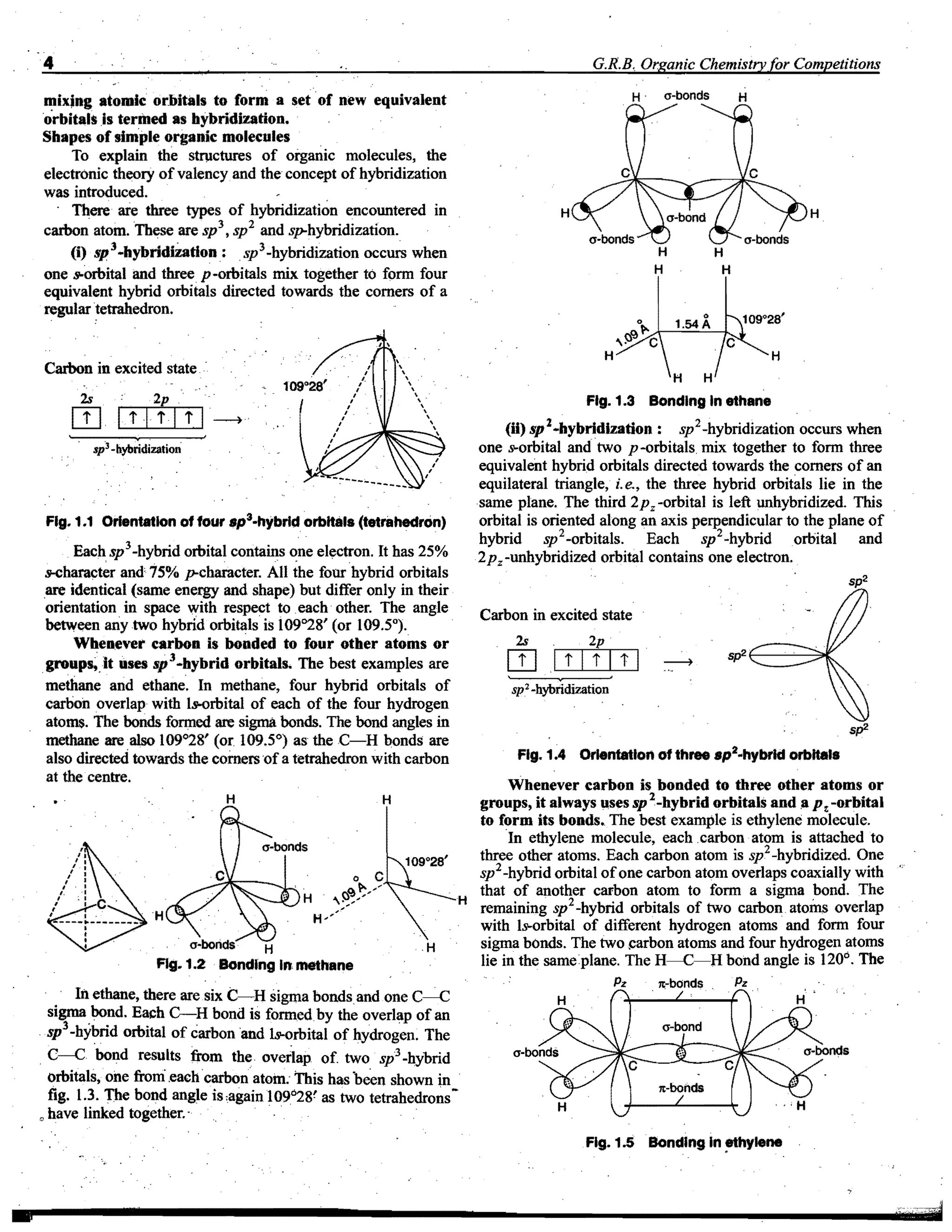
To understand how a "6-valent" carbon functions, one must examine the transition from a standard sp2 aromatic ring to a 3D dication. In its neutral state, hexamethylbenzene is a flat ring. Each carbon is sp2 hybridized, meaning it is bonded to two other carbons in the ring and one methyl group, with a p-orbital contributing to the pi-electron cloud.
When the molecule is oxidized (losing two electrons) in a superacid environment, the electronic structure shifts:
- Structural Collapse: The planar hexagonal ring is no longer the most stable arrangement. Five of the carbons form a pentagonal base.
- The Apical Carbon: The sixth carbon atom moves to a position above the center of the pentagon.
- Bonding Distribution: This apical carbon is now bonded to the five carbons in the pentagonal base plus its original methyl group carbon.
This results in a total of six bonds for the apical carbon. However, it is vital to distinguish between "coordination" and "valence electrons." The apical carbon does not have 12 valence electrons (which would violate the Pauli Exclusion Principle). Instead, it uses its four valence electrons to form a 6-center, 2-electron (6c-2e) bond with the base of the pyramid.
Electronic Structure and Molecular Orbital Theory
The primary question students ask is: "How does carbon stay within the octet rule while forming six bonds?" The answer lies in Molecular Orbital (MO) Theory.
In traditional Lewis structures, we assume a "2-center, 2-electron" (2c-2e) bond, where two atoms share two electrons. In the hexamethylbenzene dication, the apical carbon utilizes its orbitals to overlap with the collective orbitals of the five carbons in the base.
The Role of sp2 Hybridization
The base of the pyramid consists of five carbon atoms that retain a high degree of sp2-like character, but they are deformed. The apical carbon uses its 2s and 2p orbitals to create a bonding framework that "spreads" the electron density.
- Vertical Bond: One bond is a standard sigma bond to the methyl group (2c-2e).
- The "Cap" Bonding: The remaining three valence electrons of the apical carbon (and the remaining electrons of the base) are distributed across the five remaining "bonds" to the pentagonal base.
Mathematically, the bond order between the apical carbon and each carbon in the base is significantly less than 1.0. This allows the carbon to be hexacoordinate (connected to six atoms) without possessing more than eight electrons in its valence shell.
Synthesis: The Role of Superacids and Low Temperatures
Creating a 6-valent carbon species is not possible in a standard laboratory setting. It requires an environment where the dication cannot react with any nucleophiles (species that donate electrons).
In 2026, the standard method for observing these species remains the use of Magic Acid ($HSO_3F \cdot SbF_5$) or other fluoroantimonic acid derivatives. The synthesis follows these rigorous requirements:
- Extremely Low Temperature: The reaction must occur at approximately -78°C or lower. At room temperature, the dication is highly unstable and would decompose or react instantly.
- Inert Atmosphere: Any trace of moisture or air would neutralize the cation.
- Superacid Media: The dication is generated by dissolving hexamethylbenzene epoxide in a superacid, which strips away the oxygen and creates the carbon-centered cation.
The crystallization of this species was an analytical masterpiece. Because the crystals are extremely sensitive to temperature, they had to be handled using specialized "cold-stream" X-ray crystallography techniques.
Comparative Analysis: Standard vs. Hexacoordinate Carbon
The following table compares the characteristics of a standard sp2 carbon (as found in benzene) with the apical hexacoordinate carbon found in the $[C_6(CH_3)_6]^{2+}$ dication.
| Feature | Standard sp2 Carbon (Benzene) | Apical Hexacoordinate Carbon |
|---|---|---|
| Coordination Number | 3 (Trigonal Planar) | 6 (Pentagonal Pyramidal) |
| Bond Angles | 120° | Varied (~70° to base, 180° to methyl) |
| Bonding Type | 2c-2e Sigma & Delocalized Pi | Multicenter (6c-2e) |
| Stability | Highly stable under STP | Stable only in superacids at < -78°C |
| Hybridization | sp2 | Complex (Mixing of s and p) |
| Electron Count | 8 (Octet) | 8 (Octet via multicenter sharing) |
| Geometry | 2D Planar | 3D Pyramidal |
Why "6-Valent" is a Misnomer (and Why We Use It)
Strictly speaking, "hexavalent" implies a valence of six. In classical chemistry, valence refers to the number of hydrogen atoms that an atom can combine with. Under this definition, carbon remains tetravalent because it only has four valence electrons available for bonding.
However, in modern structural chemistry, the term "6-valent" is often used interchangeably with hexacoordinate. This usage highlights the structural reality that the carbon atom has six neighbors within bonding distance. The distinction is crucial for students:
- Valence Electrons: Carbon always has 4.
- Coordination: Carbon can have 1, 2, 3, 4, 5, or 6 neighbors.
- The Octet Rule: Is preserved through multicenter bonding where electrons are shared among more than two atoms.
By 2026, textbooks have largely adopted the term "Hypercoordinate Carbon" to avoid the semantic confusion of "hexavalent," though the latter remains popular in scientific journalism and introductory lectures to emphasize the "rule-breaking" nature of the discovery.
Practical Implications in 2026 and Beyond
While the hexamethylbenzene dication may seem like a laboratory curiosity, its discovery has profound implications for several fields of chemistry.
1. Refinement of Computational Models
The existence of $[C_6(CH_3)_6]^{2+}$ provided a definitive benchmark for Density Functional Theory (DFT). Before its synthesis, there was debate about whether computational models over-stabilized "exotic" structures. The fact that the X-ray structure perfectly matched the 1970s predictions confirmed that our mathematical models of electron density are highly accurate.
2. Catalysis and Reactive Intermediates
Understanding how carbon can "stretch" its bonding capacity allows chemists to design better catalysts. Many industrial reactions involve carbon passing through highly unstable, five- or six-coordinate transition states. By studying stable hexacoordinate models, researchers can better map the "reaction coordinate" of complex organic transformations.
3. Astrochemistry
In the extreme environments of interstellar space or the atmospheric pressure of gas giants, "non-classical" bonding is likely more common. The study of 6-valent carbon species helps astrochemists identify spectral signatures of unusual molecules that might exist in space but are unstable on Earth's surface.
Common Mistakes in Visualizing 6-Valent Carbon
When first encountering this topic, students often make specific errors in their diagrams and conceptualization:
- Overdrawing Electrons: Do not draw six lines (representing 12 electrons) if you are working with a standard Lewis framework. The lines to the pentagonal base represent shared "fractional" bonds.
- Confusing with Transition States: While five-coordinate carbon is a common transition state (like in $S_N2$ reactions), the hexamethylbenzene dication is a minimum on the potential energy surface, meaning it is a distinct, isolable molecule, not just a fleeting moment in a reaction.
- Assuming sp3 Hybridization: Students often try to fit the apical carbon into an sp3 model. However, the symmetry of the pentagonal pyramid requires a more complex orbital mixing that cannot be simplified to standard $sp$, $sp2$, or $sp3$ labels.
Frequently Asked Questions
Does the 6-valent carbon violate the octet rule?
No. While the carbon is bonded to six other atoms, it does not have more than eight electrons in its valence shell. It achieves this through multicenter bonding, where a single pair of electrons is shared between the apical carbon and multiple carbons in the base. This "non-classical" bonding ensures the Pauli Exclusion Principle is not violated.
Is the hexamethylbenzene dication stable at room temperature?
No. It is extremely reactive. It was synthesized and characterized at temperatures below -78°C in superacid solutions. At room temperature, the energy barrier is too low to prevent it from reacting with even the weakest nucleophiles or undergoing structural rearrangement.
What is the difference between hypervalent and hypercoordinate?
"Hypervalent" typically refers to elements like Phosphorus or Sulfur (e.g., $PF_5$ or $SF_6$) that are often thought to expand their octet using d-orbitals. "Hypercoordinate" refers to an atom having more neighbors than its standard valency allows (like Carbon having 5 or 6 neighbors). Since carbon cannot use d-orbitals effectively, it is hypercoordinate but stays within the octet.
How was the structure of 6-valent carbon finally proven?
The structure was proven using X-ray crystallography. This required growing a high-quality crystal of the $[C_6(CH_3)_6]^{2+}[SbF_6^-]_2$ salt in a superacid medium and then analyzing it with X-rays to determine the exact spatial coordinates of every atom. The analysis showed a clear pentagonal pyramidal shape.
Can other atoms besides carbon be hexacoordinate in organic molecules?
Yes, other elements like Boron frequently exhibit hypercoordination (as seen in boranes). In fact, the bonding in the hexamethylbenzene dication is very similar to the bonding found in certain organometallic clusters and borane structures, which served as a clue for chemists searching for the 6-valent carbon.
Future Directions: Moving Toward Heptacoordination?
As of 2026, the focus of structural organic chemistry has shifted toward even more extreme coordination numbers. While hexacoordinate carbon is now a verified fact, researchers are investigating whether heptacoordinate (7-bond) carbon species could exist under even more extreme pressures or within specialized cage molecules (endohedral complexes).
The exploration of 6-valent sp2 carbon derivatives has taught the scientific community that the "rules" of chemistry are often contextual. The tetravalency of carbon is a reliable rule for standard conditions, but under the influence of superacids or extreme physical forces, the electronic "glue" that holds atoms together can be redistributed in ways that Kekulé never imagined.
Next Steps for Researchers and Students: To gain a deeper understanding, one should review Wade’s Rules for cluster chemistry and study the 3-center 2-electron (3c-2e) bond models. Practicing MO diagram construction for pyramidal molecules will also provide a clearer picture of how electron density is shared in these fascinating, non-classical structures.