Finding the perfect running shoe is a challenge for any athlete, but for those with wide feet, the search often involves balancing internal volume with structural support. The best wide width running shoes for comfortable miles in 2026 combine expansive toe boxes, multi-width options (2E and 4E), and advanced midsole foams that prevent "hot spots" or nerve compression during long-distance efforts.
Whether you are managing bunions, dealing with natural foot splay, or simply require more room for orthotics, the current footwear market has moved beyond merely "sizing up." Modern engineering allows brands to create wide versions of their flagship models that maintain the same weight-to-cushion ratios as their standard-width counterparts. This guide analyzes the top five performers for 2026, focusing on mechanical durability, upper-mesh flexibility, and overall ride quality.
The Importance of Anatomical Width in Running
Running causes the feet to swell, often increasing a runner's foot volume by up to half a size during a long-distance session. For runners with naturally wide feet or high-volume midfoots, a standard "D" width (for men) or "B" width (for women) can lead to several physiological issues.
Morton’s Neuroma and Nerve Compression When the metatarsal heads are squeezed together by a narrow toe box, the plantar digital nerve can become inflamed. This often results in a sharp, burning sensation or numbness in the forefoot. Wide width shoes allow the metatarsals to splay naturally, reducing the pressure on these sensitive nerves.
Bunion Management and Prevention Hallux valgus, or bunions, are frequently exacerbated by narrow footwear that forces the big toe toward the second toe. A shoe with a dedicated wide "last"—the 3D foot model used to build the shoe—provides the necessary lateral clearance to prevent friction against the joint, allowing for comfortable miles without skin irritation or joint pain.
Efficiency and Stability A wider platform inherently provides a more stable base for landing. In 2026, footwear designers are utilizing "geometric stability," where the midsole itself is flared outward. For a wide-footed runner, this means the foot sits in the foam rather than on it, creating a cradling effect that assists with gait neutralisation without the need for intrusive medial posts.
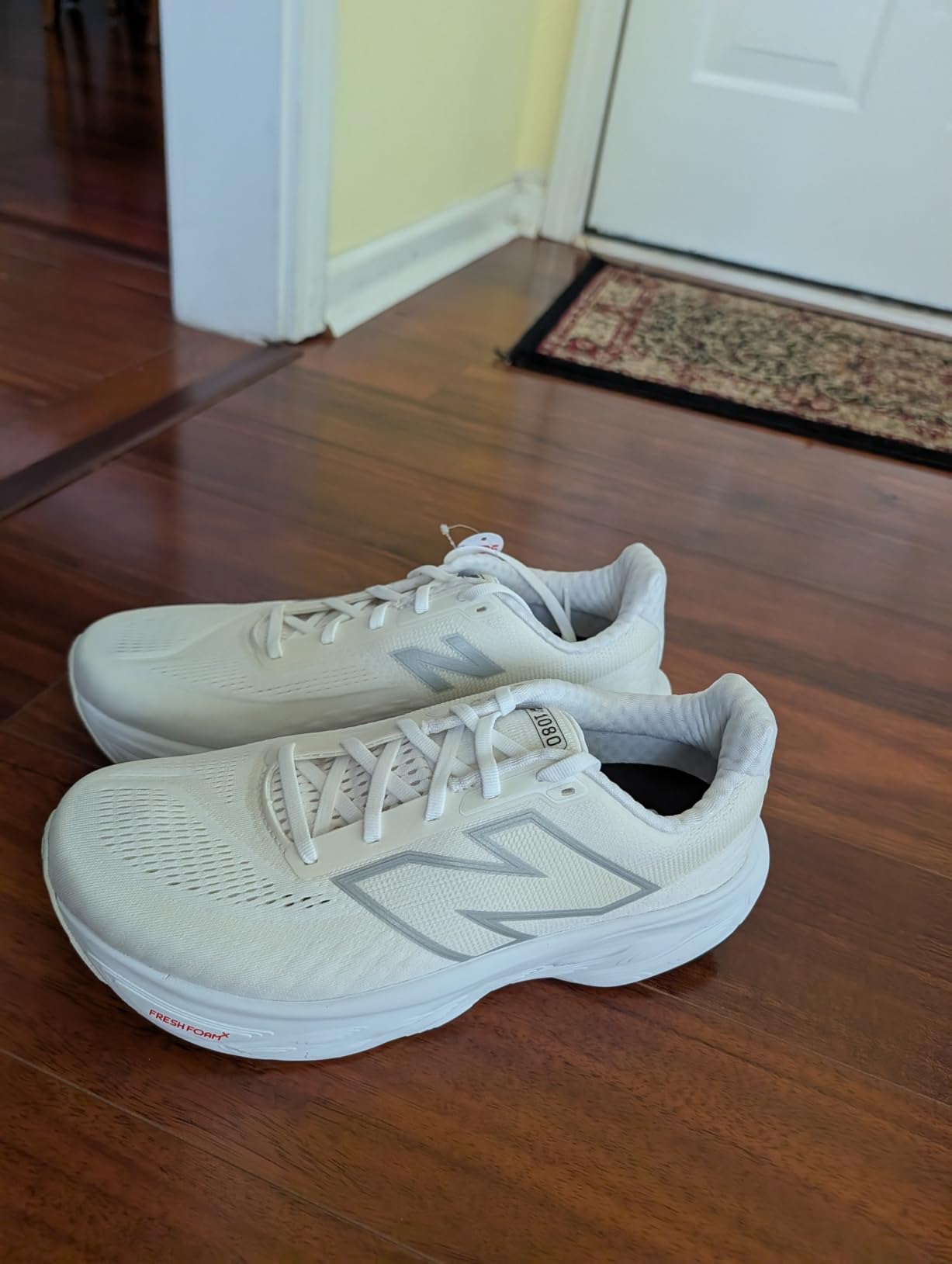
1. New Balance Fresh Foam X 1080 v16: The Gold Standard for Plush Comfort
New Balance has long been the industry leader in width accessibility, and the 2026 Fresh Foam X 1080 v16 continues this legacy. While many brands offer a single "wide" option, New Balance consistently provides 2E (Wide) and 4E (Extra Wide) for men, and D (Wide) and 2E (Extra Wide) for women.
Midsole Architecture
The v16 utilizes a refined version of Fresh Foam X, which, in 2026, incorporates a higher percentage of bio-based content without sacrificing energy return. The foam is laser-etched on the lateral side to allow for easier compression upon heel strike, while the medial side remains slightly more solid to provide a neutral guided path. For wide-footed runners, this translates to a "cloud-like" feel that doesn't "bottom out" under the higher pressure often exerted by a broader foot.
Upper Construction
The "Hypoknit" upper is specifically engineered to provide zones of stretch and support. In the wide versions, New Balance adjusts the knit density over the first and fifth metatarsal heads. This ensures that even if your foot expands significantly during a marathon-distance run, the fabric yields to the foot's shape rather than restricting it.
Practical Performance
The 1080 v16 is a daily trainer designed for everything from recovery walks to high-mileage training blocks. The rocker profile is subtle, allowing for a natural transition from midfoot to toe-off. It remains the top choice for runners who prioritize a soft underfoot feel but require a true 4E width that doesn't compromise the shoe's structural integrity.
2. Brooks Ghost 18: The Reliable Daily Driver
The Brooks Ghost 18 is perhaps the most ubiquitous neutral running shoe on the market. Its popularity stems from its "set it and forget it" nature. In 2026, the Ghost 18 remains a staple for wide-footed runners due to its traditional construction and reliable sizing.
DNA Loft v3 Technology
The Ghost 18 features nitrogen-infused DNA Loft v3 cushioning. This technology creates a lightweight, responsive ride that feels consistent from mile 1 to mile 400. For runners with wide feet, the Ghost is particularly effective because the cushioning is distributed evenly across the full width of the sole, preventing the "pinched" feeling that can occur in more aggressively tapered performance shoes.
The "Ghost" Fit
Brooks uses a plush interior lining and a refined engineered mesh that is known for its durability. The Ghost 18 is available in Medium, Wide, and Extra Wide. Unlike "fashion-forward" brands that may narrow the midfoot for aesthetics, Brooks maintains a generous volume through the instep. This makes it an excellent choice for runners with high arches who also need horizontal width.
Durability and Value
The outsole of the Ghost 18 uses a high-abrasion rubber that covers the majority of the contact points. This is crucial for wide-footed runners who may have unique wear patterns due to late-stage pronation or supination. The shoe is built to withstand 400–500 miles of road use, making it one of the most cost-effective options in the premium category.
3. Hoka Bondi 9: Maximum Cushioning for Impact Protection
Hoka revolutionized the industry with maximalist cushioning, but early iterations were notoriously narrow. The 2026 Hoka Bondi 9 has corrected this, offering one of the most spacious wide-specific models available in the "max-cushion" segment.
The Magnitude of Cushion
The Bondi 9 features a massive stack height of CMEVA (Compression Molded EVA) foam. This shoe is designed for "comfortable miles" in the literal sense—it is meant to absorb as much road vibration as possible. For runners who are larger-framed or who have sensitive fat pads on the bottom of their feet, the Bondi 9 offers unparalleled protection.
Internal Volume and "The Bucket Seat"
One of the unique features of the Bondi 9 is the Active Foot Frame. Instead of the foot sitting on top of the midsole, it sits deeply within it. In the wide version, Hoka has widened the base of this "bucket seat," ensuring that the lateral edge of the foot doesn't press against the foam walls. This design provides inherent stability without the need for traditional, often uncomfortable, stability hardware.
Meta-Rocker Geometry
Because the sole is so thick, it doesn't flex like a traditional shoe. Instead, Hoka uses an "Early Stage Meta-Rocker" to roll the runner forward. This is particularly beneficial for wide-footed runners with limited toe mobility or hallux rigidus, as it reduces the force required to "push off" the ground.
4. ASICS Gel-Kayano 33: Stability Meets Space
For wide-footed runners who also overpronate (the foot rolls inward excessively), finding a shoe that offers both width and support can be difficult. The ASICS Gel-Kayano 33 is the premier solution for this combination in 2026.
4D Guidance System
ASICS has moved away from the hard plastic "medial posts" of the past. The Kayano 33 utilizes the 4D Guidance System, which uses a softer, highly resilient foam piece under the arch that returns to its original shape faster than the surrounding midsole. This provides "on-demand" stability. In the wide (2E) and extra-wide (4E) versions, this guidance system is recalibrated to account for the wider center of pressure.
PureGEL Technology
The signature Gel technology has evolved into "PureGEL," which is integrated into the midsole rather than being a visible external pod. This allows for a smoother transition. Wide-footed runners often struggle with shoes that feel "clunky" in the heel; the Kayano 33 solves this by providing a soft, broad landing zone that dissipates force across a larger surface area.
Secure Heel Clutching
Wide feet often come with a wide heel bone (calcaneus). ASICS utilizes an external back counter that secures the heel without the need for excessive padding that can cause the foot to sit too far forward in the shoe. This keeps the wide part of the foot aligned perfectly with the widest part of the shoe's toe box.
5. Saucony Echelon 10: The Orthotic-Friendly Powerhouse
While other shoes are "wide versions" of standard models, the Saucony Echelon 10 is built from the ground up on a wide, straight last. It is specifically designed for runners who require high internal volume and a flat, stable platform.
Foundation for Orthotics
The Echelon 10 is the preferred shoe for runners who use custom medical orthotics or thick over-the-counter insoles. Because it is built on a straighter last, there is less "waist" in the middle of the shoe, providing a massive amount of surface area for an orthotic to sit flush. This prevents the orthotic from tilting, which can happen in more contoured shoes.
PWRRUN+ Cushioning
The Echelon 10 uses Saucony’s PWRRUN+ foam, a TPU-based (Thermoplastic Polyurethane) material that is highly resistant to temperature changes and compression set. Unlike standard EVA which might feel firm in the winter, PWRRUN+ remains flexible and "bouncy" regardless of the climate. For the wide-footed runner, this means the cushion remains consistent even under heavy, long-term use.
Targeted Support
The Echelon doesn't use traditional stability pillars, but its sheer width makes it incredibly stable. It is an ideal choice for runners with "flat feet" (pes planus) who need a shoe that won't collapse inward but also won't force their foot into an unnatural arch shape.
Technical Comparison of Best Wide Width Shoes (2026 Models)
The following table summarizes the key specifications for the 2026 lineup to help you decide which model aligns with your specific biomechanical needs.
| Model | Primary Category | Width Options | Heel-to-Toe Drop | Key Technology |
|---|---|---|---|---|
| NB Fresh Foam X 1080 v16 | Neutral / Plush | D, 2E, 4E | 6mm | Fresh Foam X / Hypoknit |
| Brooks Ghost 18 | Neutral / Daily | D, 2E, 4E | 12mm | DNA Loft v3 / Segmented Crash Pad |
| Hoka Bondi 9 | Maximalist | D, 2E | 4mm | CMEVA / Meta-Rocker |
| ASICS Gel-Kayano 33 | Stability | D, 2E, 4E | 10mm | 4D Guidance / PureGEL |
| Saucony Echelon 10 | High Volume | 2E, 4E | 8mm | PWRRUN+ / Straight Last |
Technical Considerations for Wide-Footed Runners
Measuring for the "Last"
When purchasing wide running shoes, it is important to understand that width is not just about the upper fabric. The "last" is the actual solid form around which the shoe is constructed. A true wide shoe, like those from New Balance or Brooks, has a wider outsole and midsole base. If you can see your foot "muffin-topping" over the edge of the foam, the shoe is not wide enough, regardless of how stretchy the upper is.
The Role of Lacing Techniques
Even with a wide shoe, specific lacing patterns can further customize the fit. For those with a wide forefoot but a narrow heel, the "Window Lacing" (or skip-lacing) technique can alleviate pressure over the metatarsals. By skipping the eyelets directly over the widest part of your foot, you allow the upper to expand more freely while maintaining a tight lock at the ankle.
Socks Matter
A wide shoe's benefits can be negated by the wrong socks. Thick, cotton socks not only take up valuable internal volume but also retain moisture, leading to friction and blisters. In 2026, synthetic or merino wool blends with "seamless toe" construction are the standard. Look for brands that offer anatomical (left/right specific) fits to ensure there is no excess fabric bunching up in your wide toe box.
Frequently Asked Questions
Can I just buy a larger size instead of a wide width?
Sizing up to gain width is generally not recommended by podiatrists or footwear experts. When you increase the length to get more width, the "flex point" of the shoe moves further away from your toes. This can lead to inefficient gait cycles, increased risk of tripping, and premature breakdown of the shoe's structure. It is always better to find a shoe in the correct length with a wider "last."
What is the difference between 2E and 4E?
In men’s sizing, "D" is standard, "2E" is wide, and "4E" is extra-wide. In women’s sizing, "B" is standard, "D" is wide, and "2E" is extra-wide. Each step up generally adds about 1/8 to 1/4 of an inch of total circumference around the ball of the foot, but it also increases the actual width of the sole (the platform) for better support.
Are Altra shoes "wide" or just "wide-shaped"?
Altra Running is famous for its "FootShape" toe box. While Altras have a naturally wider toe box than traditional tapered shoes, they are often built on a standard-width midfoot and heel. For runners who are wide from the heel all the way to the toes, a 4E wide model from New Balance or Brooks may still be more comfortable than a standard Altra.
Does a wide width shoe weigh more?
Technically, yes, because there is more material in the midsole and outsole. However, in 2026, the weight difference is often negligible (usually less than 0.5 ounces). Manufacturers use supercritical foams that are mostly air, allowing them to expand the shoe's volume without significantly increasing the burden on the runner.
Conclusion and Next Actions
Achieving "comfortable miles" is a result of matching your foot's unique geometry with the correct shoe architecture. For the plush, premium experience, the New Balance 1080 v16 remains the top contender. If you require stability, the ASICS Gel-Kayano 33 is the industry standard.
Next Steps for Runners:
- Professional Fitting: Visit a specialized running store to have your foot measured on a Brannock Device, specifically checking the "width" slider.
- Insoles Check: If you use orthotics, take them with you when trying on shoes to ensure the internal volume of the wide model can accommodate them.
- End-of-Day Testing: Always try on running shoes in the afternoon or evening when your feet are at their maximum natural swell.
By selecting a shoe designed specifically for a wider profile, you eliminate the mechanical stressors that lead to injury, allowing you to focus entirely on your training and the road ahead.