Mastering the mathematical expression 4 2 5—or $4\frac{2}{5}$ as a mixed number—requires examining how fractions and decimals interlock within base-ten numerical systems. The exact decimal equivalent of $4\frac{2}{5}$ is $4.4$. Arriving at this value involves recognizing the structural integrity of mixed numbers, converting fractional parts into decimals through division or scaling, and applying these equivalents across financial math, scientific measurements, and daily estimation tasks.
The Anatomy of the Mixed Number $4\frac{2}{5}$
To understand the mathematical weight of $4\frac{2}{5}$, one must separate the expression into its two core components: a whole number and a proper fraction. In this notation, the integer $4$ represents four complete wholes, while the fraction $\frac{2}{5}$ represents two parts out of a total of five equal parts that make up a fifth whole.
| Whole Number Part | Fractional Part |
|---|---|
| 4 | 2/5 (Two-fifths) |
When evaluating mixed numbers, the entire value is mathematically equivalent to the sum of the whole number and the fraction:
$$4\frac{2}{5} = 4 + \frac{2}{5}$$
Recognizing this addition step prevents common errors where learners mistakenly multiply the whole number by the numerator or denominator. The whole number remains entirely untouched throughout the fraction-to-decimal conversion process; it simply occupies the place value to the left of the decimal point. Therefore, the conversion focus narrows exclusively to transforming $\frac{2}{5}$ into a decimal format.
Converting the Fractional Component to a Decimal
There are two primary, mathematically rigorous methods for converting a proper fraction like $\frac{2}{5}$ into its decimal form: scaling the denominator to a power of ten, and executing long division.
Method 1: Scaling the Denominator (Equivalent Fractions)
Base-ten decimals rely on denominators that are powers of ten ($10, 100, 1000$, etc.). If a fraction's denominator can be easily multiplied to reach a power of ten, scaling is the fastest and most efficient conversion route.
- Identify the denominator: The denominator of $\frac{2}{5}$ is $5$.
- Find the multiplier: Determine what integer multiplies by $5$ to reach the closest power of ten. Since $5 \times 2 = 10$, the multiplier is $2$.
- Scale numerator and denominator: Multiply both the top number ($2$) and the bottom number ($2$) by that same factor to preserve the fraction's value.
$$\frac{2 \times 2}{5 \times 2} = \frac{4}{10}$$
- Convert to decimal read-out: The fraction $\frac{4}{10}$ is read aloud as "four-tenths." Written in standard decimal notation, this translates directly to $0.4$.
Method 2: Long Division
When fractions have more complex denominators that do not scale neatly, long division serves as the universal fallback method. Dividing the numerator by the denominator yields the exact decimal value.
- Set up the equation: Divide $2$ (the dividend) by $5$ (the divisor).
- Add a decimal point and placeholder zeros: Since $5$ cannot go into $2$, write $0.$ in the quotient, add a decimal point after the $2$, and annex a zero to make it $20$.
- Divide: $20 \div 5 = 4$.
- Result: The quotient is $0.4$.
Combining this fractional decimal ($0.4$) with the original whole number ($4$) yields the final decimal equivalent:
$$4 + 0.4 = 4.4$$
Converting to an Improper Fraction First
Another reliable pathway involves converting the mixed number into an improper fraction before decimal conversion. While slightly longer for this specific number, it provides a valuable verification check.
- Multiply the whole number by the denominator: $4 \times 5 = 20$.
- Add the numerator: $20 + 2 = 22$.
- Place over the original denominator: The resulting improper fraction is $\frac{22}{5}$.
- Execute long division ($22 \div 5$):
- $5$ goes into $22$ four times ($4 \times 5 = 20$), leaving a remainder of $2$.
- Annex a decimal and a zero to the remainder, turning $2$ into $20$.
- $5$ goes into $20$ exactly four times ($0.4$).
- Total result: $4.4$.
Practical Applications and Contexts
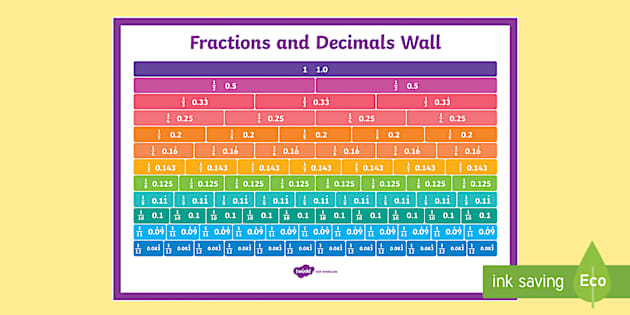
Decimal equivalents of fifths appear frequently across multiple technical, financial, and physical disciplines. Understanding that $\frac{1}{5} = 0.2$ and $\frac{2}{5} = 0.4$ streamlines calculations in contexts where fractions must interface with digital interfaces, metric measurements, or currency.
| Mixed Number / Fraction | Decimal Equivalent | Percentage Equivalent | Common Practical Context |
|---|---|---|---|
| $\frac{1}{5}$ | $0.2$ | $20%$ | Metric volume ($0.2$ liters) |
| $2\frac{1}{5}$ | $2.2$ | $220%$ | Structural engineering measurements |
| $4\frac{2}{5}$ | $4.4$ | $440%$ | Linear dimensions, financial scaling |
| $5\frac{4}{5}$ | $5.8$ | $580%$ | Chemistry solution molarity |
Financial and Measurement Calculations
In construction, carpentry, and manufacturing, measurements are often recorded in mixed inches or feet. A board measuring $4\frac{2}{5}$ inches must frequently be entered into Computer Numerical Control (CNC) machinery or digital design software that requires strict decimal input. Entering $4.4$ inches ensures precision, eliminating cutting errors caused by improper fraction-to-decimal mental math under time constraints.
Similarly, in financial analysis involving fractional shares, interest rates, or scaled production units, mixed numbers are routinely converted to decimals to facilitate automated spreadsheet modeling and algebraic forecasting.
Common Miscalculations and Troubleshooting
Even with straightforward numbers, certain procedural errors recur during conversion. Identifying these pitfalls helps maintain mathematical accuracy.
- Forgetting the whole number: A frequent mistake is converting $\frac{2}{5}$ to $0.4$ and completely dropping the whole number $4$, resulting in an incorrect answer of $0.4$ instead of $4.4$. Always anchor the whole number to the left of the decimal place before processing the fraction.
- Incorrect placement of scaling factors: When using the equivalent fractions method, some learners multiply only the denominator while leaving the numerator unchanged, which violates the rules of fraction equivalence. Both top and bottom numbers must be multiplied by the exact same integer.
- Confusing tenths and fifths: Because $5$ is half of $10$, beginners sometimes confuse fifths with halves or tenths. Remembering that $\frac{1}{5}$ equals two-tenths ($\frac{2}{10}$ or $0.2$) helps solidify the base relationship.
Frequently Asked Questions
What is $4\frac{2}{5}$ as a percentage?
To convert any decimal or fraction into a percentage, multiply the decimal value by $100$. Taking the decimal equivalent $4.4$ and multiplying it by $100$ yields $440%$. This means the value represents more than four complete wholes.
Can $4\frac{2}{5}$ be written as a repeating decimal?
No, $4\frac{2}{5}$ results in a terminating decimal ($4.4$). Fractions only produce repeating decimals when their simplified denominators contain prime factors other than $2$ and $5$. Because the denominator $5$ is exclusively a base-two/base-five compatible factor, the decimal terminates cleanly.
How do I convert $4.4$ back into a fraction?
Take the digits after the decimal point ($4$) and place them over their appropriate place-value denominator, which is $10$ (tenths). This creates the fraction $4 \frac{4}{10}$. Simplifying $\frac{4}{10}$ by dividing both the numerator and denominator by their greatest common divisor ($2$) reduces it back to $4\frac{2}{5}$.
Why is converting mixed numbers to decimals useful?
Decimals eliminate the need to find common denominators when performing addition, subtraction, multiplication, or division across mixed units. They integrate seamlessly with standard calculators, digital measurement tools, and financial software engines that process base-ten data structures natively.
Next Steps
To build greater fluency with fraction-decimal conversions, practice converting other fifth-based mixed numbers—such as $1\frac{1}{5}$, $3\frac{3}{5}$, and $7\frac{4}{5}$—using both the scaling method and long division. Verifying your work by converting the resulting decimals back into simplified fractions will reinforce your command of base-ten numerical equivalents.