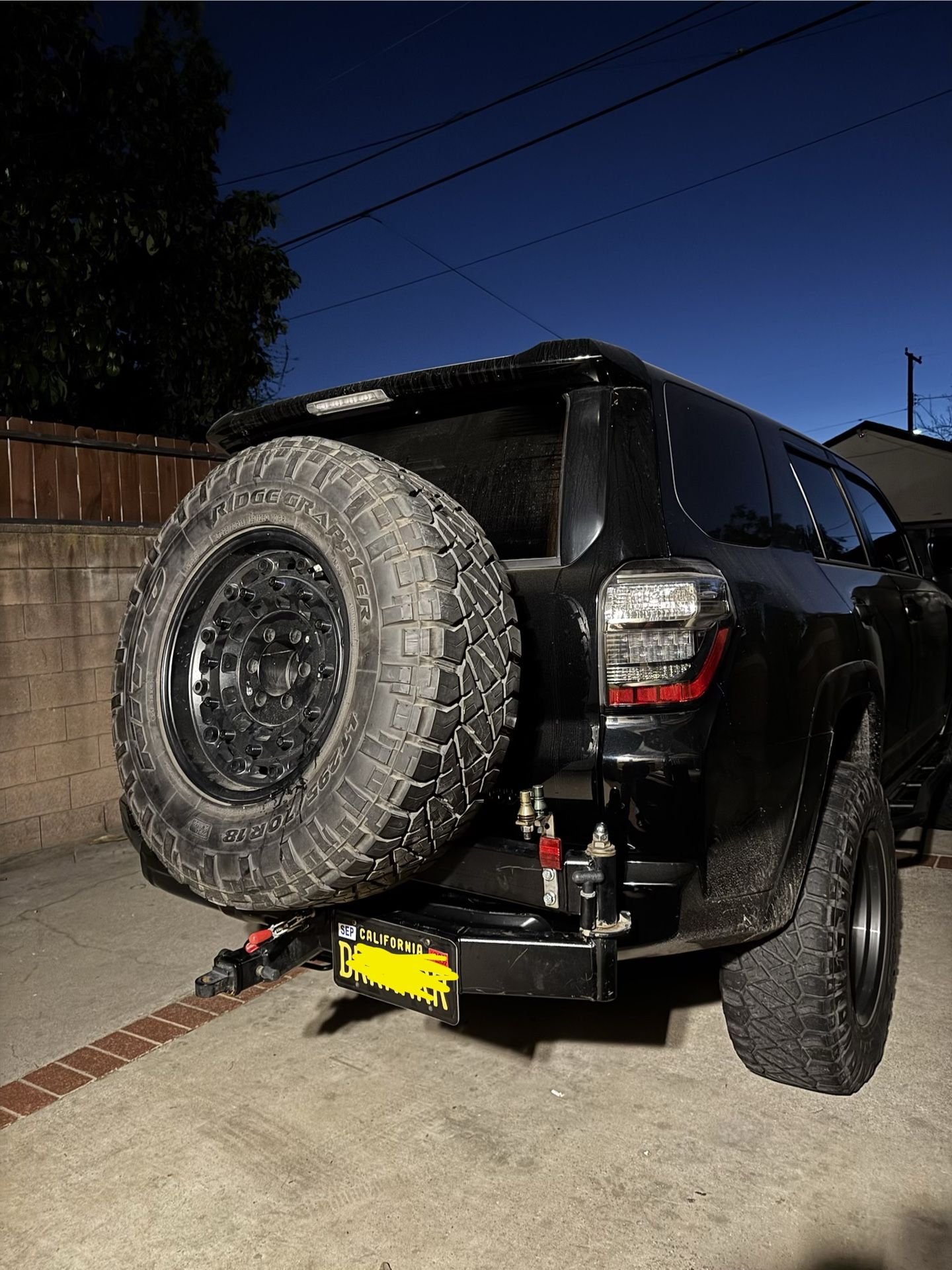
Upgrading a Toyota 4Runner with an aftermarket spare tire carrier involves understanding weight capacity distribution, rear hatch clearance mechanics, and frame-mounted installation requirements. These three critical factors dictate how the vehicle handles trail obstacles, maintains structural integrity, and retains everyday cargo accessibility.
When off-road enthusiasts push their Toyota 4Runner into rugged terrains, the factory under-chassis spare tire location often becomes a liability. Storing a large off-road tire underneath the rear departure angle severely reduces ground clearance, making it prone to catching on rocks, deep ruts, and steep inclines. Furthermore, upgrading to larger all-terrain or mud-terrain tires—such as 33-inch or 35-inch dimensions—means the spare will physically no longer fit in the factory under-vehicle cradle. Addressing this limitation requires shifting the spare tire to an exterior, rear-mounted carrier. However, mounting a heavy tire and wheel assembly to the back of a 4Runner introduces distinct engineering challenges that demand careful consideration before installation.
Understanding the mechanics of these carriers prevents costly mistakes, structural damage to the body panels, and daily operational frustrations. Below is an exhaustive breakdown of the three key facts every 4Runner owner must evaluate when researching, purchasing, and installing an exterior spare tire carrier.
Fact 1: Weight Capacity and Structural Load Distribution
The single most critical consideration when installing a spare tire carrier on a Toyota 4Runner is managing the immense static and dynamic weight load imposed on the vehicle's rear end.
Static Versus Dynamic Forces
A standard factory wheel paired with an aggressive off-road tire can easily weigh between 80 to 120 pounds. When mounted to an extension arm trailing off the rear of the vehicle, physics dictates that this weight exerts a massive leverage force (torque) against the mounting points.
- Static Load: The dead weight of the tire and wheel assembly resting on the carrier when the vehicle is parked.
- Dynamic Load: The multiplied force generated when the vehicle travels over washboard dirt roads, deep potholes, or drops off rock ledges. A 100-pound tire can exert hundreds of pounds of shock force against the mounting brackets during high-speed off-road driving.
Mounting Strategies: Bumper-Integrated Versus Hinge-Mounted
Because of these extreme forces, how the carrier attaches to the 4Runner matters immensely.
- Full Replacement Steel Bumpers: The gold standard for heavy off-road use. These units bolt directly into the vehicle's high-strength frame rails, distributing the tire's weight evenly across the vehicle's primary chassis rather than the sheet metal body.
- Hitch-Mounted Carriers: These slide directly into the standard 2-inch receiver hitch. While convenient and removable, they often introduce "hitch wobble" and can significantly reduce the vehicle's departure angle compared to high-clearance bumper replacements.
- Body-Mounted Hinges: Less common for heavy spare tires due to the risk of tearing factory sheet metal, though some lightweight versions reinforce the D-pillar or tailgate hinges (common on older or specific generations, though less favored for heavy 35-inch setups).
Without proper frame reinforcement, dynamic off-road vibrations will eventually cause metal fatigue, resulting in cracked quarter panels, sagging swing-out arms, or catastrophic carrier failure on the trail.
Fact 2: Rear Hatch Clearance, Swing-Out Mechanics, and Access
A common frustration among 4Runner owners is losing convenient access to the rear cargo area. Unlike traditional liftgates that swing upward, fifth-generation and earlier 4Runner models feature either a top-hinged hatch with a roll-down window or require unobstructed space directly behind the vehicle. A rear tire carrier fundamentally alters how you interact with your trunk.
Swing-Out Arm Design and Latches
Most exterior carriers utilize a swing-out arm design that pivots away from the vehicle to grant access to the rear hatch. The quality of this mechanism dictates long-term usability.
- Spindle and Bearings: High-end carriers use heavy-duty tapered roller bearings and greasable spindles to support the weight of the swing-out arm. Cheap bushings will wear out rapidly under dust and moisture exposure, leading to annoying squeaks and a sagging gate.
- T-Handle and Safety Latches: A secure locking mechanism is mandatory. If a latch fails while driving on a highway, the heavy swing-out arm can fly open, striking adjacent vehicles or ripping off the mounting points. Look for secondary safety pins or positive-locking T-handles.
Rear Window Roll-Down Functionality
For Toyota 4Runner owners, the power-drop rear window is an iconic and heavily utilized feature, particularly for hauling long items like surfboards or letting pets get fresh air.
- Certain poorly designed tire carriers position the upright mounting bar or accessory plates directly in line with the rear glass, rendering the roll-down window useless or blocking the wiper arm.
- Premium aftermarket configurations intentionally offset the tire mount or drop the swing-out geometry to preserve full functionality of the rear window without requiring the user to open the entire swing-out arm for quick cargo grabs.
Fact 3: Integration with Accessories, Lighting, and Rear Cameras
An exterior spare tire carrier rarely holds just a tire. For overland travelers and serious off-roaders, the real estate provided by a tire carrier swing-out arm is prime territory for mounting essential trail gear. However, adding this equipment introduces secondary complications regarding visibility, electrical wiring, and legal compliance.
Accessory Mounting Capabilities
Modern carriers often double as modular utility systems. Common add-ons include:
- Rotopax or Jerry Can Mounts: For carrying extra fuel or potable water on extended backcountry excursions.
- Hi-Lift Jack Mounts: Securing a heavy recovery jack vertically or horizontally against the carrier frame.
- Fold-Down Tables: Providing an instant tailgate kitchen workspace or camp prep station.
Impact on Electronics and Safety Systems
Adding a massive rubber obstacle to the rear of a Toyota 4Runner directly interferes with factory safety features:
- Backup Cameras: A centrally mounted spare tire will entirely block the field of view of the factory rear backup camera. Owners frequently must install aftermarket relocation kits or digital rearview mirror systems to restore visibility.
- Parking Sensors (Sonar): Ultrasonic parking sensors built into the rear bumper will constantly misread the swing-out arm or tire as an imminent collision, generating persistent dashboard warning chimes whenever the vehicle is placed in reverse. Owners must either disable these sensors manually or configure specific sensor relocation brackets.
- License Plate Visibility: In many jurisdictions, state or national laws require the rear license plate to be clearly illuminated and visible from a specific angle. Because the spare tire covers the stock bumper location, a dedicated license plate bracket with integrated LED illumination is almost always required.
Comparison of 4Runner Spare Tire Carrier Options
To help visualize how different mounting strategies affect utility, cost, and off-road performance, review the comparative breakdown below.
| Carrier Type | Primary Mounting Point | Impact on Departure Angle | Cargo Access Method | Best Suited For |
|---|---|---|---|---|
| Full Replacement Bumper | Vehicle Frame Rails | Excellent (High clearance) | Heavy-duty swing-out arm | Serious overlanding and hard-core rock crawling |
| Hitch-Mounted Carrier | 2-Inch Receiver Hitch | Moderate to Poor (Lowers clearance) | Drop-down or swing-away hitch adapter | Light off-roading, budget builds, temporary setups |
| Hinged Body Reinforcement | Tailgate / D-Pillar hinges | Minimal change | Opens with the rear door | Smaller tire upgrades (up to 32 inches) with strict weight limits |
Frequently Asked Questions
Can I keep my factory backup camera working after installing a tire carrier?
Yes, but it requires modification. Because a large tire blocks the stock camera lens, you will need to purchase an aftermarket camera relocation kit that shifts the lens to the center of the spare wheel hub or onto the top structure of the carrier arm.
Will a heavy tire carrier damage my 4Runner's frame?
If you choose a frame-mounted, high-clearance steel bumper system designed specifically for the 4Runner, the frame is engineered to handle the load. However, cheap hitch-mounted extenders or improper body-panel attachments can warp sheet metal, crack welds, or bend factory receiver hitches over rough terrain.
Do I need to upgrade my rear suspension if I install a spare tire carrier?
Often, yes. Adding a heavy steel bumper and a 100-pound tire/wheel assembly to the rear of a 4Runner creates constant downward weight, leading to "rear sag." Upgrading your rear coil springs and shocks to stiffer, heavy-duty overland-rated replacements restores the vehicle's factory rake, ride quality, and headlight alignment.
Can I still open my rear hatch with the tire carrier closed?
This depends entirely on the specific model of the carrier. Most traditional swing-out carriers require you to unlatch and swing the entire arm outward before you can open the rear liftgate. A select few low-profile or drop-down hitch carriers feature clearance clearances, but swing-outs remain the industry standard for full access.
How does an exterior tire carrier affect fuel economy?
The impact is twofold: added weight and increased aerodynamic drag. The extra 100+ pounds of steel and rubber, combined with disrupting the clean airflow off the back of the vehicle, typically results in a minor decrease of 0.5 to 1.5 miles per gallon (MPG).
Final Recommendation
When committing to an exterior spare tire carrier for your Toyota 4Runner, prioritize a frame-mounted steel bumper system if you frequently navigate rough, uneven trails where departure angles matter. Budget for necessary supporting modifications, such as suspension upgrades to manage the weight and camera relocation kits to maintain daily driving safety. Evaluate your daily cargo habits against the inconvenience of operating a swing-out arm to ensure your chosen configuration matches both your adventure ambitions and your routine driving needs.