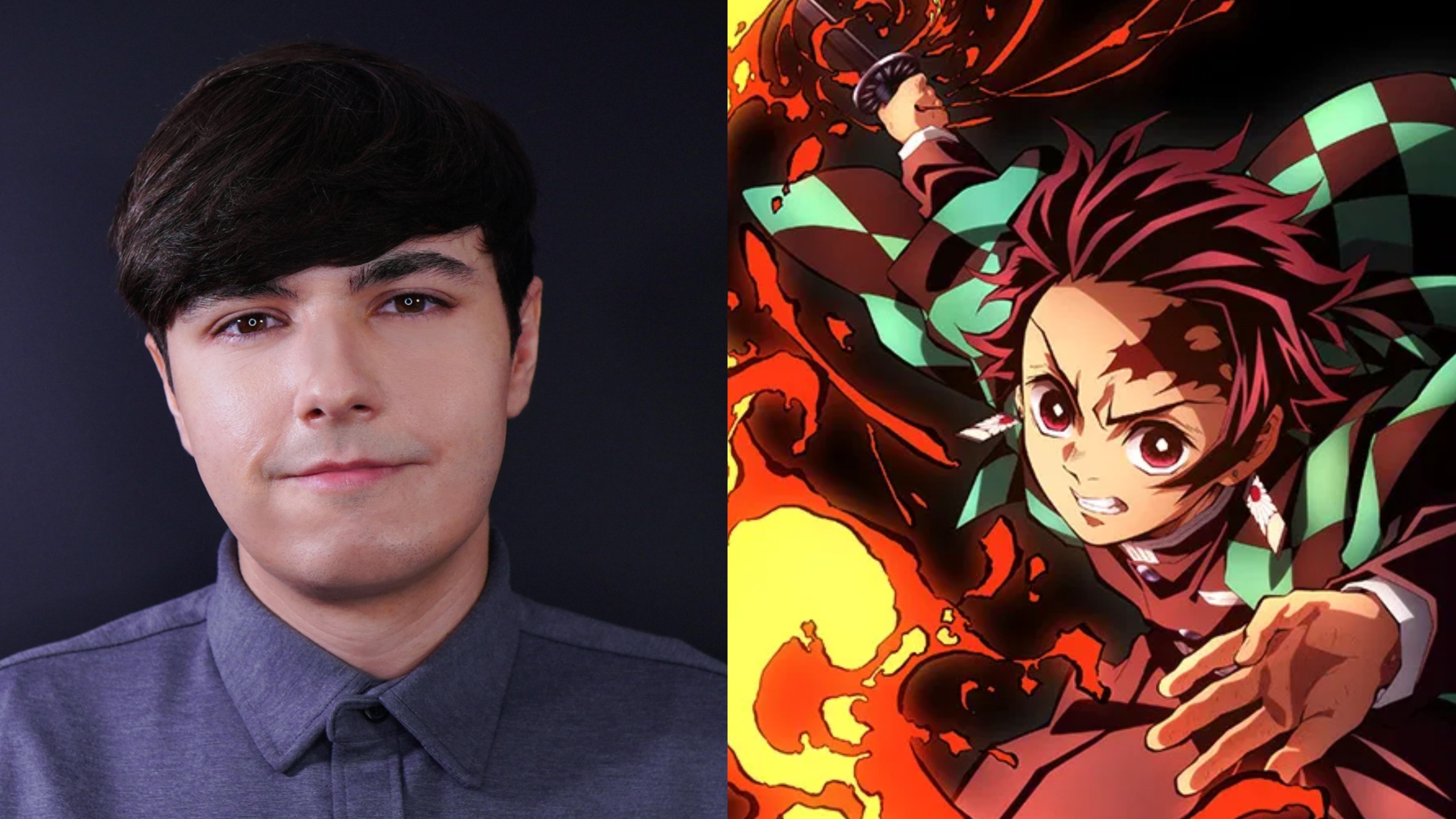
The character 2-D (Stuart Pot) from the virtual band Gorillaz is voiced by two primary performers: Damon Albarn provides his singing voice, while the speaking voice is currently portrayed by actor and comedian Kevin Bishop. Previously, Nelson De Freitas served as the character’s long-standing speaking voice from 2000 until 2017.
As of 2026, Gorillaz remains one of the most successful multimedia projects in music history. Central to this success is the distinct personality of its frontman, 2-D. Unlike traditional bands, the "members" of Gorillaz are fictional animated entities created by musician Damon Albarn and artist Jamie Hewlett. Because the project bridges the gap between music, animation, and narrative storytelling, the "voice" of 2-D is a complex assembly of different talents, depending on whether the character is performing a hit single or giving a satirical interview.
The Dual Nature of 2-D’s Vocals
The decision to split 2-D’s voice between a singer and a speaking actor was a foundational creative choice by Albarn and Hewlett. This separation allows the character to maintain a consistent musical identity—anchored by Albarn’s melancholic, melodic vocals—while possessing a quirky, distinct speaking persona that can participate in radio plays, documentaries, and social media content.
In the lore of the band, 2-D (born Stuart Harold Pot) is known for his airy, often dazed demeanor, which is attributed to various "accidents" involving the band’s bassist, Murdoc Niccals. His speaking voice reflects this history, characterized by a thick West London accent, a slightly high pitch, and a general sense of confusion.
Damon Albarn: The Singing Voice (1998–Present)
Damon Albarn is the musical mastermind behind Gorillaz and has provided the singing voice for 2-D since the band's inception in 1998. As the former frontman of the Britpop band Blur, Albarn used Gorillaz as a vehicle to explore genres ranging from hip-hop and electronic to dub and world music.
The Evolution of the Singing Voice
Albarn’s vocal performance as 2-D is often treated with specific production techniques to differentiate it from his work with Blur or his solo projects. In the early "Phase 1" era (the self-titled Gorillaz album), 2-D’s singing was often filtered through megaphones or heavy distortion to emphasize the "virtual" and slightly fractured nature of the character.
By the time Demon Days (2005) and Plastic Beach (2010) were released, the singing voice became more natural but retained a signature "lazy" or "dreamy" quality. This evolution mirrors the character’s growth in the band’s narrative lore, moving from a victimized keyboardist to a more confident (though still eccentric) lead singer. In 2026, fans still recognize the "2-D sound" as the emotional core of the band's discography.
Nelson De Freitas: The Original Speaking Voice (2000–2017)
For nearly two decades, Nelson De Freitas was the man responsible for bringing 2-D’s dialogue to life. His performance defined the character's public persona during the band’s most formative years, spanning Phase 1 through Phase 4 (Humanz).
Shaping a Cultural Icon
De Freitas gave 2-D a distinctive, somewhat high-pitched Cockney/West London accent that perfectly captured the character's "lovable idiot" archetype. His work was most prominent in:
- G-Bite Shorts: Brief animated sketches that introduced the band's personalities.
- The Gorillaz Phase Interviews: Long-form audio and video interviews used for promotion.
- Rise of the Ogre: The fictional autobiography of the band, where De Freitas provided the narration for 2-D’s sections.
De Freitas’s portrayal was instrumental in establishing the dynamic between 2-D and Murdoc Niccals. The comedic timing he brought to 2-D’s misunderstandings and submissive responses to Murdoc’s bullying became a staple of the Gorillaz fan experience.
Kevin Bishop: The Modern Speaking Voice (2017–Present)
In 2017, coinciding with the promotional cycle for the album Humanz and the transition into The Now Now (2018), British comedian and actor Kevin Bishop took over the role of 2-D’s speaking voice.
A New Era for the Character
Bishop, known for The Kevin Bishop Show and various comedic roles in the UK, brought a subtle but noticeable shift to the character. While he maintained the established accent and pitch, his 2-D felt slightly more "present" and assertive, which aligned with the narrative arc of The Now Now, where 2-D briefly flourished while Murdoc was in prison.
Kevin Bishop’s involvement has been particularly significant during the "Song Machine" era and the Cracker Island (2023) period. As Gorillaz moved toward more interactive media, including live-streamed interviews and YouTube-based "vlogs," Bishop’s ability to improvise in character became a vital asset for the creative team. In 2026, he remains the definitive speaking voice for 2-D in all multimedia appearances.
Why the Change in Voice Actors?
Fans often wonder why Nelson De Freitas was replaced after 17 years. While neither the band’s management nor the actors have cited a single dramatic reason, the shift is generally attributed to the natural evolution of the project.
- Availability and Scope: As Gorillaz became a "permanent" fixture rather than a side project, the demand for voice work increased. Kevin Bishop’s background in fast-paced comedy and television suited the band’s move toward more frequent digital content.
- Creative Refresh: Jamie Hewlett and Damon Albarn often reinvent the band’s aesthetic and tone between "Phases." Changing the voice actor helped mark the transition into a new chapter of the 2-D character’s life.
- The "Live" Factor: With the advent of motion-capture technology allowing characters to "speak" live on screen during interviews or concerts, having a seasoned comedic performer like Bishop allowed for more fluid, unscripted interactions.
Technical Execution: How the Voice Meets the Image
The process of "voicing" 2-D involves more than just a recording booth. It is a sophisticated technical operation that has evolved significantly between the early 2000s and 2026.
Lip-Syncing and Animation
In the early days, voice lines were recorded first, and animators at Passion Pictures would manually sync the mouth movements of the 2D drawings. This was a time-consuming process that limited how much the characters could speak in promotional videos.
Motion Capture (Mo-Cap)
By 2026, the technology has moved toward real-time rendering. When Kevin Bishop speaks as 2-D in a modern interview, he often wears a motion-capture suit or uses facial-tracking software. This allows his movements and expressions to be mapped onto a 3D or stylized 2D model of the character instantly. This "live" animation capability is what allowed 2-D and Murdoc to appear "in person" at events like the Brit Awards or on various late-night talk shows.
Summary of 2-D’s Voice Contributors
| Role | Performer | Years Active | Notable Projects |
|---|---|---|---|
| Singing Voice | Damon Albarn | 1998–Present | All studio albums (e.g., Plastic Beach, Cracker Island) |
| Speaking Voice (Original) | Nelson De Freitas | 2000–2017 | Phase 1-4, Rise of the Ogre, G-Bites |
| Speaking Voice (Current) | Kevin Bishop | 2017–Present | The Now Now, Song Machine, Cracker Island |
| Occasional/Guest | Various | Varies | Small cameos in promotional shorts or radio stings |
The Impact of the Voice on Fan Perception
The voice of 2-D is central to the "parasocial" relationship fans have with the band. Because 2-D is the primary narrator and often the "heart" of the group, his vocal vulnerability—both in Albarn’s singing and Bishop’s speaking—makes him the most relatable member of the fictional quartet.
The contrast between the singing and speaking is also a point of intrigue. 2-D’s singing voice is soulful, profound, and often melancholic, suggesting a depth of character that his speaking voice (which is often flighty or dim-witted) doesn't always show. This duality suggests that music is the only medium through which the character can truly express his inner thoughts, a theme that has been consistent throughout the band's history.
Frequently Asked Questions
Does 2-D have different voice actors for different languages?
While the music remains in English globally, some promotional materials or local dubs for animated shorts have utilized regional voice actors in countries like Japan or France. However, for the vast majority of official international releases, the English voices of Albarn, De Freitas, and Bishop are used with subtitles.
Why does 2-D's voice sound different in early interviews?
In the very early stages of Phase 1 (roughly 1999–2000), the character's speaking voice was not yet fully solidified. You may hear slight variations in pitch or accent in the earliest radio interviews as Nelson De Freitas and the creators worked to find the right "tone" for the character.
Can Kevin Bishop sing like 2-D?
While Kevin Bishop is a talented performer, he does not provide the singing vocals for the band's music. That role remains exclusively with Damon Albarn. Bishop’s role is strictly for dialogue, narration, and character-based interactions.
Is the "2DS" mention in the prompt related to a console?
No. The term "2ds" in the context of "2ds voice actor" is almost certainly a typographical error for "2-D's" (the possessive form of the character's name). The Nintendo 2DS console does not have a "voice actor" in the traditional sense, as it is a piece of hardware.
How has 2-D’s voice changed with his age in the lore?
As of 2026, 2-D is canonically in his mid-40s. While Kevin Bishop has kept the core characteristics of the voice, there is a slight "weariness" and maturity added to the performance to reflect the character's long, often traumatic history within the band’s storyline.
Practical Guidance for Fans and Researchers
If you are looking to verify the voice actor for a specific Gorillaz video or interview, the best resource is the credits section of the official Gorillaz YouTube channel or the liner notes of the "Phase" DVDs (like Celebrity Take Down or Slowboat to Hades).
For those interested in the technical side of how these voices are integrated into live performances, following the work of Jamie Hewlett and the animation studios they partner with (such as Nexus Studios or Blinkink) provides insight into the motion-capture technology used by Bishop and Albarn.
In 2026, as Gorillaz continues to push the boundaries of virtual reality and augmented reality performances, the role of the voice actor is more important than ever. Whether it is a pre-recorded track for a new album or a live AI-integrated chat on a social platform, the voices provided by Albarn and Bishop ensure that 2-D remains a "living" entity in the eyes of the public.