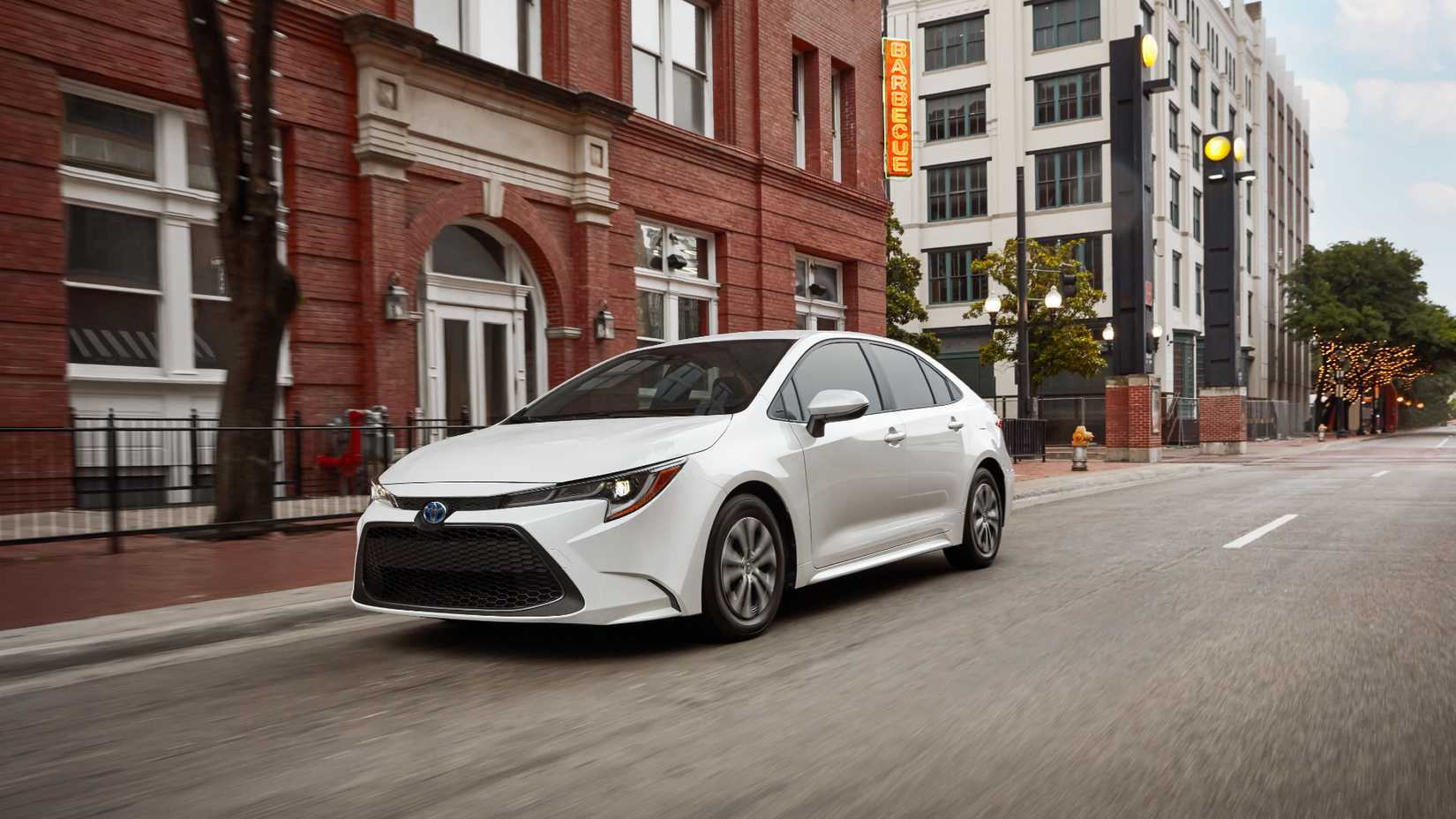
The 2020 Toyota Corolla Hybrid delivers an EPA-estimated fuel economy of 53 mpg city, 52 mpg highway, and 53 mpg combined, establishing it as one of the most efficient compact sedans available. This exceptional mileage stems from its advanced Toyota Hybrid System, combining a 1.8-liter four-cylinder engine with an electric motor to maximize energy recovery and minimize fuel consumption.
Evaluating a vehicle's fuel economy requires looking beyond window-sticker figures to understand how real-world driving conditions, powertrain mechanics, and trim features influence everyday efficiency. When Toyota introduced the hybrid variant to the twelfth-generation Corolla lineup for the 2020 model year, it brought Prius-level efficiency into a more traditional compact sedan package. For commuters, rideshare drivers, and cost-conscious motorists, understanding the nuances of the 2020 Corolla Hybrid MPG ratings helps clarify long-term ownership savings, driving dynamics, and operational limitations.
Core Powertrain Mechanics and Fuel Economy Ratings
The foundation of the 2020 Corolla Hybrid's remarkable fuel economy lies in its Hybrid Synergy Drive system. The vehicle pairs a 1.8-liter Atkinson-cycle four-cylinder engine (producing 95 horsepower and 105 lb-ft of torque) with an electric motor-generator that draws power from a lithium-ion battery pack. Total system horsepower is rated at 121.
Unlike traditional internal combustion engines that lose significant energy through heat during stop-and-go driving, the hybrid system captures kinetic energy via regenerative braking, storing it in the battery to assist with acceleration or power auxiliary systems.
The official EPA fuel economy estimates for the 2020 Toyota Corolla Hybrid are:
- City: 53 MPG
- Highway: 52 MPG
- Combined: 53 MPG
These figures apply uniformly across the single trim level available for the 2020 model year in the United States (the LE Hybrid), as there were no heavier, wheel-upgraded trims like an XSE or Limited that might have penalized fuel efficiency through added mass or wider tires.
| Driving Metric | EPA Rating | Real-World Expectation | Primary Efficiency Factor |
|---|---|---|---|
| City Driving | 53 MPG | 50–55 MPG | Regenerative braking and electric-only low-speed operation |
| Highway Driving | 52 MPG | 46–50 MPG | Aerodynamic design ($Cd$ 0.28) and Atkinson-cycle efficiency |
| Combined Cycle | 53 MPG | 49–52 MPG | Seamless blending of electric motor and gasoline engine |
Real-World Driving Dynamics and Efficiency Variations
While laboratory-tested EPA figures provide a standardized baseline, real-world fuel economy frequently fluctuates based on driver behavior, climate, and route topography. Drivers transitioning from conventional gasoline compact cars often notice that hybrid efficiency behaves inversely to traditional vehicles: city driving yields higher efficiency than high-speed highway cruising.
City Driving Advantages
In heavy urban traffic, the 2020 Corolla Hybrid frequently operates on electric power alone (EV mode) at lower speeds and during coasting or light acceleration. Every time the vehicle slows down, regenerative braking redirects energy back into the battery rather than wasting it as friction heat through traditional brake pads. Consequently, drivers navigating dense city environments can easily match or exceed the EPA city rating of 53 MPG.
Highway Cruising Limitations
At sustained highway speeds exceeding 65 or 70 mph, the gasoline engine runs continuously to maintain momentum, and the electric motor plays a secondary assistive role. Aerodynamic drag increases exponentially at higher speeds, causing highway fuel economy to dip slightly below the city rating to roughly 46 to 50 MPG. Colder ambient temperatures also impact hybrid efficiency; internal combustion engines require extra fuel to reach optimal operating temperatures, and cabin heating demands engine runtime, which temporarily reduces overall fuel economy during winter months.
Driving Modes and Their Impact on Efficiency
The 2020 Corolla Hybrid features selectable drive modes designed to alter throttle response, climate control intensity, and powertrain behavior:
- ECO Mode: Modulates throttle input to smooth out acceleration and optimizes air conditioning energy consumption. This mode helps less-efficient drivers maximize fuel economy by preventing aggressive acceleration.
- NORMAL Mode: Provides a balanced response suitable for everyday commuting without altering efficiency parameters significantly.
- POWER Mode: Sharpens throttle response to deliver quicker acceleration feel by drawing more heavily on the electric battery alongside the gasoline engine. While this mode does not fundamentally change the physical capacity of the powertrain, aggressive use can degrade overall fuel economy.
- EV Mode: Allows the vehicle to run on battery power alone for short distances under low-load conditions (such as navigating a quiet parking garage or residential street at low speeds). If the battery state of charge drops too low or if the driver accelerates past a certain threshold, the gasoline engine automatically engages.
Comparative Fuel Economy Analysis
To contextualize the 2020 Corolla Hybrid's efficiency, it helps to compare it against its direct competitors in the compact hybrid and non-hybrid segments from the same model year.
| Vehicle Model (2020) | EPA City MPG | EPA Hwy MPG | EPA Combined MPG | Transmission Type |
|---|---|---|---|---|
| Toyota Corolla Hybrid LE | 53 | 52 | 53 | Electronically Controlled CVT |
| Toyota Prius LE | 54 | 50 | 52 | Electronically Controlled CVT |
| Honda Insight EX | 51 | 45 | 48 | Electronic Continuously Variable (E-CVT) |
| Hyundai Ioniq Hybrid Blue | 57 | 59 | 58 | 6-Speed Dual-Clutch |
| Standard Toyota Corolla (Gas) | 30 | 38 | 33 | CVT with physical launch gear |
As the comparison shows, the Corolla Hybrid matches or exceeds most direct sedan competitors while outperforming the standard gasoline-powered Corolla by roughly 20 MPG in combined driving. While the Hyundai Ioniq Blue achieves higher numerical ratings, the Corolla Hybrid offers a more traditional sedan styling and interior layout that appeals to buyers who may find dedicated hybrid hatchbacks like the Prius or Ioniq unappealing.
Ownership Costs, Fuel Savings, and Financial Calculations
Achieving 53 MPG translates into tangible financial benefits over the lifecycle of the vehicle. To evaluate the real economic impact, consider a baseline driving distance of 15,000 miles per year.
- Standard Gas Corolla (33 MPG Combined): Driving 15,000 miles requires approximately 454 gallons of fuel. At an assumed fuel price of $3.50 per gallon, annual fuel costs total roughly $1,589.
- Corolla Hybrid (53 MPG Combined): Driving 15,000 miles requires approximately 283 gallons of fuel. At the same $3.50 per gallon rate, annual fuel costs total roughly $990.
This difference yields an annual fuel savings of approximately $599. Over five years of ownership, total fuel savings approach $3,000, offsetting initial price premiums associated with hybrid powertrain technology. Beyond fuel, the regenerative braking system reduces wear and tear on physical brake pads and rotors, frequently extending brake service intervals well beyond those of standard non-hybrid vehicles.
Common Questions About the 2020 Corolla Hybrid MPG
Can the 2020 Corolla Hybrid run on electricity alone?
Yes, but under limited conditions. The vehicle features an EV mode button, allowing purely electric driving for short distances at low speeds (typically under 25 mph) provided the hybrid battery has sufficient charge and throttle inputs remain light. Once the battery depletes or speed increases, the 1.8-liter engine seamlessly turns on to assist or take over.
Does the 2020 Corolla Hybrid require special fuel?
No. The 2020 Corolla Hybrid is designed to run on regular unleaded gasoline with an octane rating of 87 or higher. Using premium fuel provides no efficiency or performance benefits and is not recommended by Toyota.
Why is my highway MPG lower than the EPA estimate?
Highway fuel economy drops when driving at sustained speeds above 65 mph, during heavy headwinds, in cold ambient temperatures, or when using roof racks and cargo boxes that increase aerodynamic drag. Maintaining steady speeds and utilizing cruise control helps align real-world highway figures closer to the 52 MPG rating.
Does the hybrid battery degrade over time and hurt MPG?
All lithium-ion batteries experience minor capacity degradation over extended years and mileage. However, Toyota equips the Corolla Hybrid with sophisticated thermal management systems to protect battery health. Furthermore, Toyota backed the hybrid battery on 2020 models with a robust 10-year/150,000-mile warranty, ensuring long-term efficiency stability.
Does turning on the air conditioning significantly impact hybrid MPG?
Using the air conditioning compressor places an extra load on the hybrid system, which can reduce fuel economy by 1 to 3 MPG, particularly in heavy stop-and-go city traffic where the engine and electric motor work harder to cool the cabin. Utilizing ECO mode moderates climate control power draw to mitigate this efficiency loss.
Practical Recommendations for Maximizing Efficiency
Drivers seeking to extract the absolute maximum fuel economy from a 2020 Corolla Hybrid should adopt specific operational habits:
- Anticipate Stops Early: Rather than accelerating up to a red light and applying firm brake pressure, coast smoothly toward stops. This maximizes regenerative braking recovery time, channeling more kinetic energy back into the battery.
- Maintain Proper Tire Pressure: Under-inflated tires increase rolling resistance, forcing the hybrid powertrain to work harder and burning extra fuel. Check tire pressures monthly against the manufacturer placard located inside the driver's door jamb.
- Minimize Excess Cargo Weight: Removing unnecessary heavy items from the trunk reduces vehicle mass, improving efficiency during frequent acceleration cycles in urban commuting.
- Utilize Cruise Control on Open Roads: Engaging radar cruise control on highways maintains a smooth, consistent throttle input that prevents inefficient speed fluctuations.
By understanding the mechanical principles behind the 2020 Toyota Corolla Hybrid MPG ratings and applying mindful driving techniques, owners can consistently achieve or exceed the EPA-estimated 53 combined MPG, maximizing both financial savings and environmental efficiency.