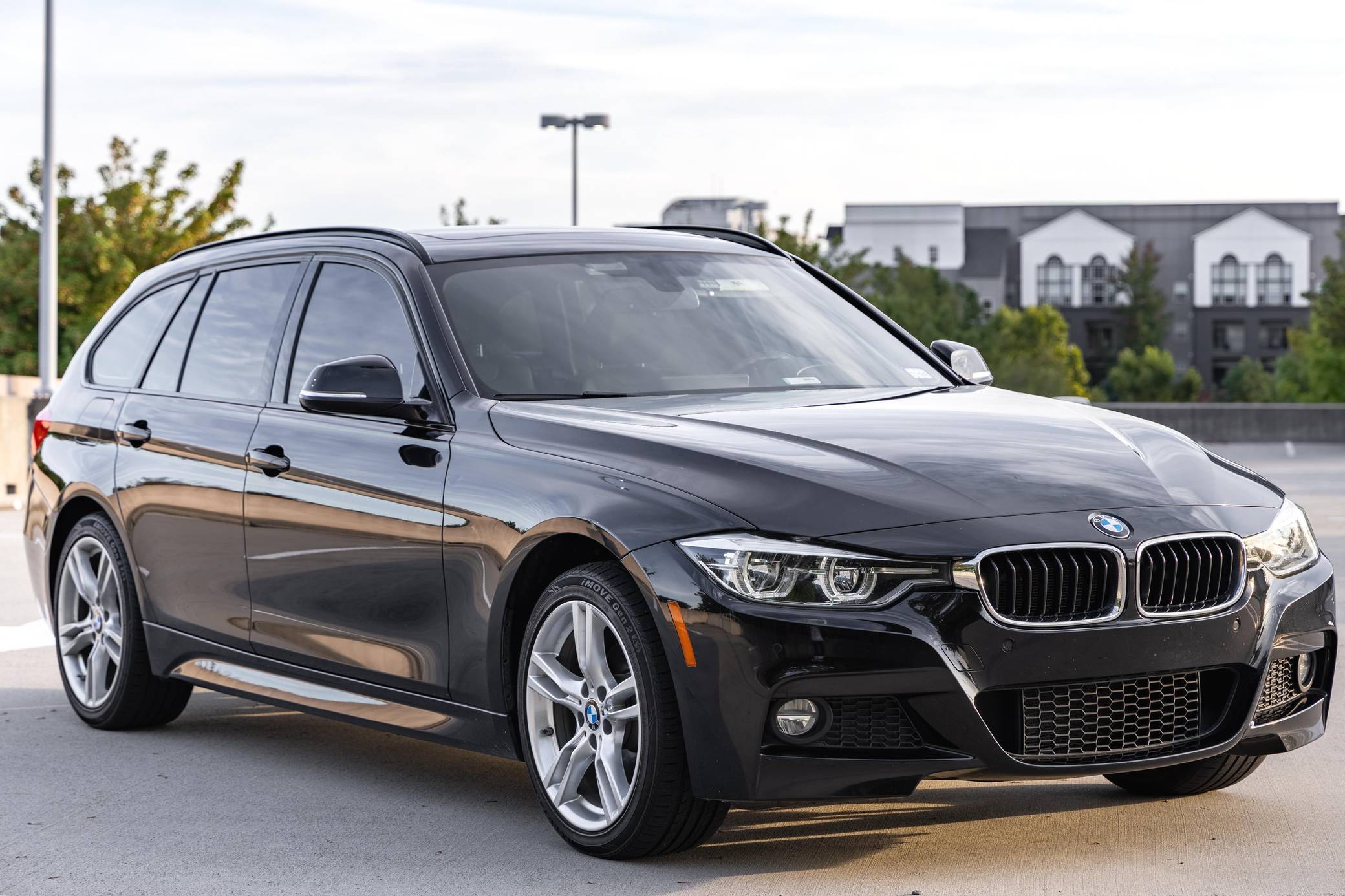
The 2017 BMW 330i xDrive is powered by the 2.0-liter B48 inline four-cylinder turbocharged engine, producing 248 horsepower and 258 lb-ft of torque. Paired with an eight-speed ZF automatic transmission and BMW’s intelligent all-wheel-drive system, this modular engine replaced the older N20 power plant, offering significantly improved structural rigidity, refined heat management, and enhanced long-term reliability.
The Transition from N20 to the Modular B48 Architecture
When BMW updated the F30 generation 3 Series for the mid-cycle Life Cycle Impulse (LCI), one of the most substantial upgrades was under the hood. The 2017 model year marked the full retirement of the 328i badge in North America, replacing it with the 330i. With this badge shift came the introduction of the BMW B48 engine, specifically the B48B20O0 variant.
The B48 is part of BMW’s modular engine family, sharing structural design principles, cylinder bore spacing (91 mm), and individual cylinder displacement (500 cc) with its three-cylinder (B38) and six-cylinder (B58) sibling engines. This modular architecture allowed BMW to standardize manufacturing processes and streamline components across its vehicle lineups, but it also brought major engineering advancements over the outgoing N20 engine.
| BMW Modular Engine Platform | Displacement | Cylinder Displacement |
|---|---|---|
| 3-Cylinder (B38) | 1.5 Liters | 500 cc per cylinder |
| 4-Cylinder (B48) | 2.0 Liters | 500 cc per cylinder (330i) |
| 6-Cylinder (B58) | 3.0 Liters | 500 cc per cylinder (340i) |
Closed-Deck Block Design vs. Open-Deck Architecture
The most critical structural evolution from the N20 to the B48 lies in the engine block design:
- N20 Engine (Open-Deck): The N20 used an open-deck aluminum engine block. While lightweight, open-deck designs leave the upper cylinder walls unsupported by cooling channels near the deck surface. Under high boost pressures or thermal stress, this can lead to subtle cylinder wall flex and gasket failure.
- B48 Engine (Closed-Deck): The B48 features a robust closed-deck aluminum block design. The top surface surrounding the cylinders is solid metal interrupted only by small coolant passageways. This provides vastly superior cylinder wall rigidity, higher torsional strength, and improved resistance to high combustion pressures.
Additionally, the B48 utilizes wire-arc sprayed cylinder wall coatings—often referred to as Lichtbogen-Draht-Spritzen (LDS) or twin-wire arc spraying—instead of heavy iron cylinder liners. This low-friction coating reduces internal drag, improves heat transfer from the combustion chamber to the coolant jacket, and saves weight.
Key Technical Specifications and Performance Data
The 2017 BMW 330i xDrive engine delivers linear power delivery with virtually negligible turbo lag, owing to its short intake tract and responsive twin-scroll turbocharger setup.
| Specification | 2017 BMW 330i xDrive (B48 Engine) | 2016 BMW 328i xDrive (N20 Engine) |
|---|---|---|
| Engine Code | B48B20O0 | N20B20 |
| Displacement | 1,998 cc (2.0 L) | 1,997 cc (2.0 L) |
| Cylinder Layout | Inline-4 | Inline-4 |
| Bore x Stroke | 82.0 mm x 94.6 mm | 84.0 mm x 90.1 mm |
| Compression Ratio | 11.0:1 | 10.0:1 |
| Horsepower | 248 hp @ 5,200–6,500 rpm | 240 hp @ 5,000–6,500 rpm |
| Torque | 258 lb-ft @ 1,450–4,800 rpm | 255 lb-ft @ 1,250–4,800 rpm |
| Block Material | Aluminum (Closed-Deck) | Aluminum (Open-Deck) |
| Intercooler Type | Air-to-Water (Integrated) | Air-to-Air (Front-Mounted) |
| Timing Chain Location | Rear (Flywheel side) | Front (Harmonic Balancer side) |
Power Delivery and Turbocharger Dynamics
The B48 incorporates a single twin-scroll turbocharger integrated directly into the exhaust manifold casting. By grouping exhaust gas pulses from cylinders 1 and 4 into one scroll, and cylinders 2 and 3 into the second scroll, scavenging efficiency is maximized. Peak torque of 258 lb-ft arrives as low as 1,450 rpm, maintaining a flat torque plateau up to 4,800 rpm.
To maintain high thermodynamic efficiency, the engine uses an indirect air-to-water intercooler. Unlike traditional air-to-air front-mounted intercoolers, the water-cooled intercooler is integrated directly into the intake manifold plenum. This dramatically shortens the intake air path, drastically cutting down boost threshold latency and ensuring consistent intake air temperatures (IATs) even under sustained driving.
Valvetrain, Injection, and Thermal Management Systems
BMW’s signature valvetrain technologies are refined in the B48 engine to optimize fuel consumption while maintaining precise throttle response across all dynamic load conditions.
Valvetronic and Double-VANOS Integration
The engine features Valvetronic phase IV, BMW’s throttle-less variable valve lift system, alongside Double-VANOS variable valve timing on both intake and exhaust camshafts.
- Valvetronic: Adjusts the intake valve opening depth continuously from 0.2 mm to 9.9 mm using an electric stepper motor and eccentric shaft. Under most driving conditions, the engine operates without traditional throttle plate losses, controlling intake charge volume entirely through valve lift height.
- Double-VANOS: Adjusts the timing of the camshafts relative to the crankshaft, retarding or advancing valve opening events to optimize volumetric efficiency, emissions performance, and low-end torque output.
High-Precision Direct Fuel Injection
Fuel delivery is managed by a high-pressure direct injection system operating at pressures up to 200 bar (2,900 psi). The solenoid-based fuel injectors are positioned centrally in the combustion chamber, immediately adjacent to the spark plugs. This central placement ensures an even, atomized spray pattern that reduces cylinder wall wetting, lowers soot formation, and enables a high 11.0:1 compression ratio without inducing harmful engine knock under boost.
Dual-Circuit Cooling System
The B48 employs a split-cooling loop strategy controlled by an electronic Heat Management Module (HMM) instead of a simple mechanical thermostat:
- High-Temperature Circuit: Cools the engine block and cylinder head, driven by an engine-mounted water pump to ensure rapid warm-up and ideal engine oil operating temperatures.
- Low-Temperature Circuit: Dedicated exclusively to the indirect air-to-water intercooler and auxiliary fluid cooling, utilizing an independent electric coolant pump.
By isolating intercooler cooling from main engine coolant loops, charge-air temperatures remain lower, preserving density and power output during hot summer driving.
Integration with ZF 8-Speed and xDrive System
In the 2017 330i xDrive, the B48 engine operates in tandem with the ZF 8HP50 eight-speed torque-converter automatic transmission and BMW’s xDrive multi-plate clutch transfer case.
- B48 2.0L Engine (248 hp / 258 lb-ft)
- ZF 8HP50 8-Speed Automatic Trans
- Transfer Case (ATC 35L)
- Front Differential (via pass-through)
- Rear Differential (Default 40:60)
Transmission Calibration
The ZF 8HP50 is tuned specifically to match the B48’s low-rpm torque band. Transmission control unit (TCU) logic communicates directly with the engine management system over the vehicle's CAN bus network, enabling lightning-fast gear changes (under 200 milliseconds) and lock-up clutch engagement near idle to maximize drivetrain efficiency.
xDrive Torque Distribution Dynamics
The ATC 35L transfer case uses an electronically controlled wet multi-plate clutch to distribute drive torque between the front and rear axles continuously:
- Default Dynamic Split: Under normal dry-pavement driving conditions, torque is split 40% to the front axle and 60% to the rear axle to maintain rear-wheel-drive handling dynamics.
- Variable Split Capability: The system can alter the bias infinitely, transferring up to 100% of available torque to either axle within milliseconds if wheel slip is detected by the DSC (Dynamic Stability Control) sensors.
- Engine Integration: Because the front axle driveshaft runs alongside the right side of the engine block, the B48’s oil pan casting features an integrated pass-through tunnel for the front axle output shaft.
Maintenance Requirements and Long-Term Reliability Concerns
While the B48 represents a massive leap forward in reliability over the N20 engine—completely resolving the notorious pre-2015 N20 timing chain guide breakdown issue—it has specific maintenance requirements and potential failure points that prospective owners and service technicians must account for.
1. Timing Chain Location and Architecture
To optimize front crash deformation zones and engine weight distribution, BMW moved the timing chain mechanism from the front of the engine (on the N20) to the rear of the engine (flywheel side) on the B48.
While the B48’s updated timing chain guides, tensioners, and duplex chains are exceptionally durable and rarely experience wear under normal oil-change intervals, servicing the timing chain componentry requires removing the entire engine and transmission assembly from the vehicle chassis.
- Front of Vehicle
- Auxiliary Belts / Alternator
- AC Compressor / Water Pump
- Rear of Vehicle (Firewall)
- Timing Chain Assembly
- Drive Gears / Balance Shafts
- ZF 8HP50 Transmission Mount
- Servicing requires engine removal
2. Plastic Component Degradation and Coolant Leaks
Like many modern engines utilizing high operating temperatures for emission compliance, the B48 incorporates several plastic composite components in its cooling and oil circuits that degrade over time due to heat cycling:
- Oil Filter Housing / Heat Exchanger Assembly: The oil filter housing is made of plastic composite mounted directly to the engine block. Heat stress causes the housing body to warp or crack, leading to oil leaks, coolant leaks, or internal cross-contamination between oil and coolant passages.
- Cylinder Head Vent Line: The small plastic hose running from the upper cylinder head to the coolant expansion tank becomes extremely brittle after 60,000 to 80,000 miles. It is prone to snapping without warning, resulting in immediate coolant loss.
- Thermostat / Heat Management Housing: Plastic internal control valves in the heat management module can stick, causing the vehicle to throw trouble codes (such as shadow code 1D2008) or over/under-heat.
3. Valve Cover Gasket (VCG) and Oil Leaks
Around 75,000 to 100,000 miles, the rubber valve cover gasket hardens and loses its sealing elasticity. Symptoms include a burning oil smell inside the cabin as oil drips onto the hot exhaust heat shield, visible residue around the perimeter of the valve cover, or oil seeping into spark plug wells, causing engine misfires.
Recommended Preventive Maintenance Schedule
To maximize the service life of a 2017 330i xDrive B48 engine, owner adherence to strict preventive maintenance interval guidelines is critical:
- Engine Oil & Filter Changes: Every 5,000 to 7,500 miles (or 1 year) using synthetic BMW Longlife-01 FE or Longlife-17 FE+ certified 0W-20 or 5W-30 oil. Avoid the factory-recommended 10,000-mile interval to preserve timing chain guides and turbo bearings.
- Spark Plugs: Every 45,000 to 60,000 miles. High-pressure direct injection creates intense spark plug wear; fresh plugs prevent ignition coil stress.
- Coolant System Flush: Every 50,000 miles or 4 years. Fresh coolant preserves internal plastic passageways and prevents electrochemical corrosion.
- xDrive Transfer Case Fluid Change: Every 50,000 miles using genuine BMW DTF-1 fluid. Fresh fluid prevents internal clutch chatter and premature wear on the ATC 35L transfer case.
- Transmission Fluid & Pan/Filter Replacement: Every 60,000 miles (ZF recommended service interval, despite BMW's "lifetime" rating).
Pre-Purchase Inspection and Diagnostic Checklist
If evaluating a used 2017 BMW 330i xDrive, technicians and prospective buyers should execute a structured diagnostic evaluation focused on the engine bay and drivetrain:
- Check the Upper Coolant Expansion Tank Line: Inspect the thin plastic line running along the upper engine bay. If the plastic appears brown or faded rather than deep black, replace it immediately to prevent roadside cooling system collapse.
- Scan for Shadow Fault Codes: Use a BMW-specific OBD-II scanner (such as ISTA, BimmerLink, or Foxwell) to check for stored or shadow fault codes relating to the Heat Management Module, Valvetronic servomotor calibration, or mixture control.
- Inspect the Oil Filter Housing Base: Reach down beneath the intake manifold with a flashlight and mirror to inspect the engine block seam below the oil filter housing. Any dampness or blue/green white coolant crust indicates an impending housing failure.
- Evaluate Cold-Start Idle and Valve Cover Integrity: Start the engine cold. Check for smooth idling without hunting or high-pitched squealing noises (which signal a failed PCV diaphragm integrated into the valve cover). Inspect plug wells for pooled oil.
- Test xDrive Engagement: Execute tight, slow-speed turning circles in a parking lot. Any shuddering, binding, or hesitation indicates worn transfer case fluid or mechanical clutch binding in the xDrive assembly.
Frequently Asked Questions
Is the 2017 BMW 330i B48 engine more reliable than the older 328i N20 engine?
Yes, significantly. The B48 features a redesigned timing chain assembly located at the rear of the block that eliminated the premature chain and guide failures common on 2012–2015 N20 engines. Furthermore, its closed-deck aluminum block provides greater structural strength and heat resistance than the open-deck design of the N20.
What is the difference between the 330i B48 engine and the 340i B58 engine?
Both engines belong to BMW’s modular engine family and share the same cylinder bore, stroke, cylinder wall coatings, and valvetrain architecture. The key difference is cylinder count and displacement: the B48 in the 330i is a 2.0-liter inline-4 producing 248 hp, while the B58 in the 340i is a 3.0-liter inline-6 producing 320 hp.
How much horse power can the 2017 BMW 330i B48 engine handle safely?
The stock B48 engine block, forged crankshaft, and connecting rods are exceptionally robust due to their closed-deck design. With basic bolt-on modifications (such as an upgraded downpipe and a Stage 1 or Stage 2 ECU tune), the stock engine internals easily handle 290 to 310 wheel horsepower on pump gas without compromising engine mechanical integrity.
Why is the timing chain on the back of the B48 engine?
BMW positioned the timing chain at the rear (flywheel side) of the B48 engine to optimize weight distribution, lower the front profile of the engine for pedestrian safety crash standards, and allow space for modular front accessory drives. However, this layout increases labor costs if timing chain repairs are required, as the engine or transmission must be dropped.
What type of engine oil does the 2017 BMW 330i xDrive take?
The B48 engine requires synthetic motor oil meeting BMW Longlife-01 FE or BMW Longlife-17 FE+ approvals. Common viscosity grades are 0W-20 (factory spec for fuel economy) or 5W-30 (preferred by many owners for higher thermal protection in warmer climates). Engine oil capacity for the B48 is approximately 5.25 liters (5.5 quarts).
Practical Recommendation
The 2017 BMW 330i xDrive represents a high-water mark for the F30 generation 3 Series. Thanks to the structural upgrades of the B48 engine, it offers a refined blend of performance, fuel efficiency, and long-term durability when properly maintained.
If you currently own or plan to buy a 2017 330i xDrive, prioritize preventive cooling system maintenance. Replace the plastic cylinder head vent line proactively before 70,000 miles, change your engine oil every 5,000 to 7,500 miles, and service the xDrive transfer case and ZF transmission fluids every 50,000 to 60,000 miles to keep the vehicle operating reliably for years to come.