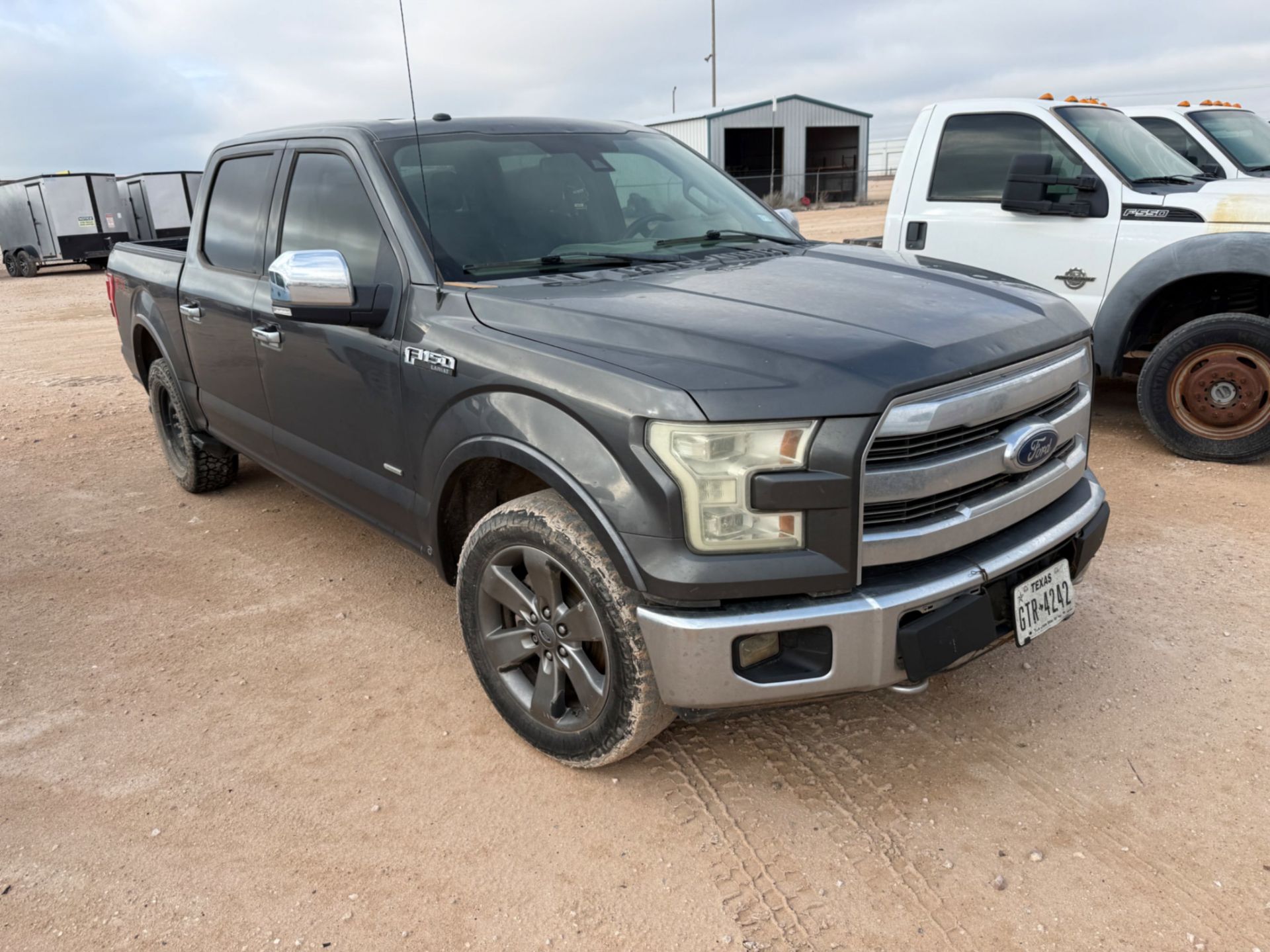
The 2015 Ford F-150 introduced a revolutionary aluminum-bodied architecture paired with four distinct engine choices: a naturally aspirated 3.5L V6, a turbocharged 2.7L EcoBoost V6, a high-output 3.5L EcoBoost V6, and a traditional 5.0L V8. Selecting the right powerplant depends entirely on your specific requirements for towing capacity, payload, fuel economy, and long-term maintenance expectations.
When Ford completely redesigned its flagship light-duty pickup truck for the 2015 model year, the manufacturer made a massive structural gamble by transitioning from traditional heavy steel body panels to military-grade aluminum alloys. This diet shed up to 700 pounds from the overall vehicle weight depending on the configuration. To maximize the efficiency and capability benefits of this lighter frame, Ford overhauled the powertrain lineup. Understanding the technical specifications, real-world performance characteristics, and common maintenance considerations of each engine option is critical for anyone buying, selling, or maintaining a 2015 F-150 today.
The Structural and Powertrain Evolution of the 2015 F-150
The 2015 model year marked the thirteenth generation of the Ford F-150. Beyond the aesthetic overhaul and the switch to high-strength, military-grade aluminum over a fully boxed high-strength steel frame, the powertrain strategy shifted dramatically toward forced induction and displacement versatility. Gone was the old 3.7-liter base V6 and the heavy 6.2-liter V8 from the previous generation, replaced by modern powerplants designed to deliver V8-level capabilities with V6-level fuel efficiency, alongside a thoroughly updated V8 option.
Every engine in the 2015 lineup was paired with a six-speed automatic transmission featuring Tow/Haul mode and SelectShift capability. However, the rear axle ratios, cooling packages, and suspension tuning varied significantly depending on which engine was selected and whether the truck was built with a Two-Wheel Drive (2WD) or Four-Wheel Drive (4WD) drivetrain.
Deep Dive: The Four 2015 Ford F-150 Engine Choices
1. 3.5L Ti-VCT V6 (Base Engine)
The 3.5-liter Twin Independent Variable Cam Timing (Ti-VCT) V6 served as the entry-level engine for the 2015 F-150.
- Horsepower: 283 hp at 6,500 RPM
- Torque: 255 lb-ft at 4,000 RPM
- Maximum Towing Capacity: Up to 7,600 lbs
- Maximum Payload Capacity: Up to 1,910 lbs
Technical Overview & Use Case: Designed primarily for fleet duty, light commercial applications, and budget-conscious buyers who primarily use their truck for daily commuting and light cargo hauling, this naturally aspirated engine relies on port fuel injection and variable valve timing. It lacks the low-end grunt of the EcoBoost turbos or the roaring top-end power of the V8, but it offers a simpler mechanical layout with fewer moving parts—no turbochargers, intercoolers, or direct injection high-pressure fuel pumps to service.
Pros and Cons:
- Pros: Lower initial purchase price, mechanical simplicity, adequate for daily driving and light utility work.
- Cons: Lacks passing power when fully loaded, lower resale demand compared to EcoBoost and V8 models, uninspiring fuel economy relative to its modest power output.
2. 2.7L EcoBoost V6 (The Efficiency and Mid-Range Marvel)
The 2.7-liter EcoBoost V6 was an entirely new engine developed specifically for the lightweight aluminum architecture of the 2015 F-150.
- Horsepower: 325 hp at 5,750 RPM
- Torque: 375 lb-ft at 3,000 RPM
- Maximum Towing Capacity: Up to 8,500 lbs
- Maximum Payload Capacity: Up to 2,250 lbs
Technical Overview & Use Case: Utilizing a compacted graphite iron (CGI) engine block—the same material Ford uses in its heavy-duty Power Stroke diesel blocks—the 2.7L EcoBoost is remarkably robust despite its small displacement. It features twin turbochargers, direct fuel injection, and auto start-stop technology (standard on this engine for 2015). The torque curve peaks early, delivering 375 lb-ft of torque at just 3,000 RPM, making it feel remarkably punchy off the line and exceptionally capable for medium towing tasks like small campers, utility trailers, and boats.
Pros and Cons:
- Pros: Outstanding low-end torque, impressive fuel economy for a full-size pickup, high maximum payload capacity when properly equipped.
- Cons: Complex turbocharging and direct-injection systems require strict oil change intervals; fuel economy drops significantly when towing heavy loads due to boost dependence.
3. 3.5L EcoBoost V6 (The Heavy-Duty Workhorse)
Carried over and refined from the previous generation, the 3.5-liter EcoBoost V6 established itself as the towing powerhouse of the half-ton market.
- Horsepower: 365 hp at 5,000 RPM
- Torque: 420 lb-ft at 2,500 RPM
- Maximum Towing Capacity: Up to 12,200 lbs
- Maximum Payload Capacity: Up to 3,180 lbs
Technical Overview & Use Case: For buyers requiring maximum heavy-duty capability without stepping up to an F-250 Super Duty, the 3.5L EcoBoost V6 is the definitive choice. Delivering a massive 420 lb-ft of torque at an incredibly low 2,500 RPM, this engine pulls heavy loads with absolute ease, rivaling or exceeding the towing capacities of many traditional V8 competitors. It utilizes twin parallel turbochargers and direct injection to maintain high power output at elevated altitudes where naturally aspirated engines suffer from power loss.
Pros and Cons:
- Pros: Best-in-class maximum towing capacity, immense low-end torque, excellent altitude performance.
- Cons: Real-world fuel economy can be disappointing if driven aggressively; early versions of this engine are known for intercooler condensation issues and timing chain wear if maintenance is neglected.
4. 5.0L Ti-VCT V8 (The Traditionalist's Choice)
For purists who prefer traditional V8 performance, sound, and linear power delivery, the 5.0-liter Coyote V8 remains a staple of the F-150 lineup.
- Horsepower: 385 hp at 5,750 RPM
- Torque: 387 lb-ft at 3,850 RPM
- Maximum Towing Capacity: Up to 11,100 lbs
- Maximum Payload Capacity: Up to 3,300 lbs
Technical Overview & Use Case: The 5.0L Coyote V8 features dual overhead cams, variable cam timing, and port fuel injection. It produces the highest horsepower rating in the 2015 lineup and delivers maximum payload capacity, making it a favorite for contractors, farmers, and heavy haulers who prefer naturally aspirated reliability. The power builds progressively as RPMs climb, offering a rewarding driving experience for those who enjoy traditional engine notes and straightforward mechanical design.
Pros and Cons:
- Pros: Highest horsepower rating, highest maximum payload capacity, linear power delivery, excellent platform for aftermarket exhaust modifications.
- Cons: Peak torque occurs higher in the RPM band compared to the EcoBoost engines; lower fuel efficiency in stop-and-go city driving.
Comparative Specifications Table
To evaluate which 2015 Ford F-150 engine configuration aligns best with your operational requirements, review the comparative technical specifications below:
| Engine Option | Configuration | Horsepower (@ RPM) | Torque (@ RPM) | Max Towing Capacity | Max Payload Capacity |
|---|---|---|---|---|---|
| 3.5L Ti-VCT V6 | Naturally Aspirated V6 | 283 @ 6,500 | 255 @ 4,000 | 7,600 lbs | 1,910 lbs |
| 2.7L EcoBoost V6 | Twin-Turbocharged V6 | 325 @ 5,750 | 375 @ 3,000 | 8,500 lbs | 2,250 lbs |
| 3.5L EcoBoost V6 | Twin-Turbocharged V6 | 365 @ 5,000 | 420 @ 2,500 | 12,200 lbs | 3,180 lbs |
| 5.0L Ti-VCT V8 | Naturally Aspirated V8 | 385 @ 5,750 | 387 @ 3,850 | 11,100 lbs | 3,300 lbs |
Operating Costs, Maintenance, and Reliability Considerations
When assessing a pre-owned 2015 Ford F-150, ongoing maintenance and historical reliability trends are just as important as initial towing figures. Each engine architecture presents distinct long-term ownership considerations.
EcoBoost Maintenance Realities
Both the 2.7L and 3.5L EcoBoost engines utilize direct fuel injection. Because fuel is sprayed directly into the combustion chamber rather than washing over the intake valves, carbon buildup on the intake valves can become an issue over high mileage, occasionally requiring walnut-blasting service. Furthermore, turbochargers operate under extreme heat and pressure; using full-synthetic oil and adhering to strict 5,000-mile oil change intervals is non-negotiable for ensuring turbo longevity. The 3.5L EcoBoost from this era is also known to require timing chain replacement inspections if the vehicle exhibits cold-start rattle or check-engine codes related to cam correlation.
Naturally Aspirated Simplicity
The 3.5L base V6 and 5.0L V8 engines generally demand less specialized mechanical oversight. The 5.0L Coyote V8 is renowned for its durability, though high-mileage units should be inspected for oil consumption and coolant fitting leaks at the water pump. Because these engines lack turbochargers and complex intercooler plumbing, routine component replacements—such as spark plugs, water pumps, and belt tensioners—are typically more straightforward and less expensive for independent mechanics to service.
Frequently Asked Questions
Which 2015 Ford F-150 engine has the best fuel economy?
The 2.7L EcoBoost V6 generally delivers the best fuel economy in real-world driving conditions, particularly in mixed city and highway commuting. Its lightweight CGI block and small displacement allow it to sip fuel when off-boost, though fuel economy drops noticeably when towing heavy trailers due to turbo boost demand.
Can the 2015 3.5L EcoBoost tow a large travel trailer?
Yes. With a properly equipped Max Trailer Tow Package, the 3.5L EcoBoost V6 can tow up to 12,200 lbs. Its low-end torque peak at 2,500 RPM makes it one of the most capable half-ton towing engines ever built, effortlessly pulling large travel trailers, livestock trailers, and heavy equipment.
Is the 5.0L V8 better than the 3.5L EcoBoost for longevity?
Both engines can easily exceed 200,000 miles if properly maintained, but they wear differently. The 5.0L V8 offers simpler mechanical architecture without turbochargers, making it appealing for long-term reliability purists. However, the 3.5L EcoBoost achieves its longevity provided that oil change intervals are strictly observed to protect the turbochargers and timing components.
What is the most common issue with the 2015 3.5L EcoBoost engine?
The most widely reported issues for the first-generation and early second-generation 3.5L EcoBoost engines involve timing chain stretch over high mileage and moisture accumulation in the intercooler causing hesitation under heavy acceleration. Regular maintenance and software updates largely mitigate these concerns.
Which 2015 F-150 engine should I buy used?
Your choice should be dictated by your workload. If you tow heavy loads regularly, look for the 3.5L EcoBoost. If you want a daily driver with great fuel efficiency and moderate towing capability, choose the 2.7L EcoBoost. If you prefer traditional V8 throttle response, high payload capacity, and simpler maintenance, the 5.0L V8 is the ideal choice.
Practical Recommendation for Buyers
If you are currently evaluating a pre-owned 2015 Ford F-150, always request a comprehensive maintenance history record. Prioritize trucks that feature documented oil changes every 5,000 miles, especially if you are considering the EcoBoost variants. Before finalizing your purchase, verify the vehicle's specific axle ratio and payload sticker located on the driver-side door jamb, as factory towing packages heavily dictate real-world capability regardless of which engine is installed under the hood.