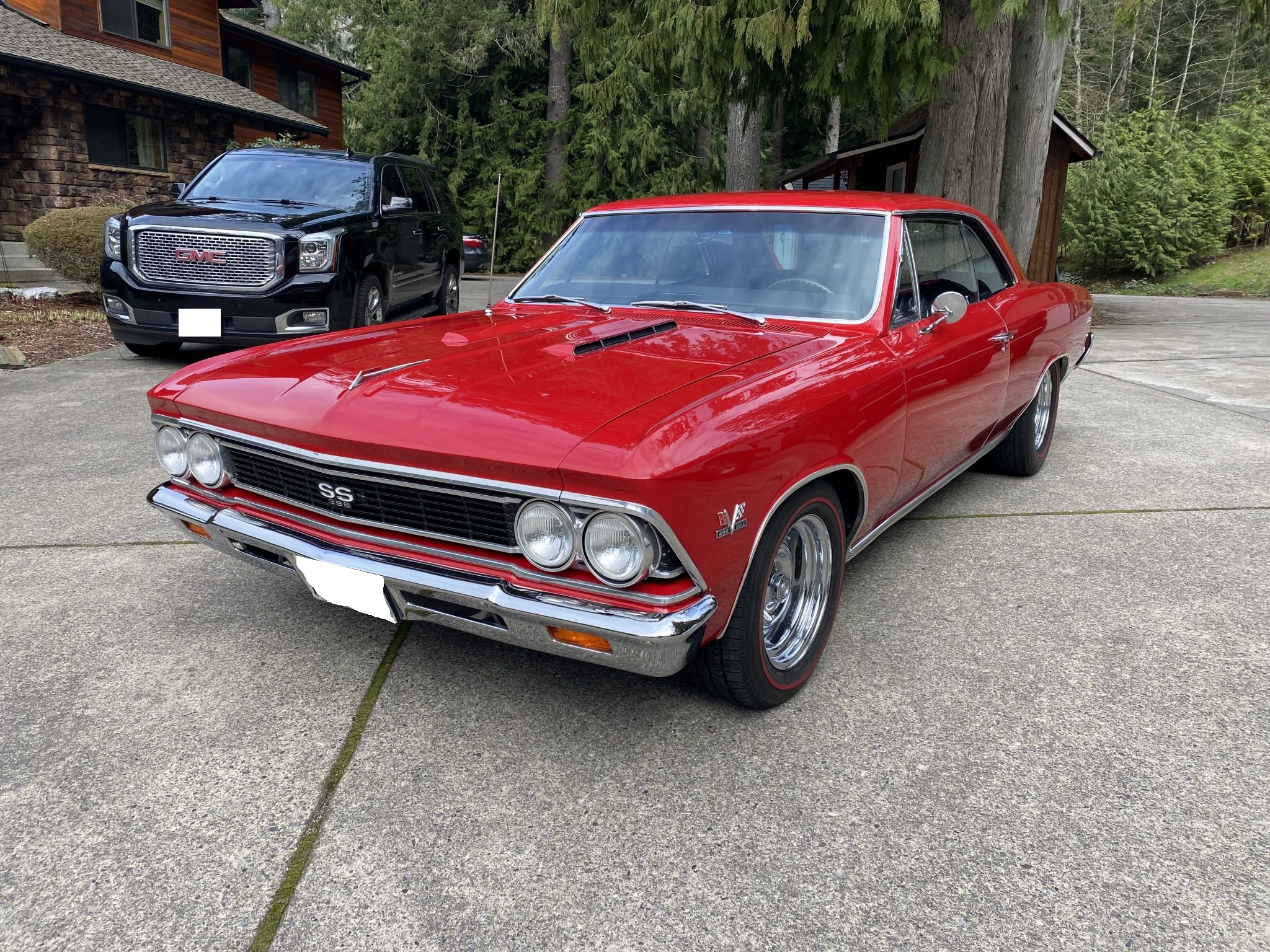
The 1966 Chevrolet Chevelle Malibu Sport Coupe represents a high-water mark of mid-sixties American automotive design, pairing a sleek, pillarless hardtop roofline with intermediate-size muscle car performance. Distinguished by its signature sweeping C-pillar, refined trim, and versatile engine lineup ranging from economical inline-sixes to potent big-block V8s, this iconic hardtop remains a cornerstone of the classic car hobby.
Introduction to the 1966 Chevelle Malibu Sport Coupe
The mid-1960s were a golden era for Detroit, and Chevrolet’s intermediate Chevelle lineup was right at the center of the market shift toward performance and style. Introduced for the 1964 model year, the Chevelle received a comprehensive, rolling-sculpture redesign for 1966 that gave the car a much more aggressive, coke-bottle profile. Among the various body styles offered—including sedans, station wagons, convertibles, and utility El Caminos—the Malibu Sport Coupe (body style code 13517 or 13617, depending on whether it housed a six-cylinder or V8 engine) captured the imagination of buyers seeking a blend of sporty aesthetics and everyday usability.
As a pillarless hardtop with no B-pillar obstructing the side glass, the Sport Coupe offered an open-air feel when all windows were rolled down, a feature that proved immensely popular. Over the decades, these cars have transitioned from affordable used transportation to highly sought-after collector pieces. Whether a restorer aims for a factory-correct numbers-matching restoration or a modern pro-touring build with contemporary handling and fuel injection, understanding the unique traits, production variants, and technical specifications of the 1966 Chevelle Malibu Sport Coupe is essential for any enthusiast.
Design Evolution and Styling Characteristics
The 1966 model year marked a distinct departure from the flatter, more boxy lines of the 1964 and 1965 models. General Motors stylists sculpted the Chevelle with a distinct beltline contour that kicked up over the rear wheels, mimicking the larger full-size Chevrolets and the legendary Corvette. The front end featured a revised grille and wrap-around front parking lights, while the rear profile showcased tunnel-shaped taillights inset into a new rear fascia.
The Sport Coupe roofline was particularly graceful. Its thin C-pillars and sweeping rear window glass created a fastback-like illusion while maintaining a traditional trunk. Exterior brightwork played a major role in defining the Malibu trim level. Malibu models were distinguished from base 300 series Chevelles by upgraded bright window moldings, wheel arch trim, rocker panel moldings, and distinctive Malibu script badging on the fenders and rear decklid. Inside, the cabin featured a more luxurious touch, including deep-twist carpeting, upgraded door panels, a standard steering wheel with a horn ring, and a glovebox lamp.
Technical Specifications and Powertrain Options
Buyers of the 1966 Chevelle Malibu Sport Coupe faced an extensive options list, particularly under the hood. Chevrolet designed the Chevelle platform to accommodate everything from frugal six-cylinder engines to heavy-duty, high-output big-block V8 powerplants.
Engine Lineup
The base engine for the Malibu series (Model 13517) was the 194-cubic-inch Turbo-Thrift inline-six, which produced 140 horsepower. Upgrading to the 230-cubic-inch inline-six bumped output to 155 horsepower. However, the vast majority of Sport Coupes were ordered with V8 power (Model 13617).
The small-block V8 offerings began with the venerable 283-cubic-inch engine, available in 195-horsepower (two-barrel carburetor) and 220-horsepower (four-barrel carburetor) configurations. For drivers seeking more muscle, the mid-year introduction of the 327-cubic-inch small-block provided robust performance, generating 275 horsepower (LM1) or 350 horsepower (L79). The L79 327 was a high-compression, solid-lifter powerhouse that made the lightweight Malibu Sport Coupe nearly as quick as a comparable big-block car, while offering superior front-end weight distribution.
For ultimate straight-line performance, big-block 396-cubic-inch V8 engines were available, though they were more commonly associated with the Super Sport (SS 396) package. While the SS was a distinct model line for 1966 (model series 13817), standard Malibu Sport Coupes could occasionally be ordered with heavy-duty mechanical options, though big-block Chevelles built outside of the dedicated SS line are heavily scrutinized by historians and buyers today.
Transmissions and Drivetrain
Power was routed to the rear wheels through several transmission choices:
- 3-speed manual: Standard equipment column-shifted transmission.
- 4-speed manual: Floor-shifted Muncie wide-ratio or close-ratio transmissions, favored by performance enthusiasts.
- Powerglide: A two-speed automatic transmission popular for smooth, effortless cruising.
Rear axle ratios varied widely based on intended use, ranging from economical highway gears (such as 3.08:1) to aggressive performance ratios (such as 3.31:1 or 3.55:1), often paired with Positraction limited-slip differentials.
1966 Chevelle Malibu Sport Coupe vs. Chevelle SS 396
A common point of confusion for prospective buyers and restorers is differentiating a standard Malibu Sport Coupe from the high-performance Super Sport (SS 396) model. While both shared the same basic A-body platform and pillarless hardtop styling, they were distinct marketing and production models with very different equipment levels.
| Feature / Specification | 1966 Chevelle Malibu Sport Coupe | 1966 Chevelle SS 396 Sport Coupe |
|---|---|---|
| Model Series Code | 13517 (I6) or 13617 (V8) | 13817 |
| Standard Engine | 194 ci Inline-6 (V8 optional) | 396 ci Big-Block V8 (325 hp standard) |
| Exterior Badging | "Malibu" script on fenders/rear | "Super Sport" or "SS 396" emblems |
| Interior Appointments | Bench seat standard, standard dash | Bucket seats, center console, full gauges (optional/standard depending on package) |
| Hood Design | Flat standard Malibu hood | Simulated chrome-louered SS hood |
| Suspension | Standard passenger car tuning | Heavy-duty springs, shocks, and stabilizer bar |
Purchasers should remain vigilant when evaluating vehicles marketed as Super Sports. Because standard Malibu Sport Coupes share the same body shell, cloning a Malibu into an SS replica is a common practice in the collector car market. Verifying the VIN (Vehicle Identification Number) prefix is the definitive way to authenticate an original SS model from a standard Malibu V8.
Evaluating and Inspecting a Project or Survivor Car
For collectors looking to acquire a 1966 Chevelle Malibu Sport Coupe, a thorough physical inspection is mandatory. As unibody-adjacent frame vehicles with full perimeter frames, these cars are prone to specific rust areas and structural vulnerabilities that can compromise safety and restoration budgets.
Common Rust Areas
- Frame Rails: Check the rear kick-up areas where the frame curves over the rear axle, as moisture and road salt collect inside the boxed sections.
- Lower Quarter Panels and Wheel Arches: Factory seam locations frequently trap water, leading to bubbling and rust-through.
- Floor Pans and Trunk Floor: Check under the carpet and inside the trunk, particularly around the rear wheel wells and spare tire well.
- C-Pillars and Base of the Windshield: Water leaks around the front and rear glass channels cause hidden corrosion that spreads underneath the trim.
Mechanical Integrity
Originality plays a massive role in valuation. Buyers should inspect engine block casting numbers, date codes, and the vehicle's trim tag (located on the firewall) to decode original paint colors, interior trim codes, and build dates. Even if a car has been modified with a crate engine or modern overdrive transmission, verifying the structural integrity of the chassis remains far more critical than matching numbers for a casual cruiser.
Restoration and Modern Upgrades
Restoring or modifying a 1966 Chevelle Malibu Sport Coupe is supported by an exceptionally robust aftermarket supply chain. Nearly every piece of sheet metal, interior trim, wiring harness, and mechanical component can be sourced new or remanufactured.
Many modern owners choose a restomod approach, retaining the classic 1966 styling while upgrading the driving experience. Popular modifications include:
- Overdrive Transmissions: Swapping original two-speed Powerglides or four-speed manuals for modern 4-speed automatic (such as the 700R4 or 200-4R) or 5-speed/6-speed manual transmissions improves highway cruising RPM and fuel economy.
- Upgraded Braking Systems: Replacing original four-wheel drum brakes with front disc brake conversions—or a complete four-wheel power disc setup—vastly improves stopping confidence.
- Suspension Restorations: Modern tubular control arms, stiffer sway bars, gas shocks, and modern radial tires transform the handling characteristics of the A-body platform, bringing modern road-holding manners to a mid-sixties classic.
Frequently Asked Questions
How can I tell if my 1966 Chevelle Malibu is a real V8 car?
The fifth digit of the Vehicle Identification Number (VIN) designates the engine type. If the VIN begins with 13637 or 13617 (for Sport Coupes), it left the factory with a V8 engine. If it begins with 13537 or 13517, it was originally equipped with an inline-six cylinder engine.
What is the difference between a Malibu and a Malibu SS in 1966?
In 1966, the Super Sport was given its own distinct series designation (138xx) and came standard with a 396-cubic-inch big-block V8 engine, special exterior badging, and unique interior trim options such as bucket seats and a console. The Malibu was a distinct series positioned above the base 300 models, offering various six-cylinder and small-block V8 powerplants.
Are replacement body panels easy to find for a 1966 Chevelle Sport Coupe?
Yes. The 1966 Chevelle is one of the most heavily supported classic cars in the restoration industry. Full floor pans, quarter panels, trunk floors, and fender replacements are widely available from multiple major automotive sheet metal manufacturers.
What wheels and tire sizes fit a stock 1966 Chevelle Malibu Sport Coupe?
Factory cars typically came with 14-inch wheels. Many owners upgrade to 15-inch wheels (such as Rally wheels or traditional Magnum 500s) to accommodate wider modern radial tires, such as 215/65R15 or 225/60R15, which fit within the stock wheel wells without rubbing.
Is the 1966 Chevelle Malibu Sport Coupe a good investment?
Classic Chevelles have historically maintained strong enthusiast demand and stable collector values. While high-end SS 396 models command top tier prices, clean, well-maintained Malibu Sport Coupes offer an accessible entry point into classic muscle car ownership with solid long-term market appreciation potential.
Conclusion and Next Actions
The 1966 Chevelle Malibu Sport Coupe bridges the gap between raw American muscle and refined mid-century styling. Whether you are hunting for a matching-numbers survivor, planning a meticulous frame-off restoration, or building a weekend cruiser with modern mechanical upgrades, preparation and thorough inspection are your best tools. Verify VIN numbers, inspect structural frame rails closely for hidden corrosion, and determine whether a factory-correct restoration or a driver-focused restomod aligns best with your automotive goals.