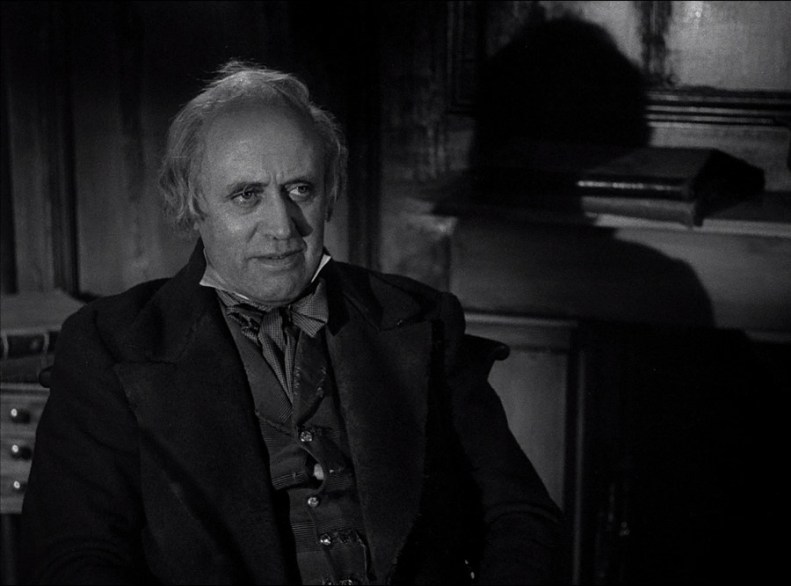
The 1951 British film adaptation of Charles Dickens's 1843 novella A Christmas Carol—released as Scrooge in the United Kingdom and titled A Christmas Carol in North America—is widely regarded by film historians and critics as the definitive cinematic rendition of the classic holiday tale. Directed by Brian Desmond Hurst and starring Scottish actor Alastair Sim in a legendary lead performance, the film balances gothic horror, social critique, and genuine emotional redemption.
Production History and Creative Background
Produced by Renown Pictures and shot at Riverside Studios in Hammersmith, London, the 1951 adaptation arrived during a crucial era for British cinema. Post-World War II Britain was undergoing significant social restructuring and economic austerity, themes that resonated powerfully with Charles Dickens's Victorian social critiques. Producer George Minter and director Brian Desmond Hurst sought to move away from the lighthearted, theatrical gloss of earlier cinematic versions—such as MGM’s 1938 American release—to create a film grounded in psychological realism and atmospheric gravity.
The screenplay was penned by South African-born writer Noel Langley, who had previously contributed to Hollywood projects like The Wizard of Oz (1939). Langley’s approach to Dickens’s text was both reverent and bold. Rather than simply executing a literal scene-by-scene translation of the novella, Langley expanded the narrative framework to provide Ebenezer Scrooge with a cohesive psychological back-story. This script structuralized Scrooge's descent into misanthropy, transforming him from a archetype of cartoonish greed into a complex, tragic figure shaped by trauma, betrayal, and institutional Victorian capitalism.
Director Brian Desmond Hurst brought a distinct visual style to the project, heavily influenced by German Expressionism and classic British gothic cinema. The production design relied on shadows, practical lighting, and claustrophobic urban sets to evoke mid-19th-century London. Despite budget constraints typical of British mid-tier productions in the early 1950s, Hurst leveraged sharp editing and mood-driven staging to maximize dramatic impact, ensuring that the film felt like an authentic artifact of Dickensian London.
Cast and Character Performances: The Definitive Scrooge
The enduring success of the 1951 adaptation rests primarily on the shoulders of its ensemble cast, led by Alastair Sim, whose portrayal of Ebenezer Scrooge set a benchmark that future actors continue to emulate.
Key Cast & Crew (1951 Adaptation):
- Director: Brian Desmond Hurst
- Screenplay: Noel Langley
- Ebenezer Scrooge: Alastair Sim
- Young Scrooge: George Cole
- Jacob Marley: Michael Hordern
- Bob Cratchit: Mervyn Johns
- Mrs. Dilber: Kathleen Harrison
- Score Composition: Richard Addinsell
Alastair Sim as Ebenezer Scrooge
Alastair Sim was already an established star of British stage and screen, known for his versatility in both dark drama and sly comedy. His performance as Scrooge is a masterclass in tone control. In the opening acts, Sim plays Scrooge not as a shouting monster, but as a cold, calculating businessman whose miserliness is a defensive armor against humanity. His voice carries a quiet, sharp bite, and his physical posture reflects a man tightly wound by self-imposed isolation.
Where Sim truly excels, however, is in the transitions. As the spectral visitations progress, his terror yields to remorse, vulnerability, and eventual joy. His performance during the Christmas morning awakening is legendary: Sim captures the frantic, breathless absurdity of a man rediscovering grace, stuttering with laughter and grappling with his own restored vitality.
Supporting Cast Excellence
- Michael Hordern (Jacob Marley): Hordern delivers an intense, terrifying portrayal of Scrooge's deceased business partner. Bound in heavy chains, his anguished wails and frantic warnings set a solemn, ominous tone for the ghost visitations that follow.
- Mervyn Johns (Bob Cratchit): Johns plays Cratchit with a delicate, unforced dignity. Rather than rendering the character merely pitiable, Johns portrays a father whose love for his family provides a stark contrast to Scrooge's wealth-fueled solitude.
- Kathleen Harrison (Mrs. Dilber): Expanded from a minor book character into Scrooge’s charwoman, Harrison offers key comedic relief while illustrating the grim economic realities of the London working poor.
- George Cole (Young Ebenezer Scrooge): Cole—who was Sim’s real-life acting protégé—portrays Scrooge in his young adult years, effectively showing the character's tragic transition from a hopeful clerk to an ambitious, emotionally hardened businessman.
Narrative Adaptations: Expanding Dickens's World
While the 1951 film adheres strictly to the core spirit of Dickens’s novella, Noel Langley introduced several strategic additions and modifications to enhance the film's theatrical depth and psychological logic.
The Invention of Mr. Jorkin
The most significant departure from the original book is the creation of Mr. Jorkin, played with sinister charm by Jack Warner. Jorkin is an unprincipled corporate financier who lures the young Ebenezer Scrooge away from the honorable, old-fashioned business of Mr. Fezziwig. Through Jorkin, Scrooge learns that financial speculation and corporate greed are far more profitable than honest labor and human empathy.
When Jorkin's company faces bankruptcy due to embezzlement, Scrooge and Jacob Marley buy out the shares, taking over the company and acquiring their iconic premises. This added plotline provides a clear, plausible explanation for how Scrooge accumulated his wealth and illustrates his corruption by systemic Victorian financial practices.
Progression of Scrooge's Character Arc:
- Idealistic Youth under Fezziwig
- Corrupted by Financial Speculation (Mr. Jorkin)
- Hardened Misanthrope & Partner to Marley
- Spectral Awakening & Emotional Breakdown
- Joyous Redemption & Reintegration into Society
Psychological Depth and Family Dynamics
The film also expands upon Scrooge's family background. It explicitly establishes that Scrooge’s mother died giving birth to him, causing his father to harbor a bitter resentment toward him throughout his childhood. This detail explains Scrooge’s early emotional withdrawal and his deep attachment to his sister, Fan (Carol Marsh).
When Fan dies during childbirth while bringing Scrooge’s nephew Fred into the world, Scrooge projects his grief and bitterness onto Fred, giving his cold hostility toward his nephew a tragic foundation.
Renaming Belle to Alice
In Dickens's novella, Scrooge’s lost love is named Belle. In the 1951 film, she is renamed Alice and played by Rona Anderson. The film expands her story beyond her breakup with young Ebenezer: in the Christmas Present sequence, the Spirit shows Alice working in a homeless shelter for poor sick Londoners. This reveals to Scrooge that while he chose a life of selfish accumulation, Alice chose a life of selfless service, compounding his sense of wasted opportunity.
Technical Craft: Cinematography, Sound Design, and Atmosphere
The artistic success of Scrooge relies heavily on its visual and auditory design, which treats Victorian London as an active psychological space reflecting Scrooge's internal state.
Chiaroscuro Cinematography
Cinematographer C.M. Pennington-Richards utilized high-contrast black-and-white lighting, heavily drawing on chiaroscuro techniques. Shadows dominate Scrooge’s counting-house and dark residence, emphasizing his isolation from the warmth of the outside world. The arrival of Jacob Marley is framed like a horror film, using dramatic low angles, deep shadow play, and practical visual effects—such as superimposing ghost footage over solid sets—to convey spectral reality without modern digital processing.
Visual & Atmospheric Contrast in the 1951 Adaptation:
| Shadows & Isolation (Scrooge's Realm) | Warmth & Community (Cratchits/Fred) |
|---|---|
| High-contrast low-key lighting | Soft, diffused interior lighting |
| Sparse, cold interior sets | Crowded, lively family settings |
| Echoing, quiet soundscapes | Music, laughter, and overlapping dialogue |
Musical Score by Richard Addinsell
The film’s score was composed by British composer Richard Addinsell, renowned for his work on Dangerous Moonlight (1941). Addinsell's score weaves traditional English Christmas carols—such as "Hark! The Herald Angels Sing" and "God Rest Ye Merry, Gentlemen"—into haunting orchestral arrangements. The music serves as an emotional counterpoint to the visuals, shifting seamlessly between eerie atmospheric dissonance during the ghostly visitations and joyful folk motifs during the Cratchit family dinner and Scrooge's redemption.
Reception, Television Revival, and Cultural Impact
Upon its initial theatrical release in late 1951, the film received mixed box-office returns and varied critical reviews, particularly in the United States.
Initial American Skepticism
In the United States, United Artists distributed the film under the title A Christmas Carol. The movie was originally booked to play at Radio City Music Hall in New York City, but theater management pulled it early, claiming the film was too dark, depressing, and unsuitable for family holiday entertainment. American critics at the time, accustomed to lighter, glossier Hollywood fare, were startled by the film's stark portrayal of poverty, death, and gothic terror.
Television Syndication and Rediscovery
The trajectory of the 1951 film changed dramatically during the 1970s, when American television networks acquired broadcast rights. Local stations across North America began airing the movie annually throughout December. Free from theatrical box-office pressure, the film found a massive television audience that embraced its atmospheric depth and emotional authenticity.
By the 1980s, Alastair Sim's portrayal had become an essential holiday viewing tradition, widely recognized by film scholars as the definitive adaptation of Dickens's text.
Colorization and Restorations
In 1989, the film became part of the controversial colorization era, when a colorized version was produced for television and home video release. While this version introduced the film to a broader commercial audience, purists and film historians argued that colorization ruined the carefully crafted black-and-white lighting and shadow design intended by Pennington-Richards and Hurst.
In subsequent decades, high-definition and 4K digital restorations sourced from original 35mm film elements preserved the film's crisp black-and-white visual texture, ensuring its archival preservation for future generations.
Comparative Analysis: 1951 Adaptation vs. Other Film Versions
To understand why the 1951 film maintains its supreme standing among Dickens screen adaptations, it is useful to evaluate it alongside other prominent cinematic versions produced across film history.
| Film Adaptation | Lead Actor | Tone & Style | Key Narrative Strengths | Primary Limitations |
|---|---|---|---|---|
| 1935 (Scrooge) | Seymour Hicks | Theatrical, early sound era | Short running time, historically early interpretation | Low production values, cut character backstories |
| 1938 (A Christmas Carol) | Reginald Owen | Bright, family-friendly, Hollywood studio style | Warm atmosphere, short and accessible for children | Sanitized depiction of Victorian poverty, shallow character depth |
| 1951 (Scrooge) | Alastair Sim | Gothic, psychological, realistic | Deep character backstory, exceptional lead performance, dark visual style | Slight pacing slow-down in expanded middle act |
| 1970 (Scrooge) | Albert Finney | Musical, colorful, widescreen | Memorable song score, broad theatrical energy | Musical numbers reduce the impact of Dickensian social critique |
| 1984 (A Christmas Carol) | George C. Scott | Made-for-TV, realistic, authentic location shoots | Filmed on location in Shrewsbury, realistic historical detail | Lacks the gothic flair and comedic agility of the 1951 film |
| 1999 (A Christmas Carol) | Patrick Stewart | Dramatic, stage-inspired, TV movie | Strong literary fidelity, Stewart's powerful performance | Standard television production design and lighting |
Performance Tone Comparison
Unlike Reginald Owen's 1938 performance—which leaned heavily into makeup and physical bluster—or Albert Finney’s 1970 musical portrayal, Alastair Sim delivers an internalized performance. He allows viewers to see the emotional toll that decades of lonely miserliness have exacted on Scrooge's spirit. While George C. Scott’s 1984 TV adaptation offers a brilliant, authoritative performance grounded in cold business logic, Scott lacks the manic, infectious joyful warmth that Sim displays during the film’s climax.
Guide to Formats, Restorations, and Modern Viewing
For viewers looking to experience the 1951 film, understanding the differences between available versions and formats ensures the best viewing experience.
Choosing the Right Version to Watch:
- Primary Recommendation: Original Black-and-White 4K / HD Restoration
- Preserves original chiaroscuro lighting and shadow effects
- Includes full unedited 86-minute runtime
- Features original uncompressed mono soundtrack
- Alternative Version: 1989 Colorized Cut (Not Recommended for First View)
- Alters original artistic contrast and atmosphere
- Often paired with edited television broadcast cuts
Runtime and Version Differences
- Original UK Uncut Version (86 minutes): Contains all expanded narrative scenes, including Mr. Jorkin's business takeovers and Alice's scenes in the shelter.
- US Edited Broadcast Cuts (78-82 minutes): Historical television broadcasts frequently trimmed minor character moments to fit standard commercial broadcast windows. Viewers should ensure they select the full 86-minute restored feature.
High-Definition Restorations
Physical media releases—such as Blu-ray and 4K UHD editions issued by specialized film preservation labels—utilize restorations performed directly from original nitrate negative materials. These editions preserve the natural film grain, deep black tones, and clear audio mix of Richard Addinsell's orchestral score.
Frequently Asked Questions
What makes Alastair Sim's performance in the 1951 film Scrooge so celebrated?
Alastair Sim is celebrated because he brings psychological nuance and emotional range to Ebenezer Scrooge. Instead of playing him as a flat, villainous cartoon character, Sim balances terrifying coldness, tragic vulnerability, and sharp comedic timing. His transformation from a hardened miser to a joyous, redeemed child-at-heart feels earned and deeply moving.
Is the 1951 film Scrooge faithful to Charles Dickens's original novella?
Yes, the film is deeply faithful to the tone, moral purpose, and central narrative of Charles Dickens's book. However, screenwriter Noel Langley added key backstories—such as the character of Mr. Jorkin and the tragic death of Scrooge's mother in childbirth—to give Ebenezer Scrooge a logical psychological progression toward misanthropy.
What is the difference between the titles Scrooge and A Christmas Carol for this film?
The film was originally produced and released in the United Kingdom under the title Scrooge. When distributed in North America by United Artists in late 1951, it was retitled A Christmas Carol to capitalize on direct brand recognition of Charles Dickens's novella. Both titles refer to the exact same motion picture.
Who played the Ghosts in the 1951 adaptation of Scrooge?
The ghostly visitations were portrayed by:
- Jacob Marley: Michael Hordern
- Ghost of Christmas Past: Michael Dolan
- Ghost of Christmas Present: Francis De Wolff
- Ghost of Christmas Yet to Come: C. Konarski
Why was the character of Mr. Jorkin added to the 1951 movie when he is not in the original book?
Screenwriter Noel Langley invented Mr. Jorkin (played by Jack Warner) to explain how Scrooge transitioned from an innocent apprentice under the kindly Mr. Fezziwig into a ruthless businessman. Jorkin represents predatory financial practices, showing how young Ebenezer was corrupted by corporate cynicism and greed.
Final Assessment and Recommendation
The 1951 film adaptation of Scrooge stands as an enduring masterpiece of cinematic adaptation. By pairing Charles Dickens’s timeless moral storytelling with expressive atmospheric production, thoughtful script additions, and a transcendent lead performance by Alastair Sim, the film transcends standard holiday entertainment to deliver a rich study of human isolation, trauma, and redemption.
For film scholars, literary fans, and casual viewers alike, the original black-and-white restored edition remains the ultimate screen version of Dickens’s classic, continuing to offer profound artistic and emotional resonance over seven decades after its debut.