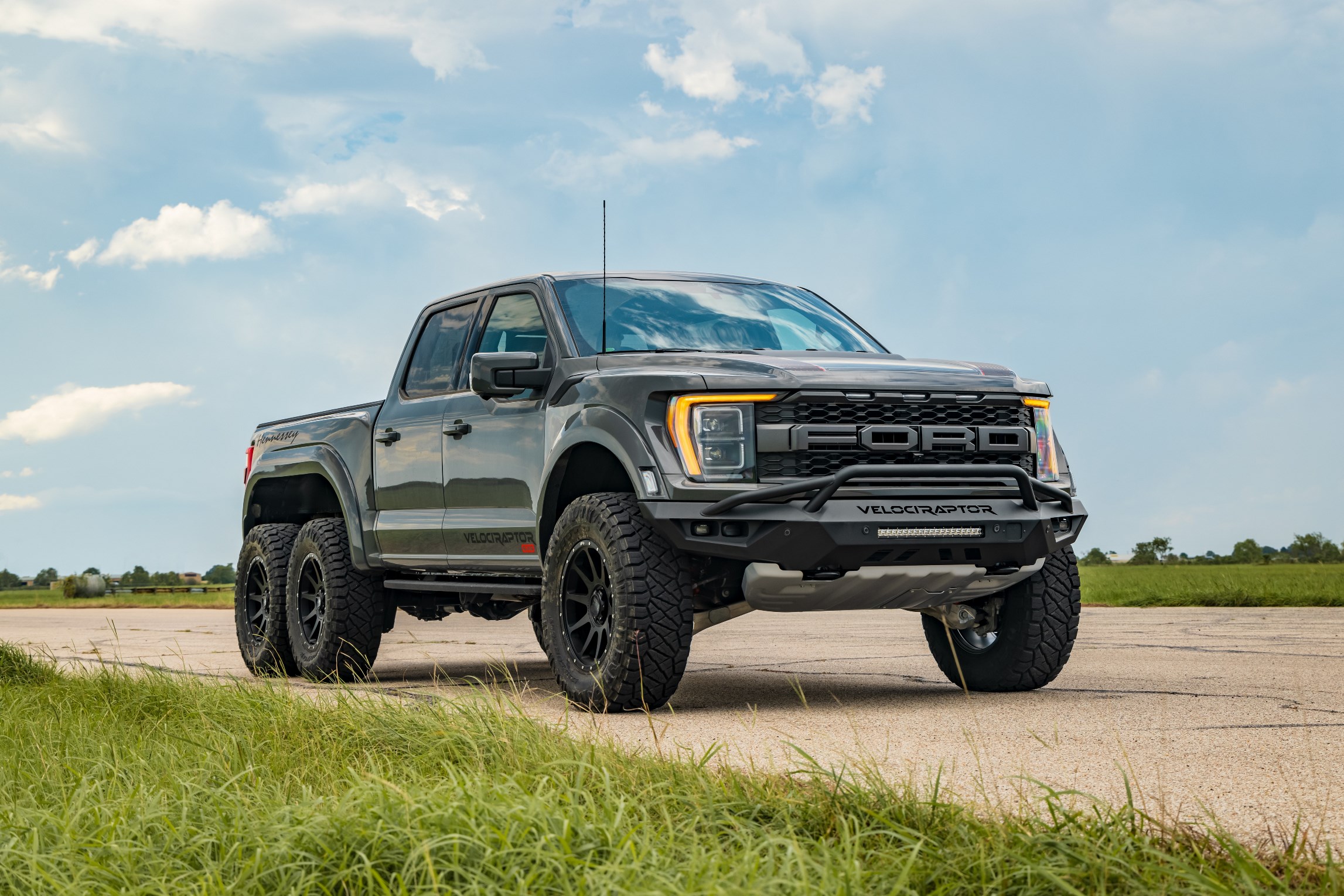
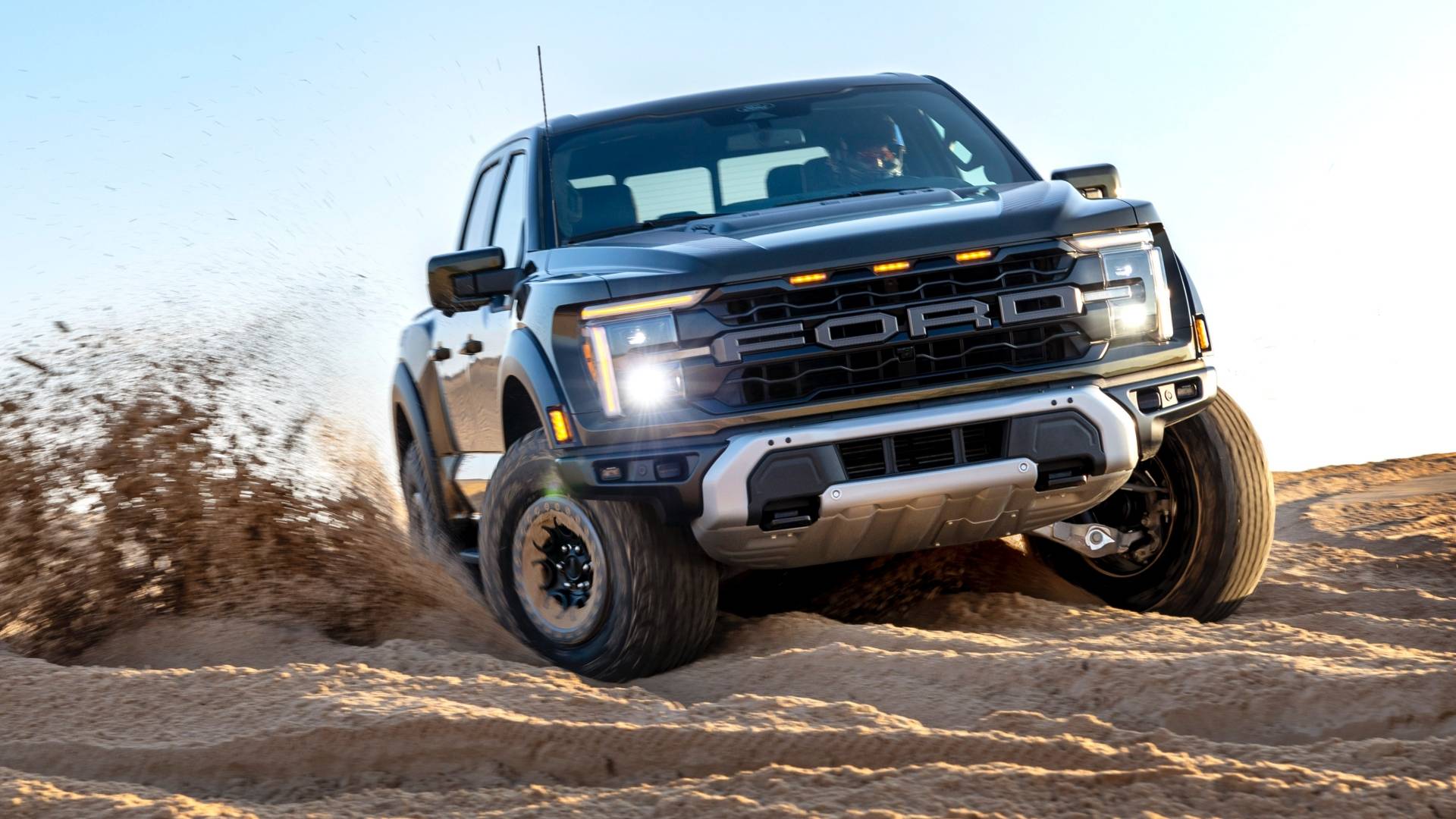
The Ford F-150 Raptor is a high-performance, off-road-focused variant of the standard Ford F-150 full-size pickup truck. It stands out in the automotive market through its factory-installed desert-racing capabilities, long-travel suspension, high-output EcoBoost or supercharged V8 engine options, and reinforced chassis architecture designed for high-speed off-road traversal.
Introduction to the Ford F-150 Raptor Lineup
The automotive landscape changed significantly when Ford introduced the original F-150 SVT Raptor. Before its debut, transforming a mass-production pickup truck into a high-speed desert runner required extensive aftermarket modification, custom fabrication, and specialized tuning. Ford integrated these capabilities directly onto a factory assembly line, offering a vehicle covered by a full factory warranty that could tackle sand dunes, rocky trails, and high-speed dirt roads straight out of the box.
Today, the Raptor nameplate represents the pinnacle of Ford's off-road truck engineering. It serves enthusiasts who demand both daily-drivable utility and extreme off-road capability. Understanding what makes an F-150 Raptor distinct requires examining its mechanical foundations, generational evolution, engine specifications, and the practical considerations of owning a full-size high-performance truck.
Generational Evolution and Mechanical Foundations
The Ford F-150 Raptor has evolved across multiple distinct generations, with each iteration bringing heavier structural reinforcement, advanced suspension technology, and greater computing power to manage traction and terrain.
First Generation (2010–2014)
The genesis of the Raptor lineage focused heavily on raw mechanical strength and off-road geometry. Available in SuperCab and later SuperCrew configurations, it introduced a wider body—requiring marker lights by federal law—and specialized internal-bypass shock absorbers developed by Fox Racing. Early models featured a 5.4-liter V8, quickly supplemented and largely overshadowed by a robust 6.2-liter V8 engine producing 411 horsepower.
Second Generation (2017–2020)
The second iteration shifted toward lightweight military-grade aluminum body panels paired with a high-strength steel frame. This generation retired the naturally aspirated V8 in favor of a specialized, high-output 3.5-liter EcoBoost twin-turbocharged V6 paired with a 10-speed automatic transmission. The shift brought increased torque at lower RPMs, improved fuel efficiency relative to its output, and an updated Fox Live Valve damping system that continuously adjusted compression stiffness in real time.
Third Generation (2021–Present)
The current generation refines the high-speed off-road formula with a completely redesigned rear suspension setup, moving away from traditional leaf springs to a sophisticated five-link rear suspension with extra-long trailing arms and a Panhard rod. This design drastically improves wheel articulation and lateral stability over rough terrain.
For enthusiasts seeking maximum displacement, Ford reintroduced a V8 option in the form of the Raptor R, powered by a supercharged 5.2-liter Predator engine derived from the Mustang Shelby GT500, delivering immense horsepower for high-speed desert running and dragstrip acceleration alike.
Key Performance and Technical Specifications
The engineering behind an F-150 Raptor extends far beyond aggressive exterior styling and larger tires. Every major subsystem is engineered to withstand the extreme thermal and physical stresses of jumping, pounding through washboards, and crawling over boulders.
Suspension and Damping Architecture
At the core of every Raptor are its dampers. Modern iterations utilize advanced Fox Live Valve internal-bypass shocks equipped with electronic sensors that monitor terrain conditions multiple times per second. These shocks dynamically alter damping forces to soften impacts during hard landings or firm up body control during high-speed cornering on paved roads. Suspension travel exceeds 13 inches in the front and 14 inches in the rear on standard configurations, allowing the wheels to track undulating ground surfaces while keeping the cabin relatively stable.
Powertrain Comparison
| Specification | High-Output 3.5L EcoBoost V6 | Supercharged 5.2L V8 (Raptor R) |
|---|---|---|
| Induction | Twin-Turbocharged | Roots-type Supercharger |
| Transmission | 10-Speed SelectShift Automatic | 10-Speed SelectShift Automatic |
| Drivetrain | 4WD with Electronic Locking Rear Axle | 4WD with Electronic Locking Rear Axle |
| Primary Focus | Balanced low-end torque, high-speed desert stability | Maximum horsepower, aggressive acceleration, heavy towing/hauling balance |
| Available Torsen Front Differential | Optional / Standard depending on package | Standard |
Tires and Terrain Management
Raptors roll from the factory on specialized, manufacturer-approved all-terrain or mud-terrain tires—typically measuring 35 inches or upgrading to 37 inches in specialized packages. These tires feature unique sidewall construction designed to resist punctures when aired down for sand driving. The Terrain Management System allows drivers to cycle through distinct drive modes—such as Normal, Sport, Tow/Haul, Slippery, Deep Snow/Sand, Mud/Ruts, and Baja mode—which recalibrate throttle mapping, transmission shift points, transfer case engagement, stability control thresholds, and exhaust notes.
Practical Considerations: On-Road Driving and Daily Utility
While the F-150 Raptor is engineered for punishing off-road environments, the vast majority of owners spend significant time driving on paved public roads, highways, and suburban streets. Operating a vehicle of this size and capability involves distinct compromises and practical adjustments.
Dimensions and Maneuverability
The Raptor is wider than a standard F-150 by approximately six to seven inches, spanning over 86 inches wide excluding mirrors. This extra width demands caution in narrow parking structures, drive-thrus, and tight residential lanes. Standard garage openings may present clearance challenges depending on height modifications and whether the truck is equipped with 35-inch or 37-inch factory tires.
Ride Quality and Comfort
Thanks to the long-travel suspension and high-profile sidewall tires, the Raptor delivers a notably plush, compliant ride over potholes, speed bumps, and broken pavement. It absorbs road imperfections far better than standard heavy-duty trucks or stiffly sprung sport utility vehicles. However, the aggressive tread patterns of off-road tires can generate noticeable road hum at highway speeds, and body roll during tight cornering is more pronounced due to the soft, long-travel suspension geometry.
Towing and Payload Capacities
Purchasers transitioning from standard light-duty trucks should note that the Raptor's off-road-optimized suspension trades away some conventional towing and payload capacity. Because the springs and dampers are tuned for flexibility and impact absorption rather than maximum weight-bearing stiffness, maximum towing capacity generally ranges between 8,200 and 8,700 pounds, with payload limits hovering near 1,400 pounds depending on the specific model year and equipment group.
Frequently Asked Questions
What fuel economy does a Ford F-150 Raptor get?
Fuel economy varies significantly depending on the powertrain and driving style. The 3.5-liter EcoBoost V6 typically achieves an EPA-estimated range in the mid-teens combined (around 15–16 mpg), while the supercharged V8 Raptor R consumes considerably more fuel due to its forced-induction displacement, averaging lower figures depending on heavy throttle usage.
Can a standard F-150 be modified to perform like a Raptor?
While aftermarket suspension kits, larger tires, and ECU tuners can dramatically improve a standard F-150's off-road performance, replicating a factory Raptor requires extensive modifications. These include widening the frame and track width, reinforcing mounting points, integrating factory-spec internal-bypass dampers, and recalibrating the vehicle's onboard computer systems to handle specialized 4WD logic.
What is the difference between the 35-inch tire and 37-inch tire packages?
Ford offers configurations optimized for either 35-inch or 37-inch tires. The 37-inch tire package typically includes unique beadlock-capable wheels, specially tuned Fox shocks with longer travel limits, unique rear-axle gear ratios, and distinct exterior graphics. Ground clearance increases slightly with the 37-inch package, enhancing breakover and departure angles.
Is the Ford F-150 Raptor suitable for daily driving?
Yes, despite its rugged orientation, the Raptor includes modern creature comforts such as advanced infotainment screens, premium audio systems, leather seating, and comprehensive driver-assist safety suites. Its wide stance and low fuel economy are the primary trade-offs for daily commuting.
Conclusion and Purchasing Guidance
The Ford F-150 Raptor remains a benchmark in the factory high-performance off-road truck segment. When evaluating a purchase, buyers should weigh their actual utilization patterns against the vehicle's physical dimensions, fuel consumption, and specialized capabilities. For drivers who frequently navigate tight urban spaces or require massive payload capacities for heavy commercial work, a standard F-150 or Super Duty may prove more practical. However, for those seeking uncompromising suspension performance, desert-running capability, and an assertive daily driver, the Raptor delivers unmatched factory-backed engineering.