Multiplying twelve by eleven yields one hundred thirty-two, which is represented in Roman numerals as CXXXII. This comprehensive exploration examines the intersection of standard arithmetic multiplication, numerical system conversions, and the historical mechanics of Roman numerals to clarify how values like twelve and one hundred thirty-two are structured, validated, and computed.
The Core Arithmetic Foundation: 12 Multiplied by 11
Before exploring ancient numeral systems, establishing the foundational arithmetic of the expression is essential. Multiplying twelve ($12$) by eleven ($11$) is a standard operation in basic arithmetic.
To solve $12 \times 11$, one can apply several mental math strategies or standard multiplication algorithms:
- The Distributive Property: Break the multiplier down into manageable parts. Multiply $12 \times 10$, which equals $120$, and then add $12 \times 1$, which equals $12$. Adding $120 + 12$ results in $132$.
- The Standard Algorithmic Method: Multiply $12$ by $1$ in the ones column to get $12$, then multiply $12$ by $1$ in the tens column (shifting the place value to represent $120$), and sum the partial products: $12 + 120 = 132$.
- The Eleven Shortcut: For any two-digit number multiplied by eleven, sum the two digits of the number and place the sum in the middle. For $12$, the digits are $1$ and $2$. Their sum is $3$. Placing $3$ between $1$ and $2$ yields $132$.
The product of this calculation is unequivocally $132$. The next logical step in our inquiry is translating this standard Arabic numeral into the additive and subtractive framework of ancient Rome.
Anatomy of Roman Numerals: Principles and Symbols
The Roman numeral system is an additive and subtractive notation that originated in ancient Rome and remained the standard way of writing numbers throughout Europe well into the Middle Ages. Unlike the modern Hindu-Arabic decimal system, Roman numerals do not use place value or a zero digit. Instead, they rely on a fixed set of basic symbols assigned to specific values.
The Primary Symbols
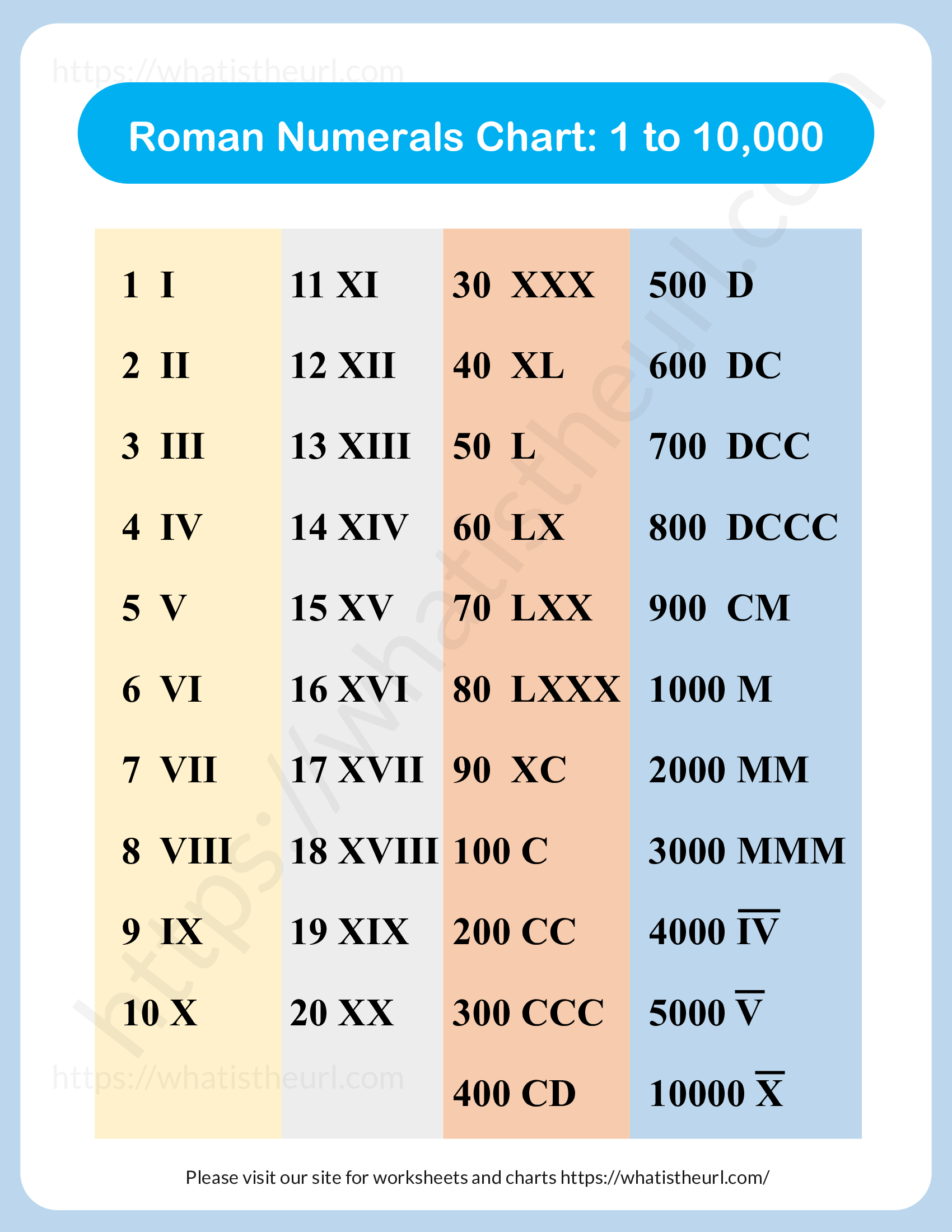
The foundational characters of the Roman numeral system are:
- I = $1$
- V = $5$
- X = $10$
- L = $50$
- C = $100$
- D = $500$
- M = $1000$
Core Rules of Construction
Constructing valid Roman numerals requires adherence to strict structural guidelines:
- Repetition: Symbols such as $\text{I}$, $\text{X}$, $\text{C}$, and $\text{M}$ can be repeated up to three times in succession to represent a cumulative value (e.g., $\text{XXX} = 30$). Symbols $\text{V}$, $\text{L}$, and $\text{D}$ cannot be repeated.
- Addition: When a smaller symbol follows a larger symbol, the values are added together. For example, $\text{VI}$ is $5 + 1 = 6$.
- Subtraction: When a smaller symbol precedes a larger symbol, the smaller value is subtracted from the larger one. Subtraction is restricted to specific pairings: $\text{I}$ can precede $\text{V}$ and $\text{X}$ ($4$ and $9$); $\text{X}$ can precede $\text{L}$ and $\text{C}$ ($40$ and $90$); and $\text{C}$ can precede $\text{D}$ and $\text{M}$ ($400$ and $900$).
Converting Twelve and One Hundred Thirty-Two
To fully unpack our central theme, we must look at both components: the number twelve ($12$) and the resulting product, one hundred thirty-two ($132$).
How to Write Twelve in Roman Numerals
Twelve is constructed by combining a ten and two units. Using the repetition and addition rules:
- Ten is represented by $\text{X}$.
- Two is represented by $\text{II}$ ($\text{I} + \text{I}$).
- Combined, $\text{XII}$ represents $10 + 1 + 1 = 12$.
How to Write One Hundred Thirty-Two in Roman Numerals
Applying the principles of the system to the product of our multiplication ($132$):
- One Hundred ($100$): Represented by $\text{C}$.
- Thirty ($30$): Represented by three tens, or $\text{XXX}$.
- Two ($2$): Represented by two units, or $\text{II}$.
Grouping these components from left to right in descending order of value yields $\text{CXXXII}$. This breaks down mathematically as: $$\text{C} (100) + \text{XXX} (30) + \text{II} (2) = 132$$
Comparative Analysis of Arabic and Roman Number Systems
Understanding why $132$ translates to $\text{CXXXII}$ involves contrasting the base-10 positional system with the Roman tally-based system. The table below outlines how numbers scale across both formats, highlighting the shift from place-value columns to additive symbol stacking.
| Arabic Number | Roman Numeral | Structural Breakdown | System Type |
|---|---|---|---|
| 1 | $\text{I}$ | Single unit | Tally / Additive |
| 5 | $\text{V}$ | Quinary base marker | Tally / Additive |
| 10 | $\text{X}$ | Decimal base marker | Tally / Additive |
| 12 | $\text{XII}$ | $10 + 1 + 1$ | Additive |
| 50 | $\text{L}$ | Half-century marker | Tally / Additive |
| 100 | $\text{C}$ | Century marker | Tally / Additive |
| 132 | $\text{CXXXII}$ | $100 + 30 + 2$ | Additive / Positional-free |
| 500 | $\text{D}$ | Five-hundred marker | Tally / Additive |
| 1000 | $\text{M}$ | Millennium marker | Tally / Additive |
Step-by-Step Conversion Methodology for Complex Integers
Converting larger numbers from Arabic digits into Roman numerals requires a methodical approach. By breaking down any integer into its place-value components (thousands, hundreds, tens, and units), a writer or mathematician can translate each tier independently.
Step 1: Isolate Place Values
Take the target number, such as $132$, and partition it into its additive components:
- Hundreds place: $100$
- Tens place: $30$
- Units place: $2$
Step 2: Translate Each Tier Independently
- Translate $100$ into $\text{C}$.
- Translate $30$ into $\text{XXX}$ ($10 + 10 + 10$).
- Translate $2$ into $\text{II}$ ($1 + 1$).
Step 3: Concatenate in Descending Order
Assemble the translated segments from largest value to smallest value without spaces or separators: $$\text{C} + \text{XXX} + \text{II} = \text{CXXXII}$$
This modular approach prevents errors associated with subtractive notation anomalies (such as writing $40$ as $\text{XL}$ instead of $\text{XXXX}$).
Common Mistakes and Misconceptions in Roman Numerals
Working with Roman numerals often leads to specific errors, particularly when dealing with repetition limits and subtraction rules. Recognizing these pitfalls ensures accurate representation of values like $132$.
- Exceeding the Three-Symbol Limit: A frequent mistake is writing four identical symbols in a row—such as writing $40$ as $\text{XXXX}$ instead of $\text{XL}$. For our number $132$, thirty is correctly written as $\text{XXX}$ because three is the maximum allowable repetition for the $\text{X}$ symbol.
- Incorrect Subtractive Pairings: Subtraction is strictly limited to powers of ten paired with their immediate or next-higher halves. For instance, subtracting $\text{I}$ from $\text{C}$ ($\text{IC}$ for $99$) is historically invalid; standard notation requires $\text{XCIX}$ ($90 + 9$).
- Order of Operations Confusion: Roman numerals are read strictly from left to right. A smaller value appearing before a larger one subtracts, while a smaller value after adds. Reversing this sequence alters the numerical value entirely.
Frequently Asked Questions
What is the exact Roman numeral for twelve?
Twelve is written as $\text{XII}$. This consists of an $\text{X}$ representing ten, followed by two $\text{I}$ symbols representing one each, totaling $10 + 1 + 1 = 12$.
How do you calculate twelve times eleven?
Multiplying twelve by eleven equals one hundred thirty-two ($132$). This can be computed using standard multiplication algorithms, distributive arithmetic ($12 \times 10 + 12 \times 1$), or the eleven multiplication shortcut.
Why is one hundred thirty-two written as CXXXII?
$\text{CXXXII}$ breaks down into $\text{C}$ ($100$), $\text{XXX}$ ($30$), and $\text{II}$ ($2$). Because the Roman numeral system is additive, these symbols are simply concatenated from left to right to sum up to $132$.
Can Roman numerals be used for complex mathematical multiplication?
While the ancient Romans performed arithmetic, doing complex multiplication like $12 \times 11$ directly in Roman numerals is extremely cumbersome. Romans typically relied on counting boards, abacuses, or converted values into verbal and tally frameworks for commerce, rather than executing long multiplication directly on symbols.
What is the maximum number that can be expressed with standard Roman numerals?
Traditional standard Roman numerals max out at $3,999$ ($\text{MMMCMXCIX}$), because symbols larger than $\text{M}$ ($1,000$) were not standardized in classic antiquity. Later historical periods introduced overlines (vinculums) to multiply base values by one thousand, but standard usage focuses on numbers under four thousand.
Conclusion and Practical Summary
Translating arithmetic operations into ancient notation bridges modern mathematics and historical numbering conventions. Multiplying twelve by eleven yields $132$, which translates directly into the Roman numeral string $\text{CXXXII}$. By understanding the core additive principles, symbol limits, and place-value breakdowns, readers can accurately interpret and construct any standard Roman numeral expression required for academic, decorative, or historical purposes.